1. Executive Overview: Operational Dynamics & Severe Stresses of Arc Furnace Transformers
In modern electrometallurgy and steelmaking, the Arc Furnace Transformer represents the absolute heart of the power distribution infrastructure. Operating an Electric Arc Furnace (EAF), Submerged Arc Furnace (SAF), or Ladle Refining Furnace (LF) subjects transformer equipment to electrical, thermal, and mechanical stresses far exceeding those encountered by standard power or distribution transformers. Where traditional utility transformers experience steady, sinusoidal loads with predictable peak cycles, an Arc Furnace Transformer must continuously endure short-circuit dead-shorts, violent current surges, severe voltage fluctuations, and heavy harmonic pollution.
During the initial scrap melt-down phase in an EAF, the electric arc unstable ignition leads to repeated, randomized dead short-circuits across the secondary busbars. These events induce electromagnetic forces proportional to the square of the peak short-circuit current (I²), generating enormous radial and axial mechanical forces on the transformer windings. Furthermore, furnace transformers operate at extremely high secondary currents—frequently ranging from 10,000 Amperes to upwards of 100,000 Amperes at low secondary voltages (typically 100V to 1500V)—demanding ultra-low stray flux losses, specialized heavy-copper busbar exits, and advanced liquid cooling topologies.
At Urja Techniques (India) Pvt. Ltd., founded in 1991 in Mumbai, Maharashtra, our engineering team has spent over three decades perfecting custom-built Arc Furnace Transformers tailored to withstand these rigorous duty cycles. Built in strict compliance with IEC 60076-14, IS 2026, and IEEE C57.17, our units are engineered with reinforced mechanical clamping structures, high-frequency harmonic mitigation, and robust On-Load Tap Changers (OLTC) capable of performing up to 100+ daily tap switches under full load conditions.
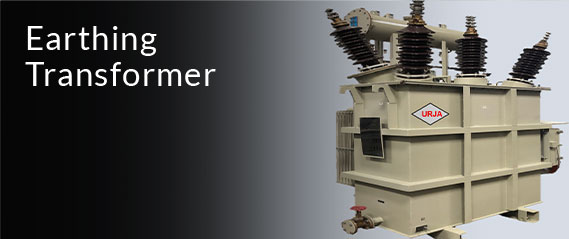
2. Technical Architecture & Product Recommendations for Global Procurement
Global procurement managers and EPC contractors must select Arc Furnace Transformer configurations based on furnace process type, raw material composition, power grid stability, and secondary current delivery requirements. Urja Techniques offers four core engineered product series designed for global metallurgical and smelting projects:
Series 1: Direct Electric Arc Furnace (EAF) Heavy-Duty Transformers
Engineered specifically for scrap steel melting plants and high-tonnage mini-mills. These units feature ultra-high power (UHP) density, internal delta closures, and multi-tap secondary regulation to allow precise power arc control throughout the charge breakdown, melting, and refining phases.
- MVA Capacity Range: 5 MVA up to 80 MVA (custom multi-core options available).
- Primary Voltage: 11 kV, 22 kV, 33 kV, or 66 kV (50 Hz / 60 Hz).
- Secondary Voltage Range: 150 V to 1,200 V with wide step regulation via motorized OLTC.
- Core Features: Fully interleaved disc windings, continuously transposed conductors (CTC) to eliminate eddy current hot spots, and OFWF (Oil Forced Water Forced) cooling.
Series 2: Submerged Arc Furnace (SAF) Transformers
Tailored for ferroalloy production (silicon metal, ferromanganese, ferrosilicon, ferrochrome) and calcium carbide smelting. Unlike EAF units, SAF transformers operate under continuous, submerged arc reduction conditions requiring steady long-term high current output and fine step voltage regulation under high ambient thermal conditions.
- MVA Capacity Range: 2.5 MVA to 60 MVA.
- Secondary Current: Up to 120,000 Amperes per phase utilizing water-cooled copper busbar tubes.
- Tap Changer: Vacuum-type On-Load Tap Changer (OLTC) with 27 to 39 voltage regulation steps.
Series 3: Ladle Refining Furnace (LF) Power Transformers
Designed for secondary steelmaking and liquid steel temperature maintenance. LF transformers demand stable voltage step regulation and rapid thermal response to maintain precise molten bath temperatures while adding alloying elements.
- MVA Capacity Range: 3 MVA to 30 MVA.
- Cooling System: ONAF (Oil Natural Air Forced) or OFAF (Oil Forced Air Forced) with dual redundant oil pumps.
Series 4: Converter Duty & Rectifier-Integrated Furnace Transformers
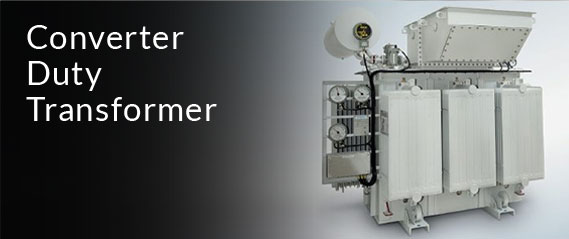
For DC Arc Furnaces and electrolyser metallurgical plants requiring multi-pulse rectification (12-pulse, 24-pulse, or 48-pulse systems). These units integrate phase-shifting tertiary windings to neutralize lower-order harmonics before they propagate into the medium-voltage supply grid.
| Technical Parameter | Direct EAF Transformer | Submerged Arc (SAF) | Ladle Furnace (LF) | DC Arc / Rectifier |
|---|---|---|---|---|
| Typical MVA Rating | 10 MVA – 80 MVA | 5 MVA – 60 MVA | 3 MVA – 30 MVA | 15 MVA – 100 MVA |
| Secondary Voltage | 200V – 1200V | 80V – 400V | 150V – 600V | 400V – 1500V (DC equivalent) |
| Secondary Current | Up to 75,000 A | Up to 120,000 A | Up to 35,000 A | Up to 90,000 A |
| Duty Cycle | Severe cyclic / heavy shorting | Continuous high-load | Intermittent refining | Continuous multi-pulse |
| Cooling Topology | OFWF / ONAF / OFAF | OFWF (Water Cooled) | ONAF / OFAF | OFWF / ONAF |
| Tap Regulation | OLTC (On-Load Motorized) | OLTC (27-39 Steps) | OLTC / NLTC | OLTC + Thyristor Control |
| Short-Circuit Test | Dynamic Withstand Certified | CPRI / ERDA Tested | CPRI / ERDA Tested | IEC 60076 Compliant |
Request Custom Engineering Drawings & Quotations
Consult with Urja Techniques' senior transformer design engineers to specify your project's short-circuit impedance, vector group, and custom busbar terminal layout.
Inquire Now3. Future Procurement Trends in Arc Furnace Transformer Technology (2025–2035)
As global heavy industry accelerates toward Net-Zero carbon targets, green steel manufacturing, and digitalized smart factory grids, procurement managers must evaluate Arc Furnace Transformer investments through a forward-looking technological lens. Below are the five dominant trends reshaping international tender specifications:
Trend 1: Green Steel & Hydrogen DRI Decarbonization Drive
The global steel industry is transitioning away from traditional blast furnace-basic oxygen furnace (BF-BOF) routes toward Electric Arc Furnace (EAF) infrastructure powered by Direct Reduced Iron (DRI) and green hydrogen. This structural shift requires furnace transformers capable of handling higher energy inputs per heat while maintaining ultra-high operational efficiency (reducing core and load losses by up to 18% compared to legacy designs).
Trend 2: AI-Powered Condition Monitoring & Digital Twin Analytics
International buyers no longer accept standalone passive transformers. Modern procurement specifications mandate integrated smart sensor arrays for real-time asset health management:
- Fiber-Optic Direct Winding Temperature Sensors (DTS): Real-time hot-spot temperature measurement bypassing conventional thermal image calculations.
- Online Dissolved Gas Analysis (DGA): Multi-gas continuous monitoring (H₂, CO, C₂H₂, C₂H₄) for early detection of arc discharge, thermal decomposition, or insulation degradation.
- Digital Twin & IoT Gateways: Cloud-connected algorithms calculating remaining insulating paper life (DP factor) and predicting required maintenance intervals prior to unscheduled plant shutdown.
Trend 3: Biodegradable Natural & Synthetic Ester Insulation Fluids
To comply with stringent environmental regulations and reduce fire risk in indoor or underground metallurgical facilities, procurement tenders are rapidly adopting high-fire-point ester fluids (K-class, flash point >300°C) as a replacement for conventional mineral oil. Ester-filled furnace transformers offer superior moisture tolerance and zero soil/water contamination risk in the event of liquid containment breach.
Trend 4: Harmonic Mitigation & Power Quality Optimization
With electrical utilities imposing harsh grid code penalties for flicker, voltage unbalance, and total harmonic distortion (THD), furnace transformer designs are increasingly integrated with Static Synchronous Compensators (STATCOMs) and specialized tertiary delta windings. Designing furnace transformer cores with lower magnetic flux density (typically 1.5 to 1.6 Tesla) prevents core saturation during transient overvoltages.
Trend 5: Modular Factory-Assembled Skid Solutions
To reduce expensive on-site installation timeline and civil work in remote mining and smelting sites across Africa, South America, and the Middle East, buyers are favoring skid-mounted, factory-tested unitized substations integrating the furnace transformer, high-voltage switchgear, and cooling system onto a single heavy steel frame.
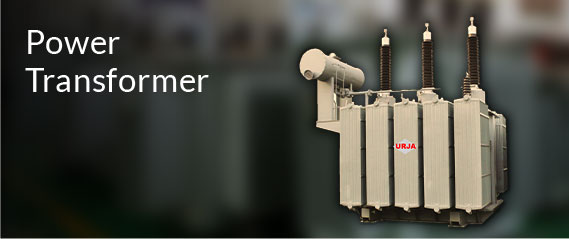
4. Industry Trends & Regional Market Dynamics
The global demand for high-performance Arc Furnace Transformers is driven by regional industrial modernizations and raw material recycling mandates:
- Europe & North America: Driven by carbon border adjustment mechanisms (CBAM) and clean steel initiatives, steelmakers are retrofitting existing plants with UHP Electric Arc Furnaces, driving replacement demand for low-loss, high-reliability furnace transformers with fiber-optic monitoring.
- Middle East & North Africa (MENA): Rapid expansion of steel rebar, DRI plants, and aluminum smelting complexes requires high-ambient rated transformers (designed for 50°C to 55°C ambient temperatures) with OFWF liquid cooling systems.
- Asia-Pacific & India: Massive infrastructure investments and ferroalloy production expansion (ferrosilicon, silico-manganese) drive demand for heavy-duty Submerged Arc Furnace (SAF) transformers compliant with IS 2026 and IEC 60076 standards.
5. Arc Furnace Transformer Procurement FAQs (Search Intent Mining)
Below are authoritative responses to the top technical and procurement questions frequently queried by global project engineers, procurement directors, and plant managers when evaluating Arc Furnace Transformers:
A standard power transformer delivers stable voltage and current under balanced grid conditions with infrequent load changes. In contrast, an Arc Furnace Transformer is specifically engineered to endure continuous, violent short-circuits caused by scrap metal bridging the electrodes during furnace melting. Furnace transformers feature heavily reinforced winding clamping arrangements, lower magnetic flux density to prevent saturation, specialized internal delta closures, extremely low secondary voltage with massive secondary currents (up to 120kA), and On-Load Tap Changers (OLTC) designed for 100+ tap changes per day.
At secondary current levels exceeding 20,000 Amperes, magnetic fields surrounding copper busbar exits induce high eddy current losses and localized hot-spots in adjacent steel tank walls. Urja Techniques mitigates this by using non-magnetic stainless steel tank cover plates, aluminum shielding inserts, interleaved copper busbar layouts to cancel electromagnetic fields, and forced water-cooled copper tube bushings to ensure low operating temperatures and high electrical efficiency.
To receive an accurate engineering design and commercial quotation, buyers should provide: (1) Rated MVA capacity; (2) Primary supply voltage & frequency (e.g., 33kV 50Hz); (3) Secondary voltage adjustment range (max/min tap voltage); (4) Secondary current rating; (5) Furnace type (EAF, SAF, LF, DC); (6) Desired cooling method (ONAN, ONAF, OFWF); (7) Ambient temperature conditions & altitude; (8) Preferred tap changer type (motorized OLTC vs. OFF-load); and (9) Specific international testing requirements (CPRI, ERDA, SGS).
Due to intense harmonic heating and continuous heavy-current loading, thermal performance is the primary factor dictating transformer lifespan. The Temperature Rise Test (a mandatory BIS type test) validates that top-oil and winding hot-spot temperatures remain well within design limits under full-load thermal equilibrium. Urja Techniques maintains an in-house state-of-the-art temperature rise testing bay capable of full thermal load validation before factory departure.
For furnace duty, vacuum-type On-Load Tap Changers (OLTC) are strongly recommended over traditional oil-arc tap changers. Vacuum OLTC switches encapsulate the arc inside sealed vacuum interrupters, preventing carbon contamination of the transformer main tank oil, eliminating contact erosion, and extending maintenance intervals from 50,000 operations up to 300,000+ operations.
Urja Techniques designs furnace transformer coils using finite element method (FEM) software to calculate radial and axial electrodynamic forces under peak short-circuit current conditions. We utilize high-density pre-compressed insulation pressboard, epoxy-bonded conductors, and spring-loaded axial clamping rings. Our design methodologies are fully type-tested and certified by premier independent testing laboratories including CPRI (Central Power Research Institute) and ERDA (Electrical Research and Development Association).
Have Specific Furnace Transformer Project Specs?
Our engineering division in Mumbai provides complete electrical calculation sheets, dimensional drawings, and thermal analysis for custom furnace transformer projects worldwide.
Inquire Now6. Corporate Authority & Manufacturing Advantage: Urja Techniques (India) Pvt. Ltd.
Choosing the right transformer manufacturer is a high-stakes decision for metallurgical plant operators. A single premature transformer failure can halt plant production for weeks, causing millions of dollars in downtime losses. Urja Techniques (India) Pvt. Ltd. stands as a premier global manufacturing partner built on uncompromised quality, verified engineering performance, and rigorous E-E-A-T (Experience, Expertise, Authoritativeness, and Trustworthiness) credentials.
30+ Years of Manufacturing Leadership & Global Footprint
Established in 1991 in Mumbai, Maharashtra, India, Urja Techniques has grown from a specialized transformer workshop into an internationally recognized manufacturer exporting high-efficiency distribution, power, dry-type, and furnace transformers to over 40+ countries across Africa, the Middle East, Europe, and Asia. International sales account for over 40% of total company revenue, testifying to our global competitiveness and compliance with international standards.
State-of-the-Art Manufacturing & Testing Facility
Our ISO 9001:2015, ISO 14001:2015, and ISO 45001 certified manufacturing plant in Mumbai is equipped with high-precision winding machines, automated vacuum drying ovens, oil purification plants, and a dedicated high-voltage testing laboratory. Unlike many regional fabricators, Urja Techniques features an in-house Temperature Rise Test facility—enabling precise verification of thermal performance under simulated full-load operating conditions prior to dispatch.
Globally Recognized Certification & Type Testing
Urja Techniques transformers are designed, manufactured, and routine-tested in strict compliance with IEC 60076, IS 2026, IS 1180, and BS standards. Our product range has undergone rigorous type-testing and short-circuit withstand testing at top-tier independent testing laboratories, including:
- ERDA (Electrical Research and Development Association): Comprehensive type testing for impulse withstand, temperature rise, acoustic sound levels, and short-circuit withstand.
- CPRI (Central Power Research Institute): Full compliance validation for high-voltage dielectric strength and mechanical short-circuit forces.
Registered Vendor to Utilities & Global EPC Contractors
Urja Techniques is an approved registered vendor to major State Electricity Boards (SEBs), public sector enterprises, multinational mining conglomerates, and international EPC contractors. Our transformers power critical national infrastructure, solar power plants, underground mining operations, heavy steel mills, and chemical processing facilities.
Ready to Upgrade Your Furnace Power Infrastructure?
Get in touch with Urja Techniques' expert engineering team for technical proposals, GA drawings, and competitive commercial quotes for your Arc Furnace Transformer requirements.
Inquire Now