Isolation Distribution Transformer: Technical Specifications, Intent Mining & Global Sourcing Trends

An exhaustive technical handbook for electrical engineers, EPC contractors, and procurement managers. Explore galvanic isolation principles, K-factor harmonic mitigation, electrostatic shielding, IEC/IS compliance standards, and advanced manufacturing practices.

Author: Urja Techniques Technical Design Team Standards: IEC 60076, IS 2026, IEEE C57.110 Certification: ISO 9001:2015, ERDA & CPRI Type-Tested
Send an Inquiry

1. Decoding the Isolation Distribution Transformer: Semantic Definition & Core Electrical Principles

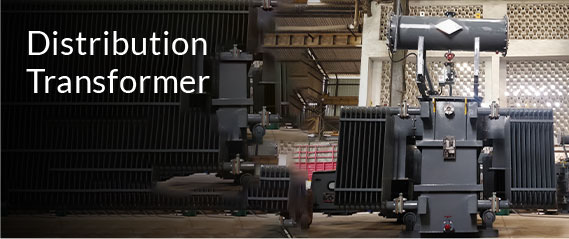
In modern industrial power distribution grids, high-frequency transients, electrical noise, harmonic distortion, and ground loop current leakage present existential threats to sensitive electrical infrastructure. An Isolation Distribution Transformer is a specialized stationary electromagnetic device specifically designed to transfer electrical power from an AC supply source to an output load circuit while providing complete galvanic isolation between the primary (input) and secondary (output) windings.

Unlike conventional auto-transformers—where primary and secondary windings share a common conductive electrical node—an Isolation Distribution Transformer completely decouples the input power grid from the downstream distribution system. Magnetizing flux generated within high-permeability Cold-Rolled Grain-Oriented (CRGO) silicon steel cores serves as the sole energy transmission medium between the primary and secondary coils.

Technical Insight: Why Galvanic Isolation Matters in Modern Power Grids

Standard distribution transformers step down voltage levels (e.g., 11kV or 33kV to 415V/230V), but they allow electrical noise, high-frequency spikes, and common-mode voltages to pass uninhibited to sensitive loads. An Isolation Distribution Transformer acts as a physical barrier to DC components, eliminates ground loop currents, establishes an independent locally grounded neutral, and mitigates electromagnetic interference (EMI) through grounded electrostatic Faraday shielding.

Key Functional Drivers for Global Electrical Buyers

Global procurement executives and electrical design engineers specify Isolation Distribution Transformers across critical infrastructure facilities due to four fundamental engineering requirements:

Comparative Matrix: Isolation Distribution Transformer vs. Standard Distribution Transformer vs. Auto-Transformer

Engineering Parameter Isolation Distribution Transformer Standard Distribution Transformer Auto-Transformer
Electrical Isolation Complete Galvanic Isolation (Separate Primary & Secondary) Galvanic Isolation (General Power Step-Down) No Galvanic Isolation (Shared Windings)
Electrostatic Faraday Shielding Standard Integration (Single, Double, or Triple Shields) Rarely Included (Custom Option Only) Not Applicable
Common-Mode Noise Attenuation High (up to 50 dB – 60 dB attenuation) Low (< 10 dB attenuation) Zero Attenuation
Neutral Ground Isolation Creates Clean New Isolated Neutral Load Point Tied directly to Utility Substation Neutral Directly Shared Neutral Grid
Harmonic K-Factor Support K-4, K-13, K-20, K-30 Customized Engineering Standard K-1 Rated (Linear Loads Only) Sensitive to Harmonic Overheating
Primary Applications Data Centers, VFD Drives, Hospitals, CNC Plants, Solar PV Utility Grid Power Step-Down, General Residential Motor Starting, Small Voltage Balancing

2. Precision Engineered Isolation Distribution Transformer Product Range

Urja Techniques (India) Pvt. Ltd. manufactures a wide array of premium grade Isolation Distribution Transformers tailored for demanding global climatic conditions and rigorous industrial operation standards. Below are our leading recommended series engineered to IEC 60076 and IS 2026 specifications.

Detailed Product Technical Specifications

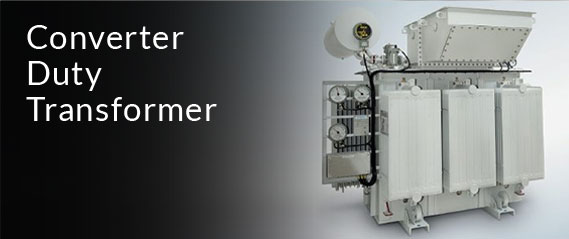
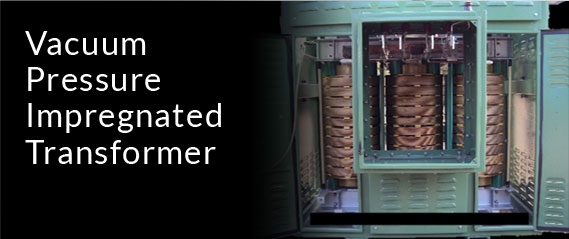
Technical Parameter VPI Dry-Type Series Oil-Filled Outdoor Series Converter & VFD Duty Series
Capacity Range 10 kVA to 3,150 kVA 50 kVA to 10,000 kVA 100 kVA to 5,000 kVA
Voltage Class Up to 11 kV / 33 kV Up to 33 kV / 66 kV Up to 33 kV (Multi-winding)
Vector Group Dyn11, Dyn1, Ddn0, Yyn0 Dyn11, Dyn5, Ynd11 Dd0y11, Dd0d6, Dyn11
Insulation Class Class H (180°C) or Class C (220°C) Class A (ONAN / ONAF) Class H (VPI) / Class A (Oil)
Winding Material 99.9% Electrolytic Copper / ETP Aluminum High grade Electrolytic Copper Dual-isolated Electrolytic Copper Strip
Faraday Shielding Copper Foil Electrostatic Shield Double Copper Faraday Interlayer Triple Faraday Shielding (UL/IEC)
K-Factor Ratings K-4, K-13, K-20, K-30 Available K-4, K-9, K-13 Available K-13, K-20, K-30 Standard
Efficiency (at 50% & 100% load) 98.5% to 99.2% (Energy Level 3/Tier 2) 98.8% to 99.5% (IEC 60076-20) 98.2% to 99.1%
Compliance Standards IEC 60076-11, IS 11171, IS 2026 IEC 60076-1-5, IS 2026, IS 1180 IEEE C57.18.10, IEC 60076
Send an Inquiry

3. Global Sourcing & Procurement Trends for Isolation Distribution Transformers (2025–2035)

The global demand for Isolation Distribution Transformers is experiencing unprecedented growth driven by the acceleration of artificial intelligence computing networks, grid-scale renewable energy storage systems (BESS), modern medical healthcare hubs, and heavy industrial automation. According to global energy market intelligence, procurement leaders are shifting from basic purchase price evaluations to total-lifecycle reliability assessments. Below are the key sourcing trends shaping procurement strategies worldwide:

Trend 1: AI Hyperscale Data Centers & Zero-Tolerance Power Quality

Hyperscale AI data centers housing thousands of high-density GPU processing clusters require ultra-clean power with strict harmonic limits. Power interruptions or voltage micro-spikes can corrupt high-performance computing tasks. Procurement teams are specifying K-20 and K-30 rated dry-type Isolation Distribution Transformers equipped with low-loss amorphous metal cores and copper Faraday shields to protect delicate silicon architectures against transient common-mode voltage fluctuations.

Trend 2: Integration with Solar PV Plants & Battery Energy Storage Systems (BESS)

Solar inverters and battery energy storage converters produce non-sinusoidal pulse-width modulation (PWM) voltage waveforms. Standard transformers operating under these conditions experience severe eddy current heating in windings and accelerated core degradation. Future procurement mandates require Converter-Duty Isolation Distribution Transformers capable of handling severe DC bias offsets, high THD (Total Harmonic Distortion), and rapid bi-directional power flow between grid and storage banks.

Trend 3: Environmental Sustainability – Transition to Synthetic Esters & Dry VPI Technology

Environmental regulations (such as EU Ecodesign Directive Tier 2 and US DOE 2026 efficiency mandates) are pushing industries away from traditional mineral-oil filled transformers in indoor or urban installations. Sourcing directors are prioritizing Vacuum Pressure Impregnated (VPI) Dry-Type Isolation Transformers and Biodegradable Synthetic Ester Fluid Transformers. Synthetic esters offer a fire point above 300°C (Class K fluid rating), reducing fire safety insurance premiums and eliminating soil contamination risks in sensitive ecology zones.

Trend 4: IoT-Enabled Smart Transformers & Real-Time Condition Monitoring

Modern enterprise buyers are demanding smart Isolation Distribution Transformers integrated with real-time digital sensors. Modern units feature built-in fiber-optic hot-spot temperature monitors, online dissolved gas analysis (DGA) sensors, partial discharge monitoring nodes, and RS485/Modbus communication gateways. This allows predictive maintenance teams to optimize transformer loading, prevent catastrophic insulation breakdown, and extend transformer service lifespans beyond 35 years.

Trend 5: Supply Chain Resilience & Global Standard Harmonization

Global procurement leaders are mitigating geopolitical supply risks by sourcing from audited ISO-certified Indian transformer manufacturers like Urja Techniques. By ensuring dual compliance with both International Electrotechnical Commission (IEC 60076) and American National Standards Institute (ANSI/IEEE C57) frameworks, global buyers streamline international plant expansions while securing cost savings of 20% to 35% compared to Western European OEMs.
4. Technological Innovations & Manufacturing Engineering Advances

The technical evolution of Isolation Distribution Transformers focuses heavily on reducing core losses, optimizing thermal dissipation, and enhancing dielectric withstand capabilities under severe environmental stresses. Key manufacturing advancements developed by Urja Techniques include:

1. High-Permeability CRGO Cores

Utilization of domain-refined, cold-rolled grain-oriented (CRGO) silicon steel laminations cut at precise 45-degree mitered step-lap angles. This core architecture reduces no-load hysteresis losses by up to 25% and minimizes magnetic acoustic noise emission to under 50 dBA.

2. Multi-Layer Electrostatic Shielding

Incorporation of continuous non-magnetic copper foil shields helically wrapped between primary and secondary winding layers. Grounded directly to the core ground bus, these shields attenuate high-frequency switching spikes and lightning surge impulses up to 100 kV.

3. Vacuum Pressure Impregnation (VPI)

Utilizing high-vacuum pressure chambers to impregnate Class H polyester resin deep into coil structures. VPI technology eliminates internal air voids, prevents partial discharge formation, and provides complete moisture and chemical corrosion resistance.

5. Frequently Asked Questions (FAQ) for Global Procurement & Engineering Buyers

To assist procurement officers and consulting engineers in evaluating their power quality requirements, our senior technical engineering team has addressed the top AI-mined queries concerning Isolation Distribution Transformers:

Q1: What is the main difference between a standard distribution transformer and an isolation distribution transformer?

While a standard distribution transformer primarily reduces high distribution voltage (e.g., 11kV) down to utilization voltage (e.g., 415V/230V) for power transfer, an Isolation Distribution Transformer is engineered with a 1:1 or step-down ratio specifically focused on power quality and circuit protection. It incorporates electrostatic Faraday shielding, reinforced dielectric insulation, and independent grounding systems to isolate the load from common-mode electrical noise, voltage transients, and ground loops.

Q2: Why is a K-Factor rating crucial when specifying an Isolation Distribution Transformer?

Modern industrial and commercial loads (such as variable speed drives, computers, LED driver banks, and UPS systems) draw non-linear current waveforms rich in triplen harmonics (3rd, 9th, 15th harmonics). These harmonics cause severe skin-effect heating in transformer copper conductors and high neutral return currents. A K-Factor rated Isolation Transformer (e.g., K-13 or K-20) utilizes double-sized neutral conductors, specialized transposed winding geometries, and high-temperature insulation to safely handle harmonic heating without derating the transformer capacity.

Q3: How does Faraday electrostatic shielding function inside an isolation transformer?

A Faraday shield is a grounded sheet of high-conductivity copper placed physically between the primary and secondary windings. Capacitive coupling normally allows high-frequency transient spikes and electrical noise to jump across transformer windings. The grounded electrostatic shield intercepts this capacitive coupling, diverting noise currents directly to earth ground without allowing them to enter the secondary circuit powering critical equipment.

Q4: What key international quality standards should an Isolation Distribution Transformer satisfy?

Global buyers must verify that the manufacturer complies with:
IEC 60076 Series: International standards for power and distribution transformers.
IS 2026 / IS 1180: Indian Standards for performance, efficiency levels, and short-circuit withstand.
IEEE C57.110: Recommended practice for establishing transformer capability when supplying non-linear harmonic loads.
ISO 9001:2015 & ISO 14001:2015: Quality and environmental management system certifications.

Q5: How do I select between Dry-Type VPI and Oil-Filled Isolation Transformers for my facility?

Choose Dry-Type VPI Isolation Transformers for indoor installations, multi-story commercial complexes, data centers, hospitals, and underground subways where fire safety and zero toxic liquid leak risks are paramount. Choose Hermetically Sealed Oil-Filled Isolation Transformers for outdoor substation environments, heavy chemical plants, or utility pole installations where natural oil cooling (ONAN) delivers superior high-capacity heat dissipation at lower initial capital cost.

Q6: Can an isolation distribution transformer resolve ground loop interference in automated manufacturing plants?

Yes. Ground loops occur when multiple electrical devices are connected to earth ground at different physical locations with slight voltage potential differences, causing stray currents to flow through signal cables. An Isolation Distribution Transformer breaks the physical conductive loop by decoupling the secondary ground system from the primary supply grid, creating a single clean local grounding reference point for industrial PLCs, CNC machines, and sensors.

Send an Inquiry

30+ Years of Engineering Excellence: Urja Techniques (India) Pvt. Ltd.

Founded in 1991 in Mumbai, Maharashtra, India, Urja Techniques (India) Pvt. Ltd. has established itself as an authoritative global manufacturer and exporter of heavy-duty power, distribution, and specialized dry-type isolation transformers. Over three decades of relentless innovation have positioned Urja Techniques as a trusted partner to utility boards, Fortune 500 corporations, and multinational EPC contractors worldwide.

Our state-of-the-art manufacturing infrastructure is ISO 9001:2015, ISO 14001:2015, and ISO 45001 certified. We maintain full in-house capabilities for core slitting, automatic coil winding, vacuum pressure impregnation (VPI), and comprehensive dielectric testing. Our products are fully type-tested by premier independent laboratories including ERDA (Electrical Research and Development Association) and CPRI (Central Power Research Institute) for short-circuit withstand performance, lightning impulse tests, and acoustic sound levels.

With over 40% of overall production dedicated to international exports across 40+ countries in Africa, the Middle East, Europe, and Southeast Asia, our engineering solutions are proven under extreme environmental conditions—from desert heat to high-humidity coastal zones.

In-House Manufacturing & Impulse Testing Facility — Wadala, Mumbai

Request a Custom Technical Quote for Your Isolation Distribution Transformer

Partner directly with Urja Techniques' senior transformer design engineers. Get custom kVA sizing, vector group matching, K-factor analysis, and competitive FOB/CIF export pricing tailored to your project requirements.

Send an Inquiry