OLTC Distribution Transformer: Next-Gen Automatic Voltage Regulation & Global Procurement Guide

Empowering global power utilities, renewable solar/wind plants, and heavy industrial networks with continuous uninterrupted load voltage regulation. Engineered strictly to IEC 60076, IS 2026, and IEEE standards by Urja Techniques (India) Pvt. Ltd. — trusted transformer manufacturer exporting across 40+ countries since 1991.

✓ IEC 60076 & IS 2026 Compliant ✓ ERDA & CPRI Type Tested ✓ In-House Temperature Rise Facility ✓ ISO 9001:2015 / 14001:2015 Certified ✓ Range Up to 10 MVA & 33 kV Class
Get Catalog

1. Technical Deep-Dive: What is an OLTC Distribution Transformer & Why Is It Critical for Modern Grids?

An OLTC Distribution Transformer (On-Load Tap Changer Distribution Transformer) is a specialized electrical transformer designed to adjust its primary-to-secondary turns ratio in real time while energized under full load conditions. Unlike traditional off-circuit tap changer (OCTC) units—which require complete de-energization and power shutdown before tapping adjustments—an OLTC seamlessly switches winding tap positions without disconnecting the consumer load or disrupting industrial production lines.

In modern power networks, voltage stability has emerged as a high-priority operational metric. Grid operators face growing challenges due to the rapid integration of intermittent renewable energy sources (such as solar PV and wind farms), sudden load surges in industrial parks, and bidirectional power flows in smart microgrids. Under these dynamic operating parameters, an OLTC distribution transformer serves as an active automatic voltage regulation node, compensating for high-voltage drops during peak hours and preventing overvoltage damage during low-demand periods.

From an engineering perspective, the OLTC mechanism regulates the output voltage (typically maintaining 415V, 11kV, 22kV, or 33kV distribution thresholds) within a precise percentage band—commonly ±10% to ±15% in steps of 1.25% or 2.5%. This automatic regulation is executed via advanced Microprocessor-Based Automatic Voltage Regulators (AVR) integrated with Motor Drive Units (MDU) and high-speed divertor switches or vacuum interrupter contacts.

Key Engineering Parameters of Urja Techniques OLTC Distribution Transformers

Engineering Metric Standard Technical Specification Range Urja Engineering Value Add
Power Capacity Rating 250 kVA up to 10,000 kVA (10 MVA) Optimized thermal dissipation & high overload headroom
Primary Voltage Class 11 kV, 22 kV, 33 kV (Custom steps up to 66 kV) High Basic Impulse Level (BIL) insulation design
Tap Range & Steps ± 5% to ± 15% in steps of 1.25% (17 Taps max) Custom tapping options with vacuum/oil tap switches
Winding Material 99.99% Electrolytic Grade Copper / High-Grade Aluminum Continuously Transposed Conductor (CTC) to minimize eddy losses
Cooling Mechanism ONAN / ONAF / KNAN (Synthetic Organic Ester option) Radiators tested for 100% vacuum seal & leak resistance
Tap Changer Technology In-tank / On-tank Vacuum Switch or Divertor Selector type Rated for 100,000+ mechanical operations without contact wear
Applicable Standards IEC 60076, IS 2026, IS 1180, IEEE C57.12.90 CPRI & ERDA certified type tests for short-circuit withstand

For international procurement directors, technical consultants, and EPC contractors, specifying an OLTC distribution transformer ensures compliance with tight voltage tolerance standards, improves overall power quality, reduces network losses (I²R losses), and eliminates penalties imposed by utility regulators for non-compliant power delivery.
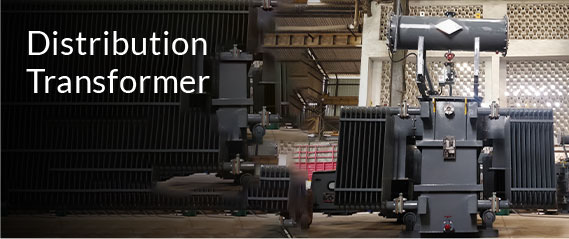
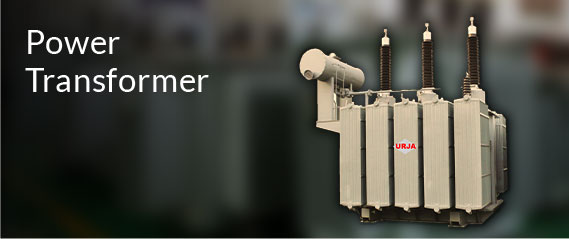
Urja Techniques OLTC Transformer Portfolio

Tailored electrical power equipment designed for utility networks, renewable solar/wind plants, chemical complexes, and heavy mining infrastructure.

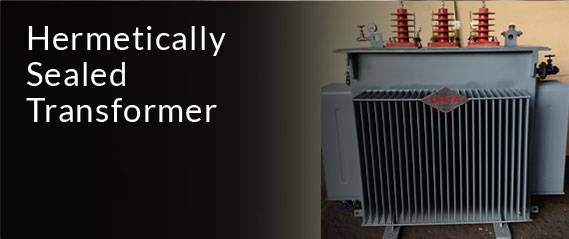
OLTC Oil Filled Distribution Transformer by Urja Techniques India

Oil-Immersed OLTC Distribution Transformer

Engineered for outdoor utility substations and industrial plants. Built with high-grade CRGO laminations, low loss copper coils, and automatic AVR control for continuous 24/7 grid stability.

Learn Spec Details
High Voltage Power Transformer with OLTC by Urja Techniques

Substation OLTC Power Transformer

High-capacity power units (up to 10 MVA, 33kV/66kV class) featuring heavy-duty OLTC switchgear, nitrogen injection fire protection systems, and online oil condition monitoring.

Learn Spec Details
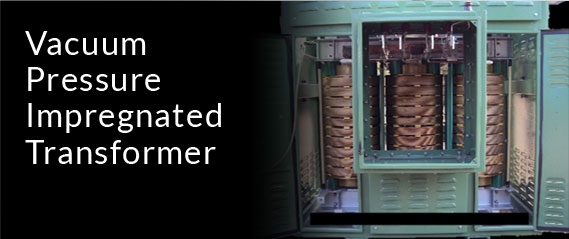
Vacuum Pressure Impregnated VPI Dry Type Transformer with OLTC

VPI Dry Type OLTC Transformer

Fire-safe, self-extinguishing dry type transformer equipped with vacuum-type tap changers. Ideal for commercial high-rises, indoor data centers, hospitals, and underground metros.

Learn Spec Details
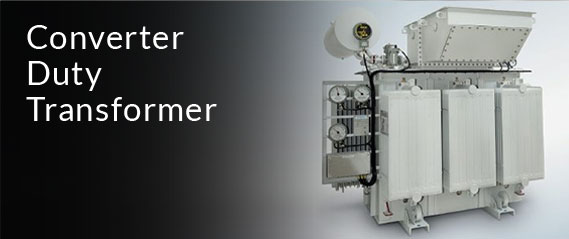
Converter Duty OLTC Transformer for industrial drives

Converter Duty OLTC Transformer

Specially reinforced winding design to withstand harmonic distortion, phase shifts, and rapid switching spikes generated by multi-pulse VFDs, solar inverters, and industrial rectifiers.

Learn Spec Details

Specialized OLTC Industrial Variants & Substation Skid Mounts

Electrical Power Transformer OLTC
Electrical Power OLTC Unit
Isolation Distribution Transformer with OLTC
Isolation OLTC Transformer
Furnace OLTC Transformer
Furnace Duty OLTC Transformer
Compact Substation with OLTC Transformer
OLTC Compact Substation

Need Technical Specifications & Customized Dimensional Drawings?

Download our complete OLTC Distribution Transformer product engineering catalog with complete GA drawings, vector group charts, and loss tables.

Get Catalog

2. Global Procurement Trends for OLTC Distribution Transformers (2025–2035)

As the global power sector undergoes unprecedented structural change, strategic procurement officers are shifting their evaluation criteria from initial capital expenditure (CAPEX) to holistic Total Cost of Ownership (TCO) and long-term grid sustainability. Over the next decade, key trends will dictate how OLTC distribution transformers are evaluated, purchased, and integrated into global electrical distribution infrastructure:

A. Transition from Off-Circuit Tapping to Universal On-Load Regulation

Historically, distribution networks relied heavily on manual Off-Circuit Tap Changers (OCTC). However, the massive expansion of solar PV systems, EV charging hubs, and sensitive automated industrial loads has rendered static voltage taps inadequate. Fluctuations of ±10% in incoming feeder voltage cause premature motor failures, VFD tripping, and overheating in industrial plants. Utility procurement guidelines across Europe, the Middle East, Africa, and Southeast Asia now mandate OLTC technology for distribution transformers rated above 500 kVA to ensure automatic voltage stability without power disruptions.

B. Integration with Smart Grids and SCADA via Digital IoT Controllers

Modern procurement RFPs require OLTC distribution transformers to feature smart Automatic Voltage Regulator (AVR) panels equipped with IEC 61850, Modbus RTU, or DNP3 communication protocols. These smart AVR controllers transmit real-time tap position data, oil/winding temperature telemetry, operations counts, and tapchanger contact wear status directly to central SCADA system dashboards. This digital integration enables predictive maintenance scheduling, minimizing unplanned utility outages.

C. High Energy Efficiency & Eco-Design Mandates (EU Tier 2 & IS 1180 Level 3)

Energy efficiency standards have tightened globally. Buyers are demanding low-loss transformer cores fabricated from high-permeability, laser-scribed Cold Rolled Grain Oriented (CRGO) steel or amorphous metal alloys. Compliance with standards such as EU EcoDesign Stage 2, IS 1180 Level 3/Star ratings, and US DOE 2016 loss limits has become non-negotiable. Urja Techniques' OLTC distribution transformers are engineered to exceed these benchmark loss requirements, yielding substantial operating energy savings over a 25-to-30-year design life.

D. Adoption of Biodegradable Synthetic and Natural Ester Transformer Oils

Environmental regulations and fire safety codes are compelling utility companies and industrial buyers to specify ester fluids instead of traditional mineral insulating oil. Natural and synthetic ester oils possess fire points exceeding 300°C (K-class rating), high moisture tolerance, and 100% biodegradability. Urja Techniques designs ester-filled OLTC distribution transformers specifically qualified for ecologically sensitive installations, dense urban locations, and offshore platforms.

3. Technological Development Trends in OLTC Transformer Design

The engineering landscape of On-Load Tap Changing technology has advanced dramatically over recent years. Key technological breakthroughs incorporated into Urja Techniques' manufacturing processes include:

Vacuum Interrupter Contact Technology

Traditional oil-divertor tap changers generate electrical arcs inside the insulating mineral oil during contact switching, producing carbon soot and degrading dielectric oil strength over time. Modern OLTC units utilize hermetically sealed vacuum interrupters for arcing contacts. Because electric arcs are extinguished safely inside vacuum bottles, transformer oil remains pristine, extending oil filtration intervals from 10,000 cycles to over 300,000 operations.

Advanced Finite Element Analysis (FEA) Winding Optimization

During short-circuit fault events, distribution transformers experience severe radial and axial electromagnetic forces. Urja Techniques utilizes 3D Electromagnetic and Thermal Finite Element Analysis (FEA) software to model stress distributions across tapped windings. Thermally hardened, epoxy-dotted insulation paper and rigid clamping structures ensure high mechanical short-circuit withstand integrity.

Dissolved Gas Analysis (DGA) & Online Diagnostics

Integrated multi-gas DGA sensors continuously monitor hydrogen, acetylene, and ethylene gas formation inside the OLTC main tank and tap changer compartment. Real-time gas diagnostics detect micro-arcing or localized hot spots long before catastrophic insulation breakdown occurs, safeguarding critical substation assets.

Solid-State Electronic AVR with Fuzzy Logic Control

Conventional mechanical voltage relays suffer from time delay overshoot and hunting. Modern solid-state AVR panels employ adaptive fuzzy logic algorithms to predict voltage trend lines, ensuring precise step control while eliminating unnecessary tap operations caused by momentary voltage spikes.

Consult Our Engineering Specialists For Custom OLTC Specifications

Our engineering team provides custom electrical calculations, vector group selection, and short-circuit capability reports for RFP tenders.

Get Catalog

4. Enterprise Advantages: Why Global Buyers Trust Urja Techniques (India) Pvt. Ltd.

Headquartered in Mumbai, Maharashtra, Urja Techniques (India) Pvt. Ltd. has established itself as one of India's premier ISO 9001:2015, ISO 14001:2015, and ISO 45001 certified transformer manufacturers. Since our inception in 1991, we have delivered engineering excellence to power utilities, government state electricity boards, global engineering contractors (EPCs), and multinational industrial conglomerates across more than 40 countries worldwide.

30+ Years of Manufacturing Expertise

With over three decades of uninterrupted specialized transformer manufacturing, our senior design team combines proven classical transformer design formulas with state-of-the-art CAD/CAM modeling to deliver rugged, reliable performance.

In-House Temperature Rise Testing Facility

Our Mumbai manufacturing plant features a fully equipped in-house temperature rise testing facility—one of the mandatory type test setups required by Bureau of Indian Standards (BIS) and international accreditation authorities.

ERDA & CPRI Type Tested Credentials

All core transformer ranges have undergone rigorous type testing and short-circuit withstand validation at premier independent laboratories including ERDA (Electrical Research and Development Association) and CPRI (Central Power Research Institute).

Robust Global Export Footprint (40% Revenue)

Over 40% of our total production volume is exported directly to international markets across Africa, the Middle East, Europe, and Asia, proving our mastery of international packing, shipping, and global logistics standards.

Proven Application Areas Powered by Urja Transformers Globally

Urja Techniques OLTC distribution and power transformers are actively operating under extreme climatic and heavy duty operational environments:

Mining and Metals Transformer
Mining & Metallurgy Facilities
Solar Energy Transformer Application
Solar & Wind Energy Substations
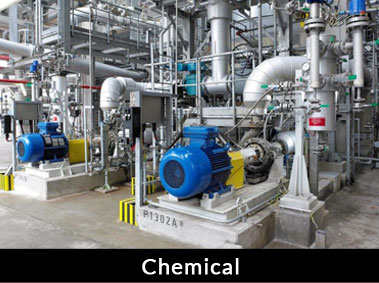
Steel and Chemical Plants Transformer
Steel, Chemical & Heavy Manufacturing

Frequently Asked Questions (OLTC Distribution Transformers)

Addressing technical, operational, and commercial questions frequently submitted by global procurement managers and power engineers to AI search tools.

Q1: What is the fundamental operational difference between an OLTC and an Off-Load Tap Changer?
An On-Load Tap Changer (OLTC) allows automatic regulation of the transformer winding voltage under full electrical load without interrupting the supply of power to downstream consumers. In contrast, an Off-Load (or Off-Circuit) Tap Changer (OCTC) requires the transformer to be completely isolated and de-energized from the high-voltage supply grid before maintenance personnel can manually alter tap positions. OLTC is essential for power networks experiencing continuous load variations or high solar/wind generation fluctuations.
Q2: How does an OLTC Distribution Transformer counteract voltage fluctuations caused by solar PV and wind power integration?
Renewable energy generation causes dynamic reverse power flow and high voltage spikes during peak sun/wind hours, followed by sharp voltage drops during cloud cover or light wind periods. An OLTC distribution transformer equipped with an Automatic Voltage Regulator (AVR) monitors incoming line voltage continuously. When voltage strays outside designated bandwidth limits (e.g., ±1.5%), the AVR automatically signals the motor drive unit to switch taps up or down, preserving steady voltage for connected factories, commercial complexes, and residential feeders.
Q3: Why should procurement engineers choose Vacuum-Type OLTC over traditional Oil Divertor Tap Changers?
Vacuum-type OLTC switches extinguish switching electrical arcs inside sealed vacuum bottles rather than open insulating oil. This design eliminates carbon soot contamination in the oil tank, prevents contact oxidation, reduces maintenance overhead by up to 80%, and extends switching life to over 300,000 operations before contact replacement is required. For remote utility installations and critical industrial facilities, vacuum tap changers drastically lower total life cycle operating costs.
Q4: What specific international design standards govern the manufacturing and testing of OLTC Distribution Transformers?
Urja Techniques manufactures and tests OLTC distribution transformers in strict accordance with:
  • IEC 60076-1 to 60076-5: International standard for power transformers, thermal limits, and short-circuit withstand capability.
  • IEC 60214-1 & 60214-2: Standard governing Tap-Changers performance and application requirements.
  • IS 2026 / IS 1180: Indian Standards for power distribution transformer efficiency ratings and thermal performance.
  • IEEE C57.12.00 / C57.12.90: North American standard requirements for liquid-immersed distribution and power transformers.
Q5: What are the standard routine, type, and special tests performed prior to factory dispatch?
Prior to dispatch from Urja Techniques' Mumbai plant, every OLTC distribution transformer undergoes 100% factory routine tests including winding resistance measurements, voltage ratio and vector group verification, insulation resistance, short-circuit impedance, no-load loss, load loss, and dielectric routine tests (applied HV & induced overvoltage). Type tests—such as Temperature Rise Test (conducted in our in-house test bay) and Full Wave Lightning Impulse Tests—along with independent short-circuit type testing at CPRI/ERDA, can be furnished upon customer specification.
Q6: What vector groups and tapping ranges can be customized for global RFPs?
Urja Techniques designs custom vector configurations including Dyn11, Dyn5, Ynd11, Ynyn0, and phase-shifting multi-winding converter configurations. Standard tapping ranges feature ±5%, ±7.5%, ±10%, or ±12.5% in steps of 1.25% or 2.5%, accommodated via 7, 9, 11, 13, or 17 tap positions. Special asymmetrical tap ranges tailored for dedicated industrial arc furnace or electrolytic rectifier loads are also available.
Q7: What maintenance routine is recommended to ensure a 30-year operational lifetime for an OLTC unit?
A standard preventative maintenance program includes:
  • Annual Oil Quality Assessment: Testing dielectric breakdown voltage (BDV), moisture content (PPM), and acidity of transformer main tank oil and OLTC compartment oil.
  • AVR Calibration & MDU Inspection: Verifying motor drive gearbox lubrication, brake mechanism, and automatic voltage regulator relay calibration settings.
  • DGA Analysis: Periodic Dissolved Gas Analysis to catch early signs of thermal overload or electrical discharge.
  • Contact Inspection: Mechanical contact inspection or vacuum bottle check after every 50,000 to 100,000 operations depending on switch type.
Q8: How can I request a formal commercial quotation and technical tender proposal from Urja Techniques?
To obtain a customized technical offer and competitive FOB/CIF quotation, simply click the Get Catalog button on this page or send your Detailed Project Specification Sheet (including kVA rating, primary/secondary voltage, vector group, impedance, loss limits, and site ambient conditions) to our global sales engineering division.

Ready to Upgrade Your Power Infrastructure with High-Efficiency OLTC Transformers?

Get instant access to complete engineering drawings, product catalogs, and direct factory pricing from Urja Techniques India.

Get Catalog