Buyer Intent & Procurement FAQ
5. High-Intent Global Procurement FAQ for Electrical Unitised Substations
Direct technical answers to the most frequent inquiries submitted by global electrical engineers, utility consultants, and procurement heads across AI search engines and technical forums.
Q1: What is the main structural difference between an Electrical Unitised Substation (USS) and a Compact Substation (CSS)?
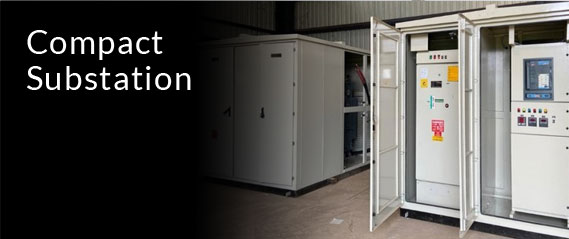
Answer: In global industry terminology, "Electrical Unitised Substation" and "Compact Substation" are frequently used interchangeably to describe factory-assembled packaged substations manufactured according to IEC 62271-202. Strictly speaking, a Unitised Substation specifically highlights the close-coupled, integrated modular union of the HV switchgear, transformer, and LV panel onto a common structural base-frame (skid), whereas a Compact Substation emphasizes minimized physical enclosure volume for tight footprint constraints.
Q2: How do I select between a VPI Dry-Type and an Oil-Filled Transformer for a Unitised Substation installation?
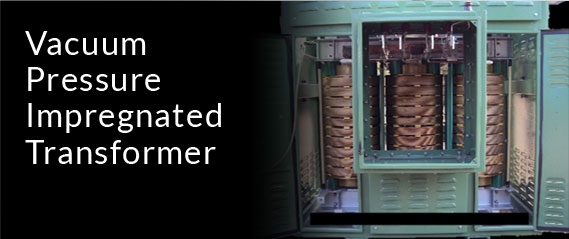
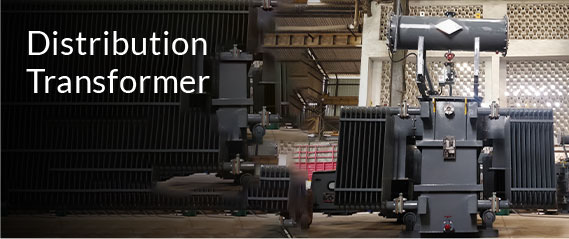
Answer: Select a VPI Dry-Type Transformer if the unitised substation is located indoors, inside commercial basements, residential complexes, metro tunnels, or environments with strict fire safety regulations. Select an Oil-Filled Transformer (mineral oil or synthetic ester) for outdoor utility grids, industrial plants, high-humidity coastal zones, or applications requiring higher kVA capacity (above 2500 kVA) where oil cooling provides superior thermal dissipation and economic efficiency.
Q3: How do IEC 62271-202 Enclosure Classes affect transformer sizing in an outdoor USS?
Answer: IEC 62271-202 defines Enclosure Classes 5, 10, 15, and 20, corresponding to the additional temperature rise (in Kelvin) introduced by the enclosure. If a 1000 kVA standard transformer (designed for 65K oil temperature rise) is placed inside a Class 10 enclosure, its allowable temperature rise in ambient air is reduced by 10K. To prevent transformer overheating or mandatory load derating, manufacturers must either upgrade the transformer insulation class (e.g., Class H VPI) or over-size the thermal radiator surface area within the housing.
Q4: What internal arc safety rating should be specified for public utility installations?
Answer: For public access areas, utility grids, and commercial sites, specify an IAC AFLR (Internal Arc Classification - Accessibility: Authorized personnel, Front, Lateral, Rear) tested for 20 kA for 1 second. This guarantees that in the rare event of an internal short-circuit fault within the HV switchgear or transformer compartment, hot gases and overpressure are safely vented upwards through calibrated pressure-relief roofs, eliminating risk to personnel surrounding any side of the substation.
Q5: Can Urja Techniques manufacture customized voltage ratings and 60 Hz frequency units for international export?
Answer: Yes. Urja Techniques routinely designs and exports custom Electrical Unitised Substations built to client-specific grid standards across 40+ countries. We supply 11kV, 22kV, 33kV primary voltages at 50Hz or 60Hz, with custom LV distribution panels (380V, 415V, 440V, 480V, 690V) conforming to ANSI, NEMA, IEEE, and IEC requirements.
Q6: What type tests must a high-quality Electrical Unitised Substation pass prior to procurement approval?
Answer: A compliant USS must undergo comprehensive type testing by accredited third-party laboratories (such as ERDA or CPRI). Key mandatory type tests under IEC 62271-202 include: (1) Temperature-rise test inside the enclosure, (2) Short-time and peak withstand current tests on busbars and earth circuits, (3) Internal arc fault test (IAC), (4) Mechanical operation test of interlocks, (5) Ingress protection (IP code) verification, and (6) Enclosure structural sound and blast resistance tests.
Q7: How does Urja Techniques protect unitised substations against severe coastal or industrial corrosion?
Answer: Urja Techniques utilizes heavy-gauge pure electro-galvanized or stainless steel enclosures treated with a multi-stage zinc-phosphate surface preparation followed by high-micron UV-resistant electrostatic polyurethane powder coating (C4 to C5 corrosive environment grade as per ISO 12944). All hardware fasteners are high-grade stainless steel (SS304/SS316), preventing rust in high-salinity marine environments.
Q8: What is the typical lead time and site preparation requirement for a packaged USS project?
Answer: Factory fabrication and type testing typically take 6 to 10 weeks depending on custom switchgear specifications. Site preparation requires only a flat, level reinforced concrete plinth with cable trench entries. Once delivered, the factory-tested unitised substation is placed on the plinth, cables are terminated, and commissioning can be completed within 1 to 2 days.
Download Full Technical Specifications & Engineering Catalog
Connect with Urja Techniques' senior engineering team to receive complete product catalogs, type test reports, and tender documentation.
Get Catalog