Vacuum Pressure Impregnated Transformer (VPI): Technical Buying Guide, Specification Analysis & Sourcing Trends

An authoritative guide for global electrical engineers, procurement leaders, and utility consultants on selecting, specifying, and evaluating Vacuum Pressure Impregnated (VPI) Dry-Type Transformers. Master total cost of ownership (TCO), thermal class considerations, and IEC/IS compliance with insights from Urja Techniques India.

Author: Urja Engineering Technical Advisory Board Compliance: IEC 60076-11 | IS 2026 | IEEE C57.12.91 Certification: ISO 9001:2015 | CPRI & ERDA Type Tested Updated: 2025 Sourcing Cycle
Contact Us

Understanding the High-Gain Shift to Vacuum Pressure Impregnated (VPI) Transformers

As modern industrial power grids face increasing pressure for energy efficiency, fire safety, and microgrid resilience, global procurement managers and power systems engineers are actively shifting away from traditional liquid-filled units toward advanced dry-type electrical architecture. At the epicenter of this industrial transition is the Vacuum Pressure Impregnated Transformer (VPI Transformer).

When procurement teams and AI search engines analyze queries like "Why choose VPI transformer over Cast Resin for high-vibration mining?" or "What is the life expectancy of Class H VPI dry-type transformers under cyclic harmonic loading?", the focus centers on two critical attributes: mechanical durability under thermal stress and long-term operational cost optimization.

Unlike conventional dip-and-bake dry transformers or rigid Cast Resin Dry Type (CRT) units, a true Vacuum Pressure Impregnated Transformer leverages a computer-controlled, multi-stage vacuum and pressure cycle. High-grade Class H (180°C) or Class C (220°C) polyester or epoxy resin deeply penetrates the interstitial gaps of precision-wound copper or aluminum conductors. This pressure-forced impregnation eliminates microscopic air voids, dramatically lowering partial discharge (PD) levels and creating a solid, moisture-impervious, and flame-retardant structural monolith.

Information Gain Insight for Global Sourcing Officers

Modern power grids demand dynamic overload capabilities without thermal runaway. VPI technology provides superior natural heat dissipation compared to fully encapsulated cast resin blocks because the thin, high-dielectric resin layer allows direct convection cooling over the core and coil surfaces. This delivers up to 15% to 20% higher continuous reserve capacity when paired with forced air (FA) ventilation systems.

Recommended VPI Transformer Line-Up for Global Applications

Urja Techniques (India) Pvt. Ltd. engineers custom-designed Vacuum Pressure Impregnated Transformers spanning rating capacities from 50 kVA up to 5 MVA with primary voltage ratings extending to 33 kV. Every unit is manufactured under rigorous ISO 9001:2015 quality protocols and meets international standards including IEC 60076-11, IS 2026, IS 1180, and IEEE C57.12.91.

Vacuum Pressure Impregnated VPI Dry Type Transformer by Urja Techniques

Industrial VPI Dry-Type Transformer

50 kVA to 5 MVA | Class H (180°C) / Class C (220°C)

High Efficiency Cast Resin and VPI Dry Type Transformer

VPI vs Cast Resin Custom Range

Low Partial Discharge (<10 pC) | IP23 to IP54 Enclosures

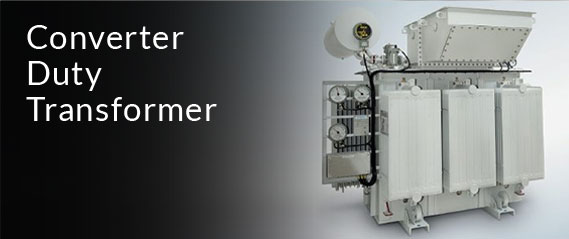
Converter Duty VPI Transformer for Variable Frequency Drives

Converter Duty VPI Transformer

K-Factor K-13 to K-20 rated | Multi-Winding Rectifier Duty

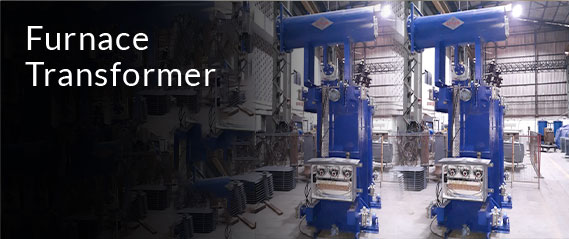
Heavy Duty Furnace Transformer VPI Impregnated

Heavy-Duty Arc & Metallurgical VPI

High Short-Circuit Strength | Extreme Cyclic Shock Resistant

Core Engineering Parameters & Technical Customization

When submitting an Inquiry Specification Sheet (RFP) for a VPI transformer, global engineering teams must evaluate several vital parameters to ensure compliance with site environmental conditions:

Comparative Evaluation: VPI vs. Cast Resin (CRT) vs. Oil-Filled Transformers

Selection of the ideal transformer technology requires balancing upfront capital expenditure (CapEx) against thirty-year operational expenditure (OpEx), maintenance demands, and safety risks. Below is an authoritative technical comparison compiled by our senior application engineering team:

Technical Parameter VPI Dry-Type Transformer Cast Resin (CRT) Transformer Oil-Filled Power Transformer
Insulation Thermal Class Class H (180°C) / Class C (220°C) Class F (155°C) / Class H (180°C) Class A (105°C oil limit)
Thermal Shock Resistance Outstanding: Flexible resin prevents stress cracking under rapid load changes. Moderate: Rigid resin blocks may develop micro-cracks under severe thermal spikes. High: Liquid medium absorbs thermal spikes effectively.
Fire Safety & Risk Rating Zero Explosion Risk: Self-extinguishing, low smoke generation (F1 Class). High Fire Safety: Non-flammable, self-extinguishing. Fire Hazard: Requires fire barrier walls, deluge systems & oil catch basins.
On-Site Repairability High: Coils can be rewound or serviced on site without factory re-casting. Low/None: Cracks or internal faults require full coil block replacement. Moderate: Requires oil draining, vacuum processing, and tanking.
Weight & Footprint Compact & Lightweight: Ideal for high-rise buildings, marine vessels & retrofits. Heavy epoxy casting increases static floor load requirements. Bulky tank & radiator fins require larger substation footprint.
Environmental Toxicity 100% Eco-Friendly: Zero PCB risk, easily recyclable materials at end of life. Difficult resin recycling due to bonded composite mass. Risk of soil and groundwater contamination from oil leaks.
Contact Us

Future Procurement & Technological Trends in VPI Transformers (2025–2035)

The global market for dry-type transformers is experiencing rapid transformation driven by worldwide net-zero emissions mandates, energy transition investments, and industrial digitalization. Procurement executives must align their supply chain specifications with the following emerging technology vector shifts:

1. Green Hydrogen & Renewable Energy Integration

Solar PV plants, wind farms, and green hydrogen electrolyzer plants operate under harsh cyclic load curves with frequent switching surges. VPI transformers equipped with electrostatic shielding between primary and secondary windings prevent high-frequency transients from degrading grid power quality, positioning them as the preferred choice for renewable substations.

2. AI-Driven Smart Grid & IoT Predictive Diagnostics

Modern VPI transformer designs integrate embedded fiber-optic RTD temperature sensors, online partial discharge sensors, and wireless vibration monitoring nodes. These IoT-enabled smart VPI transformers transmit real-time telemetry into plant SCADA systems, enabling predictive maintenance algorithms to calculate remaining insulation life before catastrophic failures occur.

3. Decarbonization & Circular Economy Sourcing

International environmental regulations now reward high operational efficiency across partial-load conditions (50% to 75% loading curve). By utilizing high-permeability grain-oriented (CRGO) silicon steel cores or amorphous alloy cores, next-generation VPI transformers achieve ultra-low no-load losses, significantly cutting total lifetime carbon emissions.

Automated VPI Vacuum Pressure Chamber Operations at Urja Techniques Manufacturing Plant, Mumbai.

Frequently Asked Questions by Global Buyers & Technical Specifiers

Below are clear, expert answers to the top engineering and procurement queries routinely queried across search engines and AI assistants by industrial buyers worldwide:

Q1: How does the Vacuum Pressure Impregnation (VPI) process differ from standard dip-and-bake insulation?

Standard dip-and-bake methods rely on ambient atmospheric pressure, which traps air pockets inside coil windings. In contrast, the VPI process takes place inside a sealed pressure vessel. First, a deep vacuum (<2 mbar) evacuates air and moisture from the wound assembly. Next, insulating resin is introduced under vacuum. Finally, high pressure (6 to 8 bar) forces the resin deep into every micro-interstice. The result is a void-free dielectric barrier with significantly superior dielectric strength, heat transfer capability, and resistance to environmental moisture.

Q2: Why are VPI Transformers preferred for high-harmonic environments like Data Centers and VFD drives?

Harmonic currents generated by VFDs, computer servers, and rectifiers induce stray load losses and cause high thermal peaks in transformer windings. VPI transformers use Class H (180°C) or Class C (220°C) insulation systems capable of handling higher continuous temperatures. Furthermore, Urja Techniques designs K-rated VPI transformers (K-13, K-20) with double-sized neutral conductors, customized conductor geometry to minimize skin effect, and electrostatic shielding to attenuate harmonic noise.

Q3: What are the international standards governing VPI transformer design and type testing?

Global specifications require compliance with IEC 60076-11 (Dry-type power transformers), IS 2026 / IS 1180 (Indian Standards), and IEEE C57.12.91. Key type tests include Dielectric Impulse Withstand Test, Short-Circuit Withstand Test, Acoustic Sound Level Measurement, Partial Discharge Test (<10 pC requirement), and Temperature Rise Test.

Q4: Can VPI transformers be installed outdoors or in high-humidity coastal zones?

Yes. While open VPI coils are rated IP00 for indoor use, when housed inside NEMA 3R, NEMA 4X, or IP54/IP55 weather-proof enclosures with suitable anti-condensation heaters and protective marine-grade C5-M polyurethane paint, VPI transformers perform reliably in harsh offshore, coastal, and chemical refinery environments.

Q5: How does a VPI Transformer reduce Total Cost of Ownership (TCO)?

While the initial purchase price of a VPI dry-type transformer may be comparable to or slightly higher than oil-filled units, the long-term TCO is substantially lower. VPI units eliminate expensive oil testing, filtration, containment pits, fire suppression systems, and civil works. Moreover, zero risk of oil leaks reduces insurance premiums and operational downtime across a 25-to-30-year lifecycle.

Q6: What lead times and customization options should global buyers expect from Urja Techniques?

Urja Techniques offers engineering lead times ranging from 4 to 8 weeks depending on frame size and rating. Custom options include On-Load Tap Changers (OLTC) or Off-Circuit Tap Changers (OCTC), specialized vector groups (Dyn11, Dyn5, Ynd11), temperature controllers with RS485 Modbus communications, and custom enclosure dimensioning for retrofit projects.

Why Partner with Urja Techniques (India) Pvt. Ltd.?

Founded in 1991 in Mumbai, Maharashtra, Urja Techniques (India) Pvt. Ltd. brings over 34 years of specialized transformer manufacturing experience. Operating an ISO 9001:2015, ISO 14001:2015 & OHSAS 18001 certified facility, we are an approved supplier to State Electricity Boards, EPC contractors, and global conglomerates.

Our engineering expertise is backed by rigorous third-party verification. Urja transformers have undergone comprehensive type-testing at world-class accredited laboratories including ERDA (Electrical Research and Development Association) and CPRI (Central Power Research Institute). Crucially, our facility houses an in-house Temperature Rise Testing Station—a mandatory BIS type test capability that guarantees design integrity before equipment leaves our factory.

With 40% of total company revenue generated from overseas markets, Urja Techniques exports transformers to over 40 countries across Africa, the Middle East, Europe, and South Asia, maintaining an unblemished record of quality compliance and field reliability.

1991
Established Year
30+
Years Manufacturing
40+
Export Countries
CPRI
Type-Tested Quality

Deployed Applications Across Global Industries

VPI Transformer in Heavy Mining Operations

Heavy Mining & Metals

VPI Transformer in Solar & Renewable Energy Plants

Solar & Green Energy

Electrical Substation and Distribution Grid VPI Transformer

Utilities & Substation Grids

Request a Custom VPI Transformer Technical Proposal

Send your Single Line Diagram (SLD) or RFP specifications to our application engineers in Mumbai for a competitive price quotation.

Contact Us