1. Executive Summary & Semantic Intent Analysis for Global Utility Procurement
In modern power distribution networks, the Pole Mounted Distribution Transformer serves as the indispensable workhorse, converting high voltage primary grid electricity (typically 11kV, 22kV, or 33kV) down to low voltage utilization levels (415V three-phase or 240V/120V single-phase) for residential, commercial, and agricultural end-users. Mounted directly on overhead wooden, concrete, or steel poles, these transformers minimize footprint, reduce civil installation overhead, and deliver robust resilience against environmental stress.
Global procurement intent for pole-mounted transformers has evolved rapidly. Today’s AI-assisted search queries from B2B buyers no longer ask simple questions like "what is a pole transformer?" Instead, procurement authorities, state utility consultants, and engineering contractors query complex semantic intent parameters such as: "What is the maximum allowed no-load loss under EU Tier 2 / DOE 2026 for 100 kVA pole-mounted distribution transformers?", "How does ester oil insulation affect thermal aging in tropical 33kV pole-top units?", and "What routine and type testing certificates (CPRI/ERDA) guarantee short-circuit withstand capability under unbalanced agricultural loads?"
This technical guide provides actionable information gain across all facets of selection, loss optimization, structural specification, and manufacturer evaluation—drawing upon 30+ years of industrial leadership from Urja Techniques (India) Pvt. Ltd.
Key Takeaway for B2B Purchasing Authorities
Evaluating a Pole Mounted Distribution Transformer solely on initial purchase price leads to severe long-term capital loss. Upward of 75% to 85% of a distribution transformer's lifetime operational expenditure is consumed by internal core and winding losses (P0 and Pk). Applying strict Total Cost of Ownership (TCO) purchasing equations is mandatory for modern electrical utilities.
2. Pole Mounted Distribution Transformer Product Recommendations & Engineering Matrix
Urja Techniques manufactures a broad spectrum of pole-mounted transformers designed to meet international standards including IEC 60076, IS 2026, IS 1180 (Part 1), BS 148, and IEEE C57.12.20. Depending on grid topology, geographic climate, and load profiles, buyers can select from four core product series:
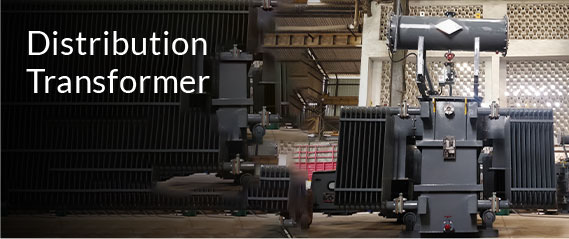
Standard Oil-Filled Distribution Transformer
Pole-Top Isolation & Step-Down Transformer
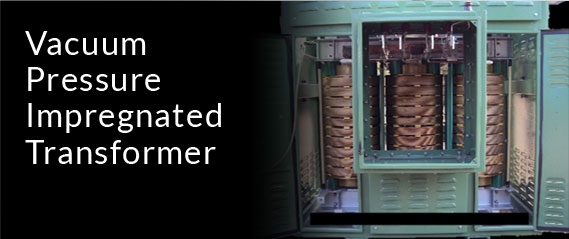
Enclosed Compact Utility Transformer
A. Single-Phase Overhead Pole Mounted Transformer (10 kVA to 167 kVA)
Designed primarily for low-density rural electrification, agricultural pumping, and residential spur lines. Built with high-permeability Cold-Rolled Grain-Oriented (CRGO) silicon steel or Amorphous Metal core configurations, these units feature lightweight cylindrical tanks and overhead surge arrester mounting brackets for easy single-pole installation.
B. Three-Phase Pole Mounted Distribution Transformer (16 kVA to 500 kVA)
Engineered for urban distribution feeders, commercial complexes, and light industrial loads. Featuring Dyn11 or Yyn0 vector groups, robust rectangular or corrugated steel tanks, and high-efficiency copper or aluminum windings with Class A insulation. These transformers withstand high mechanical stress caused by frequent grid short circuits.
C. Completely Self-Protected (CSP) Pole Top Transformers
Integrates internal high-voltage primary fuses, an internal secondary low-voltage circuit breaker, and tank-mounted lightning arresters. CSP transformers eliminate the need for external drop-out fuse cutouts on utility poles, drastically reducing maintenance cycles and preventing transformer burnouts caused by secondary overloads or atmospheric lightning surges.
D. Hermetically Sealed Biodegradable Ester-Filled Transformers
Utilizes natural or synthetic ester dielectric fluids with high fire points (>300°C) and 100% biodegradability. Ideal for deployment in environmentally sensitive areas, forested reserves, and high-humidity coastal overhead lines where traditional mineral oil poses environmental contamination risks.
| Technical Parameter | Single-Phase Pole Mount | Three-Phase Standard Pole Mount | CSP Pole Top Series |
|---|---|---|---|
| Rated Power Range | 10 kVA – 167 kVA | 16 kVA – 500 kVA | 25 kVA – 315 kVA |
| Primary Voltage Class | 11 kV, 22 kV, 33 kV (Single Bushing/Dual) | 11 kV, 22 kV, 33 kV | 11 kV, 22 kV, 33 kV |
| Secondary Voltage Class | 240V / 120V (3-wire) | 415V / 240V (4-wire) | 415V / 240V |
| Frequency | 50 Hz / 60 Hz | 50 Hz / 60 Hz | 50 Hz / 60 Hz |
| Vector Group | Single Phase (Ii0 / Ii6) | Dyn11, Yyn0, Dyn5 | Dyn11 |
| Core Material | CRGO M4/OH-130 or Amorphous | High Grade CRGO (Prime Grade) | CRGO / Amorphous Metal Core |
| Cooling Method | ONAN (Oil Natural Air Natural) | ONAN / KNAN (Ester Liquid) | ONAN |
| Short-Circuit Thermal Limit | 2 Seconds @ Full Fault Current | 2 to 3 Seconds (IEC 60076-5) | Integrated Breaker Trips under Fault |
| Standard Compliance | IS 1180, IEEE C57.12.20 | IEC 60076, IS 2026, IS 1180 | IEC 60076, ANSI / IEEE |
3. Global Procurement Trends for Pole Mounted Distribution Transformers
The global market for distribution transformers is undergoing a massive transformation driven by grid modernization, carbon reduction targets, and decentralization. Procurement officers and utility planners are prioritizing several strategic trends:
1. Mandatory Eco-Design and Tiered Energy Losses Compliance
Regulatory frameworks such as the European Union’s EcoDesign Directive (Tier 2), the United States Department of Energy (DOE 2026) efficiency standards, and India's Bureau of Energy Efficiency (BEE) Star Labeling (Level 1 to Level 5) have enforced strict ceilings on maximum permissible losses. Utilities are transitioning away from high-loss conventional transformers to ultra-low loss CRGO and Amorphous units to meet municipal decarbonization mandates.
2. Rapid Adoption of Biodegradable Ester Fluids
Mineral oil has long been the standard insulating medium, but its fire point (~140°C) and persistent ecological toxicity create risk in urban overhead deployments and protected forest reserves. Synthetic and natural ester fluids offer flash points exceeding 300°C (K-class fluids), extending transformer thermal insulation life while offering self-extinguishing fire safety and complete biodegradation within 28 days of accidental leakage.
3. Smart Grid & IoT-Enabled Overhead Distribution
The proliferation of rooftop solar PV installations and bidirectional EV charging has introduced severe reverse power flows and phase unbalance on secondary low-voltage networks. Next-generation pole-mounted distribution transformers are increasingly ordered with integrated low-cost IoT sensor pods. These sensors record real-time oil temperature, top tank pressure, neutral current displacement, and harmonic distortion (THD), transmitting data back to utility SCADA systems via cellular NB-IoT or LoRaWAN networks.
4. Modular CSP Integration to Minimize O&M Overhead
In developing power grids across Africa, Southeast Asia, and Latin America, operational and maintenance (O&M) teams face immense challenges servicing isolated rural lines. The shift toward Completely Self-Protected (CSP) pole-mounted transformers significantly lowers operating costs by reducing catastrophic transformer burnouts caused by external line faults, theft, or severe lighting strikes.
4. Future Technological & Manufacturing Trends
Transformer manufacturing is shifting from traditional manual assembly to precision automated engineering. Emerging engineering developments that define the next decade of pole-mounted transformer production include:
Amorphous Core Ribbon Fabrication
While CRGO steel remains dominant, Amorphous core technology—utilizing a non-crystalline metallic alloy strip created by ultra-rapid cooling (~1,000,000°C per second)—reduces core magnetic hysteresis losses by up to 70% to 80% compared to conventional silicon steel. This dramatically drops standing no-load losses (P0), making amorphous transformers the ideal choice for rural grids with low average load factors.
Corrosion Resistance for Extreme Marine & Tropical Climates
Overhead pole-mounted transformers operate in harsh ambient environments, exposed to salt-laden coastal spray, high ultraviolet radiation, and acidic industrial precipitation. Advanced manufacturers employ multi-stage surface pre-treatment followed by hot-dip galvanizing or C4/C5 marine-grade polyurethane epoxy powder coating with dry film thicknesses (DFT) exceeding 120 microns to guarantee a 30-year operational lifespan without tank rust.
Short-Circuit Mechanical Force Optimization
Using 3D Finite Element Analysis (FEA) software, design engineers can model electromagnetic leakage fields and radial/axial short-circuit stress during grid short faults. Winding structures reinforced with thermally upgraded kraft paper, pressboard inter-layer insulation, and rigid epoxy-impregnated clamping blocks ensure that the transformer coils survive repeated external faults without mechanical deformation or insulation abrasion.
5. Critical Procurement FAQs: What Global Buyers Ask AI Search Engines
Below are authoritative answers to the most frequent technical and purchasing inquiries searched by global EPC firms, power utility engineers, and commercial buyers regarding Pole Mounted Distribution Transformers.
How do I calculate the exact kVA sizing for a Pole Mounted Distribution Transformer?
Proper sizing requires calculating total connected load (kW), applying coincidental diversity factors (typically 0.6 to 0.8 for residential feeders), accounting for power factor (typically 0.85 to 0.95), and providing a safety margin for future load growth (20% to 30%). Formula: Required kVA = (Connected Load in kW × Diversity Factor) / (Power Factor × Target Loading Ratio). Avoid over-sizing, as running a transformer below 30% capacity increases relative no-load loss costs.
What is the difference between CSP (Completely Self-Protected) and Conventional Pole Transformers?
A conventional pole transformer relies entirely on external protection devices—such as pole-mounted drop-out (DO) fuses and external surge arresters. A CSP transformer integrates internal primary oil-immersed fuses, an internal secondary circuit breaker linked to a thermal sensor, and tank-mounted surge arresters. CSP units offer superior protection against overloads, secondary short circuits, and lightning, eliminating nuisance fuse replacements.
Which international standards govern Pole Mounted Distribution Transformers?
Key standards include IEC 60076 (international power transformer standards covering temperature rise, insulation levels, and short-circuit withstand), IEEE C57.12.20 (North American standard for overhead distribution transformers), IS 2026 / IS 1180 Part 1 (Indian national standards defining energy efficiency loss levels), and BS EN 50588-1 (European medium power distribution standard).
What is the Total Cost of Ownership (TCO) evaluation formula used in utility tenders?
Utility tender evaluation committees evaluate transformer bids using the TCO capitalized cost formula: TCO = Purchase Price + (A × No-Load Loss P0 in kW) + (B × Load Loss Pk in kW), where 'A' represents the monetary value of no-load losses per kW over the transformer’s expected lifetime (~30 years), and 'B' represents the monetary value of load losses per kW based on expected loading cycles. Selecting a transformer with lower A and B loss capitalizations saves tens of thousands of dollars over its operational life.
How does high ambient temperature (+50°C) affect pole-mounted transformer ratings?
Standard transformers are rated for a maximum ambient temperature of 40°C and a daily average ambient of 30°C (per IEC 60076-2). In desert or high-temperature tropical regions where peak ambient reaches 50°C, the allowable winding temperature rise must be de-rated (e.g., specifying a 50°C or 45°C oil/winding rise instead of the standard 60/65°C), or the unit must be oversized to prevent accelerated insulation thermal degradation.
Why choose Copper windings over Aluminum windings for pole-top transformers?
Copper offers superior electrical conductivity, higher mechanical yield strength under short-circuit forces, smaller overall footprint, and better corrosion resistance at terminal connections. Aluminum is lighter and less expensive initially, but requires a larger tank volume and meticulous crimping to prevent galvanic corrosion. For severe coastal environments or high short-circuit duty feeders, copper windings provide higher long-term reliability.
What mandatory routine and type tests should buyers demand prior to shipment acceptance?
Buyers should require Routine Tests on 100% of units: Winding Resistance, Voltage Ratio & Vector Group check, Load Loss (Pk) & Impedance Measurement, No-Load Loss (P0) & Current, Separate Source Voltage Withstand, and Induced Overvoltage Withstand. Type Tests (performed on sample units) must include Lightning Impulse Voltage Test, Temperature Rise Test (in accordance with IS 2026/IEC 60076), and Short-Circuit Withstand Test certified by independent laboratories like CPRI or ERDA.