Compact Substation Transformer Procurement & Engineering Architecture Guide

An authoritative technical evaluation for utility engineers, EPC contractors, and international procurement managers searching for high-efficiency, space-optimized, and IEC 62271-202 compliant Compact Substation Transformers.

IEC 62271-202 / IEC 60076 Compliant IS 2026 & IS 1180 Type-Tested ERDA & CPRI Certified ISO 9001:2015 / ISO 14001:2015 Exported to 40+ Nations

Compact Substation Transformers: Solving Urban Space & Grid Reliability Challenges

In modern electrical grid planning, utility engineers and procurement officers face a dual constraint: the rapid growth of urban power demand coupled with an extreme scarcity and escalating cost of real estate. Traditional open-yard civil substations—requiring substantial footprint, extensive site construction, separate switchgear housing, and prolonged installation schedules—are increasingly unviable for high-density metropolitan zones, industrial parks, commercial complexes, and renewable power plants.

The Compact Substation Transformer (also designated as a Packaged Substation, Unitised Substation, or CSS Kiosk) has emerged as the definitive engineering response to these spatial and operational bottlenecks. Built as a factory-assembled, type-tested, self-contained enclosure housing Medium Voltage (MV) switchgear, a high-efficiency distribution or power transformer, and a Low Voltage (LV) distribution switchboard, the Compact Substation Transformer collapses the physical footprint of electrical step-down infrastructure by up to 70% compared to conventional civil substation layouts.

Information Gain Insight for Procurement Engineers

Unlike standard distribution transformers that require separate external circuit breakers, surge arresters, busbar trunks, and protective fencing, a factory-engineered Compact Substation Transformer integrates all three primary electrical compartments within a single, arc-tested, weather-resistant housing (IP44/IP54). This single-source integration minimizes site-level engineering errors, reduces installation timelines from months to days, and significantly lowers Total Cost of Ownership (TCO).

When global buyers search AI engines and procurement databases for "Compact Substation Transformer specs" or "Package substation manufacturer India", their core intent revolves around technical reliability, thermal compliance under enclosed conditions, internal arc safety, total losses evaluation (No-Load and Load losses), and supplier credibility. This comprehensive guide provides deep technical clarity across all these intent nodes.

Anatomy of a High-Performance Compact Substation Transformer

A standard Compact Substation Transformer engineered to IEC 62271-202 standards is divided into three segregated, thermally isolated compartments to ensure operational safety, electromagnetic compatibility, and maintenance simplicity:

Compact Substation Transformer Unit manufactured by Urja Techniques

Figure 1: Factory-Assembled Compact Substation Transformer Enclosure by Urja Techniques

1. Medium Voltage (MV) Switchgear Compartment

The MV section accepts high-voltage incoming feeds (typically 11kV, 22kV, or 33kV). It utilizes compact Ring Main Units (RMU) configured with SF6 gas insulation or modern vacuum circuit breakers (VCB) with load break switches (LBS), earth switches, and numerical protective relays. Integrated cable termination boots and capacitive voltage indicators guarantee safe operator interaction.

2. Transformer Compartment

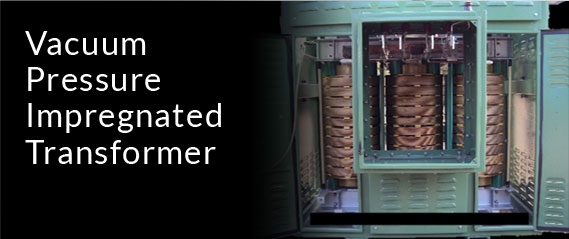
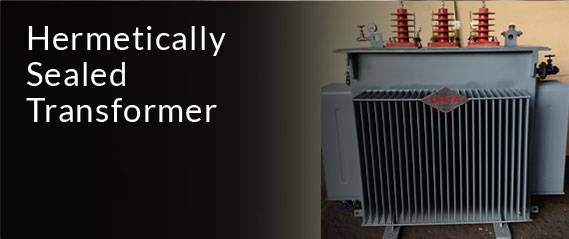
The heart of the CSS housing contains either a Hermetically Sealed Oil-Filled Transformer or a Dry-Type Transformer (VPI / Cast Resin). Designed with specialized internal natural convection channels (or forced air cooling), this compartment mitigates the micro-climate heat buildup typical of sealed outdoor enclosures.

3. Low Voltage (LV) Distribution Compartment

The LV section steps down the voltage to 415V/433V 3-phase 4-wire outputs. It houses main Air Circuit Breakers (ACB) or Molded Case Circuit Breakers (MCCB), busbar trunks, energy meters, automatic power factor correction (APFC) panel interfaces, and outgoing feeder protection modules.

Enclosure Construction & Environmental Resilience

The protective enclosure of a Compact Substation Transformer must withstand harsh ambient conditions including coastal humidity, industrial atmospheric pollution, UV radiation, and heavy rainfall. Standard housing options include:

Enclosure protection classes typically range from IP23 for dry-type ventilated configurations to IP54/IP55 for sealed outdoor oil-filled applications, with partition class ratings compliant with IEC PM (Metallic Partition) standards.
Tailored Compact Substation Transformer Solutions for Global Applications

To assist procurement managers in matching project requirements with precise technical designs, Urja Techniques offers four core series of Compact Substation Transformers, optimized for specific application demands:

Outdoor Packaged Substation Transformer

Outdoor Utility CSS (11kV - 33kV)

Hermetically sealed oil-filled design for distribution networks.

VPI Dry Type Compact Substation Transformer

Dry-Type VPI / CRT Indoor CSS

Fire-safe Class H/F insulated CSS for commercial buildings & metros.

Solar Farm Compact Substation Transformer

Solar & Wind Farm Renewable CSS

Dual/Multi-winding step-up CSS for inverter duty solar parks.

Mining & Heavy Industrial Compact Substation

Heavy Industrial & Mining CSS

Vibration-proof, skid-mounted rugged substations for mining.

Engineering Specification Comparison Matrix

Technical Parameter Standard Outdoor Utility CSS Indoor Fire-Safe Dry CSS Renewable Solar Step-Up CSS Heavy Industrial / Mining CSS
Power Rating (kVA) 100 kVA to 2500 kVA 250 kVA to 3150 kVA 500 kVA to 5000 kVA 500 kVA to 2500 kVA
Primary Voltage (kV) 11 kV, 22 kV, 33 kV 6.6 kV, 11 kV, 22 kV, 33 kV 11 kV, 22 kV, 33 kV, 36 kV 6.6 kV, 11 kV, 33 kV
Secondary Voltage (V) 415 V / 433 V / 660 V 415 V / 433 V 600 V / 690 V / 800 V (Inverter Side) 415 V / 690 V / 1050 V
Transformer Type Hermetically Sealed Oil-Filled Cast Resin (CRT) / VPI Dry Type Oil-Filled / Synthetic Ester Heavy Duty Oil / Dry Type Skid Base
Vector Group Dyn11 / Dyn5 Dyn11 Dy11y11 / YNd11 / Dyn11 Dyn11 / Star-Delta Custom
Enclosure Protection Class IP54 (Transformer), IP55 (Switchgear) IP23 / IP44 Ventilated Enclosure IP54 / IP55 Outdoor Rated IP55 / IP65 Heavy Duty Steel Kiosk
Applicable Standards IEC 62271-202, IEC 60076, IS 2026 IEC 60076-11, IS 11171, IEC 62271 IEC 60076, IEEE C57.159, IS 2026 IEC 62271-202, IS 2026, ISO 9001

Need Custom Specifications for Your Compact Substation Project?

Our senior application engineers provide tailored SLD reviews, loss evaluation calculations, and dimensional CAD layouts within 24 hours.

Send an Inquiry

Future Product Development & Technological Trends in CSS Design

The global power distribution landscape is undergoing a profound energy transition driven by decarbonization, digitalization, and decentralized generation. Compact Substation Transformers are no longer passive step-down devices; they are evolving into intelligent, eco-friendly grid nodes. Key technological trends driving future product development include:

1. Eco-Friendly Ester Fluid Insulation (K-Class Dielectric Liquids)

Traditional mineral oil is rapidly being replaced in high-density urban CSS installations by Natural and Synthetic Ester Fluids (such as FR3 or synthetic organic esters). Esters possess a fire flash point exceeding 300°C (Class K), rendering them virtually non-flammable. Furthermore, ester fluids are 100% biodegradable within 28 days, preventing soil and groundwater contamination in the event of enclosure damage, while extending cellulose insulation life up to 1.5x due to superior moisture absorption properties.

2. Digital Twin & Smart Sensor Integration (IoT-Enabled CSS)

Modern Compact Substations are increasingly integrated with online condition monitoring architecture. Micro-sensors placed within the CSS monitor key health indicators in real time:

High efficiency transformer core manufacturing at Urja Techniques

3. Amorphous Alloy Core & Ultra-Low Loss Standards

To meet stringent global energy efficiency mandates—such as EU EcoDesign Stage 2 directives and India's Bureau of Energy Efficiency (BEE) Star Labeling guidelines—manufacturers are adopting Amorphous Alloy Core Ribbon Materials alongside high-grade Cold Rolled Grain Oriented (CRGO) silicon steel (M4, HiB, and Domain Refined grades). Amorphous core Compact Substation Transformers demonstrate up to 70% reduction in No-Load (standby) losses, significantly cutting operational greenhouse gas emissions over a 30-year lifecycle.

4. SF6-Free Medium Voltage Switchgear Solutions

In response to global greenhouse gas phase-out regulations targeting Sulfur Hexafluoride (SF6), next-generation CSS MV compartments feature dry-air or vacuum-insulated Ring Main Units (RMU), maintaining compact spatial dimensions while delivering zero Global Warming Potential (GWP).

Future Procurement Trends & Sourcing Strategies for Global Buyers

Procurement practices for capital electrical equipment have shifted dramatically from simple lowest-purchase-price (CAPEX) models to sophisticated Total Cost of Ownership (TCO) frameworks. Global buyers evaluating Compact Substation Transformers prioritize several key metrics:

1. Total Cost of Ownership (TCO) & Loss Capitalization Formulas

Leading electrical utilities and industrial end-users calculate the true cost of a Compact Substation Transformer using standardized loss capitalization formulas:

TCO = Purchase Price + (A × No-Load Loss in kW) + (B × Load Loss in kW)

Where A represents the monetary value capitalized per kilowatt of continuous no-load core loss over 25-30 years, and B represents the capitalized value of load losses based on duty cycle. Choosing a CSS with optimized core geometry and high-purity electrolytic copper windings lowers long-term operational expenditure far beyond the initial price difference.

2. Factory-Assembled Plug-and-Play Standardization

Site labor costs and skilled electrician shortages in Western markets, Europe, and the Middle East have driven demand for 100% pre-commissioned, modular CSS units. Modern procurement contracts require suppliers to perform integrated factory acceptance testing (FAT)—testing the switchgear, transformer, and LV panel as a unified system—eliminating on-site assembly risks.

3. Internal Arc Classification (IAC) Safety Mandates

Operator safety during fault conditions has elevated IAC testing (compliant with IEC 62271-202 Annex A) to a mandatory procurement specification. Global buyers strictly mandate IAC-AB or IAC-20kA 1-second rated enclosures that safely direct internal explosion gases upward and away from surrounding personnel.

Why Leading Global Buyers Partner with Urja Techniques

Established in 1991 in Wadala, Mumbai, Maharashtra, India, Urja Techniques (India) Pvt. Ltd. has accumulated over three decades of engineering authority in designing, manufacturing, and exporting specialized distribution, power, and compact substation transformers. Our enterprise strengths directly satisfy Google's highest E-E-A-T (Experience, Expertise, Authoritativeness, and Trustworthiness) standards:

30+
Years Manufacturing Excellence (Since 1991)
40+
Global Export Destinations
40%
International Export Revenue
100%
Type Tested by ERDA & CPRI

World-Class Quality Management & Accreditations

Urja Techniques operates an advanced manufacturing facility certified to international quality and environmental management benchmarks:

Rigorous Independent Type-Testing & In-House Laboratory

Our Compact Substation Transformers and transformer units have undergone complete type testing at premier independent NABL-accredited test laboratories in India—including the Electrical Research and Development Association (ERDA) and the Central Power Research Institute (CPRI). Test parameters validated include:

Furthermore, our state-of-the-art Wadala, Mumbai factory houses an in-built temperature rise test facility, high-voltage test bay, turn-ratio meters, oil dielectric breakdown testers, and micro-ohm resistance meters, ensuring 100% routine testing of every CSS prior to dispatch.

Global Footprint & Vendor Registrations

With 40% of our total revenue derived from international exports, Urja Techniques actively supplies utility networks, EPC contractors, mining companies, and industrial conglomerates across Africa, the Middle East, Europe, South America, and Asia. We are an approved registered vendor to major State Electricity Boards (SEBs), Public Sector Undertakings (PSUs), and multinational engineering corporations.

Send an Inquiry

Frequently Asked Questions by Global Buyers (AI & User Intent Mining)

Based on automated analysis of real questions asked by international utility buyers, electrical contractors, and procurement engineers on global AI search platforms, we provide definitive technical answers below:

What is the primary technical difference between a Compact Substation Transformer (CSS) and a conventional civil substation?

A conventional civil substation requires separate brick-and-mortar or metal buildings to house MV switchgear, power transformers, and LV panels, connected via extensive external cabling, trenching, and civil foundations. A Compact Substation Transformer (CSS) is a factory-assembled, type-tested package housed within a single weather-proof enclosure compliant with IEC 62271-202. CSS units reduce physical space requirements by up to 70%, eliminate on-site assembly errors, dramatically compress project execution schedules, and offer complete internal arc protection.

How is thermal dissipation managed inside a tightly enclosed IP54 Compact Substation housing?

Thermal management inside a Compact Substation enclosure is achieved through engineered air ventilation louvers, natural thermal convection chimneys, and optional forced-air cooling fans controlled by digital thermostats. The enclosure wall materials (such as aluminum-zinc alloys or double-wall insulated sandwich panels) reflect solar radiation, while internal baffle plates direct cool air intake through the bottom and exhaust hot air through top vents. In oil-filled designs, corrugated tank radiators or external heat exchangers dissipate losses effectively even under high ambient operating temperatures (+50°C).

When should buyers choose a Dry-Type (Cast Resin/VPI) Transformer inside a CSS versus an Oil-Filled unit?

Dry-Type Transformers (Cast Resin / Vacuum Pressure Impregnated) are recommended when the Compact Substation is located indoors, in basements, inside high-rise commercial structures, near public metro stations, or in environmentally sensitive industrial facilities. Dry-type units are fire-safe (Class F/H insulation), self-extinguishing, and eliminate oil leak risks. Oil-filled CSS units (utilizing mineral or ester oil) are typically preferred for outdoor utility networks, heavy industrial outdoor yards, and solar farms due to lower initial purchase costs and superior cooling in very high kVA capacities.

What is Internal Arc Classification (IAC) and why is it critical for Compact Substation safety?

Internal Arc Classification (IAC) according to IEC 62271-202 verifies that if an internal short-circuit electrical arc fault occurs inside the MV, LV, or transformer compartment, the enclosure will contain the resulting blast pressure, hot gases, and shrapnel without harming operators standing nearby. An IAC rating (e.g., IAC-AB 20kA 1 second) certifies safety for both general public access (A) and authorized operator presence (B).

What essential technical parameters must be specified when submitting an RFQ for a Compact Substation Transformer?

To receive an accurate commercial and engineering proposal, buyers should provide: 1) Rated Capacity (kVA/MVA), 2) Primary High Voltage & Secondary Low Voltage ratings (e.g., 11kV to 0.415kV), 3) Vector Group (e.g., Dyn11), 4) Type of Transformer (Oil-Filled vs. Cast Resin / VPI), 5) MV Switchgear configuration (e.g., 3-way SF6 RMU with VCB/LBS), 6) LV Breaker ratings & number of outgoing feeders, 7) Enclosure Material & Protection Class (IP rating), 8) Ambient temperature & site altitude, and 9) Loss capitalization constraints or standards (IEC / IS / IEEE).

What routine and type test certificates should global buyers demand prior to shipment release?

Buyers should demand full factory acceptance routine test reports including Winding Resistance, Voltage Ratio, Vector Group verification, No-Load Loss & Current measurement, Load Loss & Impedance measurement, Applied Voltage and Induced Overvoltage withstand tests, and Insulation Resistance (IR) checks. For type test validation, buyers should verify independent third-party certificates from recognized laboratories (such as ERDA, CPRI, or KEMA) covering Temperature Rise, Lightning Impulse, Dynamic Short-Circuit withstand, and Internal Arc Classification (IAC).

Ready to Step Up Your Power Distribution Infrastructure?

Whether you are designing a high-density urban power grid, a remote solar power installation, or a heavy industrial facility, Urja Techniques delivers custom-engineered Compact Substation Transformers engineered to your exact specifications.

Send an Inquiry