Expert articles, design standards, and technical guides on VPI, Cast Resin, Power, and Distribution Transformers.
Learn how our type-tested transformers deliver high efficiency and safety across industrial grid networks.
Best practices for selection, installation, and operation of fire-safe, maintenance-free transformers.
Electricity networks are becoming denser, more digital, and less forgiving of equipment failures. The IEA’s Electricity 2024 report forecasts average global electricity-demand growth of 3.2% annually from 2024 to 2026. That growth increases pressure on substations serving factories, hospitals, data centers, housing, and renewable-energy projects.
A Compact Substation Transformer can save space and simplify installation. However, compact dimensions do not guarantee dependable performance. They can also reduce airflow, maintenance access, and future expansion space. Small details matter. A crowded cabinet may look efficient but operate hotter than expected. The U.S. Department of Energy’s transformer efficiency rulemaking highlights the importance of reducing transformer losses throughout service life. Therefore, purchasing decisions should examine more than rated capacity or initial price. Cooling method, impedance, temperature rise, insulation level, enclosure protection, acoustic performance, and short-circuit strength deserve equal attention. IEC 60076 provides a widely recognized technical framework for power-transformer design and testing, but local grid codes still require careful review. Field experience suggests that installation conditions often expose weaknesses missed during factory evaluation. That is an uncomfortable lesson. A specification can be technically correct yet poorly matched to the site. These ten practical tips will help engineers, contractors, and facility owners compare suppliers, verify performance data, assess lifecycle costs, and choose a Compact Substation Transformer that remains safe, serviceable, and adaptable under real operating conditions.
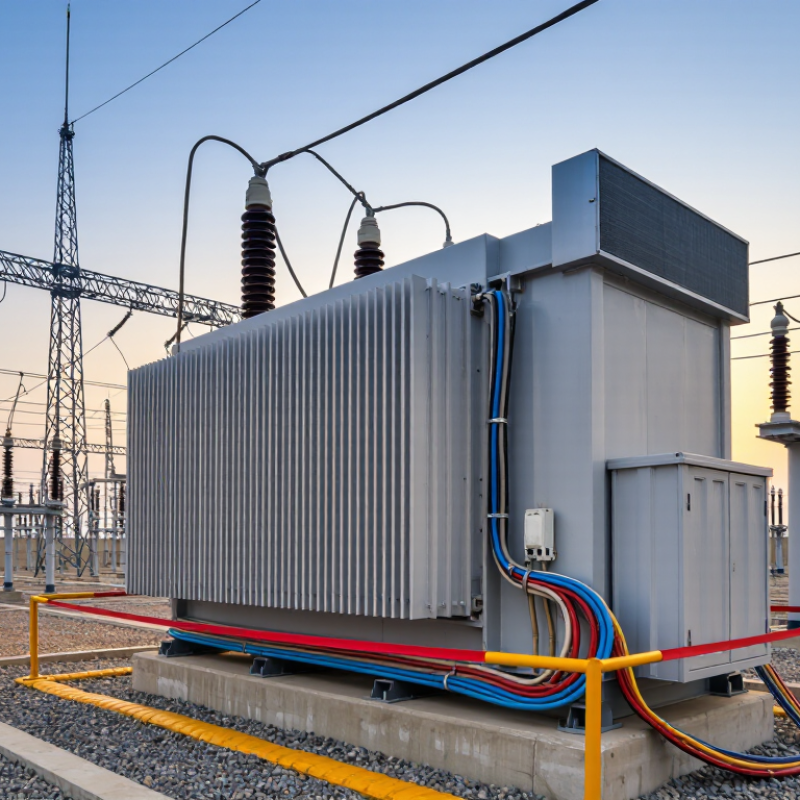
Before choosing a compact substation transformer, define the real power demand at the installation site. List motors, lighting, heating, charging equipment, and control systems separately. Record each load’s rated power, operating hours, and starting behavior. Nameplate values alone can mislead.
Calculate the connected load in kW, then apply realistic demand and diversity factors. Convert the result to kVA using the expected power factor. Large motors may draw several times their running current during startup. That surge can cause voltage dips and nuisance trips. Measure existing peak demand with a power-quality analyzer when possible. Field data is more reliable than assumptions.
Voltage requirements need equal attention. Confirm the utility’s primary voltage, frequency, phase arrangement, and permitted variation. Verify the required secondary voltage at the farthest panel, not only at the transformer terminals. Cable length and load current can create a noticeable drop. Check grounding, insulation levels, and available fault current with a qualified engineer. A future expansion margin of 15 to 25 percent is often practical, but it should match the site plan.
Do not oversize blindly. An oversized transformer may operate inefficiently at light loads. I have seen early estimates fail because seasonal equipment was ignored. Recheck the calculation during hot and cold operating periods. Leave written assumptions for every load estimate, even uncertain ones. That record makes later corrections easier and safer.
Compare common transformer ratings with the estimated three-phase full-load current on a 400 V secondary system. Select the rating after considering measured peak demand, starting currents, diversity, cooling conditions, and future expansion.
Full-load current is calculated as I = S ÷ (√3 × V). The values shown use a 400 V secondary voltage and represent typical standardized transformer capacity steps. Primary voltage must be matched to the local utility network, while the secondary voltage must match the site's distribution equipment and connected loads.
A compact substation transformer should fit the site, not merely the equipment schedule. Measure the available footprint, ceiling height, access route, and maintenance clearance before selecting a unit. Measure twice. A transformer may fit on paper but fail when a service door opens or a lifting vehicle reaches the foundation.
Check the complete layout, including cable trenches, ventilation openings, fire separation, drainage, earthing points, and nearby structures. Cable bends often need more room than expected. Keep high-voltage and low-voltage routes practical, with safe separation and clear identification. Leave space around radiators and inspection panels. Poor airflow can raise operating temperatures and shorten service life. Local electrical codes and fire requirements should guide the final arrangement, while a qualified engineer verifies loading, protection, and fault levels.
Installation conditions deserve equal attention. Inspect soil strength, foundation level, flood risk, dust, salt exposure, and indoor humidity. A small site may require modular delivery, removable wall panels, or staged lifting. Confirm the transformer’s weight against the lifting plan and floor capacity. I have seen layouts that ignored turning space for delivery equipment. The drawing looked efficient. The installation became expensive. Space lies. Recheck every assumption with measurements, photographs, and a site walkdown before approving the design.
Efficiency should guide the comparison, not only the purchase price. The U.S. Department of Energy’s 2024 technical analysis projects about 3.6 quadrillion Btu in energy savings over 30 years from stronger distribution-transformer efficiency standards. For a compact substation, compare no-load and load losses separately. No-load losses continue day and night. Load losses rise sharply when demand increases. Ask for tested loss data, not rounded catalogue estimates.
Cooling affects usable capacity, footprint, and service life. An ONAN design can suit moderate loads with simpler maintenance. Forced-air cooling may provide extra capacity, but fans add noise, controls, and failure points. IEC 60076 loading guidance links insulation ageing to temperature, so measure hot-spot performance during peak operation. Small enclosures can trap heat. That detail is easy to miss.
Insulation choices deserve a site-specific review. Mineral oil is familiar and widely supported, while ester fluids can offer a higher fire-safety margin and improved biodegradability. Dry-type transformers avoid liquid handling, but their ventilation and enclosure requirements may increase space needs. The International Energy Agency’s 2023 grid report highlights growing pressure for resilient, efficient network investment, making lifecycle performance increasingly important. My practical mistake was comparing efficiency before checking ambient temperature and ventilation. The order should be reversed. Performance claims still need independent verification.
Choosing a compact substation transformer starts with safety, not cabinet size. Check insulation levels, temperature alarms, pressure relief devices, and accessible emergency isolation. A reliable unit should include clear interlocks that prevent unsafe switching. Grounding points must be visible, strong, and suitable for the local fault current. Small details matter.
Confirm compliance with IEC 60076 for transformers and IEC 62271-202 for prefabricated substations, where applicable. Local electrical codes still control the final installation. Request test records for dielectric strength, partial discharge, temperature rise, and short-circuit performance. Do not accept a certificate without checking its scope and date. I have seen paperwork look complete while missing site-specific requirements.
Environmental protection needs equal attention. Inspect the enclosure rating, corrosion resistance, drainage, noise control, and resistance to dust or salt spray. Oil-filled designs need spill containment and fire separation, especially near buildings or drinking-water areas. Biodegradable insulating fluids may reduce environmental risk, but their fire behavior and maintenance requirements need verification. Consider ventilation in hot climates. Check winter performance in cold regions. A quiet transformer can still overheat if airflow is restricted. This is easy to miss. Review maintenance access before delivery, not after installation. No checklist catches every site mistake, so let an experienced engineer compare the design with actual ground conditions.
| No. | Selection Tip | Key Dimension or Check | Practical Requirement or Reference Value | Relevant Standard or Test | Why It Matters |
|---|---|---|---|---|---|
| 1 | Confirm the electrical rating | Rated power, primary voltage, secondary voltage, frequency, and phase configuration | Select a transformer whose continuous rated power meets the calculated maximum demand, with additional capacity for expected load growth. Common distribution ratings include 50–2,500 kVA, depending on the installation. | IEC 60076 series; IEEE C57.12.00 | Prevents overheating, nuisance tripping, voltage drop, and premature insulation aging. |
| 2 | Check enclosure protection | Ingress protection against dust, water, and accidental contact | For outdoor compact substations, verify the specified IP rating. IP54 provides dust protection and protection against water splashes; higher ratings may be required for severe exposure or direct water jets. | IEC 60529; IEC 62271-202 | Reduces the risk of moisture ingress, contamination, corrosion, and electrical faults. |
| 3 | Evaluate fire safety | Transformer insulation medium, fire point, and fire containment | Use a dry-type transformer where indoor fire risk is critical, or specify a suitable high-fire-point insulating fluid for applicable outdoor installations. Provide fire barriers and oil containment when required by local regulations. | IEC 60076-11 for dry-type transformers; IEC 60076-14 for liquid-immersed transformers | Limits fire spread and protects people, buildings, and adjacent equipment. |
| 4 | Verify short-circuit withstand | Thermal and mechanical withstand during fault conditions | Confirm the transformer short-circuit withstand rating matches the available fault current and the protection-clearing time. The assembly should also have a documented short-circuit rating suitable for the connected switchgear. | IEC 60076-5; IEC 62271-202 | Helps prevent winding deformation, enclosure damage, and catastrophic failure during faults. |
| 5 | Review insulation coordination | Lightning impulse withstand, power-frequency withstand, and surge protection | Match the insulation level to the system voltage and installation altitude. Install properly coordinated surge arresters on the medium-voltage side where lightning or switching surges are possible. | IEC 60076-3; IEC 60099-4 | Protects insulation from transient overvoltage and improves service continuity. |
| 6 | Check temperature management | Cooling method, ambient temperature, ventilation, and temperature monitoring | Verify the specified ambient temperature and altitude. Provide unobstructed ventilation, temperature sensors, and alarms or shutdown functions where required. Forced cooling should be considered only when the load profile justifies it. | IEC 60076-1; IEC 60076-11 | Controls hot-spot temperature and extends insulation life. |
| 7 | Compare energy efficiency | No-load loss, load loss, impedance, and total cost of ownership | Compare guaranteed losses at the specified load and temperature rather than relying only on purchase price. Select the applicable regional minimum-efficiency class or loss limits and account for 24-hour energized operation. | IEC 60076-20; applicable national energy-efficiency regulations | Lower losses reduce operating cost, heat generation, and lifetime emissions. |
| 8 | Assess noise performance | Sound pressure or sound power level, installation distance, and vibration isolation | Request a guaranteed sound level measured under defined test conditions. For residential or commercial areas, confirm compliance with local noise limits and consider anti-vibration pads or a low-noise enclosure. | IEC 60076-10; local environmental noise regulations | Reduces nuisance noise and vibration transmitted to nearby buildings. |
| 9 | Specify environmental protection | Corrosion resistance, pollution level, UV exposure, humidity, and spill control | Select enclosure materials and coatings suitable for the site atmosphere. Consider coastal salt, industrial pollution, condensation, and ultraviolet exposure. For liquid-filled units, provide a sealed tank or an appropriately sized containment system. | IEC 62271-1; IEC 62271-202; IEC 60076 series | Improves durability and prevents soil or water contamination from insulating fluid leaks. |
| 10 | Confirm maintainability and monitoring | Access clearance, interlocks, earthing, condition monitoring, and spare parts | Provide safe access to inspection points, visible earthing connections, mechanical and electrical interlocks, and clear switching positions. Consider temperature, humidity, partial-discharge, or dissolved-gas monitoring according to transformer type and criticality. | IEC 62271-200; IEC 62271-202; IEC 60076 series | Supports safe operation, faster troubleshooting, and predictable maintenance costs. |
Note: Final ratings, protection settings, enclosure requirements, and environmental provisions must be verified against the site study, local electrical code, utility requirements, and the applicable edition of each standard.
Tip 1: Map the load profile before comparing prices. Tip 2: Check enclosure access around cable terminations. Tip 3: Prefer clear inspection points for oil, temperature, and protection devices.
The U.S. Department of Energy’s 2024 distribution transformer rule links higher efficiency with major lifetime energy savings. However, efficiency is not the whole bill.
Tip 4: Calculate losses across the expected operating profile, not only at rated load. Tip 5: Include oil testing, gasket replacement, cooling-fan service, transport, and disposal costs. Small omissions become expensive.
Tip 6: Ask for a maintenance schedule with labor hours and spare-part availability. Tip 7: Require documented factory tests, temperature-rise results, and routine test certificates.
IEC 60076 provides the key testing framework for power transformers.
Tip 8: Examine the supplier’s response process, including emergency contact coverage and repair capacity. The U.S. Department of Energy’s 2024 transformer supply-chain assessment reported lead times stretching toward 12–30 months for some transformer categories.
Supplier support is therefore an operational safeguard, not a sales extra. Tip 9: Request realistic delivery dates in writing. Tip 10: Compare warranty exclusions carefully.
A low purchase price can look brilliant. It may not remain brilliant.
I would also challenge the first lifecycle model, because actual load growth, dust, heat, and delayed inspections can change the result.
Ask for references from installations with similar humidity, fault levels, and access limitations.
The best compact unit is serviceable, documented, and supported after energization.
List motors, lighting, heating, charging equipment, and controls separately. Record rated power, operating hours, and starting behavior. Add the connected load in kilowatts. Apply realistic demand and diversity factors. Convert the result to kVA using the expected power factor. Nameplate data can mislead. Measure peak demand when possible.
Large motors may draw several times their running current during startup. This surge can create voltage dips and nuisance trips. Check starting methods and simultaneous motor operation. A short event still matters. I once trusted running current alone. That estimate was weak.
Confirm the primary voltage, frequency, phase arrangement, and permitted variation. Verify the required secondary voltage at the farthest panel. Cable length and current can create noticeable voltage drop. Also review grounding, insulation levels, and available fault current with a qualified engineer.
A 15 to 25 percent expansion margin is often practical. Match it to the actual site plan. Do not oversize blindly. An oversized transformer can operate inefficiently at light loads. Seasonal equipment may change the result. Recheck hot and cold operating periods.
Compare no-load and load losses separately. No-load losses continue day and night. Load losses increase sharply as demand rises. Request tested loss data instead of rounded estimates. Calculate losses across the expected operating profile. The lowest purchase price may not be lowest overall.
Simpler cooling may suit moderate loads. Forced-air cooling can add capacity, noise, controls, and failure points. Small enclosures may trap heat. Check ambient temperature and ventilation before comparing performance claims. Review hot-spot temperature during peak operation. The order matters.
Provide practical access around cable terminations. Include clear inspection points for temperature, fluid condition, and protection devices. Estimate oil testing, gasket replacement, fan service, transport, and disposal costs. Ask for labor hours and spare-part availability. Small omissions become expensive.
Request factory test records, temperature-rise results, and routine test certificates. Ask for a written maintenance schedule and realistic delivery date. Review warranty exclusions carefully. Confirm emergency contact coverage and repair capacity. References from similar climates are useful. Support after energization matters.
Selecting the right Compact Substation Transformer begins with clearly defining the facility’s power demand, operating voltage, expected load growth, and required capacity. This information helps ensure reliable performance without unnecessary investment. Buyers should also examine the installation site, including available space, access for transportation, ventilation, foundation conditions, and the layout of connected equipment.
Efficiency, cooling methods, and insulation options should be compared according to the operating environment and performance goals. Important safety considerations include protection against overloads, short circuits, moisture, dust, and overheating, as well as compliance with applicable technical standards. Finally, evaluate routine maintenance requirements, total ownership costs, replacement-part availability, warranty coverage, and the supplier’s technical support. A careful assessment of these factors will help organizations choose a Compact Substation Transformer that offers dependable operation, efficient energy use, practical installation, and long-term value.