Engineering Insights

Transformer Technical Blog & Knowledge Hub

Expert articles, design standards, and technical guides on VPI, Cast Resin, Power, and Distribution Transformers.

IEC 60076 | IS 2026

Standard Compliance & Performance

Learn how our type-tested transformers deliver high efficiency and safety across industrial grid networks.

Dry Type Technologies

VPI & Cast Resin Dry Transformers

Best practices for selection, installation, and operation of fire-safe, maintenance-free transformers.

0%

Choosing a Cast Resin Dry Type Transformer is not simply a matter of comparing catalog ratings. The correct decision begins with the electrical system, the building environment, and the people responsible for maintenance. A transformer may appear efficient in a quiet factory test, yet perform differently beside variable-speed drives, dust, heat, or restricted ventilation. Small details matter.

Transformer specialist Michael Heathcote has often emphasized a practical principle: “A transformer must be judged in the system, not in isolation.” This view remains valuable when reviewing cast resin designs. Engineers should examine rated power, primary and secondary voltages, insulation level, impedance, temperature rise, noise, losses, and short-circuit strength. Harmonic currents also deserve attention. They can increase heating and reduce expected service life.

This guide explains how to choose a Cast Resin Dry Type Transformer with evidence rather than attractive claims. It considers load patterns, indoor installation, fire-risk expectations, cooling conditions, maintenance access, and applicable technical standards. Manufacturer test reports should support the stated performance. Independent engineering review is wise for hospitals, data centers, transport facilities, and other critical sites.

There is no perfect selection.

A larger transformer may offer useful reserve capacity, but it can raise purchase cost and no-load losses. A compact unit may fit the room, yet leave little space for future expansion. Sometimes the original specification is the problem. Careful questioning can expose it. The following outline provides a practical path from site assessment to supplier evaluation, helping readers balance safety, reliability, efficiency, and lifecycle value.
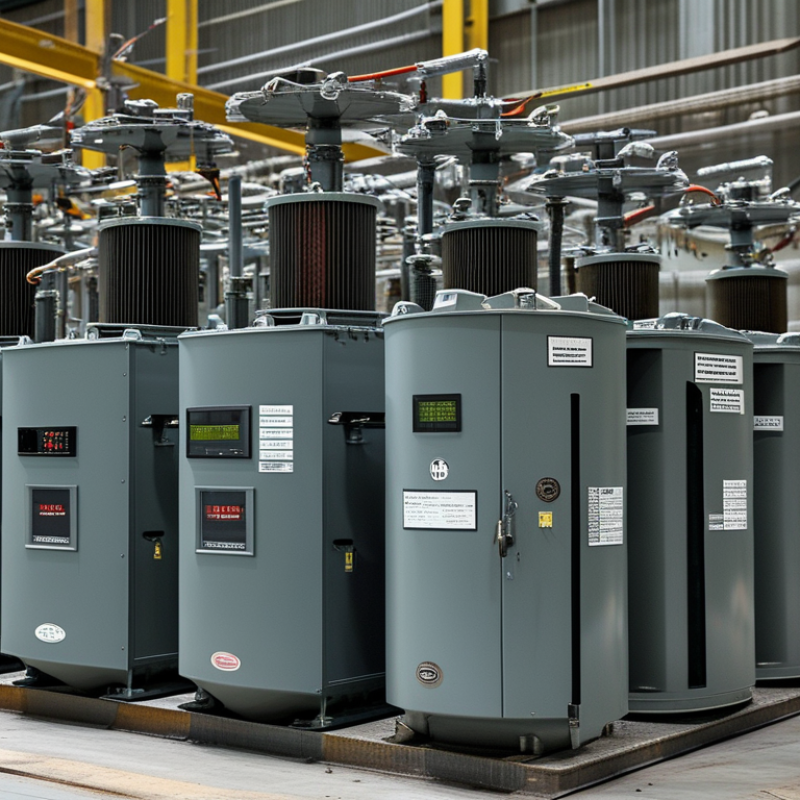
How to Choose a Cast Resin Dry Type Transformer?

Assess Load: Match kVA, 11–33 kV Class, and 40–60 Hz System Needs

Choosing a cast resin dry type transformer starts with the real load, not the nameplate alone. Record 15-minute demand, motor-starting current, harmonics, ambient temperature, and future expansion. A 1,000 kVA transformer at 11 kV carries about 52.5 amperes on the primary side. That same rating at 400 V requires roughly 1,443 amperes. Cable size, protection settings, and fault levels change significantly.

Leave practical headroom, but avoid excessive oversizing. A transformer operating near 40–80% of rated capacity usually balances efficiency and thermal margin. This is a useful guide, not a law. In field assessments, a clean 80% estimate can fail when elevators, pumps, or welding equipment start together. IEC 60076-11 provides the main requirements for dry-type transformers, including insulation and temperature-rise considerations. Check the manufacturer’s tested data against these requirements.

Voltage and frequency must match the system precisely. Select an 11, 22, or 33 kV class according to the network, insulation coordination, and utility specifications. Confirm whether the system operates at 50 Hz, 60 Hz, or within the requested 40–60 Hz range. The IEA Electricity 2024 report projects global electricity demand growth of about 3.4% annually from 2024 to 2026. That growth supports realistic capacity planning, but forecasts can still miss local peaks. Review measured data again before ordering.

Specify Insulation: Choose IEC 60076-11 Class F/H and 100–150 K Rise

When choosing a cast resin dry type transformer, specify insulation and temperature rise together. IEC 60076-11 defines Class F and Class H insulation systems for maximum reference temperatures of 155°C and 180°C. These values are not winding temperature-rise ratings. Ambient temperature, hot-spot effects, and enclosure ventilation still matter.

The IEC standard commonly aligns Class F designs with approximately 100 K rise and Class H designs with higher allowances. A 40°C ambient plus a 100 K rise already produces a 140°C average winding temperature. A 150 K rise can approach 190°C before hot-spot correction. That may exceed Class H limits. It needs careful thermal evidence. CIGRE transformer loading guidance also treats hot-spot temperature as a major ageing factor, not merely a nameplate detail. Field experience supports this caution: restricted airflow in compact rooms can raise operating temperatures noticeably.

Ask for temperature-rise test data under the intended installation conditions. Check altitude, enclosure IP rating, fan operation, harmonics, and emergency loading. The U.S. Department of Energy’s 2024 distribution-transformer technical assessment also highlights losses and thermal performance as linked design considerations. Do not select Class H automatically. It may provide useful margin, but poor ventilation can consume that margin quickly. A 100 K rise often offers a practical balance. A 125–150 K specification deserves a documented hot-spot calculation, especially in dusty or confined electrical rooms. Experienced reviewers should challenge optimistic assumptions.

Compare Efficiency: Verify DOE 2016 or EU Tier 2 Loss Limits at 50% Load

How to Choose a Cast Resin Dry Type Transformer?

At 50% load, compare losses rather than headline efficiency. Copper loss falls with the square of current. Therefore, a 4 kW full-load loss becomes approximately 1 kW at half load, before temperature corrections. No-load loss continues almost unchanged. This simple calculation often exposes optimistic proposals.

Use the US Department of Energy’s 2016 distribution transformer standards and technical support documents as a compliance reference. However, DOE calculations may use a prescribed reference load, not always 50%. Check the exact transformer category, rated power, voltage, and test temperature. The European Commission’s Ecodesign Regulation 548/2014, amended by Regulation 2019/1783, provides Tier 2 limits for no-load and load losses by transformer class. Ask for the complete loss table, not one efficiency percentage.

A reliable supplier should provide certified test results, winding-loss data, and the declared load point. Compare identical conditions. Otherwise, the result is misleading. A cast resin unit may show strong part-load performance, yet higher no-load loss can affect a continuously energized building. DOE and European technical analyses both treat these losses as long-term operating costs, not minor specifications. In practice, I would calculate annual energy cost at 25%, 50%, and 75% load. The 50% figure is useful, but it should not become a shortcut. Real buildings rarely behave perfectly.

Select Cooling and Enclosure: Evaluate AN/AF Operation and IP23–IP54 Protection

When selecting a cast resin dry type transformer, match cooling to the real load profile. AN cooling uses natural air circulation and suits normal continuous operation. It is simple, quiet, and easier to maintain. Keep airflow clear. AF cooling adds fans for higher capacity or short overload periods. Fans increase noise, maintenance, and auxiliary power use. In my field experience, fan controls should respond to winding temperature, not run continuously without purpose.

Enclosure protection deserves equal attention. Under IEC 60529, IP23 limits access to hazardous parts and resists water sprays up to 60 degrees from vertical. It also allows more ventilation than a tightly sealed enclosure. IP54 provides limited dust ingress protection and resistance to water splashes from all directions. It is not dust-tight. Check the site carefully.

Consider dust, humidity, salt, altitude, and ambient temperature before choosing IP23, IP31, IP42, or IP54. A sealed enclosure can trap transformer heat, especially in a compact electrical room. Measure the expected heat rise, then verify ventilation or forced cooling capacity. I have seen projects specify IP54 automatically, only to discover fan filters clogging during commissioning. That choice needed more reflection. A practical inspection plan should include filter cleaning, fan replacement, temperature alarms, and clear access around the enclosure.

How to Choose a Cast Resin Dry Type Transformer? — Select Cooling and Enclosure: Evaluate AN/AF Operation and IP23–IP54 Protection

Selection Dimension Option Technical Characteristics Typical Application Main Benefits Selection Considerations
Cooling Method AN
Air Natural
Transformer heat is dissipated through natural air circulation. No cooling fans are required during normal operation. Commercial buildings, utility rooms, industrial plants, and installations with normal load profiles. Low auxiliary power consumption, quiet operation, fewer moving parts, and reduced maintenance. Confirm that the room has adequate ventilation and that the transformer can carry the required continuous load without forced cooling.
Cooling Method AF
Air Forced
Fans increase airflow across the windings and core to improve heat removal during high-load conditions. Variable-load systems, compact substations, data centers, renewable-energy facilities, and installations with short-duration overloads. Can increase available transformer capacity when permitted by the design and manufacturer’s thermal rating. Check fan noise, control logic, standby-fan requirements, filter access, alarm contacts, and the manufacturer’s AF rating. AF capacity is not automatically universal.
Cooling Operation AN/AF Dual Mode Operates naturally under normal load and starts fans automatically at a defined temperature or load threshold. Facilities requiring energy efficiency at normal load but additional short-term capacity when demand increases. Balances efficiency, acoustic performance, operating flexibility, and overload capability. Specify fan starting temperature, control method, alarm and trip settings, and whether the AF rating is continuous or time-limited.
Enclosure Rating IP23 Provides protection against solid objects larger than 12.5 mm and water spraying up to 60° from vertical. Clean, dry indoor electrical rooms where accidental contact and limited dripping or angled spray are the main concerns. Good ventilation with relatively low enclosure pressure drop and a compact, economical design. Not dust-tight and not intended for direct water jets, outdoor exposure, or heavily contaminated environments.
Enclosure Rating IP31 Provides protection against solid objects larger than 2.5 mm and vertically dripping water. Indoor substations with improved protection against small objects and limited overhead condensation or dripping. Higher ingress protection than IP23 for selected indoor environments. Verify that the enclosure does not restrict the airflow required for AN or AF cooling.
Enclosure Rating IP33 Provides protection against solid objects larger than 2.5 mm and water spraying up to 60° from vertical. Indoor industrial rooms with moderate environmental exposure and a need for added protection over IP23. Improved protection against smaller objects and angled water spray. Requires careful evaluation of ventilation openings, internal temperature rise, and cleaning access.
Enclosure Rating IP54 Dust-protected enclosure with protection against water splashes from any direction. Dusty industrial areas, workshops, process plants, and locations where occasional splashing may occur. Substantially improved protection against dust and water compared with ventilated IP2X or IP3X designs. Reduced natural airflow may increase temperature rise. Fans, heat exchangers, or derating may be required; confirm thermal performance by test or calculation.
Installation Environment Clean and Dry Indoor Room Low dust, no direct water exposure, controlled ambient conditions, and sufficient room ventilation. Office buildings, hospitals, schools, and standard electrical rooms. AN cooling with IP23 or a similar ventilated enclosure is often technically practical. Maintain required clearances, provide ventilation openings, and prevent storage materials from blocking airflow.
Installation Environment Dusty or Industrial Area Airborne dust, fibers, or process particles may enter a conventional ventilated enclosure. Manufacturing plants, cement facilities, woodworking areas, and material-handling zones. Higher IP protection can reduce contamination of insulation surfaces and internal components. Consider IP54, room pressurization, suitable filtration, cleaning intervals, and the resulting thermal derating.
Installation Environment Outdoor or Semi-Outdoor Location Exposure may include rain, condensation, sunlight, temperature variation, and airborne contaminants. Weather-protected substations, plant yards, and electrical rooms with outdoor interfaces. A properly engineered enclosure can protect the cast resin transformer from environmental ingress. IP23–IP54 alone may not provide complete outdoor suitability. Evaluate rain exposure, condensation control, corrosion resistance, drainage, and solar heating.
Thermal Design Ambient Temperature Transformer temperature rise depends on rated ambient conditions, altitude, load factor, harmonics, and enclosure ventilation. All installations, especially compact rooms and high-load applications. Correct thermal assessment improves service life and prevents nuisance temperature alarms or trips. Confirm the applicable standard, rated ambient temperature, altitude correction, temperature-rise class, and harmonic loading.
Operational Decision Recommended Selection Sequence 1. Establish load and duty cycle. 2. Select AN or AN/AF operation. 3. Assess dust and water exposure. 4. Select IP rating. 5. Recheck heat dissipation and maintenance access. New installations, replacement projects, and system upgrades. Creates a balanced selection based on electrical, thermal, environmental, and maintenance requirements. Require the final design to be verified against the transformer manufacturer’s tested ratings and the applicable installation standards.

Note: IP codes are defined by IEC 60529. The final transformer rating must be confirmed using the manufacturer’s certified thermal data, enclosure test results, site ambient conditions, altitude, harmonics, duty cycle, and applicable electrical standards.

Validate Installation: Check 1000 m Altitude, Harmonics, Noise, and 30-Year Life

Choosing a cast resin dry type transformer starts with installation conditions, not only rated kVA. At 1,000 m altitude, standard cooling assumptions usually remain valid under IEC 60076-11. Higher sites need derating or special design because thinner air removes heat less effectively. During commissioning, record room temperature, ventilation openings, and actual load current. A small room can quietly become a large problem.

Harmonics deserve careful checking. Rectifiers, variable-speed drives, and data-center power supplies may increase winding losses and temperature rise. IEEE 519 provides planning limits for harmonic distortion at the point of common coupling, but the transformer still needs a site-specific assessment. Request the manufacturer’s impedance, loss, and temperature-rise data. Do not assume a standard cast resin unit is automatically suitable for nonlinear loads. Noise should also be verified against IEC 60076-10. Measure sound levels at one meter, with doors and fans operating as they will in service. A quiet factory test may not represent a reflective concrete room.

Tips: Build a 30-year life model using loading, ambient temperature, harmonics, dust, and maintenance records. IEC 60076-11 supports dry-type transformer design requirements, while thermal aging practice shows that sustained overheating reduces insulation life. Industry reliability studies commonly treat 25–30 years as a realistic service horizon under controlled conditions, not a guarantee. Infrared scans and annual torque checks are useful. I would also leave engineering margin; perfect forecasts rarely survive real operating changes.

FAQS

What insulation class should I choose for a cast resin dry type transformer?

Class F and Class H are common choices. Class F references 155°C, while Class H references 180°C. These temperatures are not winding temperature-rise ratings. Choose insulation and temperature rise together.

Is a 100 K temperature rise usually practical?

Often, yes. With a 40°C ambient, a 100 K rise gives about 140°C average winding temperature. This can provide a reasonable thermal balance. Real conditions may still differ.

When does a 150 K rise require extra evidence?

A 150 K rise can approach 190°C before hot-spot correction. That may exceed Class H limits. Request a documented hot-spot calculation and thermal test data. Do not trust optimistic assumptions.

Why does ventilation matter so much?

Restricted airflow can raise transformer temperature quickly. Compact electrical rooms are especially risky. Check openings, fan operation, dust, and enclosure protection. A small room can become a large problem.

Does altitude affect transformer cooling?

Standard cooling assumptions commonly remain valid at 1,000 meters. Higher locations need derating or special design. Thinner air removes heat less effectively. Record altitude during project review.

How should I assess harmonics?

Check rectifiers, variable-speed drives, and data-center power supplies. These loads can increase winding losses and temperature rise. Request impedance, loss, and temperature-rise data. A standard unit may not fit nonlinear loads.

How should transformer noise be verified?

Verify sound levels under realistic operating conditions. Measure at one meter, with doors and fans operating normally. Concrete walls can reflect noise. A quiet factory test may mislead.

How can I estimate a 30-year service life?

Build a life model using loading, ambient temperature, harmonics, dust, and maintenance. Controlled conditions may support a 25–30-year service horizon. This is not a guarantee. Annual torque checks and infrared scans can reveal problems.

Conclusion

Choosing a Cast Resin Dry Type Transformer requires a careful review of both present and future operating conditions. Begin by matching the transformer’s kVA rating to the expected load, while confirming compatibility with an 11–33 kV system and a 40–60 Hz frequency range. Insulation should meet IEC 60076-11 requirements, with Class F or Class H materials and an appropriate temperature rise, typically between 100 and 150 K.

Efficiency and operating costs should also guide the selection. Verify that no-load and load losses comply with applicable DOE 2016 or EU Tier 2 limits, particularly at around 50% load. Evaluate whether natural-air or forced-air cooling is suitable, and select an enclosure rating from IP23 to IP54 based on the installation environment. Before final approval, check altitude suitability up to 1000 meters, harmonic effects, acceptable noise levels, maintenance access, and the expected 30-year service life. A complete assessment helps ensure reliable, efficient, and safe long-term performance.

Ethan

Ethan

Ethan is a dedicated marketing professional with extensive knowledge of the company’s products, services, and industry landscape. Through a combination of strategic thinking, market research, and clear communication, he helps customers understand how the company’s solutions can address practical......