Choosing a Pole Mounted Distribution Transformer affects safety, voltage stability, maintenance, and operating cost. It is not simply a matter of selecting the highest kVA rating. In real installations, engineers compare expected load, future demand, feeder length, fault levels, and local utility rules. A rural workshop may need a different solution from a dense residential street. Small details matter. Pole height, conductor spacing, grounding, and wildlife exposure can change the design. An experienced supplier should provide verified test data, drawings, loss figures, and clear warranty terms. Those documents are more useful than attractive product claims. Yet no checklist is perfect. Site conditions often reveal assumptions missed during office planning.
This guide explains how to choose a Pole Mounted Distribution Transformer with practical engineering judgment. It considers voltage ratio, rated power, phase arrangement, insulation, cooling, tap settings, and protection coordination. Climate deserves close attention, especially where heat, salt mist, ice, dust, or heavy rainfall is common. A transformer that performs well in factory testing may require different accessories outdoors. Ask how the unit was tested, which standards were followed, and whether replacement parts remain available. Reliability also depends on installation quality and routine inspection. Loose connections, overloaded circuits, and poor earthing can shorten service life quickly. Do not ignore sound level or visual access. They affect nearby residents and maintenance crews. The best choice balances purchase price, efficiency, safety, and long-term serviceability. Sometimes, the cheapest option is only cheap at delivery. Careful comparison prevents expensive surprises later.
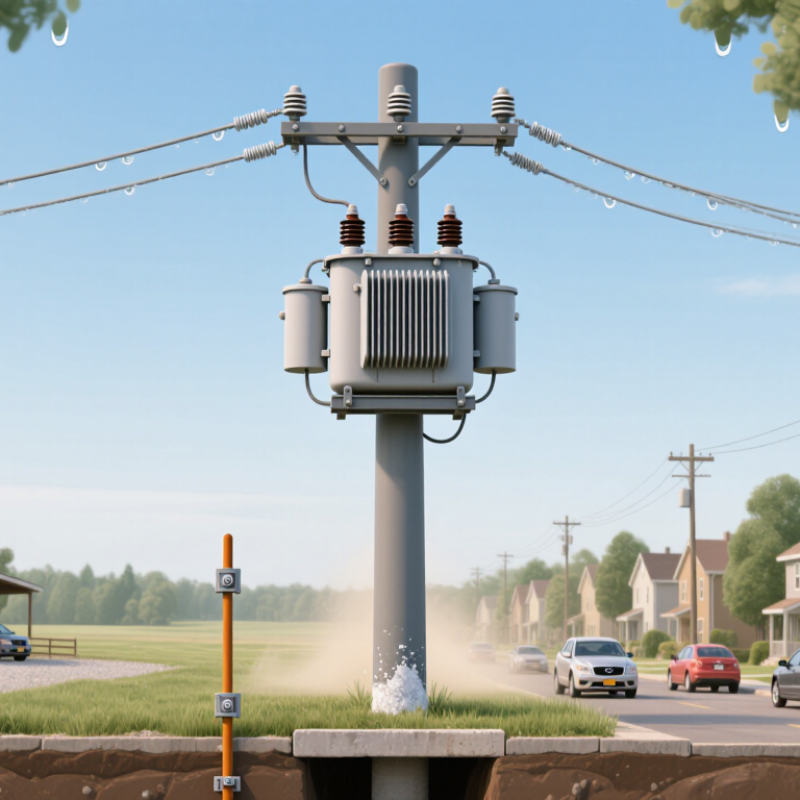
What Is a Pole-Mounted Distribution Transformer?
A pole-mounted distribution transformer is a compact electrical device installed on a utility pole. It reduces medium-voltage electricity for homes, farms, shops, and small industrial loads. A common unit converts several kilovolts into usable low-voltage supply. It may contain a steel tank, mineral or natural ester insulation, bushings, fuses, and a lightning arrester. The structure looks simple. The duty is not.
IEEE C57.12.20 covers many single-phase and three-phase pole-type transformers rated up to 500 kVA. Actual limits depend on voltage, temperature, and local utility specifications. The International Energy Agency reported that annual global grid investment must exceed 600 billion dollars by 2030. More renewable generation will increase pressure on local networks. Therefore, choosing a transformer requires more than checking kVA. Engineers should examine peak demand, future load growth, short-circuit levels, altitude, humidity, and salt exposure. A coastal installation needs different protection from a dry inland site.
Efficiency also deserves attention. The U.S. Department of Energy’s 2024 distribution-transformer rule evaluates equipment across a 30-year service period. Small losses become expensive when a transformer operates continuously. Field inspections often find overloaded units, loose connections, or poor grounding. These details can shorten service life. A higher-rated transformer is not automatically better. It can increase no-load losses and cost. The selection may remain imperfect, especially when future demand is uncertain. A careful specification should record assumptions, not hide them.
Choose the Transformer Rating and Technical Specifications
Choose the Transformer Rating and Technical Specifications
Selecting a pole-mounted transformer starts with the load, not the pole. Calculate diversified peak demand from motors, lighting, heating, and future equipment.
A 100 kVA, single-phase unit at 240 volts can supply about 417 amperes.
At 208 volts, a 100 kVA three-phase unit supplies about 278 amperes per phase.
These figures assume balanced loading and ideal conditions. Real installations need correction.
The U.S. Energy Information Administration reports that transmission and distribution losses average roughly 5% of electricity supplied. Transformer efficiency therefore matters, especially during continuous operation.
Compare no-load loss, load loss, impedance, and temperature rise. Specify the primary and secondary voltages, frequency, phase arrangement, tap range, insulation level, and basic impulse level.
IEEE C57.12.20 addresses overhead distribution transformers rated up to 500 kVA, with high-voltage ratings up to 34.5 kV. Keep it practical.
Check ambient temperature, altitude, wind exposure, salt contamination, and harmonic-producing loads.
A 25% spare-capacity allowance may look safe, but it can increase purchase cost and no-load losses. A smaller unit may run hot during an unexpected load increase. A larger unit may waste energy every hour.
DOE’s Distribution Transformers Technical Support Document evaluates both no-load and load losses, supporting this two-sided decision.
I would also verify fault current, grounding, surge protection, clearances, and local utility requirements. Small errors matter. The neatest calculation can still fail when real operating data is missing.
Evaluate Site Conditions, Safety, and Mounting Options
How to Choose a Pole Mounted Distribution Transformer?
A pole mounted distribution transformer must fit the site, not just the load estimate. Inspect soil stability, pole condition, flood exposure, wind loading, and nearby trees. A transformer installed beside a narrow road may need extra clearance for maintenance vehicles. Check expected demand, voltage requirements, temperature, and future load growth. A neat calculation can still miss seasonal irrigation loads.
Safety depends on details people often overlook. Confirm grounding paths, protective devices, conductor clearances, and safe working space before selecting equipment. Keep the enclosure away from windows, balconies, and areas with frequent public access. Review local electrical codes and utility requirements with a qualified engineer. Field conditions can disagree with drawings. That is where careful judgment matters.
Tips: Measure pole strength and available platform space. Choose a crossarm or bracket arrangement that matches the transformer’s weight and center of gravity. Consider climbing access, lifting equipment, noise, and replacement procedures. Leave room for inspection. More clearance is not always practical, but too little becomes expensive. Document photographs, measurements, and fault-current data before approval. A second site review may reveal a buried service, weak connection, or drainage problem that the first visit missed.
How to Choose a Pole Mounted Distribution Transformer?
Evaluate site conditions, safety, and mounting options before selecting the transformer capacity.
How to use this chart: The capacities shown are common nominal single-phase pole-mounted distribution transformer options, expressed in kVA. Select a rating only after calculating the diversified load, checking future demand, and confirming the utility’s approved range.
Site and safety checks: Verify pole strength, equipment weight, conductor clearances, grounding, accessibility, flood exposure, corrosion risk, and required working space. The final installation must comply with the applicable electrical code, utility standards, and local authority requirements.
Mounting options: A single-pole, crossarm, or platform arrangement depends on transformer weight, voltage class, available space, structural loading, and maintenance access.
Conclusion
Choosing a Pole Mounted Distribution Transformer requires more than selecting a standard unit. First, understand its role in reducing medium-voltage electricity to a level suitable for local homes, farms, businesses, or small industrial facilities. Assess the expected electrical load, voltage levels, phase configuration, demand growth, power quality needs, and network conditions to determine the appropriate capacity and connection design.
The transformer’s rating, impedance, insulation level, cooling method, and protection features should match both present and future requirements. Site conditions are equally important, including climate, altitude, space limitations, pole strength, accessibility, and public safety. Select a secure mounting arrangement with suitable clearances, grounding, surge protection, and isolation equipment. Finally, consider transportation, installation procedures, inspection schedules, spare parts, energy efficiency, and expected service life. A complete lifecycle cost assessment can help balance the initial purchase price with maintenance, reliability, safety, and long-term operating performance.