Engineering Insights

Transformer Technical Blog & Knowledge Hub

Expert articles, design standards, and technical guides on VPI, Cast Resin, Power, and Distribution Transformers.

IEC 60076 | IS 2026

Standard Compliance & Performance

Learn how our type-tested transformers deliver high efficiency and safety across industrial grid networks.

Dry Type Technologies

VPI & Cast Resin Dry Transformers

Best practices for selection, installation, and operation of fire-safe, maintenance-free transformers.

0%

An Industrial Rectifier Transformer is a specialized power transformer designed for rectification systems. It supplies controlled alternating current to rectifier equipment, which converts AC into usable direct current. This arrangement supports demanding industrial processes requiring stable, high-current power. Unlike ordinary distribution transformers, it must tolerate unusual waveforms, harmonic currents, and repeated thermal stress. Its design affects production stability, energy efficiency, and equipment life.

Inside a plant, this transformer may feed electrochemical cells, arc furnaces, traction systems, or large DC drives. The transformer changes voltage levels before the rectifier stage performs conversion. Engineers examine phase configuration, impedance, cooling method, insulation strength, and expected load patterns. Harmonic loading deserves close attention. It can create extra heat and vibration. Noise matters too. A quiet unit is not automatically a healthy unit, but unusual sound should never be ignored. Site temperature, ventilation, dust, and maintenance quality also influence performance.

A useful introduction should connect technical theory with operating reality. Nameplate ratings alone cannot describe every installation. Actual production cycles may include overloads, frequent starts, and uneven current demand. That gap between rated conditions and plant conditions requires careful review. This article will explain the working principle, main components, applications, selection criteria, and maintenance needs of an Industrial Rectifier Transformer. It will also consider common design mistakes and practical inspection points. Some recommendations may appear simple, yet simple checks often prevent expensive failures. No design is perfect. Reliable results depend on accurate data, qualified engineering judgment, and disciplined maintenance records.
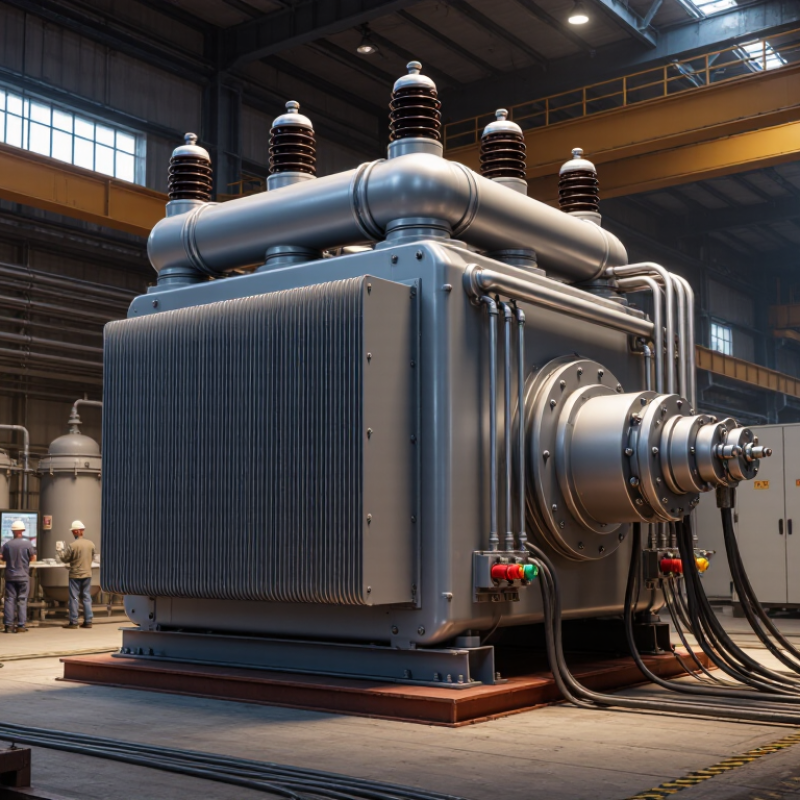
What Is an Industrial Rectifier Transformer?

Definition and Core Purpose of an Industrial Rectifier Transformer

What Is an Industrial Rectifier Transformer?

Definition and Core Purpose of an Industrial Rectifier Transformer

An industrial rectifier transformer converts medium- or high-voltage AC into a controlled supply for rectifier equipment. Its core purpose is reliable DC power delivery. It also provides electrical isolation between the utility system and the process load.

Unlike a general-purpose transformer, it is designed for heavy nonlinear currents. Its secondary winding feeds diodes or thyristors that shape the DC output. Common applications include electrolysis, metal finishing, DC furnaces, and large battery systems.

The load decides everything. Voltage, current, pulse pattern, and duty cycle must match the process.

During engineering assessments, I check winding temperature, insulation strength, cooling performance, and harmonic stress. A properly selected unit should tolerate repeated load changes without excessive heating or unstable voltage. Connection details matter too. Phase-shifting windings can reduce some harmonics and improve system behavior. Protection devices must respond quickly to faults, but they should not create unnecessary trips.

A neat calculation can still mislead. Real plants contain dust, vibration, ambient heat, and uneven loading. These conditions may expose weaknesses that laboratory figures overlook. In my view, service access deserves more attention during specification. A transformer that performs well but cannot be inspected efficiently may become a costly maintenance problem. Its purpose is not merely conversion; it supports a continuous industrial process under demanding electrical and physical conditions.

Main Components and Electrical Operating Principle

An industrial rectifier transformer supplies controlled alternating current to a rectifier system. It changes incoming voltage, provides electrical isolation, and supports heavy DC loads. Unlike an ordinary distribution transformer, it is designed for frequent current pulses and harmonic stress.

Its main components include the magnetic core, high-voltage winding, rectifier-side winding, insulation system, tank, bushings, and cooling equipment. Some designs use several secondary windings with a phase shift. This arrangement reduces ripple and limits harmonic distortion. The transformer first transfers AC energy through electromagnetic induction. The connected diode or thyristor bridge then converts the secondary AC waveform into pulsating DC. Smoothing reactors and capacitors may reduce current variation, but they cannot correct poor transformer design.

Field checks should include winding temperature, oil condition, insulation resistance, grounding, and unusual vibration. Small warning signs matter. A loose connection can create local heating. In practice, calculated ratings may look perfect, yet site conditions can differ. Ambient heat, load cycling, and waveform distortion deserve careful review. Engineers should verify short-circuit impedance and cooling capacity before commissioning.

Tips: Keep cooling paths clean, record temperature trends, and inspect terminals during planned maintenance. Do not judge performance from output voltage alone. Check ripple, current balance, and harmonic behavior with suitable instruments. A qualified engineer should confirm protection settings and rectifier compatibility.

Common Industrial Applications and Process Requirements

What Is an Industrial Rectifier Transformer?

Common Industrial Applications and Process Requirements

An industrial rectifier transformer adapts medium- or high-voltage AC for heavy DC processes. The transformer provides isolation, voltage adjustment, and controlled phase shifting. A separate rectifier unit then converts AC into usable DC power.

Electrolysis is a major application. The International Energy Agency reported nearly 100 million tonnes of global hydrogen demand in 2023. Low-emissions hydrogen remained below 1% of supply, showing the scale of future electrical requirements. Chlor-alkali plants also need stable DC current for chlorine and caustic soda production. Even brief voltage disturbances can affect cell efficiency, product quality, and electrode life.

Aluminium smelting places another severe demand on rectifier systems. International Aluminium Institute data indicates that primary aluminium production commonly requires about 14 MWh of electricity per tonne. Rectifier transformers must therefore support continuous high-current operation, low ripple, strong cooling, and controlled harmonics. Steel furnaces and electrochemical refining require similar durability, but their load patterns can change sharply. Ratings alone are not enough. Commissioning teams should examine short-circuit strength, redundancy, cooling-water quality, protection coordination, and maintenance access. Harmonic filters may reduce network stress, although they also add cost and maintenance points. Designers sometimes underestimate thermal cycling. That mistake can shorten insulation life. Real plants are rarely perfectly balanced.

What Is an Industrial Rectifier Transformer? - Common Industrial Applications and Process Requirements

Industrial Application Primary Purpose Typical DC Output Characteristics Common Rectifier Arrangement Transformer Design Requirements Key Process Requirements
Aluminum Electrolysis Supplies high-current direct power for reducing alumina into aluminum. Very high current, low DC voltage, and continuous operation; current stability is critical. Multi-pulse, phase-shifting rectifier systems are commonly used to reduce harmonics. High short-circuit strength, controlled leakage impedance, robust insulation, and parallel secondary windings. Continuous high-load duty, low voltage fluctuation, cooling redundancy, and coordinated maintenance planning.
Chlor-Alkali Electrolysis Provides DC power for producing chlorine, hydrogen, and caustic soda from brine. Low-voltage, high-current output with tight current regulation and high availability. 12-pulse or higher-pulse configurations are frequently selected for large installations. High thermal capacity, corrosion-resistant accessories, suitable insulation coordination, and low impedance variation. Stable DC current, harmonic control, high efficiency, process interlocking, and protection against overloads.
Electrowinning Deposits metals such as copper, zinc, nickel, or cobalt from an electrolyte. Low DC voltage and high current; ripple and current distribution affect deposit quality. Diode or controlled-rectifier bridges with multiple parallel paths. Low-loss construction, strong mechanical bracing, high current terminals, and effective heat dissipation. Continuous duty, low ripple, precise current control, reliable cooling, and resistance to humid or corrosive environments.
Electroplating Applies protective, decorative, or functional metal coatings to manufactured parts. Generally low-voltage DC with adjustable current; output quality depends on ripple and regulation. Single-phase or three-phase diode and thyristor rectifier systems. Frequent current adjustment, suitable insulation, compact construction, and protection from chemical vapors. Stable output, programmable ramps, low ripple, short-cycle responsiveness, and easy cleaning or maintenance access.
Electric Arc Furnaces Supports DC arc melting in steelmaking and other high-temperature metallurgical processes. High power with rapidly changing load current and severe electrical disturbances. High-power controlled rectifiers, often integrated with furnace power-control equipment. High mechanical strength, high short-circuit withstand capability, controlled leakage reactance, and robust cooling. Frequent overloads, arc instability, voltage dips, harmonic mitigation, rapid protection, and coordination with furnace controls.
Traction and Industrial DC Drives Feeds DC motors, rolling-mill drives, cranes, hoists, and other variable-speed equipment. Variable DC voltage and current with repeated acceleration, braking, and regenerative events. Controlled thyristor bridges or active front-end systems, depending on drive architecture. High dynamic response, suitable impedance, insulation for repetitive transients, and thermal cycling capability. Fast voltage response, overload tolerance, regenerative energy management, low acoustic noise, and reliable protection.
Hydrogen Production by Electrolysis Converts electrical energy into hydrogen and oxygen through water electrolysis. High DC current with adjustable voltage; efficiency and current stability influence hydrogen output. Diode, thyristor, or power-electronic rectifier systems selected by electrolyzer type and scale. High efficiency, low losses, suitable harmonic performance, dependable insulation, and continuous-duty cooling. Stable DC supply, rapid load-following where required, high availability, remote monitoring, and integration with safety systems.
Cathodic Protection Limits corrosion on pipelines, storage tanks, marine structures, and buried metallic assets. Low-voltage DC with relatively low current compared with heavy electrochemical processes. Single-phase or three-phase diode and controlled rectifier units. Weatherproof enclosure options, galvanic isolation, adjustable output, and long unattended service life. Remote monitoring, surge protection, corrosion resistance, stable output, and minimal maintenance requirements.
Design note: An industrial rectifier transformer is a specialized power transformer that supplies an AC voltage suitable for conversion into controlled DC power. Final specifications should be determined from the required DC voltage, current, pulse number, load profile, harmonic limits, cooling method, insulation level, short-circuit duty, installation environment, and applicable electrical standards.

Key Design Parameters and Performance Considerations

What Is an Industrial Rectifier Transformer?

An industrial rectifier transformer converts alternating current into a controlled supply for electrochemical plants, furnaces, and large drives. Its design begins with the DC load, not the nameplate alone. Engineers must define DC voltage, current, duty cycle, ripple limits, and overload duration. The IEA Electricity 2024 report projected global electricity demand would rise by about 4% in 2024 and 2025. That growth increases pressure on high-power conversion equipment and grid stability.

Key design parameters include phase-shift configuration, secondary winding arrangement, short-circuit impedance, insulation level, and cooling capacity. A six-pulse system may create stronger harmonics than a twelve-pulse arrangement. Harmonic studies should therefore use actual operating profiles, not optimistic assumptions.

IEEE 519-2022 provides planning guidance for voltage and current distortion at the point of common coupling. Thermal design also matters. Copper losses, stray flux, and frequent load changes can raise hotspot temperature quickly. Small calculation errors become expensive.

Tips:

Check the transformer against the real DC waveform. Confirm ripple, harmonic current, and fault duty with site measurements. Ask for factory temperature-rise and impulse-test records. IEC 61378-1 offers relevant requirements for converter transformers. It is useful, but not a substitute for application-specific engineering. A perfect design rarely exists. Sometimes, a slightly larger impedance improves system behavior, yet reduces voltage regulation. That trade-off deserves review before procurement.

Maintenance, Safety, and Service Life Management

What Is an Industrial Rectifier Transformer?

Maintenance, Safety, and Service Life Management

An industrial rectifier transformer feeds controlled DC equipment, often under heavy, uneven loading. Its transformer windings, rectifier connection, cooling system, and insulation work as one thermal system. Maintenance should begin with operating data, not guesswork. Record load current, winding temperature, oil level, vibration, and unusual sound during normal shifts. Infrared scans can reveal hot cable lugs before they discolor. For oil-filled units, trained personnel may check dielectric strength and dissolved gases at defined intervals.

Safety depends on disciplined isolation. Disconnect every energy source, apply lockout and tagout, and verify the absence of voltage with a properly rated tester. DC circuits can retain charge after isolation. Discharge capacitors, install protective grounding, and control access around exposed conductors. Wear arc-rated clothing and task-appropriate face and hand protection. A second person should confirm the switching plan. Small assumptions cause large failures.

Service life improves when heat is controlled. Clean blocked air paths, inspect cooling fans, tighten connections to specified torque, and replace cracked insulators. Never tighten live equipment. Trend test results instead of relying on one pass or fail. A rising winding temperature may reflect overload, poor ventilation, or a failing cooler. No checklist is perfect. Field teams sometimes miss loose secondary connections because inspections focus only on oil condition. Review the plan after every fault, near miss, or abnormal trend, and adjust intervals to the site's real duty cycle.

FAQS

What is an industrial rectifier transformer?

It converts medium- or high-voltage AC into a controlled supply for rectifier equipment. Its main purpose is reliable DC power delivery.

How does it support industrial processes?

The transformer feeds AC to diode or thyristor bridges. These bridges convert the waveform into pulsating DC for demanding processes.

Which components are most important?

Key parts include the magnetic core, windings, insulation, tank, bushings, and cooling equipment. Protection devices are also essential.

Why are rectifier transformers different from ordinary transformers?

They handle heavy nonlinear currents, repeated pulses, and harmonic stress. Ordinary distribution transformers may not tolerate these conditions well.

How can phase-shifting windings improve operation?

Several phase-shifted secondary windings can reduce ripple and some harmonic distortion. They may also improve overall system behavior.

What should engineers check before commissioning?

They should verify insulation resistance, grounding, cooling capacity, short-circuit impedance, and rectifier compatibility. Winding temperature deserves attention.

What maintenance signs should operators watch for?

Watch for unusual vibration, rising temperature, poor oil condition, loose terminals, and uneven current. Small warnings can become serious.

Is output voltage alone enough to judge performance?

No. Operators should also check ripple, current balance, waveform distortion, and harmonic behavior with suitable instruments.

Which site conditions can affect transformer performance?

Dust, vibration, ambient heat, load cycling, and uneven loading can expose weaknesses. Laboratory calculations may not show every problem.

Why does service access matter during specification?

Easy access supports faster inspections and safer maintenance. A unit can perform well yet become costly when inspection is difficult.

Conclusion

An Industrial Rectifier Transformer is a specialized power-conversion unit that combines voltage transformation with rectification to provide stable direct current for demanding industrial processes. Its main components typically include the transformer windings and core, rectifier elements, cooling systems, insulation, protection devices, and monitoring equipment. During operation, alternating current is adjusted to the required voltage and then converted into direct current, with controls helping manage output stability, load changes, and electrical disturbances.

These transformers are commonly used in electrochemical processing, metal production, charging systems, traction power, and other applications requiring high-current DC supplies. Important design considerations include rated power, output voltage and current, harmonic performance, efficiency, cooling capacity, insulation strength, short-circuit resistance, and compatibility with the production process. Regular inspections, temperature and vibration monitoring, connection checks, insulation testing, and timely replacement of worn components help maintain safe operation and extend service life. Proper installation, protective coordination, and documented maintenance procedures are also essential for reliable long-term performance.

Ethan

Ethan

Ethan is a dedicated marketing professional with extensive knowledge of the company’s products, services, and industry landscape. Through a combination of strategic thinking, market research, and clear communication, he helps customers understand how the company’s solutions can address practical......