Expert articles, design standards, and technical guides on VPI, Cast Resin, Power, and Distribution Transformers.
Learn how our type-tested transformers deliver high efficiency and safety across industrial grid networks.
Best practices for selection, installation, and operation of fire-safe, maintenance-free transformers.
Choosing the right Arc Furnace Transformer is a critical decision for steelmakers, foundries, and heavy industrial plants. These transformers face severe electrical stress, repeated short-circuit events, harmonic distortion, and rapid thermal changes. Their performance affects furnace stability, electrode control, production speed, maintenance costs, and worker safety.
Transformer engineering specialist Martin J. Heathcote has emphasized, “The transformer is the heart of the electrical system.” That perspective is especially relevant in electric arc furnace operations. A transformer may appear to be a large steel enclosure, but inside, every winding, cooling channel, tap changer, and protection device has a specific job. Small design differences can influence energy efficiency and service life.
This guide examines the Top 10 Arc Furnace Transformer Manufacturers Worldwide through practical industry criteria. These include manufacturing experience, transformer capacity, voltage regulation, cooling technology, short-circuit strength, testing procedures, customization, after-sales support, and global project performance. Factory evidence matters.
The list is not perfectly universal. Regional standards, furnace size, grid conditions, and operating habits can change the final choice. A supplier that performs well in a modern European mill may not suit an older plant with unstable power quality. Buyers should verify technical data, reference projects, spare-parts availability, and service response before signing a contract.
Some comparisons remain difficult. Manufacturers do not always publish comparable failure rates or lifetime operating costs. Therefore, this overview combines available technical information with practical purchasing considerations. The goal is not to promote one brand blindly. It is to help readers ask sharper questions before investing in a transformer that may operate continuously for decades.
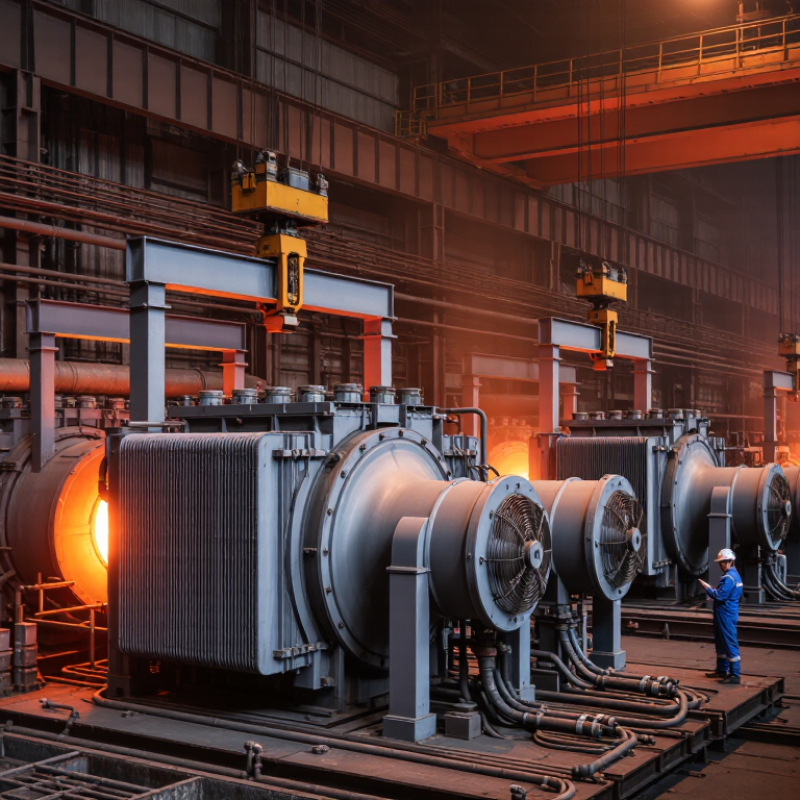
Arc furnace transformers are specialized power units that feed electric arc furnaces with controlled, high-current energy. Unlike ordinary industrial transformers, they must withstand repeated thermal shocks, voltage changes, and severe short-circuit conditions. Their role is direct: converting high-voltage supply into lower-voltage, extremely high-current output for melting steel and other conductive materials.
Design begins with electrical stability and mechanical strength. Engineers select copper windings, reinforced insulation, and cooling systems that match the furnace cycle. On-load tap changers can adjust voltage while production continues, helping operators control arc behavior and energy consumption. A robust tank, magnetic shielding, and carefully designed bushings reduce vibration, stray losses, and overheating. In practice, small design errors can become expensive failures. This is where operating records matter.
Field inspections often reveal what calculations miss. Dust, harmonic distortion, loose connections, and uneven cooling may accelerate insulation aging. Technicians therefore monitor oil temperature, winding hot spots, dissolved gases, vibration, and moisture levels. Maintenance plans should reflect actual furnace duty, not only rated capacity. A transformer may meet its nameplate values yet perform poorly under aggressive cycling. That uncomfortable gap deserves attention. Reliable operation depends on coordination between transformer engineers, furnace operators, and maintenance teams. Safety clearances, emergency isolation, and compliant testing remain essential throughout the equipment’s service life.
Ranking the top 10 arc furnace transformer manufacturers requires more than comparing brochure figures. Evaluators should examine field experience with steel mills, furnace duty cycles, and harsh electrical conditions. Proven projects reveal how transformers handle repeated thermal shocks, voltage fluctuations, and heavy short-circuit stress. Details matter.
Technical capability deserves a high weighting. Review rated power, impedance control, cooling design, insulation systems, and tap-changer performance. Manufacturers should provide type-test reports, factory acceptance records, and traceable quality procedures. Compliance with recognized electrical standards strengthens credibility.
However, certificates alone cannot prove dependable operation. Maintenance records and verified customer references offer stronger evidence.
Reliability also depends on service depth. Assess response times, spare-part availability, commissioning support, and technician training across regions. A clear warranty is useful, but practical assistance matters more during an unexpected outage. Energy efficiency should include losses during real furnace operation, not only laboratory conditions. Safety features, monitoring systems, and lifecycle costs should influence the final score. No ranking is flawless. Some data remains difficult to compare because operating temperatures, production loads, and local grid conditions vary. A careful evaluation should disclose those gaps instead of presenting false precision.
Top 10 Arc Furnace Transformer Manufacturers Worldwide
The top ten arc furnace transformer manufacturers worldwide should be assessed by engineering depth, not catalogue size. The World Steel Association’s World Steel in Figures 2024 reports approximately 1.89 billion tonnes of crude steel production in 2023. Electric arc furnaces produced about 29% of that total. This share strengthens demand for transformers built for repeated thermal shocks, rapid load changes, and severe harmonic conditions.
A credible ranking should examine furnace capacity, voltage regulation, short-circuit strength, cooling design, and service response. Large units may exceed 100 MVA, while secondary voltages must remain stable during charging and tapping. On-site commissioning experience also matters. A transformer can look excellent in a factory test, yet perform poorly beside dust, vibration, and heat. The IEA’s Electricity 2024 report highlights industrial electrification as a continuing power-demand driver, making efficiency and grid compatibility increasingly important.
The ranking is not perfectly objective. Regional standards, spare-part access, and maintenance quality can change the result. Buyers should review IEC 60076 test records, temperature-rise data, impedance tolerance, and documented outage rates. A low purchase price may hide expensive downtime. That lesson is easy to miss. Some evaluations also underweight tap-changer durability and harmonic monitoring. Better comparisons include verified references from steel plants, lifecycle energy losses, delivery performance, and technician availability. Metrics matter. Field evidence matters more.
This chart presents ten commonly published arc furnace transformer rating classes used in electric arc furnace steelmaking. The figures represent standard apparent-power capacities in MVA and are provided as an industry reference rather than as company-specific or ranked manufacturer data.
Comparing the top ten arc furnace transformer manufacturers requires more than checking installed capacity. The strongest suppliers offer transformers from medium to ultra-high ratings, with flexible voltage regulation for demanding steel operations. Their designs often include on-load tap changers, low-loss windings, robust cooling systems, and reinforced insulation. These features matter when furnace cycles create sudden thermal and electrical stress.
Technology separates capable manufacturers from ordinary suppliers. Advanced monitoring can track oil temperature, winding hotspots, gas levels, and vibration in real time. Some suppliers integrate digital protection with plant control systems, reducing response time during faults. Others focus on rugged simplicity, easier maintenance, and reliable performance in dusty environments. Market strength also depends on service engineers, spare-part availability, testing facilities, and delivery support across industrial regions. A perfect ranking is impossible. Project conditions change the result.
An experienced buyer should compare total operating cost, not only purchase price. Copper losses, unplanned downtime, tap-changer wear, and oil treatment can reshape the investment over ten years. Factory acceptance testing should include temperature-rise checks and protection verification. I would also question unusually optimistic efficiency claims. They may be accurate, but independent validation remains valuable.
Selecting an arc furnace transformer begins with the furnace’s real operating profile, not a catalogue rating. Review furnace capacity, tap-to-tap time, secondary voltage, short-circuit duty, and expected daily cycles. The transformer must tolerate repeated thermal and electrical shocks. World Steel Association data indicates that electric arc furnaces produced roughly 28% of global crude steel in 2023. This share increases pressure on equipment reliability and grid performance.
Ask manufacturers for verified test records, loss calculations, impedance tolerance, cooling arrangements, and service references from comparable furnaces. IEC 60076 compliance is important, but it does not prove suitability for every melting shop. The transformer should also match local grid limits, harmonic conditions, and protection settings. The IEA’s Iron and Steel Technology Roadmap identifies steelmaking as a major industrial emissions source, so energy efficiency deserves serious attention. A small reduction in no-load and load losses can matter over thousands of operating hours. Yet, I would not choose efficiency alone. A cheaper unit with poor thermal recovery may cost more during production interruptions.
Tips: Compare total ownership cost over 15–20 years. Request factory acceptance tests, spare-parts policies, emergency response times, and on-site commissioning support. Check whether the supplier can model voltage flicker and harmonics before contract signing. Speak with furnace operators, not only purchasing teams. Their feedback often reveals cooling leaks, noisy tap changers, or delayed repairs. Leave room for uncertainty; production data is sometimes incomplete, and optimistic assumptions can distort the specification.
It converts high-voltage electricity into lower-voltage, extremely high-current power. This energy feeds an electric arc furnace during metal melting. The unit must survive heat, vibration, and sudden electrical changes.
Arc furnaces create repeated thermal shocks and severe short-circuit conditions. Their power demand changes quickly during charging and tapping. Ordinary designs may age faster under these conditions.
Copper windings, reinforced insulation, strong bushings, and effective cooling are essential. A durable tank and magnetic shielding can reduce vibration and stray losses. On-load voltage adjustment helps control arc behavior during production.
They should track oil temperature, winding hot spots, dissolved gases, vibration, and moisture. Harmonic distortion and loose connections also deserve attention. Small abnormalities can become costly failures.
Review furnace references, short-circuit strength, voltage regulation, cooling design, and service response. Request factory test records and temperature-rise results. Field evidence matters more than catalogue size.
No. Compliance shows that required tests were completed. It does not guarantee performance beside dust, vibration, heat, and aggressive cycling. Actual furnace conditions still need separate evaluation.
Provide furnace capacity, secondary voltage, daily cycles, tap-to-tap time, and short-circuit duty. Include grid limits, harmonic conditions, and protection settings. Incomplete production data can distort the specification.
Compare losses, maintenance, spare parts, commissioning, and emergency response over fifteen to twenty years. A cheaper transformer may cause longer production interruptions. Efficiency matters, but thermal recovery matters too.
Not necessarily. A low purchase price may hide weak cooling or delayed repairs. I would question optimistic assumptions. The decision should include operators’ feedback and verified outage records.
An Arc Furnace Transformer is a specialized power transformer designed to supply the high current, fluctuating loads, and demanding operating conditions of electric arc furnaces. This article explains its structure, electrical design, cooling methods, regulation systems, protection features, and essential role in steelmaking and other high-temperature industrial processes. It also introduces the key criteria used to evaluate global manufacturers, including engineering expertise, product reliability, customization capabilities, energy efficiency, safety standards, production capacity, service support, and experience with complex industrial applications.
The ranking of the top 10 Arc Furnace Transformer manufacturers worldwide is presented through a practical comparison of product capabilities, advanced technologies, market coverage, and long-term service strength, without focusing on brand promotion. The article concludes with guidance for selecting a suitable manufacturer by considering furnace capacity, voltage requirements, operating environment, maintenance needs, delivery capability, total lifecycle cost, and technical support. These factors help buyers make informed decisions and choose a dependable solution for stable, efficient, and safe furnace operation.