Engineering Insights

Transformer Technical Blog & Knowledge Hub

Expert articles, design standards, and technical guides on VPI, Cast Resin, Power, and Distribution Transformers.

IEC 60076 | IS 2026

Standard Compliance & Performance

Learn how our type-tested transformers deliver high efficiency and safety across industrial grid networks.

Dry Type Technologies

VPI & Cast Resin Dry Transformers

Best practices for selection, installation, and operation of fire-safe, maintenance-free transformers.

0%

Choosing a reliable China-based OLTC Distribution Transformer supplier requires more than comparing prices or published capacity. The on-load tap changer adjusts voltage while the transformer remains energized, helping manage changing loads and network conditions. Its performance depends on the specified voltage range, switching duty, insulation design, and maintenance plan. Small details matter.

The International Energy Agency’s 2023 report, Electricity Grids and Secure Energy Transitions, says more than 80 million kilometres of grids may need to be added or replaced by 2040. It also estimates annual grid investment must rise above USD 600 billion by 2030. These are grid-wide projections, not transformer-specific demand forecasts. Still, they show why dependable equipment and supplier capacity deserve careful review.

This guide examines Chinese suppliers through practical evidence: product specifications, relevant certifications, routine and type-test reports, manufacturing capability, delivery terms, and after-sales support. Buyers should confirm whether quoted tap-changing performance matches the actual operating profile, rather than relying on catalogue language alone. Ask for clear documentation. Verify the details. Supplier rankings can be useful, but they are imperfect; public information may not reveal factory workload, component sourcing, or service quality in a buyer’s region. A careful comparison should therefore combine documented technical data with direct questions and, where feasible, an independent factory assessment.
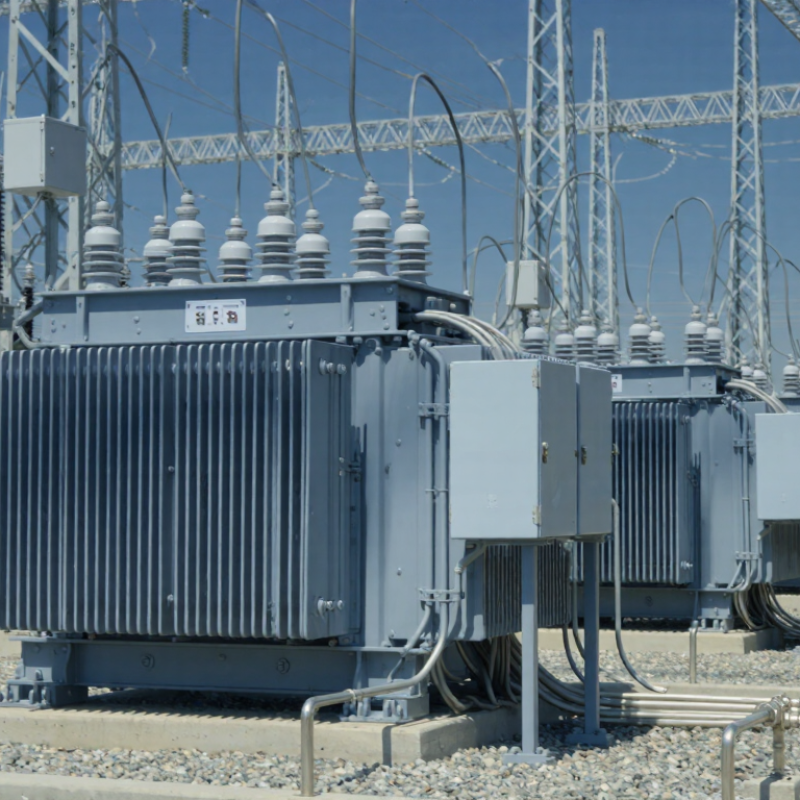
China Top OLTC Distribution Transformer Suppliers?

What Is an OLTC Distribution Transformer?

An on-load tap changer (OLTC) lets a distribution transformer adjust its voltage ratio while energized and supplying customers. It changes the winding connection in small steps, helping compensate for changing supply voltage or feeder conditions. The switching mechanism must control the transition between taps to avoid interrupting service or creating a short circuit. In practice, that means moving parts, contacts, and insulating oil need careful design and maintenance. It is not magic.

Unlike an off-circuit tap changer, an OLTC can operate without taking the transformer out of service. That capability can help where voltage varies during the day, though the added mechanism brings cost and maintenance needs. The IEA’s 2023 report, Electricity Grids and Secure Energy Transitions, says annual grid investment must rise to more than $600 billion by 2030. This is a broader grid investment estimate, not an OLTC market figure, but it shows the scale of network upgrades underway. For buyers, check the transformer’s voltage range, step size, switching duty, and maintenance access against actual site conditions. A mismatch is easy to miss. A qualified engineer should also verify that the selected control scheme suits the feeder and expected load profile.

How to Evaluate OLTC Transformer Suppliers in China

China Top OLTC Distribution Transformer Suppliers?
How to Evaluate OLTC Transformer Suppliers in China

Choosing an OLTC transformer supplier requires more than comparing prices and delivery dates. Start with the project’s voltage, capacity, tap range, and operating conditions. Ask how the on-load tap changer performs under the expected switching frequency and load profile. Details matter. A supplier should explain design limits clearly, not just offer a broad product catalogue.

Review technical drawings, routine test records, and applicable certification documents. Check that ratings and test results match the quoted transformer configuration. Ask about tap-changer maintenance intervals, contact replacement, oil separation, and spare-part availability. Request clear answers on factory testing, inspection access, packaging, and delivery terms. If possible, speak with customers operating similar units in comparable environments. Documents help, but they do not replace practical verification.

A factory assessment can reveal whether assembly areas are orderly and test equipment is suitable for the stated product range. Confirm who handles commissioning support and warranty claims, and how quickly technical questions receive responses. Compare quotations on the same technical basis; otherwise, a cheaper offer may exclude important accessories or services. Price comparisons are imperfect. Even a detailed checklist can miss something, so record open questions and resolve them before placing an order.

How to Evaluate OLTC Transformer Suppliers in China

Illustrative procurement scorecard: suggested percentage weights for comparing suppliers. These are buyer-defined priorities, not measured market data or ratings of any specific supplier.

How to use it: Request comparable evidence for each criterion, such as applicable transformer and tap-changer standards, test reports, quality records, service arrangements, and delivery documentation. Adjust the weights to match your project requirements; the chart does not represent a ranking of suppliers.

Leading Chinese OLTC Distribution Transformer Suppliers

Leading Chinese OLTC distribution transformer suppliers should be judged by engineering evidence, not catalogue claims. Buyers should request routine and type-test records, clear tap-range data, and documented checks of insulation, temperature rise, and switching performance. IEC 60076 covers power-transformer requirements, while IEC 60214-1 addresses tap-changer performance and testing. These references help frame technical discussions, but they do not replace project-specific verification.

Demand for dependable grid equipment is growing. The IEA’s 2023 report, Electricity Grids and Secure Energy Transitions, says annual grid investment must rise to more than US$600 billion by 2030, over twice current levels. That figure covers grids broadly, not OLTC distribution transformers alone. Still, it signals why buyers should examine supplier capacity, component traceability, and service support. Ask how the tap changer handles frequent voltage adjustments, and request test results under stated operating conditions. Small details matter. A polished brochure cannot prove long-term field performance. One limitation is easy to overlook: test conditions may differ from the actual site, so review them carefully.

Comparing Supplier Capabilities, Certifications, and Product Ranges

When comparing China-based OLTC distribution transformer suppliers, look beyond rated capacity and price. Ask how the on-load tap changer performs during repeated voltage adjustments and what maintenance intervals the supplier recommends. Request drawings, routine test reports, and details on winding materials, cooling method, and temperature-rise limits. Small details matter.

Certifications can indicate a supplier’s quality systems or product conformity, but their scope matters. Check the issuing body, validity, covered factory, and whether the documents apply to the exact transformer configuration. Requirements differ by destination market. A certificate alone cannot prove consistent production quality. Ask for traceable factory test records and, where practical, independent inspection arrangements.

Compare product ranges against actual operating needs: voltage class, power rating, phase, insulation level, enclosure, and available tap range. Confirm whether customization affects lead time, spare-part availability, or testing plans. Field conditions vary. A supplier may offer many configurations yet have limited experience with a particular duty cycle. That is worth discussing openly. Request a clear list of exclusions and assumptions in the quotation; otherwise, two apparently similar offers may not be directly comparable.

Key Considerations When Selecting a Chinese Supplier

When evaluating Chinese suppliers of OLTC distribution transformers, match the design to the actual load profile. Share the required voltage ratio, rated capacity, tap range, installation conditions, and expected switching frequency. Ask how the on-load tap changer responds to voltage changes and what maintenance intervals the supplier recommends. Details matter.

Request drawings, a bill of materials, and test records for the proposed configuration. Check that reports identify the same model and ratings you plan to order. Clarify which tests are routine and which are type tests; the distinction is easy to miss. Confirm how the supplier controls winding materials, insulation, sealing, and final assembly. A factory visit can help, but a documented audit is more useful than a quick walk-through.

Look beyond the quoted price. Compare production lead time, spare-part availability, commissioning support, and response times for technical questions. Ask for references from projects with similar voltage and operating conditions, then verify the details independently where possible. One uncertainty may remain: published specifications do not always show how quickly service teams can respond after delivery. Put that expectation in writing, along with warranty coverage, packaging requirements, and procedures for reporting defects.

China Top OLTC Distribution Transformer Suppliers? — Key Considerations When Selecting a Chinese Supplier

Use this comparison framework to evaluate suppliers and project proposals. The ranges below are indicative examples, not guaranteed product specifications; confirm the applicable standards, ratings, and design details against the project requirements.

Evaluation Dimension Typical Project Parameters What to Confirm with the Supplier Useful Evidence
Rated capacity Distribution transformer ratings commonly cover hundreds to a few thousand kVA; the required value depends on the load profile and utility design. Confirm rated power, cooling method, overload requirements, ambient conditions, and whether the stated capacity applies at the specified site conditions. Technical datasheet, guaranteed-rating schedule, and project-specific transformer drawing.
Voltage and connection Primary distribution voltages vary by network; secondary voltage, phase arrangement, frequency, and winding connection must match the installation. Specify rated voltages, highest voltage for equipment, frequency, vector group, neutral arrangement, and insulation levels. Nameplate draft, connection diagram, and approved technical specification.
OLTC range and steps A project may specify a tap range such as ±8 × 1.25% (±10%), but the required range and step size are application-dependent. Check tap range, number of positions, step percentage, voltage-control objective, operating limits, and whether the range is available at the required rated power. OLTC data sheet, tap-position table, and winding/tap connection diagram.
OLTC operating system On-load tap changing allows ratio adjustment while the transformer is energized, within the equipment’s specified operating conditions. Confirm OLTC type, motor-drive supply, local and remote operation, position indication, control interfaces, interlocks, and manual operation provisions. Control schematic, operation and maintenance manual, and interface list.
Applicable standards Relevant requirements may include the applicable IEC 60076 series and Chinese GB/T transformer standards; the exact editions and clauses depend on the contract. List every applicable standard and edition. Clarify which requirements govern if international and national specifications differ. Compliance matrix, type-test reports, and contractually agreed deviations list.
Efficiency and losses No-load loss and load loss depend on rating, voltage, materials, and design. Applicable minimum-efficiency requirements should be checked for the intended market. Request guaranteed loss values, test tolerances, measurement conditions, and the applicable Chinese efficiency regulation or project requirement. Guaranteed loss schedule and routine test report with measured results.
Impedance and voltage regulation Percentage impedance is selected to meet network fault-level, parallel-operation, and voltage-regulation requirements. Confirm impedance at the specified rating and tap, tolerance, X/R information where required, and compatibility with existing or parallel units. Rated-data sheet, design calculation, and short-circuit test results where applicable.
Insulation and environmental conditions Altitude, ambient temperature, humidity, pollution, seismic conditions, and indoor or outdoor installation can affect design and accessories. State site conditions and verify insulation levels, creepage requirements where applicable, enclosure protection, corrosion protection, and cooling performance. Environmental design declaration, outline drawing, and accessory list.
Testing and quality control Routine tests are generally specified for each unit; type and special tests depend on the design, standard, and purchase contract. Agree on test scope, acceptance criteria, witness or hold points, calibration traceability, and treatment of nonconformities before production. Inspection and test plan, sample reports, and final factory test records.
Manufacturing and traceability Transformer and OLTC components may have separate production, inspection, and documentation records. Ask how core, windings, insulating materials, OLTC assembly, and final testing are controlled and traceable to the delivered serial number. Quality-system documentation, production inspection records, and serial-number traceability plan.
Delivery and export readiness Lead time and shipping arrangements depend on design approval, component availability, testing, packaging, and destination requirements. Confirm the delivery schedule, shipping configuration, preservation method, lifting points, spare parts, export documents, and responsibility for logistics. Project schedule, packing specification, document register, and shipping plan.
Warranty and after-sales support Warranty duration, response times, and service coverage are contractual terms and vary by supplier and destination. Define warranty start date, covered components, exclusions, claim process, technical support availability, and access to replacement parts. Written warranty terms, service contact procedure, and recommended spare-parts list.

FAQS

What is an OLTC distribution transformer?

It adjusts its voltage ratio while energized and supplying customers. The tap changer shifts winding connections in small steps. Not magic.

Why use an OLTC instead of an off-circuit tap changer?

An OLTC can adjust voltage without taking the transformer out of service. This can help when supply voltage changes during the day. The added mechanism also needs maintenance.

What should buyers check before choosing one?

Compare the voltage range, step size, switching duty, and maintenance access with site conditions. A qualified engineer should review the feeder and expected load profile. Mismatches are easy to miss.

What technical records should suppliers provide?

Request drawings, routine and type-test records, tap-range data, and checks for insulation and temperature rise. Ask for switching results under stated conditions. Details matter.

How can buyers assess certifications?

Check who issued each document, whether it is valid, and which factory and configuration it covers. A certificate alone cannot prove consistent quality. Review the fine print.

Which transformer specifications should be compared?

Compare voltage class, power rating, phase, insulation level, enclosure, and available tap range. Also check cooling method and winding materials. Small details matter.

How should buyers compare testing with real operating conditions?

Ask how the tap changer handles repeated voltage adjustments. Compare test conditions with the expected site conditions and duty cycle. They may differ.

What should a quotation explain clearly?

Request a list of exclusions and assumptions. Confirm whether customization affects lead time, spare parts, or testing plans. I would check twice; similar offers can hide different details.

Conclusion

This article explains what an OLTC Distribution Transformer is and how its on-load tap changer helps adjust voltage while the transformer remains in service. It outlines practical ways to evaluate suppliers in China, including their engineering experience, manufacturing capabilities, quality-control processes, technical support, and ability to customize products for different operating conditions.

The article also compares supplier capabilities, certifications, and product ranges, helping buyers understand which factors to verify before requesting quotations or placing an order. Key considerations include rated capacity, voltage requirements, operating environment, delivery schedule, warranty terms, documentation, and after-sales support. By assessing these points systematically, buyers can identify a suitable Chinese supplier and make a more informed decision based on project requirements rather than price alone.

Ethan

Ethan

Ethan is a dedicated marketing professional with extensive knowledge of the company’s products, services, and industry landscape. Through a combination of strategic thinking, market research, and clear communication, he helps customers understand how the company’s solutions can address practical......