Explore our high-efficiency oil-immersed, dry-type VPI, cast resin, and specialized renewable energy isolation transformers certified for international markets.
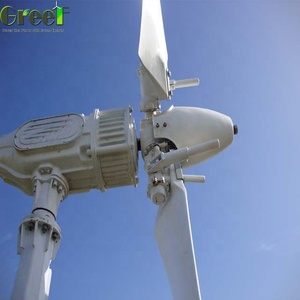
Aluminium Body Small Wind Turbine for Farm
Lightweight aluminum alloy construction, low cut-in wind speed, weather-resistant protection for rural power generation.
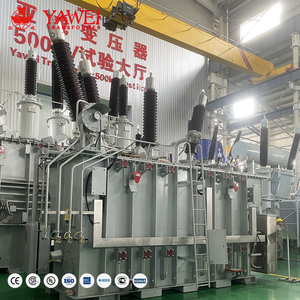
Yawei 10-20 MVA 67kV/69kV/33kV Power Transformer
High-capacity power transformer with 100% electrolytic copper windings, 60Hz frequency, and Dyn11 vector configuration.
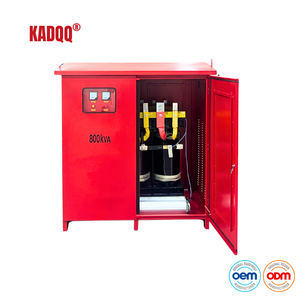
800kVA Wind Turbine Isolation Transformer IP65
Three-phase IP65 weather-sealed isolation unit engineered specifically for harsh renewable energy step-up environments.
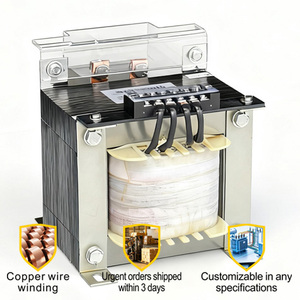
5kVA / 10kVA Single Phase Control Transformer
Step-down control transformer (110/220V to 36/48V) for packaging machinery with pure copper winding, CE & ISO certified.
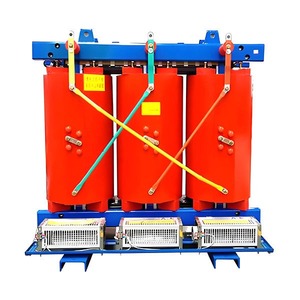
33kV / 35kV / 38.5kV Dry-Type Wind Turbine Transformer
Fire-prevention dry type three-phase isolation transformer with copper winding designed for commercial buildings & wind towers.
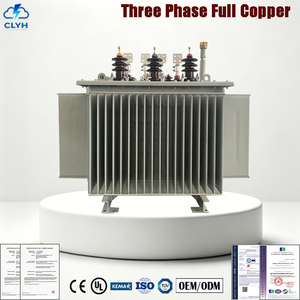
100kVA 10/0.4kV Oil Immersed Transformer (IEC/CE)
Three-phase oil-immersed distribution transformer with low-loss core and 100% copper conductors for utility power grids.
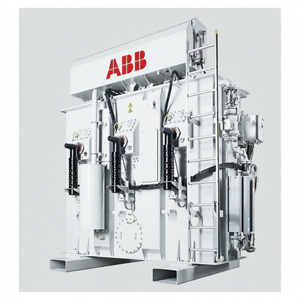
ABB (Hitachi Energy) Offshore Wind Transformer 5-25MVA
66-72.5kV heavy-duty offshore step-up power transformer optimized for vibration resistance and extreme marine conditions.
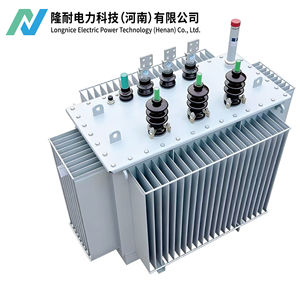
S11 3-Phase Oil Immersed 10kV / 0.4kV Transformer
Energy-efficient S11 series distribution transformer with 100% copper coils and low temperature-rise characteristics.
1. CE Certification Standards & Electromagnetic Engineering Principles
In modern electrical distribution architecture, procuring CE certified distribution transformers is not merely a legal gateway into the European Economic Area (EEA); it is a rigorous guarantee of operational safety, electromagnetic compatibility (EMC), and minimal environmental impact. European Union CE marking mandates strict compliance with the Low Voltage Directive (LVD) 2014/35/EU, the Electromagnetic Compatibility Directive 2014/30/EU, and the mandatory efficiency thresholds established under EU Commission Regulation No 548/2014 (and amendment 2019/1783 for EcoDesign Tier 2).
The core architecture of a high-performance distribution transformer relies on minimizing core (no-load) losses ($P_0$) and winding (load) losses ($P_k$). Premier manufacturers achieve this through the deployment of prime-grade Cold-Rolled Grain-Oriented (CRGO) silicon steel laminations—typically M0H, M1H, or amorphous metal ribbons—processed via step-lap 45-degree mitered cutting technology. This precision stacking arrangement drastically reduces stray magnetic flux leakage, mitigates magnetostriction, and suppresses acoustic noise levels to below 45–50 dBA.
Key Technical Criteria for CE & IEC Standard Compliance
- EcoDesign Tier 2 Loss Limits: Compliance with EN 50588-1 mandates no-load loss reductions of up to 10% over Tier 1 standards, optimizing total cost of ownership (TCO) across a 30-year lifecycle.
- Dielectric Withstand & Impulse Strength: Fully type-tested to IEC 60076-3 standards, featuring high-voltage Basic Impulse Insulation Levels (BIL) up to 170kV for 36kV system voltages.
- Thermal & Short-Circuit Endurance: Engineered in accordance with IEC 60076-5, surviving high dynamic stress under symmetrical and asymmetrical short-circuit fault conditions without structural deformation.
- Environmental Protection & Fire Safety: Dry-type variants conform to C2 (climatic), E2 (environmental), and F1 (fire reaction) classifications, ideal for high-density metropolitan facilities and underground mining networks.
2. Transformer Typology Matrix: Oil-Immersed vs. VPI vs. Cast Resin (CRT)
Selecting the appropriate transformer topology involves evaluating thermal dissipation metrics, installation environments, maintenance overheads, and total lifecycle costs. Below is an engineering comparison matrix designed to assist utility buyers, EPC contractors, and plant engineers in making informed technical selections.
| Performance Parameter | Oil-Immersed Distribution | VPI (Vacuum Pressure Impregnated) | Cast Resin Dry Type (CRT) |
|---|---|---|---|
| Cooling Medium | Mineral Oil / Synthetic Ester (ONAN/ONAF) | Air Natural / Air Forced (AN/AF) | Air Natural / Air Forced (AN/AF) |
| Insulation Thermal Class | Class A (105°C) | Class H (180°C) or Class C (220°C) | Class F (155°C) or Class H (180°C) |
| Fire Safety Rating | Standard (Requires fire wall / pit) | Self-extinguishing, Non-toxic | F1 Certified (Zero flammability risk) |
| Partial Discharge Threshold | Not Applicable (< 5 pC typical) | < 10 pC at 1.3 Um | < 10 pC (High dielectric resistance) |
| Overload Capability | Moderate thermal inertia | High short-term surge headroom | Excellent with forced ventilation (AF) |
| Target Applications | Utility grids, outdoor substations, overhead poles | Commercial towers, marine vessels, paper mills | Subways, data centers, offshore wind towers |
Engineering Insight: The Shift Toward Ester Fluids
While conventional mineral oil remains widespread in utility grid distribution due to low upfront cost, industrial procurement is rapidly transitioning to K-class biodegradable ester fluids (such as synthetic or natural organic esters conforming to IEC 61099 & IEC 62770). Natural esters offer flash points exceeding 300°C—eliminating the requirement for extensive fire suppression systems—and possess high moisture tolerance, protecting insulation paper from premature hydrolysis and extending transformer service life by up to 30%.
3. Global Procurement Trends & Future Technical Outlook (2025–2035)
The international power distribution sector is experiencing a paradigm shift driven by decarbonization, grid edge digitization, and decentralized renewable power integration. Procurement officers and grid planners must anticipate these key technical evolutions:
A. Integration of Smart Sensing & Digital Twins
Distribution assets are transitioning from static hardware to intelligent IoT nodes. Modern CE certified transformers feature embedded Fiber-Optic Hot-Spot Temperature Sensors, Online Dissolved Gas Analysis (DGA) monitors, and dielectric moisture sensors. Integrating these sensors with cloud-based Digital Twin algorithms enables real-time dynamic load rating and predictive maintenance—drastically reducing catastrophic failure risk.
B. K-Factor and Harmonic Mitigation in Renewable Grids
With the proliferation of PV inverters, EV superchargers, and variable speed drives, distribution transformers face severe non-linear harmonic loading. Future-proof procurement demands transformers specified with K-Factor ratings (K-4, K-13, K-20) featuring electrostatically shielded windings, transposed copper conductors, and enlarged neutral busbars designed to handle up to 200% neutral current without overheating.
C. Compact Prefabricated Package Substations (CSS)
Urban real estate constraints are driving demand for factory-assembled, unitized compact substations conforming to IEC 62271-202. Integrating a CE certified dry-type or hermetically sealed transformer with SF6-free Ring Main Units (RMU) and low-voltage distribution panels in a single IP54 enclosure minimizes field installation time by over 70%.
4. Enterprise OEM Manufacturing Capabilities & Quality Validation
Leveraging over three decades of engineering excellence, our manufacturing facilities operate under comprehensive ISO 9001:2015, ISO 14001:2015, and OHSAS 18001 certifications. Serving utility networks, industrial plants, and infrastructure projects across 40+ countries, every unit undergoes strict Quality Assurance Protocols prior to factory dispatch.
CPRI & ERDA Tested
Our designs are independent type-tested by premier laboratories for short-circuit withstand capability, dynamic shock load, lightning impulse strength, and thermal rise.
100% Electrolytic Copper
We exclusively employ prime grade EC-grade copper conductors with high-grade thermally upgraded Nomex or paper insulation, ensuring superior surge capability.
VPI Autoclave Processing
Our computer-controlled Vacuum Pressure Impregnation (VPI) tanks ensure complete void-free resin penetration, eliminating micro-partial discharges.
Custom Vector Groups
Tailored electrical configurations including Dyn11, Ynd11, Dyn5, or dual secondary windings for multiphase converter and drive duty systems.
In-House Temperature Rise Facility
Equipped with specialized power analyzer banks to perform full-load thermal equilibrium testing in accordance with IEC 60076-2.
Global Logistics Support
Proven export packaging compliant with ISPM-15, seaworthy timber crating, and complete international shipping documentation support.
5. Comprehensive Procurement & Engineering FAQ
Find authoritative answers to technical procurement queries regarding CE certified distribution transformers, efficiency parameters, vector selection, and factory testing protocols.
CE compliance requires adherence to the Low Voltage Directive (2014/35/EU), EMC Directive (2014/30/EU), and EU EcoDesign Regulation 2019/1783 (Tier 2). Electrical performance must align with EN/IEC 60076 series standards, validating dielectric withstand, short-circuit security, and maximum permissible load/no-load power losses.
Dyn11 (Delta primary, Star secondary with neutral brought out, 30-degree phase shift) allows unbalanced single-phase consumer loads to be safely drawn on the low-voltage neutral without inducing severe flux imbalance in the primary phase windings. It also provides an effective trap for 3rd harmonic currents.
VPI (Vacuum Pressure Impregnated) transformers use high-temperature polyester or silicone resin cured under vacuum over breathable glass-fiber insulated coils, delivering extreme thermal flexibility (Class H 180°C). Cast Resin transformers encapsulate windings completely in solid quartz-filled epoxy resin, providing superior mechanical rigidity, IP-rated moisture protection, and zero flammability (F1).
Although EcoDesign Tier 2 transformers require higher initial capital expenditure due to premium grade CRGO core steel and larger copper cross-sections, the reduced no-load ($P_0$) and load ($P_k$) losses save thousands of kilowatt-hours annually. Over a typical 25-to-30-year operational span, the energy savings exceed the initial purchase price multiple times over.
In accordance with IEC 60076-1, every manufactured unit undergoes 100% mandatory routine testing: Winding Resistance Measurement, Voltage Ratio and Vector Group Verification, Short-Circuit Impedance and Load Loss Measurement, No-Load Loss and Current Check, Separate-Source AC Dielectric Withstand Test, and Induced Overvoltage Withstand Test.
Yes. Solar Step-Up (GSU) transformers are specifically custom-engineered to withstand high voltage harmonics from central or string inverters, feature electrostatic copper shielding between primary and secondary windings to suppress transient switching surges, and can be supplied with multiple split LV inputs (e.g., dual or quad secondary windings).
Standard IEC transformers are designed for operation up to 1000m above sea level and max ambient temperatures of 40°C. For installations exceeding 1000m altitude (due to reduced air density and cooling efficiency) or extreme high-temperature environments (up to 55°C desert duty), insulating clearances are widened, and thermal coil sizing is adjusted to maintain nameplate kVA rating without exceeding insulation temperature limits.
To receive a formal quotation, technical datasheet, and general arrangement (GA) drawing, simply click the "Inquire Now" button on this page. Provide your required rating (kVA/MVA), primary/secondary voltages, frequency (50Hz/60Hz), cooling method (ONAN/AN), vector group, and compliance destination.
Ready to Procure CE Certified Transformers for Your Project?
Consult with our senior electrical application engineers to review your single-line diagrams (SLD), custom vector group requirements, and EcoDesign loss compliance specifications.