Featured Solar & Renewable Energy Transformers
Explore high-efficiency step-up transformers, isolation dry-type units, and heavy-duty converter duty transformers engineered to IEC 60076, IEEE C57.159, and ISO standards for global green energy projects.
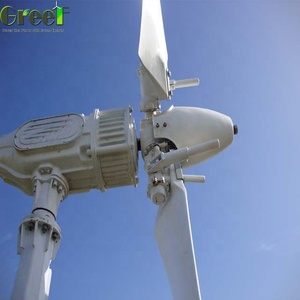
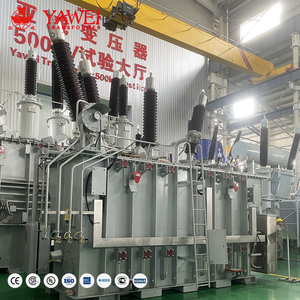
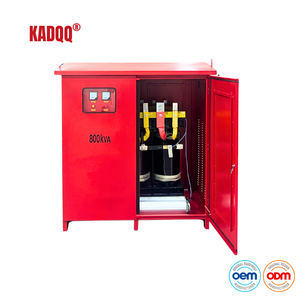
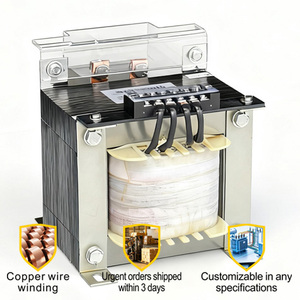
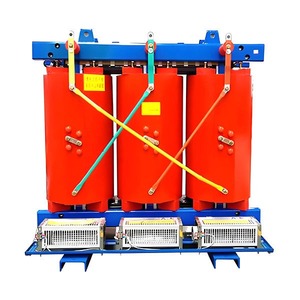
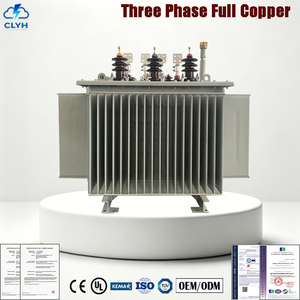
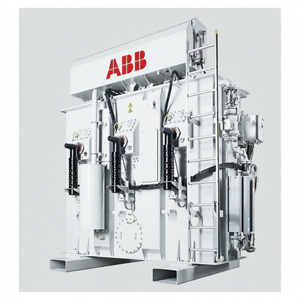
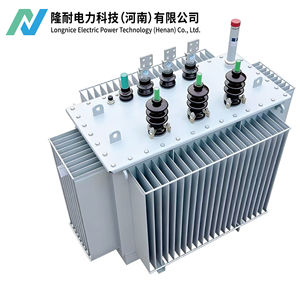
China's Solar Transformer Manufacturing Ecosystem: Engineering Excellence & Supply Chain Dominance
As global utility-scale solar photovoltaic (PV) and wind power installations scale toward gigawatt-level capacities, the transformer has transitioned from a standard passive distribution asset into a highly complex, critical link within renewable power conversion architecture. Chinese solar transformer factories have established global leadership by integrating advanced silicon steel core processing, precision automated foil winding, non-destructive vacuum pressure impregnation (VPI), and stringent dielectric testing protocols.
In modern 1500V DC central inverter solar plant designs, step-up transformers operate under exceptionally harsh operational profiles. Unlike traditional utility distribution transformers that handle smooth, sinusoidal 50/60Hz grid loads, solar step-up transformers (often rated at 3.125 MVA, 4.4 MVA, 6.25 MVA, or even 12.5 MVA for multi-inverter configurations) are subjected to severe harmonic voltage distortions (THD), high-frequency pulsed width modulation (PWM) switching transients, direct current (DC) bias injection from inverter switching, and dramatic ambient temperature fluctuations.
Core Engineering Parameters of Solar Inverter Duty Transformers
Leading solar transformer factories in China adhere to specialized design frameworks such as IEEE C57.159 (Guide for Application of Transformers in Distributed Photovoltaic Power Generation Systems) and IEC 60076-16 (Rules for Transformers for Wind Turbine Applications). Key engineering customizations include:
- Multi-Winding Low-Voltage (LV) Inputs: Modern central inverters frequently aggregate dual, triple, or quad inverter outputs onto a single step-up transformer core. This requires split LV windings with high magnetic decoupling to prevent short-circuit cross-feeding between inverter channels.
- Electrostatic Shielding & Harmonic Management: Grounded copper electrostatic shields are positioned between primary and secondary windings to attenuate high-frequency noise and block capacitive coupling of inverter switching spikes. Transformers are specified with K-Factor ratings (K-9, K-13, or K-20) to withstand eddy current loss heating caused by 5th, 7th, 11th, and 13th order harmonics.
- DC Offset Suppression & Core Saturation Prevention: DC bias caused by minor timing misalignments in IGBT switching can drive transformer magnetic cores into saturation, increasing excitation current and noise. Top China factories utilize cold-rolled grain-oriented (CRGO) silicon steel with low loss density and design magnetic flux densities conservatively below 1.55 Tesla.
- Thermal Class & Insulation Resilience: Utilizing Class H (180°C) or Class C (220°C) Nomex insulation systems in dry-type transformers, or high-flashpoint synthetic/natural ester bio-oils (FR3) in fluid-filled units, extending operating life even under continuous 110% overload conditions during peak solar irradiance.
| Technical Parameter | Standard Utility Distribution Transformer | Solar PV Inverter Duty Step-Up Transformer |
|---|---|---|
| Primary Waveform Profile | Pure 50Hz / 60Hz Sinusoidal | High Harmonics (PWM Inverter Output, THD up to 5-8%) |
| LV Winding Configuration | Single 3-Phase LV Winding | Split Multi-Winding (Dual, Triple, or Quad Inputs) |
| K-Factor Rating | K-1 (Standard linear loads) | K-9 to K-20 (Non-linear inverter harmonic loads) |
| Electrostatic Shielding | Optional / Rare | Mandatory Faraday Shields between LV & HV Windings |
| Cooling Medium | Standard Mineral Oil (Class A, 105°C) | Synthetic Ester Fluid / High Temp Cast Resin (Class F/H) |
| Voltage Surge Protection | Standard BIL Rating | Enhanced Impulse Withstand (Fast-Transient Protection) |
Future Procurement Trends for Solar & Renewable Energy Transformers
The global energy transition demands ultra-efficient, eco-friendly, and digitally connected transformer solutions. Procurement teams must adapt to evolving technical standards and supply chain mandates.
1. Transition to 66kV Collector Networks
Utility-scale solar farms and offshore wind installations are rapidly migrating from 33kV collector systems to 66kV collector grids. Raising collector voltages reduces cable conduction losses by up to 50%, reduces copper cabling volume, and allows larger block sizes (up to 15MVA per transformer station). Top Chinese manufacturers are pioneering compact 66kV outdoor oil-immersed and gas-insulated transformers specifically tailored for modular solar skids.
2. Biodegradable Ester Fluids (FR3) Adoption
Environmental compliance and fire safety regulations are pushing EPC contractors away from mineral oils toward natural and synthetic ester transformer fluids (K-class dielectric fluids with fire points > 300°C). Ester fluids are 100% biodegradable within 28 days, self-extinguishing in fire scenarios, and extend paper insulation life by absorbing moisture, enabling higher continuous operating thermal margins in hot desert solar environments.
3. Smart IoT Diagnostics & Online DGA
Modern power purchase agreements (PPAs) demand >99.5% plant uptime. Procurement specs now routinely stipulate digital transformer monitoring systems. Features include fiber-optic real-time winding hot-spot temperature sensors, online Dissolved Gas Analysis (DGA) for hydrogen and acetylene monitoring, bushings power-factor sensors, and cloud-integrated Modbus/IEC 61850 telemetry for predictive maintenance.
4. Amorphous Metal Core Technology
With international standards enforcing stricter no-load loss limits (such as EU Ecodesign Tier 2 and US DOE 2016 standards), amorphous alloy core transformers are gaining rapid market share. Amorphous cores reduce no-load magnetizing losses by 70-80% compared to traditional silicon steel, drastically reducing standby power loss during night hours when solar arrays generate zero output.
5. Turnkey Integrated Solar Substation Skids
Global buyers are shifting away from purchasing loose transformers, switchgear, and inverters separately. The industry standard is moving toward factory-assembled, containerized "Solar Power Skids" or Compact Substations containing the step-up transformer, Ring Main Unit (RMU), LV switchboard, auxiliary power transformer, and SCADA gateway pre-tested and ready for plug-and-play field installation.
Enterprise Strengths & World-Class Manufacturing Standards
Combining over 30 years of transformer engineering heritage with cutting-edge production lines, rigorous type testing, and seamless international project delivery.
Comprehensive Quality Certifications & Type Testing
Our manufacturing facility operates under strictly enforced ISO 9001:2015 (Quality Management), ISO 14001:2015 (Environmental Management), and ISO 45001:2018 (Occupational Health & Safety) protocols. Every batch of solar and wind transformers undergoes rigorous routine testing per IEC 60076 specifications.
Furthermore, our transformer design prototypes are independently type-tested and certified by renowned international laboratories including CPRI (Central Power Research Institute) and ERDA (Electrical Research and Development Association). Tests validate short-circuit withstand performance, lightning impulse voltage tolerance, acoustic sound emissions, and temperature-rise limits under full load conditions.
Proven Global Export Footprint & Engineering Customization
With over 40% of total output exported across 40+ countries throughout North America, Europe, the Middle East, Africa, and Southeast Asia, our engineering team understands region-specific grid codes, IEEE/ANSI standards, IEC requirements, and harsh climate adaptations.
From high-altitude solar arrays in the Andes (4,000m+ elevation rating) to corrosive offshore wind environments (C5-M painting systems) and extreme desert solar installations (+55°C ambient temperature capability), we provide tailored magnetic, structural, and electrical transformer designs built to withstand extreme environmental stress.
Solar Transformer Procurement Frequently Asked Questions (FAQ)
Get definitive technical and commercial answers from our senior transformer application engineers.
Ready to Engineer Your Renewable Grid Infrastructure?
Partner with China's leading solar transformer factories for high-efficiency, type-tested, and fully customized power transformer solutions. Contact our engineering team for immediate pricing and technical datasheets.