High-Efficiency Power & Distribution Transformers
Explore our export-grade distribution, power, and renewable application transformers manufactured to rigorous IEC 60076 and IS 2026 quality standards.
1. Metallurgical Foundations of Amorphous Metal Transformers
As global electric utility grids transition toward net-zero targets and strict energy efficiency mandates—such as EU EcoDesign Tier 2, US Department of Energy (DOE) 2026 efficiency standards, and China's GB 20052 standards—power system engineers and procurement executives are fundamentally re-evaluating core material physics. At the heart of this technical transition is the strategic adoption of Amorphous Alloy Core Transformers (AMTs).
Traditional distribution transformers rely on Cold-Rolled Grain-Oriented (CRGO) silicon steel cores. CRGO steel possesses a crystalline structure with ordered atomic lattices, which inherently imposes resistance during magnetization cycles. In contrast, amorphous alloys (primarily Fe-Si-B formulations) are manufactured through a rapid solidification process where molten metal is cooled at extreme speeds exceeding 1,000,000°C per second. This ultra-fast quenching prevents the formation of crystalline grains, resulting in a non-crystalline, disordered glass-like atomic structure.
Information Gain Engineering Insight: Because amorphous ribbon exhibits zero grain boundaries and an ultra-thin nominal thickness (typically 0.025 mm compared to 0.18–0.30 mm for CRGO silicon steel), its domain wall motion experiences minimal friction. Consequently, coercive force ($H_c$) is drastically reduced, yielding an extraordinary 70% to 80% reduction in hysteresis loss ($P_h$) and eddy current loss ($P_e$).
Physical & Electromagnetic Comparison Matrix
To quantify the clear engineering advantage provided by China's leading wholesale amorphous transformer exporters, the table below contrasts critical material parameters between premium-grade CRGO silicon steel and Fe-Si-B amorphous alloy cores:
| Material Characteristic | High-Permeability CRGO Steel (e.g., 23ZH085) | Amorphous Alloy Ribbon (1B11 / Fe-Si-B) | Engineering Impact on Transformer Performance |
|---|---|---|---|
| Atomic Structure | Ordered Crystalline Lattice | Disordered Non-Crystalline (Glassy) | Eliminates grain-boundary resistance during magnetic flux reversals. |
| Nominal Ribbon Thickness | 0.18 mm – 0.27 mm | 0.025 mm (25 microns) | Proportionally lowers eddy current losses by a factor of 10x. |
| Saturation Flux Density ($B_s$) | 1.90 – 2.03 Tesla | 1.56 Tesla | Requires precise core sizing & magnetic density design ($\le 1.35-1.40\text{ T}$). |
| Coercive Force ($H_c$) | ~8.0 A/m | ~2.4 A/m | Massive reduction in energy required per magnetization cycle. |
| Specific Core Loss at 50Hz, 1.3T | ~0.85 W/kg | ~0.20 W/kg | 76.5% reduction in continuous 24/7 no-load losses ($P_0$). |
| Magnetostriction Coefficient | $1.0 \times 10^{-6}$ | $27 \times 10^{-6}$ | Requires specialized flexible core clamping to dampen acoustic vibration. |
2. Mathematical Loss Analysis & Total Cost of Ownership (TCO)
When evaluating wholesale transformer suppliers in China, savvy B2B buyers must move beyond initial capital expenditure (CAPEX) to calculate Total Cost of Ownership (TCO) over a 30-year design lifecycle. Because distribution transformers remain energized 8,760 hours per year regardless of load, continuous core losses (no-load loss $P_0$) represent a massive cumulative expense for electrical utilities and industrial industrial operations.
The total active power loss ($P_T$) of a transformer operating at load factor $K$ is modeled by:
$$P_T = P_0 + K^2 \cdot P_k$$
Where $P_0$ is No-Load (Core) Loss in kW, $P_k$ is Load (Copper/Winding) Loss at rated capacity in kW, and $K$ is average loading factor ($\text{Load} / \text{Rated Capacity}$).
The economic evaluation of transformer procurement uses capitalized loss formulas established by IEEE C57.12.33 and IEC standards:
$$\text{TCO} = A \cdot P_0 + B \cdot P_k + \text{Initial Purchase Price (CAPEX)}$$
Where $A$ is the capitalized cost of no-load loss ($/kW, typically $6,000–$10,000/kW based on grid electricity costs) and $B$ is the capitalized cost of load loss ($/kW, typically $1,500–$3,000/kW).
30-Year Financial Simulation: 1000 kVA Transformer
Consider a grid utility procuring a 1000 kVA distribution transformer operating at an average 50% load factor ($K=0.5$) with electricity valued at $0.12 / kWh:
- Standard Silicon Steel (S11/Tier 2 CRGO): $P_0 = 1,150\text{ W}$, $P_k = 10,300\text{ W}$. Annual no-load loss consumption = $1.15\text{ kW} \times 8760\text{ hrs} = 10,074\text{ kWh}$. 30-year core loss energy cost = $36,266.
- China Amorphous Metal (SH15 Series): $P_0 = 260\text{ W}$, $P_k = 10,300\text{ W}$. Annual no-load loss consumption = $0.26\text{ kW} \times 8760\text{ hrs} = 2,277.6\text{ kWh}$. 30-year core loss energy cost = $8,200.
Net Direct Savings: Purchasing a China wholesale amorphous transformer saves $28,066 in core energy losses alone per unit—more than double the original transformer procurement cost!
3. Specialized Industrial Applications & Product Architecture
Chinese wholesale amorphous transformer exporters supply diverse, harsh-environment configurations engineered for high operational uptime, extreme climate resistance, and complex harmonic loads.
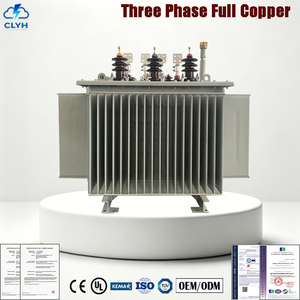
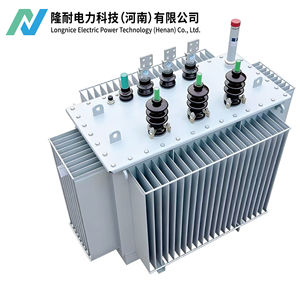
Oil-Immersed Amorphous (SH15/SH17)
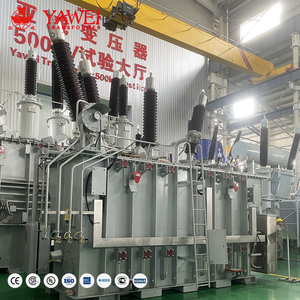
Hermetically sealed tanks filled with high-dielectric mineral oil or biodegradable synthetic ester fluid. Features corrugated radiated walls and maintenance-free nitrogen cushions for rural and urban utility grids.
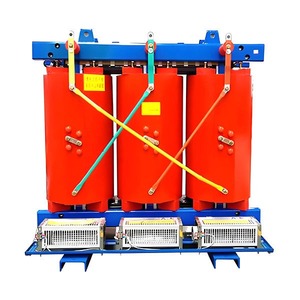
Cast Resin Dry-Type (SCBH15/SCBH17)
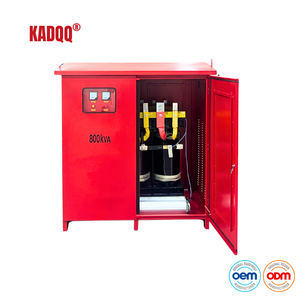
Vacuum pressure resin-encapsulated epoxy insulation (Class H, 180°C). Fire-retardant, self-extinguishing, and moisture-proof. Engineered specifically for high-rise commercial structures, data centers, and underground subways.
Renewable Solar & Wind Inverter-Duty
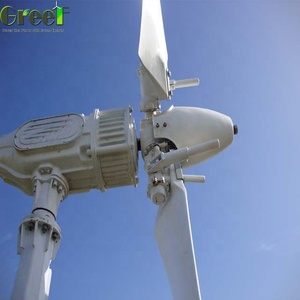
Specialized multi-winding isolation transformers designed to handle high harmonic distortion ($THD$), rapid voltage fluctuations, and DC offset currents inherent to large-scale PV solar inverters and offshore wind turbines.
4. Why Partner with China Wholesale Amorphous Transformer Exporters?
China has established the world’s most integrated supply chain ecosystem for amorphous alloy production, ribbon casting, automated core annealing, and complete transformer assembly. Partnering with elite Chinese exporters provides global B2B buyers distinct strategic advantages:
A. Advanced Longitudinal Magnetic Field Annealing
Amorphous metal ribbons are inherently brittle and sensitive to mechanical stress. Leading Chinese manufacturers utilize continuous, high-vacuum, longitudinal magnetic field annealing furnaces. This process aligns magnetic domains perfectly along the ribbon's axis, relieving mechanical stress while optimizing magnetic flux permeability.
B. Rigorous Quality Control & International Certification Compliance
Tier-1 Chinese amorphous transformer exporters operate under strict quality frameworks compliant with ISO 9001:2015, ISO 14001:2015, and ISO 45001. Transformers undergo routine, type, and special testing at internationally accredited third-party laboratories such as CPRI (Central Power Research Institute), ERDA, KEMA, and TÜV Rheinland. Tests verify:
- Full Impulse Voltage Withstand (BIL): Validating insulation resistance against lightning surges up to 170kV+.
- Short-Circuit Thermal & Dynamic Withstand: Ensuring mechanical stability during severe external grid faults.
- Partial Discharge Measurement: Guaranteeing $< 5\text{ pC}$ for dry-type cast resin units to ensure 30+ year dielectric integrity.
- Acoustic Noise Spectrum Analysis: Advanced dampening techniques ensure sound levels remain below 45-55 dBA.
C. Seamless OEM / ODM Customization & Global Logistics
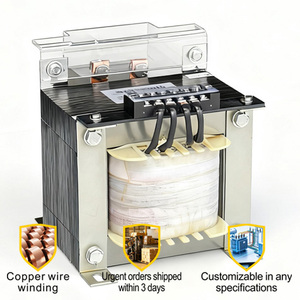
From custom primary/secondary voltages (e.g., 11kV, 22kV, 33kV, 34.5kV, 66kV down to 0.4kV / 415V / 220V) to specialized vector groups (Dyn11, Yyn0, Dd0, Ynd11) and On-Load Tap Changers (OLTC), Chinese exporters offer complete turnkey customization packaged in sea-worthy heavy-duty timber crating with vacuum moisture barriers.
5. Frequently Asked Questions (FAQ) for B2B Procurement Managers
Partner with China's Premier Amorphous Transformer Exporters
Upgrade your grid infrastructure, reduce lifetime operational expenditure, and meet net-zero carbon efficiency targets with custom-engineered amorphous metal transformer solutions.