Featured Unit Substations & Industrial Transformers
Factory-direct engineering solutions compliant with IEC 60076, IS 2026, IEEE C57, and CE certifications. Optimized for harsh environments, renewable power grids, and industrial heavy loads.
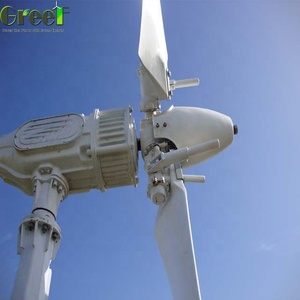
Aluminium Body Small Wind Turbine for Farm
- Aerodynamic Lightweight Alloy Shell
- Off-Grid Rural & Agricultural Power
- Corrosion-Resistant Weather Coating
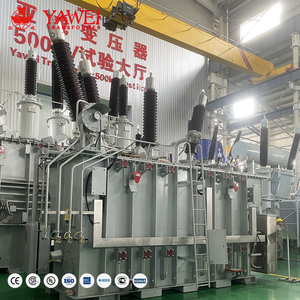
Yawei 10MVA–20MVA 69KV/33KV Power Transformer
- 100% Electrolytic Pure Copper Winding
- Vector Group Dyn11 / 60Hz Grid Ready
- CPRI / ERDA Type-Tested Performance
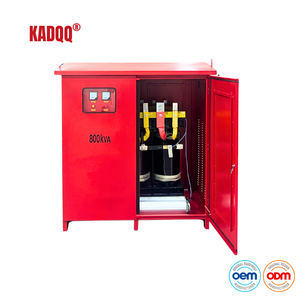
800KVA Wind Generator Isolation Transformer IP65
- IP65 Outdoor Enclosure Grade
- Renewable Energy Harmonic Filtering
- CE Certified High Dielectric Isolation
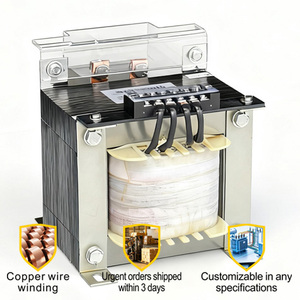
5KVA–10kVA Single Phase Control Transformer
- 110/220V Stepped down to 36/48V
- Packaging & Industrial Automation
- ISO / CE Compliant Copper Coils
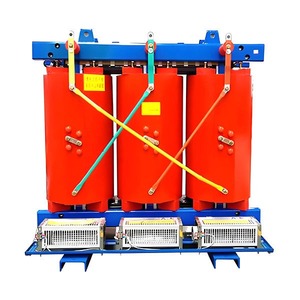
33KV/35KV/38.5KV Wind Turbine Dry Type Transformer
- Fire-Retardant F-Class Resin Cast
- Customizable Building & Turbine Specs
- Zero Flammability Flame-Self-Extinguishing
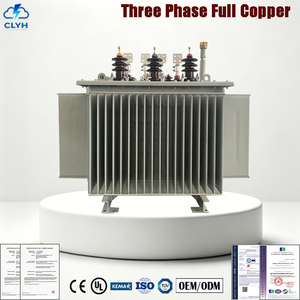
100kVA 10/0.4kV Oil Immersed Distribution Transformer
- Low No-Load Losses (IEC 60076)
- Hermetically Sealed Tank Technology
- Ideal for Public Grid Distribution
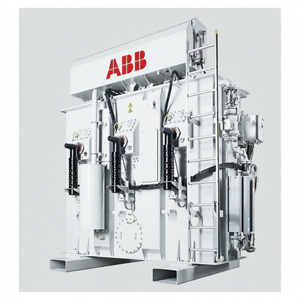
ABB (Hitachi Energy) Offshore Wind Transformer 5–25MVA
- 66kV–72.5kV High Voltage Class
- C5-M Marine Environment Protection
- Genuine OEM Electrical Substation Grade
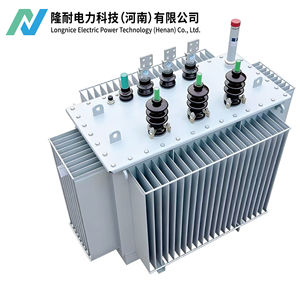
S11 3-Phase Oil Immersed Transformer 10kV/0.4kV
- S11 Energy-Efficient Core Architecture
- High Short-Circuit Resistance
- Long-Life Industrial Power Distribution
Why Engineering Procurement & Construction (EPC) Managers Trust Our Supply Chain
With over 30 years of transformer manufacturing heritage since 1991, our production ecosystem delivers certified high-voltage gear, compact unit substations, and specialty converter duty transformers tailored for global utility standards.
Rigorous Quality Assurance & In-House Testing Infrastructure
Engineering power grid infrastructure demands uncompromising electrical integrity, acoustic silence, and thermal endurance. Our manufacturing hubs integrate state-of-the-art Vacuum Pressure Impregnation (VPI) plants, automated core-cutting lines, and dedicated temperature-rise test bays audited directly for BIS and IEC compliance. Every unit substation leaving our production line undergoes rigorous routine testing including lightning impulse withstand (BIL), partial discharge analysis, winding resistance, dissolved gas analysis (DGA), and short-circuit withstand verification.
Over 40% of our enterprise output powers international utility grids, commercial data centers, offshore wind farms, and heavy metallurgical plants across Europe, Africa, the Middle East, and Asia. As qualified tier-1 vendors for multinational engineering groups, we ensure full compliance with IS 2026, IS 1180, IEC 60076, and IEEE C57 standards.
Certified Quality Management
Fully accredited under ISO 9001:2015 (Quality), ISO 14001:2015 (Environmental Management), and OHSAS 18001/ISO 45001. All materials traceable to primary source foundries.
Custom OEM/ODM Engineering
Custom engineering for challenging footprints, extreme ambient temperatures (-40°C to +55°C), high-altitude de-rating, and seismic-resistant heavy enclosures.
Factory Acceptance Testing (FAT)
Complete customer or third-party (SGS, TÜV, Bureau Veritas) inspection access with full digital oscillograph records for impulse & noise tests.
Anatomy of Modern Unit Substations: Modular Engineering & Design Criteria
Replacing traditional field-erected open substations with pre-engineered, factory-tested Compact Unitized Substations (CSS) reduces installation timelines by up to 70% while mitigating site civil safety risks.
A standard **Unit Substation** (also known as a Compact Substation or Package Substation) integrates three distinct functional enclosures into a single, factory-assembled, lockable, and weather-proof housing: the High Voltage (HV) Switchgear Compartment, the Distribution/Power Transformer Bay, and the Low Voltage (LV) Switchboard Assembly. Designed according to **IEC 62271-202**, these systems safeguard operator personnel through internal arc containment and IP-rated segregated compartments.
Key Engineering Insight: Information Gain for Substation Procurement
When procuring wholesale unit substations, evaluating the Enclosure Class (K-factor) per IEC 62271-202 is critical. Enclosure classes (Class 10, 15, 20, 30) define the thermal rise of the transformer inside the housing compared to open air. Selecting an improperly ventilated enclosure forces artificial de-rating of transformer MVA capacity. Our designs utilize fluid-dynamic optimized ventilation louvers and thermal radiation barriers to maintain 100% rated capacity without premature insulation degradation.
Compartmental Structural Breakdown
1. High Voltage (HV) Switchgear
Houses Ring Main Units (RMU) utilizing SF6-free or vacuum circuit breaker technology. Operating voltages range from 11kV up to 40.5kV with motorized automation options for remote grid switching via IEC 61850 protocols.
2. Transformer Core & Winding Bay
Options for Hermetically Sealed Oil-Immersed (mineral oil or biodegradable natural ester) or Cast Resin / VPI Dry Type transformers. Incorporates pressure relief devices, Buchholz relays, and winding temperature detectors (RTDs).
3. Low Voltage (LV) Distribution Bay
Contains main Air Circuit Breakers (ACB) or Molded Case Circuit Breakers (MCCB), busbar distribution systems, active power factor correction (APFC) capacitor banks, and smart energy metering units.
Comparative Technical Analysis: Compact Substation vs Conventional Open-Yard Substation
| Evaluation Parameter | Modular Compact Unit Substation | Conventional Built-in-Place Substation | Procurement Benefit |
|---|---|---|---|
| Physical Footprint | Minimal (Up to 75% smaller footprint) | Large land area required for clearances | Ideal for high-density urban & farm sites |
| Installation Lead Time | Plug-and-play (1–2 days site commissioning) | 3 to 6 months civil work & assembly | Accelerates project ROI & grid connection |
| Safety & Public Access | Fully enclosed metal/concrete kiosk (IP54/65) | Exposed high-voltage busbars, fencing required | High safety for public, industrial, & wind sites |
| Environmental Protection | Built-in oil containment tray & anti-corrosion shell | Risk of uncontained oil spills into soil | Complies with strict EPA & ESG mandates |
| Maintenance Overhead | Sealed components, minimal site maintenance | Regular open insulator cleaning & busbar maintenance | Lowers long-term Operational Expenditure (OPEX) |
Key Technological Trends Transforming Unit Substation Sourcing
Global decarbonization goals, smart grid expansion, and microgrid deployments are fundamentally shifting how B2B buyers evaluate unit substation suppliers. Below are the key industry vectors defining modern procurement requirements.
1. Direct Integration with Renewable & BESS Microgrids
Modern unit substations must handle bi-directional power flows, rapid solar/wind voltage fluctuations, and steep ramp rates from Battery Energy Storage Systems (BESS). Leading Chinese manufacturers now integrate specialized step-up transformers with dual low-voltage windings designed to accept direct inputs from multiple solar central inverters simultaneously, cutting system losses by 1.5%.
2. Adoption of Eco-Friendly Natural Ester Dielectric Fluids
With environmental compliance tightening, traditional mineral oil is rapidly being replaced by synthetic and natural ester fluids (e.g., FR3). Ester fluids offer high fire flashpoints (>300°C vs mineral oil's 140°C), classifying substations as non-flammable and eliminating the need for expensive fire-deluge walls in urban settings.
3. IoT-Enabled Smart Substation Monitoring
Condition-based predictive maintenance is replacing manual inspection schedules. Modern substations feature fiber-optic winding thermal sensors, online DGA gas monitors, humidity sensors, and cloud-connected RTUs communicating via Modbus/IEC 61850 to allow remote utility monitoring and auto-diagnostics.
4. SF6-Free Clean Air Switchgear Technologies
SF6 gas (Sulfur Hexafluoride) possesses a global warming potential 23,500 times higher than CO2. Wholesale buyers are increasingly specifying clean-air or vacuum-insulated MV switchgear inside unit substations to eliminate greenhouse gas liabilities and simplify end-of-life recycling.
Step-by-Step Risk Mitigation Checklist for Importing Unit Substations
Mitigate technical risk and prevent costly project delays when sourcing high-voltage electrical equipment internationally by following this audited procurement framework.
Verify Standard Compliance & Third-Party Type Test Reports
Ensure the supplier provides non-expired type test reports from internationally recognized ILAC-accredited laboratories (such as CPRI, ERDA, KEMA, or TÜV) confirming short-circuit withstand withstand capability and basic impulse level (BIL) tests.
Evaluate Winding Material (Electrolytic Copper vs Aluminum)
Specify 100% High-Grade Electrolytic Copper for high-load industrial, furnace, and marine environments where short-circuit stresses and thermal expansions are extreme. For standard rural distribution, quality aluminum windings with copper busbar interfaces offer a cost-effective alternative.
Confirm Corrosion Protection Class for Coastal & Offshore Deployment
For coastal wind farm or desert oil & gas projects, specify ISO 12944 C5-M or C4 high-durability epoxy paint systems, hot-dip galvanized enclosures, or 304/316L stainless steel kiosks to prevent salt-spray atmospheric degradation.
Establish Factory Acceptance Testing (FAT) Protocol
Demand pre-shipment FAT inspections including voltage ratio, vector group verification, insulation resistance, no-load & load loss measurement, and oil breakdown voltage (BDV) tests witnessed remotely or via third-party inspectors.
B2B Procurement & Technical FAQ
Addressing core engineering, customization, logistical, and operational queries from global buyers.
Q1: What voltage ranges and power capacities do your unit substations cover?
Our standard modular compact substations cover High Voltage (HV) ratings from 6kV up to 40.5kV (including 10kV, 11kV, 22kV, 33kV, and 35kV grids) and Low Voltage (LV) secondary outputs from 400V up to 690V. Power capacities range from 100 kVA distribution kiosks up to 25 MVA heavy-duty power unit substations for wind farms and industrial plants.
Q2: What is the difference between VPI Dry Type and Cast Resin Transformers in a unit substation?
Vacuum Pressure Impregnated (VPI) dry transformers utilize high-temperature Class H/N insulation varnish processed under vacuum to penetrate organic windings, providing high mechanical flex resistance. Cast Resin (CRT) transformers completely encapsulate the windings in solid epoxy resin under vacuum, offering total moisture resistance, zero flammability (Class F1 fire reaction), and superior protection against heavy ambient dust or chemical fumes.
Q3: How do you ensure long-term corrosion resistance for coastal or island deployments?
For high-salinity or harsh marine environments, our outdoor unit substation enclosures undergo a multi-stage surface preparation including shot-blasting to SA 2.5 grade, followed by zinc-rich epoxy priming and polyurethane topcoats engineered to ISO 12944 C5-M specifications. We also offer 304 or 316L stainless steel enclosures for extreme marine exposures.
Q4: Are your compact substations compliant with international grid codes and standards?
Yes. All units are fully designed, built, and routine-tested in strict adherence to IEC 62271-202 (High-voltage switchgear - Compact substations), IEC 60076 (Power transformers), IS 2026, IS 1180, and IEEE C57 standards. Third-party type-test certificates from CPRI, ERDA, or KEMA are available upon request.
Q5: Can the low-voltage compartment be customized with smart energy management devices?
Absolutely. We customize LV bays with specified circuit breaker brands (Schneider, ABB, Siemens, Chint), Automatic Power Factor Correction (APFC) capacitor banks, surge protection devices (SPD), active harmonic filters, and IoT gateway meters supporting Modbus RTU / IEC 61850 protocols for SCADA integration.
Q6: What lead time should be expected for custom OEM unit substation manufacturing?
Standard rating units (e.g., 10kV to 400V up to 1250kVA) typically ship within 25 to 35 days post drawing approval. Complex multi-megawatt substations with special OLTC (On-Load Tap Changers), dual LV windings, or custom stainless steel enclosures take approximately 45 to 60 days from technical sign-off.
Q7: How are unit substations packaged and transported for global ocean freight?
Units are factory-assembled, sealed, and shipped inside 20ft or 40ft High Cube containers or Open Top / Flat Rack containers for larger MV MVA designs. Internal components are structurally braced to withstand high sea-transit G-forces, wrapped in heavy-duty VCI anti-corrosion barrier foil, and packed with silica desiccant bags.
Q8: How is thermal dissipation handled inside a compact enclosed substation?
We perform 3D Computational Fluid Dynamics (CFD) thermal analysis during the design phase. Kiosks feature labyrinth-style natural airflow ventilation louvers (IP23/IP54 rated) combined with thermostatically controlled forced-air cooling fans that activate automatically under heavy load conditions or elevated ambient temperatures.
Q9: Do you supply specialized Converter Duty or Furnace Transformers within substations?
Yes. We manufacture heavy-duty converter duty transformers specifically engineered to withstand severe harmonic currents (K-factor ratings up to K-20) associated with multi-pulse rectifiers, variable frequency drives (VFD), and electric arc furnace operations without overheating or dielectric breakdown.
Q10: What warranty terms and field support options do you offer for export orders?
We provide a standard 18 to 24-month comprehensive warranty from the date of shipment, backed by 24/7 remote technical commissioning support. On-site commissioning engineers and long-term spare parts kits (gaskets, bushings, protection relays) can also be included in project contracts.
Request a Customized Technical Quote for Your Electrical Project
Connect directly with our senior transformer application engineers to receive custom single-line diagram (SLD) reviews, detailed CAD dimensions, and factory-direct price estimates within 24 hours.