Precision Engineered OEM Power Reactors & Transformers
Explore our flagship, type-tested heavy equipment portfolio engineered for renewable integration, industrial power compensation, and high-voltage grid utility applications.
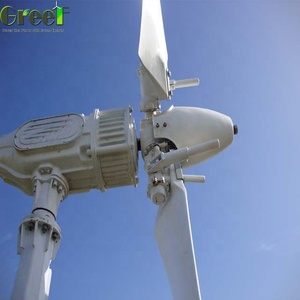
Aluminium Body Small Wind Turbine for Farm
- High-durability OEM housing
- Low start-up torque design
- Farm & microgrid optimization
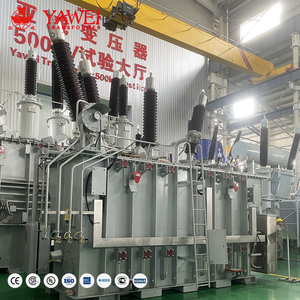
10MVA-20MVA 69KV Power Transformer
- 100% Electrolytic Copper Winding
- Dyn11 Vector Group / 60Hz
- IEC 60076 & IEEE Compliant
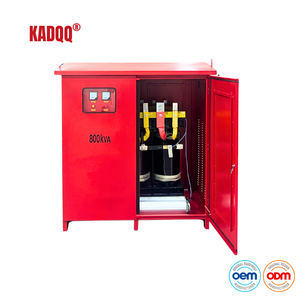
800KVA IP65 Wind Generator Isolation Transformer
- IP65 Harsh Environment Enclosure
- CE Certified for Green Energy
- Superior Short-Circuit Withstand
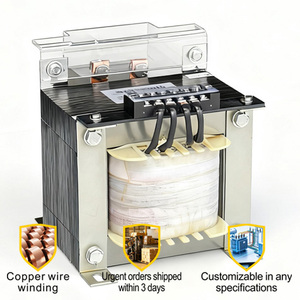
5KVA-10KVA Single Phase Packaging Control Transformer
- 110/220V to 36/48V Step-down
- Pure Copper Core Winding
- CE & ISO 9001 Approved
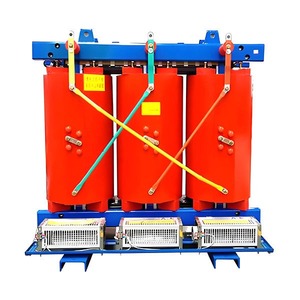
33KV-38.5KV Fire-Safe Dry-Type Wind Transformer
- Class H VPI Insulation System
- Fire Prevention Structure
- High Thermal Load Margin
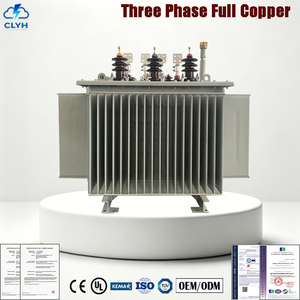
100kVA 10/0.4kV Oil Immersed Distribution Transformer
- Hermetically Sealed Oil Core
- Low No-Load Core Loss
- Utility Grid Certified (IEC/CE)
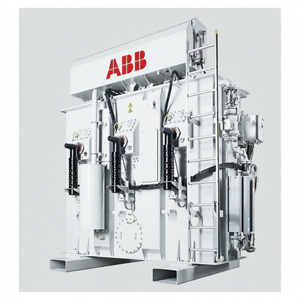
ABB Standard 5-25MVA 66-72.5KV Offshore Wind Unit
- Offshore Corrosion Protection
- High Voltage Substation Duty
- Genuine OEM Architecture
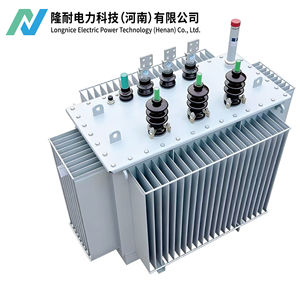
S11 Series 10kV/0.4kV 100% Copper Power Transformer
- High Efficiency S11 Grade
- Extreme Thermal Endurance
- Zero Maintenance Design
Empowering Global Grids Since 1991: Custom OEM Power Reactor Engineering
With over three decades of mastery in electromagnetic induction and power transformation, our facilities represent the pinnacle of industrial OEM manufacturing. Certified under ISO 9001:2015, ISO 14001:2015, and ISO 45001, we deliver bespoke inductive reactor solutions to over 40 countries worldwide.
Verified Compliance & Testing Rigor: Every OEM Power Reactor manufactured within our facilities undergoes stringent routine, type, and special testing according to IEC 60076-6, IEEE C57.21, and IS 2026 standards. Our in-house test bays feature specialized Impulse Voltage Generators, Partial Discharge Analyzers, and Temperature Rise Test Rigs certified by national calibration authorities (NABL).
Custom OEM Power Reactors: Electromagnetic Topology & Application Architecture
Modern power distribution and transmission networks encounter severe dynamic stress—from voltage surges and capacitive reactive power imbalances to non-linear harmonic pollution. Power reactors serve as the fundamental inductive shield for critical electrical infrastructure.
Shunt Reactors (HV & EHV)
Essential for capacitive VAR compensation on long high-voltage transmission lines. Designed with gapped core structures (using high-permeability CRGO steel) to maintain linear inductance up to 150% rated voltage, suppressing the Ferranti Effect and maintaining grid voltage stability during light-load periods.
Current Limiting Series Reactors
Engineered to restrict prospective short-circuit fault currents to levels within the rated breaking capacity of downstream circuit breakers. Featuring high mechanical strength, electromagnetic force balance, and flame-retardant VPI (Vacuum Pressure Impregnation) resin encapsulation.
Detuned & Filtering Reactors
Connected in series with power factor correction (PFC) capacitors to prevent dangerous resonance conditions. Specially designed with low magnetic flux density to handle high harmonic current distortion (3rd, 5th, 7th, 11th, and 13th harmonics) without core saturation.
OEM Engineering Differentiation: Core vs. Air-Core Reactor Selection
Choosing between iron-core (gapped CRGO silicon steel) and dry-type air-core reactors depends on space constraints, magnetic stray field requirements, and installation environment. Our OEM engineering team conducts Finite Element Method (FEM) electromagnetic field simulations to eliminate eddy-current heating in structural tank walls and ensure precise inductance tolerance (±2.5%).
Custom OEM Power Reactor Technical Parameters
Standard parameters for custom manufacturing. All electrical, mechanical, and thermal parameters are customizable based on project specification datasheets.
| Reactor Type | Voltage Class | Capacity Range (kVAR / MVAR) | Cooling Method | Insulation System | Applicable Standards |
|---|---|---|---|---|---|
| Oil-Immersed Shunt Reactor | 11kV - 400kV | 500 kVAR to 100 MVAR | ONAN / ONAF | Class A (Mineral Oil / Synthetic Ester) | IEC 60076-6, IEEE C57.21 |
| Dry-Type VPI Series Reactor | Up to 36kV | 50 kVAR to 15 MVAR | AN / AF (Air Natural/Forced) | Class H (180°C Nomex / Polyester Resin) | IEC 60076-6, IS 5553 |
| Cast Resin Detuned Reactor | 400V - 11kV | 10 kVAR to 2,500 kVAR | AN | Class F (155°C Epoxy Resin) | IEC 60076-6, EN 61558-2-20 |
| Smoothing / DC Reactor | Up to 1500V DC / 33kV AC | 100A to 6,000A DC | AN / Water Cooled | Class H / Class C | IEC 60146, IEEE 1653.2 |
| Neutral Grounding Reactor (NGR) | 3.3kV - 66kV | 10A to 3,000A (10s - Cont.) | AN / ONAN | Class F / Class H | IEEE 32, IEC 60076-6 |
Global Power Reactor Procurement Trends & Technology Evolution (2025–2035)
Analyzing the global market transition driven by renewable integration, grid decarbonization, and smart grid automation.
1. Massive Expansion in Renewable Grid Interconnection
The global surge in utility-scale solar PV and offshore wind power plants demands sophisticated dynamic reactive power compensation. Variable renewable generation introduces voltage fluctuations, requiring OEM factories to supply high-duty, fast-responding variable shunt reactors (VSRs) and harmonic filtering reactors rated up to 72.5kV and 400kV.
2. Adoption of Eco-Friendly Synthetic Ester Insulation
Environmental regulations and fire safety requirements are driving global EPCs away from traditional mineral oil. Modern power reactors increasingly utilize biodegradable synthetic and natural ester fluids (K-class fluids with fire points >300°C), making them ideal for urban substations, offshore wind platforms, and environmentally sensitive zones.
3. Smart Reactor Diagnostics & IoT Integration
Procurement managers are prioritizing equipment equipped with online monitoring capabilities. Modern power reactors feature integrated fiber-optic hotspot temperature sensors, dissolved gas analysis (DGA) monitors, dynamic vibration monitoring, and real-time loss tracking connected directly to substation SCADA systems via IEC 61850 protocols.
4. Focus on Total Cost of Ownership (TCO) & Low Losses
With energy costs escalating globally, procurement evaluation models have shifted from simple initial capital expenditure (CAPEX) to TCO analysis. OEM reactor designs utilize laser-scribed domain-refined CRGO steel and multi-strand transposed copper conductors (CTC) to minimize no-load hysteresis and eddy-current losses over a 30-year lifecycle.
Frequently Asked Questions by Industrial Buyers & EPC Engineers
Expert answers to critical procurement, customization, and engineering queries regarding OEM Power Reactors.
What is the primary difference between a Power Transformer and a Power Reactor?
While a power transformer is designed to transfer electrical energy between voltage levels via electromagnetic induction with low internal impedance, a power reactor is designed specifically to introduce a precise amount of inductive reactance into a system. Power reactors limit short-circuit currents, filter electrical noise/harmonics, adjust power factors, or compensate for line capacitance.
Why is custom OEM manufacturing essential for power reactors?
Power reactors operate in highly specific system topologies. Parameters such as system voltage, rated current, required inductance (± tolerance), harmonic spectrum (e.g., 5th vs 7th harmonic detuned factor 5.67% or 7%), short-time current withstand capacity, thermal dissipation limits, and physical dimensional constraints require tailor-made electromagnetic and structural engineering rather than off-the-shelf catalog ordering.
What insulation classes are available for dry-type power reactors?
Our dry-type power reactors are manufactured using Class F (155°C) or Class H (180°C) insulation systems utilizing high-grade epoxy resin casting or Vacuum Pressure Impregnation (VPI) with Dupont Nomex insulation papers. Class H insulation provides superior thermal margins for high ambient temperature installations (up to 55°C) and heavy cyclic loading.
How do you ensure low noise levels in iron-core power reactors?
Magnetostriction in the iron core and electromagnetic forces across air gaps are the main sources of noise in reactors. We suppress acoustic noise below 60 dBA by using high-density step-lap CRGO core laminations, non-magnetic gap spacers bonded with high-rigidity structural adhesives, tie-rod core clamping frameworks, and vibration-dampening elastomeric pads under the core frame.
What standard type tests are conducted before international shipping?
In accordance with IEC 60076-6 and IEEE C57.21, routine and type tests include: Inductance and Impedance Measurement, Winding Resistance Measurement, Insulation Resistance (IR) & Polarization Index (PI), Dissipation Factor (Tan Delta), Temperature Rise Test, Lightning Impulse Voltage Withstand Test, Acoustic Noise Level Test, and Short-Circuit Dynamic Withstand Verification (certified by CPRI/ERDA).
What export packaging and ocean transport standards are followed?
All export equipment is packaged in ISPM-15 heat-treated, fumigated seaworthy wooden crates with internal vapor corrosion inhibitor (VCI) vacuum packing, desiccant bags, and impact/tilt indicators. For heavy oil-immersed reactors, tanks are filled with dry nitrogen gas under positive pressure during transit to prevent insulation moisture ingress.
Streamlined 5-Step OEM Custom Manufacturing Workflow
From initial single-line diagram (SLD) review to global site commissioning support.
Spec Consultation
Review of SLD, system voltage, impedance, harmonic spectrum, and environmental site conditions.
3D FEM Modeling
Electromagnetic, thermal, and mechanical stress simulation to optimize core and winding layout.
Precision Assembly
High-grade copper winding, CRGO core stack assembly, VPI resin impregnation, or tanking.
FAT & Dispatch
Witnessed Factory Acceptance Testing (FAT), third-party inspection, seaworthy packaging, and export shipment.
Ready to Request Technical Proposals & OEM Quotations?
Click the button below to connect directly with our application engineering team and request our full factory catalog.
Get Catalog