Engineered OEM Power Transformer Solutions
Explore our flagship OEM custom-manufactured transformers built to IEC 60076, IEEE C57, and IS 2026 standards for utility grids, renewable installations, and heavy industrial applications.
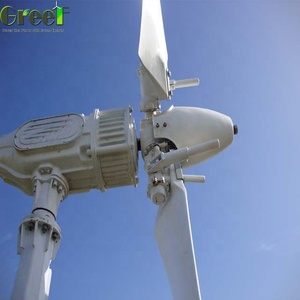
Aluminium Body Small Wind Turbine for Farm
- Corrosion-Resistant Enclosure
- Low Cut-In Wind Velocity
- Farm & Off-Grid Optimized
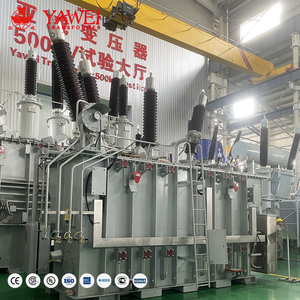
Yawei 10 MVA 15MVA 20MVA 67KV 69KV 33KV Power Transformer Copper Winding Dyn11
- 100% Electrolytic Copper Winding
- High Dielectric Oil Insulation
- Substation & Utility Grid Ready
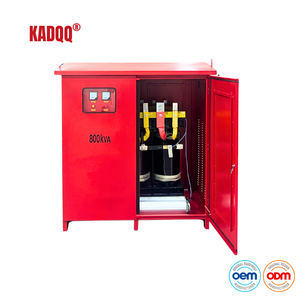
Wind Turbine Generator Isolation Transformer 800KVA IP65 CE Certified
- IP65 Outdoor Enclosure
- Harmonic Suppressing Shield
- Renewable Generation Grade
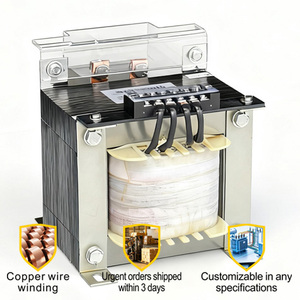
5KVA 10kVA Single Phase Control Transformer 110/220V To 36/48V Pure Copper
- Pure Copper Winding Coils
- Low Stray Load Loss Design
- Packaging & Industrial Machinery
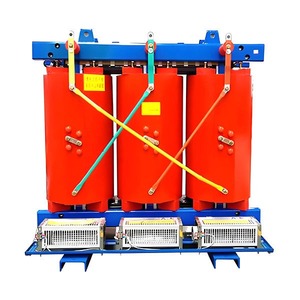
Customizable Fire-Safe Isolation 33KV 35KV 38.5KV Wind Turbine Dry Transformer
- Self-Extinguishing Dry Insulation
- VPI / Cast Resin Technology
- High Thermal Class H / C Rating
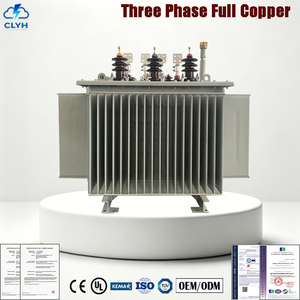
Distribution Transformer 100kVA 10/0.4kV Three Phase Oil Immersed IEC CE
- Hermetically Sealed Oil Tank
- Ultra-Low No-Load Core Loss
- Rural & Urban Grid Compliance
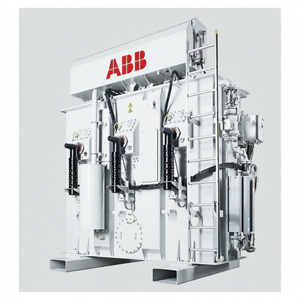
Offshore Wind Turbine Transformer 5-25MVA 66-72.5KV IEC Standard
- Vibration Resistant Core Design
- Marine Environment Coating
- High Voltage Offshore Duty
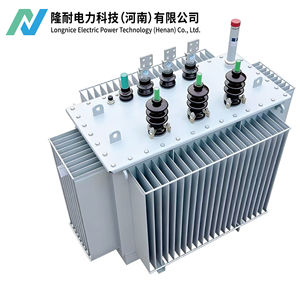
S11 3 Phase Oil Immersed Distribution Transformer 10kV 0.4kV Copper Winding
- S11 High Energy Efficiency Rating
- 100% Pure Electrolytic Copper
- Superior Short-Circuit Strength
Enterprise OEM Manufacturing Excellence & Facility Capabilities
With over three decades of engineering innovation, Urja Techniques (India) Pvt. Ltd. operates state-of-the-art transformer manufacturing facilities headquartered in Mumbai, Maharashtra, delivering custom magnetic solutions worldwide.
Strategic Sourcing Blueprint: Custom OEM Power Transformer Trends (2025–2035)
An executive deep-dive into materials engineering, grid decarbonization, harmonic mitigation, and digitalization shaping transformer procurement strategies over the next decade.
1. High-Permeability Amorphous & CRGO Core Alloys
Global decarbonization mandates are pushing OEM power transformer factories to transition from conventional Cold-Rolled Grain-Oriented (CRGO) steel to high-permeability laser-scribed CRGO and Amorphous Metal Ribbons. Amorphous core technology reduces no-load losses (hysteresis and eddy current loss) by up to 70-80% compared to standard silicon steel grades. Procurement engineers must evaluate the core material's B-H saturation curve and magnetic flux density limit (typically 1.35T–1.40T for amorphous vs 1.7T for CRGO) to optimize transformer footprint versus lifetime operational energy efficiency.
2. Solar & Wind Inverter-Duty Harmonic Resilience
Modern renewable installations introduce steep dV/dt voltage transients, DC bias currents, and elevated harmonic spectrums (5th, 7th, 11th, and 13th harmonics) generated by modern IGBT inverters. Custom OEM power transformer factories must implement electrostatic copper shielding between primary and secondary windings, coupled with K-Factor ratings (K-13 to K-20) and conservative flux density margins. Winding conductor geometry is shifting toward transposed strip conductors to minimize high-frequency eddy current losses inside the copper windings.
3. Biodegradable Ester Dielectric Fluids
Environmental regulations and urban safety fire codes are accelerating the replacement of traditional mineral oils with Synthetic (e.g., Midel 7131) and Natural Ester Fluids (e.g., FR3). Ester fluids offer high fire points (>300°C, Class K), allowing sub-station designs to eliminate expensive explosion-proof blast walls and fire-deluge systems. Furthermore, ester fluids exhibit moisture-absorbing properties that extend the thermal lifespan of solid cellulose paper insulation by up to 300% under high operational load profiles.
4. IoT Telemetry & Online Dissolved Gas Analysis (DGA)
Industry 4.0 integration has transformed the humble power transformer into an intelligent asset node. Top-tier OEM factories are embedding multi-gas DGA sensors, fiber-optic real-time winding hotspot temperature probes, and smart On-Load Tap Changer (OLTC) health monitors. Utilizing IEC 61850 protocol standards, these smart transformers feed operational health data to central SCADA systems, enabling predictive condition-based maintenance and avoiding catastrophic dielectric breakdown.
5. Dry-Type VPI & Cast Resin Fire Safety Surge
For high-rise commercial structures, subway systems, data centers, and underground mining operations, Vacuum Pressure Impregnated (VPI) and Cast Resin Dry-Type Transformers (CRT) have become the default choice. Utilizing Class H (180°C) or Class C (220°C) non-hygroscopic insulation systems, these units eliminate oil-spill risks, provide zero toxic gas emissions during thermal overload, and require minimal routine maintenance over a 30-year operational life.
6. Modular Substation & Custom OEM Adaptability
Rapid infrastructure deployment demands compact, pre-commissioned skid-mounted and unitised electrical substations. Custom OEM power transformer factories are tasked with delivering tailored mechanical dimensions, specialized side-mounted busduct entry boxes, dual-voltage primary windings (e.g., 11kV / 22kV switchable), and custom vector groups (such as Dyn1, Dyn11, or YNd11) to match existing brownfield grid configurations without extensive civil engineering modifications.
Transformer Dielectric & Cooling Technology Comparison
A comparative analysis for procurement directors and electrical design engineers selecting power transformer specifications.
| Transformer Type | Cooling Medium | Max Voltage Class | Fire Safety Index | Maintenance Overhead | Primary Application Areas |
|---|---|---|---|---|---|
| Oil-Immersed (Mineral Oil) | ONAN / ONAF / OFAF | Up to 765 kV+ | Moderate (Class A, Flash Pt ~140°C) | Moderate (DGA, Oil Filtering, Sampling) | Utility Transmission, Heavy Substations, Outdoor Industrial |
| Ester-Fluid Immersed | KNAN / KNAF | Up to 230 kV | High (Class K, Flash Pt >300°C) | Low-Moderate (High Fluid Stability) | Populated Urban Areas, Offshore Wind, Eco-Sensitive Zones |
| Cast Resin Dry-Type (CRT) | AN / AF (Air Natural/Forced) | Up to 36 kV | Highest (Self-Extinguishing, F1 Rated) | Very Low (Visual Dust Wipe, Tightening) | Commercial High-Rise, Hospitals, Subways, Data Centers |
| VPI Dry-Type (Vacuum Impregnated) | AN / AF | Up to 33 kV | Highest (Class H / C Insulation) | Very Low (Moisture & Chemical Resistant) | Mining Operations, Marine Vessels, Chemical Plants, Steel Mills |
Total Cost of Ownership (TCO) & Loss Capitalization Formula
Why initial purchase price represents less than 20% of a power transformer’s 30-year lifecycle cost.
When evaluating commercial bids from custom OEM power transformer factories, procurement teams often make the mistake of selecting the lowest capital expenditure (CAPEX). However, continuous operational electrical losses—comprising No-Load Core Losses ($P_0$) and Load Copper Losses ($P_k$)—accumulate millions of dollars in wasted electricity over a standard 25 to 30-year operational life.
- Cpurchase: Initial Capital Cost of the Transformer (NRE, Equipment, Shipping, Installation).
- P0: Guaranteed No-Load Loss in Kilowatts (Core Hysteresis & Eddy Losses, present 24/7/365 regardless of load).
- Pk: Guaranteed Load Loss in Kilowatts at rated load and reference temperature (75°C or 120°C).
- A ($/kW): Capitalization factor for No-Load Losses ($A = \frac{8760 \times \text{Cost per kWh} \times \text{Present Value Factor}}{\text{Efficiency Rating}}$), typically ranging between $4,000 to $10,000 per kW.
- B ($/kW): Capitalization factor for Load Losses ($B = A \times [\text{Average Load Factor}]^2$), typically ranging between $1,500 to $3,500 per kW.
Strategic Procurement Takeaway: Investing 15% more up-front in a custom OEM transformer built with premium laser-cut CRGO steel laminations, high-purity 99.99% electrolytic copper windings, and optimized magnetic flux densities yields a full Return on Investment (ROI) within 24 to 36 months through reduced $P_0$ and $P_k$ losses.
Custom OEM Power Transformer Procurement & Factory Audit FAQ
Answers to critical technical, quality control, and factory qualification questions asked by global EPC contractors and procurement managers.
What quality standards and factory certifications should an OEM transformer manufacturer possess?
A top-tier OEM transformer factory must maintain ISO 9001:2015 (Quality), ISO 14001:2015 (Environmental), and ISO 45001 (Occupational Health & Safety). Furthermore, their designs must be validated by independent accredited laboratories (such as ERDA, CPRI, KEMA, or CESI) with type-test reports covering Lightning Impulse Withstand, Short-Circuit Thermal and Dynamic Withstand, Temperature Rise, and Acoustic Sound Level measurements in strict compliance with IEC 60076 or IEEE C57 standards.
How does copper winding purity impact power transformer reliability and lifespan?
High-purity (99.99% ETP grade) electrolytic copper guarantees minimal electrical resistance, reduced $I^2R$ load losses, and superior thermal dissipation. Cheap alternatives or lower-grade recycled copper introduce localized hot-spots, accelerate insulation breakdown, and decrease short-circuit mechanical strength. OEM factories like Urja Techniques utilize pure copper windings wrapped in high-density thermally upgraded Kraft paper or Nomex insulation for maximum thermal stability.
What factory tests are mandatory during Factory Acceptance Testing (FAT)?
Standard FAT procedures include: (1) Winding resistance measurement, (2) Voltage ratio and vector group phase verification, (3) Measurement of no-load loss and no-load current, (4) Measurement of load loss and short-circuit impedance, (5) Dielectric routine tests (Applied Voltage AC withstand and Separate Source Voltage Withstand), (6) Insulation resistance & Polarization Index (PI) test, and (7) Partial Discharge measurement for Dry-Type VPI/Cast Resin units (<10 pC limit).
Why is Vacuum Pressure Impregnation (VPI) superior for dry-type industrial transformers?
VPI technology involves immersing pre-heated core-coil assemblies into a sealed pressure vessel, applying deep vacuum (<1 mbar) to evacuate air and moisture from microscopic voids, and injecting high-grade polyester/epoxy resin under positive pressure. The assembly is then thermally cured. This process creates a void-free, moisture-proof, chemical-resistant insulation barrier with exceptional mechanical rigidity, ideal for severe industrial, marine, and mining environments.
How do custom OEM factories design transformers for high-altitude or tropical environments?
Standard transformers are designed for altitudes ≤1000m and ambient temperatures ≤40°C. For extreme operating environments, OEM factories customize: (1) External insulation creepage distance on HV/LV bushings to prevent flashover in thin air or coastal saline atmospheres, (2) Thermal derating factor and enlarged radiator surface areas for high ambients, and (3) Specialized anti-corrosion C4/C5 marine grade paint systems (epoxy primer + polyurethane topcoat).
What are the standard lead times for custom OEM power transformer manufacturing?
Manufacturing lead times depend on KVA/MVA rating, voltage class, and custom engineering requirements. Standard distribution transformers (100kVA–2500kVA) typically require 4 to 6 weeks. Larger power transformers (5MVA–25MVA up to 69kV) require 8 to 12 weeks, inclusive of complete CAD design approval, raw material procurement (specialized CRGO steel and copper strip conductor), assembly, vacuum oil filling, and full FAT testing.
How does an On-Load Tap Changer (OLTC) differ from a De-Energized Tap Changer (DETC)?
A DETC requires the transformer to be completely isolated from the electrical grid before adjusting voltage tap ratios (typically ±2.5% or ±5%). An OLTC allows automated voltage regulation in real time under full load conditions without disrupting power to downstream consumers. OLTC units are essential for utility substations, solar plants, and heavy industrial facilities experiencing volatile grid voltage supply.
What export packaging protections are required for international maritime shipping?
International shipping demands heavy-duty seaworthy packaging. Radiator panels, conservator tanks, and delicate bushings are disassembled and packed in ISPM-15 heat-treated fumigated wooden crates. Main transformer tanks are filled with dry nitrogen gas under positive pressure (0.2–0.3 bar) to prevent moisture ingress, equipped with impact recording sensors to detect transit shocks, and coated with VCI (Vapor Corrosion Inhibitor) protective wraps.
Why Partner with Urja Techniques for Custom OEM Manufacturing
Uncompromising precision engineering, extensive global supply chain capabilities, and robust quality assurance protocols.
In-House Temperature Rise Testing Facility
Unlike many regional manufacturers, Urja Techniques houses an advanced in-built temperature rise test bed. This capability enables us to perform full-load thermal testing on-site—one of the most critical BIS, IS 2026, and IEC type tests—guaranteeing our transformers exceed thermal dissipation design limits prior to dispatch.
Customized Specialized Transformer Lines
Our engineering division specializes in non-standard heavy industrial applications, including Arc Furnace Transformers, Submerged Arc Furnace Transformers, Converter Duty / 12-Pulse / 24-Pulse Rectifier Transformers, Neutral Grounding Earthing Transformers, and Compact Unitised Substations tailor-made to client specifications.
Global Export Footprint & Utility Trust
With 40% of total output exported to over 40 countries across Africa, the Middle East, Europe, and Asia, Urja Techniques is an approved vendor to leading state electricity boards, EPC contractors, mining conglomerates, and multinational industrial corporations worldwide.
Request OEM Technical Specifications & Factory Quotation
Partner with India's premier ISO 9001:2015 certified power transformer manufacturer. Contact our engineering design team today for custom sizing, CAD dimensional drawings, loss capitalization calculations, and comprehensive technical catalogs.