Featured Copper Winding Equipment & Transformers
Custom OEM/ODM manufacturing engineered with 100% Oxygen-Free Electrolytic Copper for ultra-low losses, superior thermal dissipation, and decades of operational reliability.
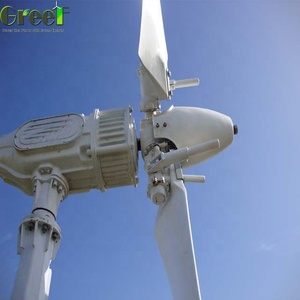
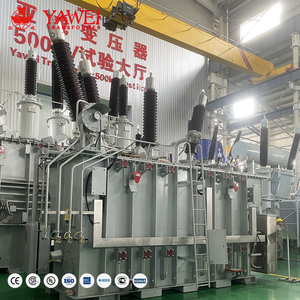
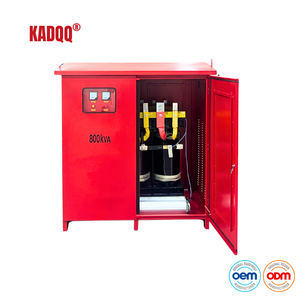
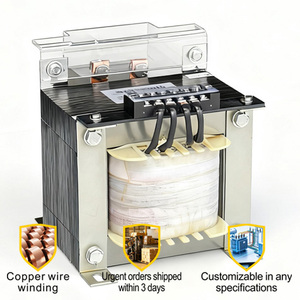
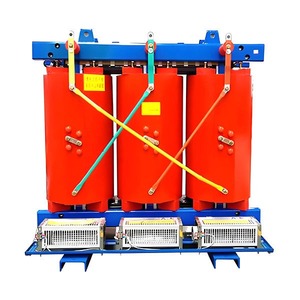
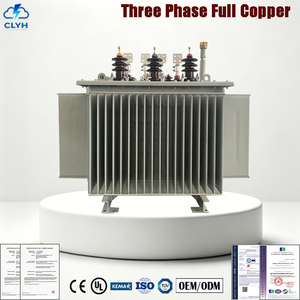
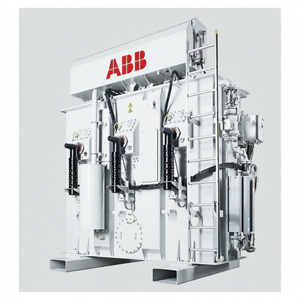
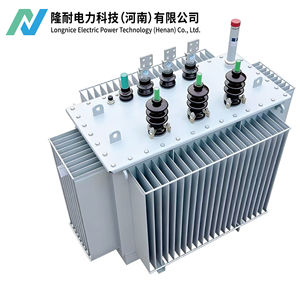
Industrial Leadership in OEM/ODM Copper Winding Manufacturing
Since our establishment in 1991 in Mumbai, Maharashtra, Urja Techniques (India) Pvt. Ltd. has established an international benchmark in designing, manufacturing, and exporting advanced electrical distribution equipment, dry-type transformers, and specialized copper-wound power solutions. Built upon more than three decades of rigorous research and practical field deployments, our organization delivers fully customized OEM and ODM solutions to meet complex utility, industrial, and renewable energy mandates globally.
Operating under certified Quality Management (ISO 9001:2015), Environmental Management (ISO 14001:2015), and Occupational Health and Safety (ISO 45001 / OHSAS 18001) systems, Urja Techniques ensures that every copper-wound assembly engineered in our facilities complies strictly with mandatory national and global directives, including IEC 60076, IS 2026, and IS 1180 standards. Over 40% of our annual production capacity serves international infrastructure projects across Europe, the Middle East, Africa, and Southeast Asia.
Technical Superiority Guarantee: Every unit designed within our manufacturing facility undergoes stringent short-circuit withstand performance, impulse voltage testing, and partial discharge evaluation at national accredited testing labs including ERDA (Electrical Research and Development Association) and CPRI (Central Power Research Institute).
Material Science: Why 100% Oxygen-Free Copper Winding Wins in Utility Applications
In modern high-voltage power transmission, industrial arc furnaces, and variable frequency drive (VFD) applications, electrical transformers encounter severe electromagnetic stresses, high thermal gradients, and aggressive harmonic distortions. While alternative conductor materials like aluminum exist for budget-conscious low-duty applications, pure Oxygen-Free High Conductivity (OFHC) and Electrolytic Tough Pitch (ETP) copper windings remain the gold standard for mission-critical infrastructure.
1. Lower Electrical Resistivity & Minimal I²R Loss
Copper exhibits an electrical conductivity rating of 101% IACS (International Annealed Copper Standard), significantly higher than aluminum (~61% IACS). This inherent physical advantage allows copper-wound transformers to operate with substantially lower internal resistance. The resulting reduction in primary and secondary $I^2R$ copper losses translates directly to higher operational efficiency, reduced thermal dissipation, and thousands of dollars in cumulative lifetime energy savings for utility operators.
2. Exceptional Mechanical Strength & Short-Circuit Withstand Capability
During system fault conditions or grid short-circuits, transformer coils endure extreme radial electromagnetic forces attempting to tear the windings apart. Copper possesses a tensile strength of roughly 200–250 N/mm², nearly double that of commercial electrical aluminum. This structural rigidity prevents coil deformation, inter-turn insulation abrasion, and phase-to-ground flashovers during transient fault events.
| Engineering Parameter | Electrolytic Copper Winding (ETP/OFHC) | Electrical Grade Aluminum Winding | Operational Impact |
|---|---|---|---|
| Electrical Conductivity | 101% IACS (1.724 µΩ·cm) | 61% IACS (2.826 µΩ·cm) | ~40% lower conductor losses ($I^2R$) in copper |
| Tensile Strength (N/mm²) | 220 – 260 N/mm² | 90 – 130 N/mm² | Copper withstands short-circuit electromagnetic stress |
| Thermal Expansion Coeff. | 16.5 × 10⁻⁶ /°K | 23.0 × 10⁻⁶ /°K | Reduced expansion stress on turn insulation |
| Thermal Conductivity | 390 W/(m·K) | 237 W/(m·K) | Rapid hotspot cooling; prevents thermal runaway |
| Volumetric Efficiency | High Power Density / Compact Footprint | Requires ~50% larger cross-sectional area | Copper enables compact substations & space-constrained setups |
Global Procurement Trends: Navigating the Next Era of Transformer Sourcing
As global energy grids undergo rapid decarbonization and electrification, procurement executives, EPC contractors, and plant engineers are adjusting their transformer sourcing strategies. The static purchase decisions of the past have evolved into dynamic multi-variable evaluations focused on total cost of ownership (TCO), grid resilience, and compliance with ultra-strict eco-design standards.
1. Transition to Eco-Design Tier 2 & Low-Loss Standards
Regulatory frameworks such as EU Eco-Design Tier 2 and US DOE 2016 standards demand strict limits on no-load (iron) and load (copper) losses. Buyers are abandoning low-cost, high-loss designs in favor of high-purity copper windings coupled with high-permeability grain-oriented silicon steel (CRGO) cores.
2. Renewable Energy & Dynamic Load Adaptation
Wind and solar installations present highly fluctuating load cycles, reverse power flows, and high harmonic contents. Modern procurement specifications prioritize custom K-factor-rated isolation transformers and step-up dry transformers capable of enduring continuous thermal cycling without insulation fatigue.
3. Total Cost of Ownership (TCO) vs. Initial CAPEX
Leading EPC procurement managers now evaluate vendors based on 30-year lifecycle financial modeling. Because electrical losses generate heat and consume power non-stop, purchasing a high-efficiency copper-wound transformer yields a full return on investment (ROI) within 24 to 36 months of continuous operation.
Next-Generation Development Trends in Copper Winding Manufacturing
To stay ahead of global energy demands, OEM/ODM manufacturing facilities are introducing sophisticated material processes, insulation topologies, and smart monitoring systems directly into the transformer design phase.
A. Vacuum Pressure Impregnation (VPI) & Cast Resin Innovations
For high-rise commercial complexes, metro networks, and subterranean mining applications, dry-type VPI transformers are quickly replacing traditional oil-immersed units due to fire safety mandates. Advanced VPI processes utilize high-purity polyester or epoxy resins applied under deep vacuum pressure cycles. This completely eliminates micro-voids and air pockets within the copper coil layers, lowering partial discharge rates below 10 pC and securing Class H (180°C) or Class C (220°C) thermal endurance.
B. Automated Strip & Foil Winding Precision
Modern high-capacity transformer factories utilize computer-controlled, multi-layer foil and strip winding machines. By replacing round wire conductors with rectangular copper foil in secondary low-voltage windings, manufacturers eliminate axial short-circuit forces, improve heat transfer coefficients, and achieve unmatched packing factors.
C. Smart Transformer Integration & IoT Sensorization
Next-generation copper-wound transformers are engineered as intelligent grid assets. Integrated optic-fiber temperature sensors, Dissolved Gas Analysis (DGA) monitors, and online partial discharge sensors stream real-time operational telemetry to centralized SCADA systems, enabling predictive maintenance before catastrophic insulation failure occurs.
Our Custom OEM/ODM Execution Framework
Urja Techniques provides a seamless, transparent engineering pipeline for turnkey power projects, private label original equipment manufacturers, and municipal electrical boards worldwide.
Stage 1: Custom Parameter Engineering
Our engineering team performs electromagnetic finite element analysis (FEA) to tailor voltage ratios, vector groups (Dyn11, Ynd11, etc.), short-circuit impedance, and harmonic loss profiles to exact site requirements.
Stage 2: Precision Manufacturing & Coiling
Utilizing high-purity ETP copper wire/strips and low-loss CRGO steel laminations, coils are wound in cleanroom environments to eliminate dust contamination and maintain uniform insulation tension.
Stage 3: Comprehensive Factory Acceptance Testing (FAT)
Before dispatch, every transformer is subjected to routine and type testing including ratio checks, winding resistance, dielectric insulation resistance, temperature rise, and high-voltage withstand tests.
Frequently Asked Questions (Procurement & Technical FAQ)
Get immediate answers to common technical queries, manufacturing lead times, and customization options when sourcing OEM/ODM copper-wound transformers.
Partner with an Established Global OEM/ODM Transformer Manufacturer
Contact our technical engineering sales team in Mumbai today to request technical datasheets, competitive price quotes, or custom drawing evaluations for your upcoming power projects.
Send an Inquiry