Featured OEM/ODM Industrial Transformers & Energy Systems
Explore our precision-engineered transformer lineup, built to IS 2026, IS 1180, and IEC 60076 international standards for utility, industrial, and renewable grids.
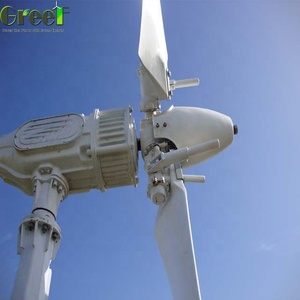
Aluminium Body Small Wind Turbine for Farm
Send an Inquiry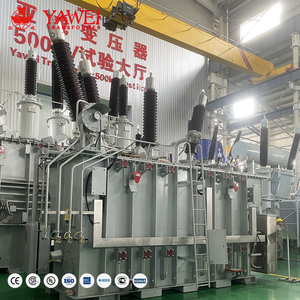
Yawei Manufacturer Price 10 MVA 15MVA 20MVA 67KV 69KV 33KV Power Transformer Copper Winding 60hz Dyn11
Send an Inquiry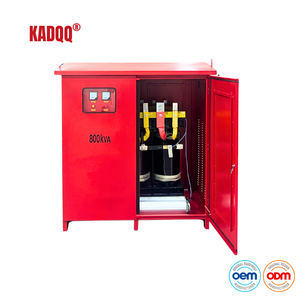
Wind Turbine Generator Isolation Transformer 800KVA Three Phase IP65 Protection CE Certified for Renewable Energy Systems
Send an Inquiry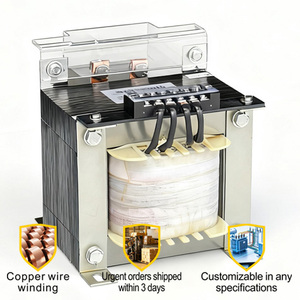
5KVA 10kVA Single Phase Control Transformer 110/220V To 36/48V For Packaging Machinery Pure Copper Winding CE ISO
Send an Inquiry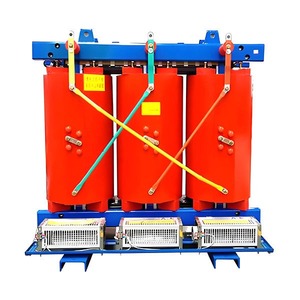
Customizable Fire Prevention Buildings Use Isolation Copper Winding Three Phase 33KV 35KV 38.5KV Wind Turbine Dry Transformer
Send an Inquiry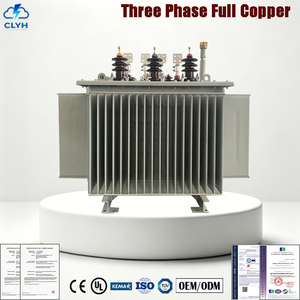
Distribution Transformer 100kVA 10/0.4kV Three Phase Oil Immersed Copper Winding IEC CE Certified 50Hz For Utility Grid
Send an Inquiry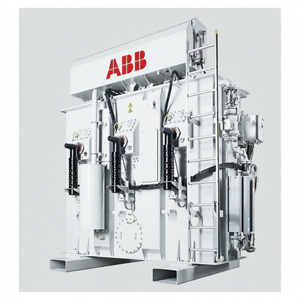
ABB (Hitachi Energy) Offshore Wind Turbine Transformer 5-25MVA 66-72.5KV IEC Genuine
Send an Inquiry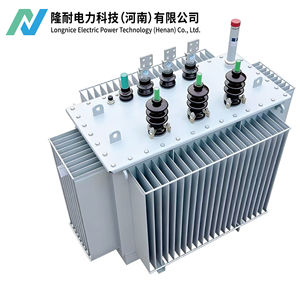
S11 3 Phase Oil Immersed Distribution Transformer 10kV 0.4kV 100% Copper Winding Power Transformer
Send an InquiryEngineering Principles of Hermetically Sealed Transformers
Understanding how complete liquid-filling and elastic tank walls eliminate atmospheric degradation and maximize transformer operational longevity.
Fluid Expansion Mechanics & Zero-Atmosphere Sealing
Unlike conventional oil-immersed transformers that utilize an external conservator tank with a silica gel breather, a hermetically sealed transformer completely isolates the dielectric insulating fluid from the ambient atmosphere. Thermal expansion and contraction of the transformer oil during load cycles are accommodated either through flexible corrugated sheet steel walls or an inert dry nitrogen gas cushion pressurized above the oil level.
By preventing moisture ingress and oxygen exposure, oil oxidation (sludging) is completely eliminated. This preserves the breakdown voltage (dielectric strength >70 kV) and neutralizes acidity formation, significantly slowing the thermal aging of cellulose paper insulation.
Corrugated Tank Elasticity & Finite Element Analysis (FEA)
In corrugated hermetic designs, the tank side panels are folded into flexible cooling fins using high-precision automated folding machines. As oil expands under load temperature spikes up to 90°C, the corrugated fins flex outward. Precision mechanical design via Finite Element Analysis (FEA) ensures that flexing stresses remain well below the fatigue limit of cold-rolled steel.
This elastic design eliminates mechanical stress on gaskets and bushings, preventing fluid leaks across thousands of dynamic thermal cycles over a 30-to-40-year operational lifecycle.
Information Gain Metric: Hermetically sealed transformers reduce routine dielectric maintenance expenditures by up to 85% compared to open-breather conservator systems, while extending paper insulation life expectation by over 40% under continuous rated load.
Transformer Architecture Comparison Table
Detailed engineering evaluation contrasting Hermetically Sealed Liquid Transformers against Conventional Conservator Units and Dry-Type (VPI / Cast Resin) Alternatives.
| Performance Parameter | Hermetically Sealed Oil-Filled | Conventional Conservator Oil | VPI Dry-Type Transformer | Cast Resin (CRT) Dry-Type |
|---|---|---|---|---|
| Atmospheric Isolation | 100% Sealed (Zero Air Contact) | Open Breather via Silica Gel | Open Air Circulation | Encapsulated Coils |
| Dielectric Degradation | Virtually Zero Oxidation / Sludge | Moderate (Requires Regular Degassing) | N/A (Solid Insulation) | N/A (Epoxy Resin Encapsulated) |
| Maintenance Requirement | Ultra-Low / Maintenance-Free | High (Breather, Oil Sampling) | Medium (Dust Removal, Airflow) | Low (Visual Checks) |
| Fire Safety Rating | High (K-Class Synthetic Esters Option) | Standard (O-Class Mineral Oil) | F1 Fire Behavior Class | Self-Extinguishing F1 Class |
| Overload Capacity | High Thermal Dissipation Capability | High Thermal Mass | Moderate Thermal Response | Limited Short-Term Overload |
| Environmental Suitability | IP65 Coastal / Harsh Marine / Industrial | Standard Outdoor Substation | Indoor Clean Room / High-Rise | Indoor / High Moisture / Mining |
| Total Cost of Ownership (TCO) | Lowest Lifecycle TCO | Moderate Initial / High Maintenance | Higher Capital Outlay | Highest Capital Outlay |
OEM & ODM Customization Framework
From bespoke electrical parameters to specialized structural enclosures, our Mumbai engineering center delivers fully customized OEM/ODM power solutions.
1. Custom Winding & Core Geometry
We offer 100% electrolytic Grade A copper or high-grade aluminum windings with customized vector groups (Dyn11, Dyn5, YNd11, Star-Delta). Magnetic cores are fabricated using prime, high-permeability Cold Rolled Grain Oriented (CRGO) silicon steel laminations with step-lap miter jointing to minimize no-load losses and acoustic sound levels to IEC 60076-10 thresholds.
2. Specialized Dielectric Mediums
Options include standard mineral transformer oil (IEC 60296), high-flashpoint synthetic esters (MIDEL 7131), and natural ester fluids (FR3). Ester-filled hermetic transformers provide K-class fire safety (>300°C fire point) and 100% biodegradability, making them ideal for offshore wind farms, dense urban centers, and underground mining complexes.
3. Heavy Duty & Extreme Environment Enclosures
Engineered for severe ambient challenges including C5-M marine anti-corrosion paint systems for offshore wind platforms, IP65 sealed terminal boxes for dusty desert solar fields, and anti-seismic bracing complying with IEEE 693 standards for earthquake-prone utility installations.
Future Procurement Trends & Global Market Trajectory
Navigating the global energy transition: How smart grids, renewable integration, and decarbonization are redefining transformer procurement.
1. Smart Grid & IoT Sensor Integration
Modern utility procurement specs increasingly mandate digitalized asset monitoring. Future-ready hermetic transformers are outfitted with non-intrusive fiber-optic temperature sensors directly embedded in coil hot-spots, electronic pressure transducers, online Dissolved Gas Analysis (DGA) micro-sensors, and RS485/Modbus IoT gateways.
This empowers grid operators with real-time predictive analytics, allowing dynamic load management and condition-based maintenance instead of fixed-interval servicing schedules.
2. Renewable Energy & Dynamic Harmonic Loading
With the exponential growth of solar PV inverters, wind power step-up units, and EV fast-charging hubs, transformers are subjected to high total harmonic distortion (THD) and fluctuating reverse power flows.
Procurement trends favor custom OEM converter-duty hermetic transformers designed with K-Factor ratings (K-4 to K-20), electrostatic shielding between windings, and reinforced neutral conductors to manage triplen harmonics without overheating.
3. Eco-Design Regulations & Loss Reduction Directives
Regulatory mandates such as the European EU Tier 2 Eco-Design requirements and India's Bureau of Energy Efficiency (BEE) Star Labeling standards (IS 1180 Level 1, 2, 3) are forcing global buyers to prioritize ultra-low no-load (core) and load (copper) losses.
Amorphous alloy cores and domain-refined CRGO steels are becoming standard procurement requirements for distribution utilities striving to lower carbon footprints.
4. Offshore Wind & Floating Substation Demand
Offshore wind generation demands compact, lightweight, highly reliable step-up transformers capable of enduring high vibration and saline atmospheres.
Hermetically sealed units filled with synthetic esters (such as 66kV to 72.5kV class offshore wind turbine transformers) represent the fastest-growing market segment in global grid infrastructure tenders.
Urja Techniques (India) Pvt. Ltd. Enterprise Capabilities
Headquartered in Mumbai, India — Delivering engineering reliability, stringent quality control, and global compliance since 1991.
Rigorous Quality Assurance & International Certification
Urja Techniques (India) Pvt. Ltd. operates under a fully integrated ISO 9001:2015 (Quality Management), ISO 14001:2015 (Environmental Management), and OHSAS 18001/45001 framework. Situated in Sri Ram Industrial Estate, Wadala (West), Mumbai, our state-of-the-art production facility houses automated winding machines, vacuum drying ovens, and precision oil processing plants.
Our entire transformer series complies with IS 2026, IS 1180, IEC 60076, and IEEE C57 standards. All designs are routine tested in-house and third-party type-tested by premier accredited laboratories including ERDA (Electrical Research and Development Association) and CPRI (Central Power Research Institute).
Comprehensive In-House Routine & Type Testing Protocol
- ✔ Dielectric Withstand Test: Separate source AC voltage and induced overvoltage testing.
- ✔ Winding Resistance & Vector Group Check: Precision micro-ohm measurements across all tap positions.
- ✔ Impulse Voltage Withstand Test: Full wave lightning surge testing simulating 1.2/50µs grid surges.
- ✔ In-House Temperature Rise Facility: Dedicated thermal testing bay to verify ONAN/ONAF cooling dynamics under full rated load.
- ✔ Pressure & Leakage Verification: 24-hour positive pressure test on corrugated hermetic tanks to guarantee zero oil leakage.
Frequently Asked Procurement & Engineering Questions
Expert answers to key technical questions encountered by procurement managers, EPC contractors, and electrical engineers.
Ready to Request a Technical Proposal or Customized Quotation?
Our engineering team in Mumbai is ready to support your grid, industrial, or renewable energy procurement requirements with precision-manufactured OEM/ODM hermetic transformers.
Send an Inquiry