Featured Power & Auto Transformer Solutions
Explore our flagship lineup of high-efficiency autotransformers, isolation units, and specialized power grid equipment designed to meet rigorous international IEC 60076 and IEEE standards.
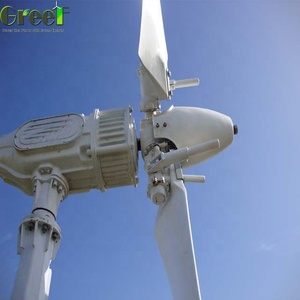
Aluminium Body Small Wind Turbine for Farm
Contact Us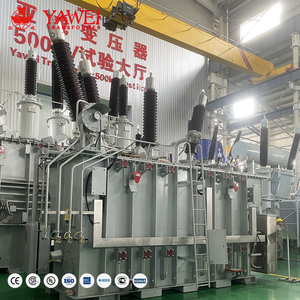
Yawei 10 MVA-20MVA 67KV/33KV Power Transformer Copper Winding
Contact Us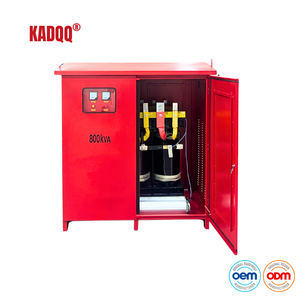
Wind Turbine Isolation Transformer 800KVA IP65 CE Certified
Contact Us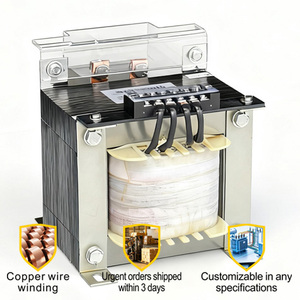
5KVA-10kVA Single Phase Control Transformer Pure Copper
Contact Us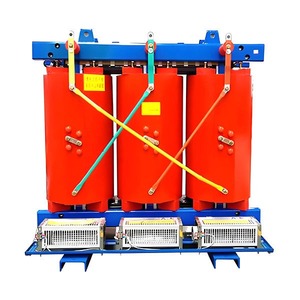
Fire Prevention 33KV 35KV Wind Turbine Dry Type Transformer
Contact Us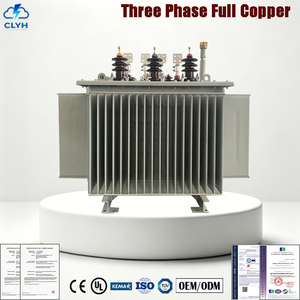
100kVA 10/0.4kV Oil Immersed Distribution Transformer IEC CE
Contact Us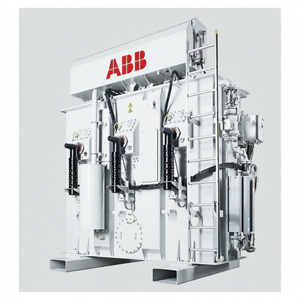
ABB (Hitachi Energy) Offshore Wind Transformer 5-25MVA 66-72.5KV
Contact Us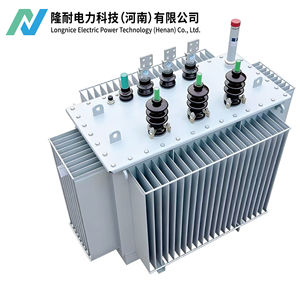
S11 3 Phase Oil Immersed 10kV 0.4kV Distribution Transformer
Contact Us1. Global Autotransformer Market Overview & Technical Whitepaper
An autotransformer is an electrical transformer in which primary and secondary windings share a common continuous magnetic circuit and conductive pathway. Unlike traditional two-winding isolation transformers, autotransformers achieve voltage step-up or step-down through a single tapped winding, yielding significant benefits in compact sizing, reduced copper losses, and superior electromagnetic efficiency.
Superior Power Density
Because power is transferred both galvano-inductively and directly via electrical conduction, autotransformers exhibit a much higher equivalent kVA rating relative to their physical core size.
Reduced Copper & Core Losses
The co-ratio factor \(K_{co} = 1 - (V_L / V_H)\) minimizes conductor volume, dramatically decreasing load loss (\(P_k\)) and no-load loss (\(P_0\)) under continuous duty cycles.
Enhanced Grid Stability
Extensively utilized in inter-tie transmission substations (e.g., 400kV/220kV or 220kV/132kV networks) for seamless voltage regulation and grid phase synchronization.
Comparative Matrix: Autotransformer vs. Two-Winding Isolation Transformer
| Evaluation Parameter | Autotransformer (Single Tapped Winding) | Isolation Transformer (Dual Independent Windings) | B2B Procurement Impact |
|---|---|---|---|
| Operating Efficiency | 98.5% – 99.6% (Extremely High) | 95.0% – 98.2% (Standard) | 30-50% lower annual operational energy losses |
| Raw Material Requirement | Reduced copper, core steel, and fluid mass | Full mass requirement for primary & secondary | Lower CAPEX outlay per MVA capacity |
| Galvanic Isolation | None (Common electrical path) | Complete isolation between primary & secondary | Requires downstream surge protection for sensitive loads |
| Impedance & Short-Circuit | Lower internal impedance | Higher internal impedance | Requires specialized short-circuit withstand design |
| Physical Footprint | Compact; up to 40% smaller footprint | Larger overall dimensions and transport weight | Drastically simplifies urban & offshore installation |
2. Top 10 Auto Transformer Manufacturers & Suppliers (2025 Global Review)
Based on technical innovation, manufacturing capacity, E-E-A-T credentials, compliance with international standards (IEC 60076, IEEE C57.12, ISO 9001:2015), and global market share, here are the top 10 autotransformer manufacturers leading the industry.
Hitachi Energy (ABB)
Headquarters: Zurich, Switzerland / Tokyo, Japan
Global leader in extra-high voltage (EHV) and ultra-high voltage (UHV) autotransformers up to 1100 kV. Famous for their TRAFOSTAR™ technology platform, delivering exceptional short-circuit withstand capabilities and digitized smart sensors for grid monitoring.
Siemens Energy
Headquarters: Munich, Germany
Renowned for Sensformer® technology which integrates IoT telemetry directly into autotransformer units. Siemens provides customized step-up and step-down autotransformers engineered for low noise pollution and bio-degradable ester fluid insulation.
Urja Techniques (India) Pvt. Ltd.
Headquarters: Mumbai, India
An ISO 9001:2015, ISO 14001:2015 certified premier manufacturer with over 30 years of engineering excellence. Urja Techniques specializes in custom-built autotransformers, Cast Resin Dry Type units, VPI transformers, and heavy-duty industrial units type-tested by ERDA and CPRI.
GE Vernova
Headquarters: Cambridge, Massachusetts, USA
Supplies robust power autotransformers for grid interconnectivity and industrial heavy power users. Integrates advanced transient voltage mitigation and oil-preservation systems to ensure 40+ years of operational service life.
Schneider Electric
Headquarters: Rueil-Malmaison, France
A pioneer in medium voltage autotransformers and custom motor-starting autotransformers. Offers specialized dry-type and cast resin units engineered for high energy efficiency and fire safety compliance in commercial and industrial facilities.
Jiangsu Yawei Electric Co., Ltd.
Headquarters: Jiangsu, China
Major global exporter offering cost-competitive 10MVA to 20MVA power autotransformers with copper winding and Dyn11 vector groups. Yawei units feature automated tap changers and high thermal withstand characteristics.
TBEA Co., Ltd.
Headquarters: Xinjiang, China
One of China's largest transformer manufacturers, producing large-scale 500kV to 1000kV single-phase and three-phase autotransformers tailored for long-distance renewable energy power transmission corridors.
Toshiba Energy Systems
Headquarters: Kawasaki, Japan
Renowned for advanced core cutting techniques and low loss magnetic steel alloys. Toshiba’s autotransformers deliver maximum reliability in seismic zones and high-humidity marine environments.
Eaton Corporation
Headquarters: Dublin, Ireland / Cleveland, USA
Specializes in compact dry-type autotransformers and custom voltage-matching transformers for industrial plants, packaging machinery, data centers, and healthcare infrastructure.
Hyosung Heavy Industries
Headquarters: Seoul, South Korea
Leading supplier across North America and Asia-Pacific. Hyosung manufactures high-voltage autotransformers featuring low audible noise, high insulation safety margins, and integrated dynamic cooling systems (ONAF/OFAF).
3. Future Autotransformer Procurement & Technology Trends (2025–2030)
As global power grids transition toward renewable energy integration and decarbonization, B2B procurement managers must align equipment specifications with emerging market dynamics.
1. High-Efficiency Eco-Design Directives
Strict regulatory frameworks like the EU Eco-Design Tier 2 and US DOE 2016 efficiency mandates demand ultralow core losses. Manufacturers are shifting toward high-permeability grain-oriented electrical steel (CRGO) and 100% pure electrolytic copper windings.
2. Renewable Grid Interconnection
Solar farms and wind turbine step-up substations require custom autotransformers capable of coping with rapid load fluctuations, reverse power flows, and high harmonic distortion profiles (THD).
3. Smart Sensors & Condition Monitoring
Procurement standards increasingly dictate IoT-enabled online Dissolved Gas Analysis (DGA), real-time winding temperature monitoring, and automated tap-changer diagnostics to transition from reactive maintenance to predictive asset management.
4. Enterprise Superiority: Why Procurement Leaders Choose Urja Techniques
With decades of proven field performance, Urja Techniques combines cutting-edge engineering design with uncompromising quality control to deliver world-class transformer equipment.
ISO & Type-Test Certified
Fully certified under ISO 9001:2015, ISO 14001:2015, and OHSAS 18001:2007. Every autotransformer unit undergoes rigorous type testing by independent accredited laboratories including ERDA (Electrical Research and Development Association) and CPRI (Central Power Research Institute).
In-House Temperature Rise Testing
Our Mumbai manufacturing plant features state-of-the-art testing bays, including an in-house temperature rise test facility. We perform routine and special tests for impulse voltage, short-circuit withstand, loss measurement, and acoustic noise levels before shipment.
Global Export Footprint
Exporting over 40% of total output to more than 40 countries across Africa, the Middle East, Europe, and South Asia. Approved vendor for government utilities, EPC contractors, and Fortune 500 industrial conglomerates.
5. Frequently Asked Questions (FAQ) for Autotransformer Procurement
Answers to essential technical and commercial questions faced by electrical engineers and procurement managers when sourcing autotransformers.
Ready to Engineer Your Custom Autotransformer Solution?
Contact our senior electrical engineering team today to review your voltage vector requirements, short-circuit withstand specs, and request a detailed technical quotation.
Contact Us