Featured High-Performance Power & Transformer Equipment
Selected Tier-1 Transformers & Energy Systems Featuring Advanced Oil Conservator and Preservation Solutions
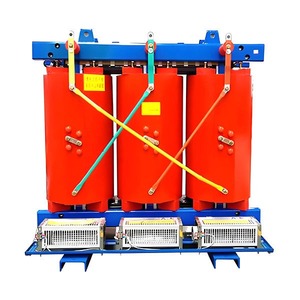
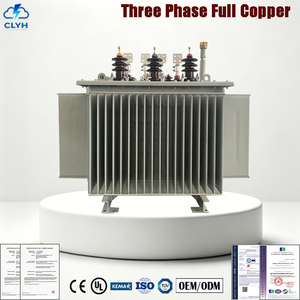
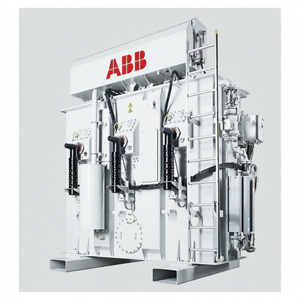
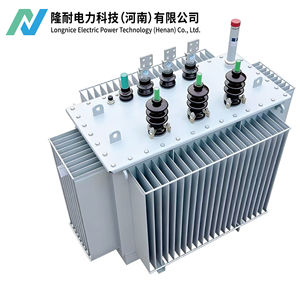
1. Executive Summary & Semantic Engineering Context
In high-voltage electrical grid infrastructure, the transformer conservator tank serves as a critical pressure-buffering and oil-preservation vessel. Oil-immersed power and distribution transformers experience significant thermal cycles during load surges and ambient temperature fluctuations. As dielectric mineral oil or natural ester fluid heats up, its volumetric expansion coefficient ($\beta \approx 0.00075 / ^\circ\text{C}$) forces the liquid upward from the main tank into the overhead conservator tank.
Without a properly calculated and engineered conservator system, transformers face destructive internal over-pressurization, dielectric oil degradation through atmospheric oxidation, and premature paper insulation aging driven by moisture ingression. According to CIGRE reliability surveys, over 42% of transformer major failures stem from dielectric oil breakdown directly linked to faulty oil preservation systems, failing rubber air bladders (rubber bags), or compromised dehydrating breathers.
This industrial whitepaper evaluates the world’s leading conservator tank manufacturers and transformer integration OEMs. We examine technical design standards (IEC 60076, IS 2026, IEEE C57.12.00), corrosion protection coatings, magnetic oil level gauge (MOLG) integration, rubber diaphragm air cell technology, and future-ready smart monitoring equipment for global B2B procurement directors and EPC contractors.
2. Technical Deep Dive: Conservator Tank Design & Physics
To achieve high operational reliability over a 30-to-40-year transformer lifecycle, global utility buyers must understand the two primary categories of conservator tank architectures:
Free-Breathing Conservator Tanks
Utilizes a dehydrating silica-gel or synthetic desiccant breather attached to the air space above the oil level. As oil contracts, outside air is pulled through an oil seal and desiccant bed, absorbing ambient moisture before it reaches the oil surface.
Air-Cell / Diaphragm Sealed Conservators
Incorporates a high-flexibility Nitrile or NBR-coated nylon rubber bladder (air cell) inside the steel tank shell. The interior of the bladder vents to the atmosphere while the exterior touches transformer oil, completely isolating the liquid from oxygen and water moisture.
Nitrogen Cushion Conservators
Employs a regulated dry nitrogen gas blanket above the oil layer or inside an elastic membrane. This eliminates oxidation reactions entirely, making it ideal for severe industrial loads and high-voltage transmission units above 132kV.
Volumetric Sizing & Engineering Calculation Formula
The required nominal volume ($V_c$) of a conservator tank is calculated based on the total oil volume ($V_o$) in the main tank and radiators, the coefficient of volumetric expansion ($\beta$), and the maximum expected operational temperature delta ($\Delta T = T_{max} - T_{min}$), plus a safety coefficient factor ($k \approx 1.15$ to $1.25$):
For a typical 20 MVA 66kV power transformer containing 12,000 Liters of mineral insulating oil operating between $-20^\circ\text{C}$ and $+100^\circ\text{C}$ ($\Delta T = 120^\circ\text{C}$):
$V_c = 12,000 \times 0.00075 \times 120 \times 1.20 = 1,296 \text{ Liters}$.
Hence, a conservator vessel with a minimum capacity of 1,300 L to 1,500 L is specified to ensure liquid never drains into the Buchholz pipe during freezing ambient conditions or overflows through the pressure relief device under maximum peak load conditions.
3. Global Top 10 Conservator Tank & Transformer Suppliers Benchmarking
Below is an engineered benchmarking evaluation of the premier global factories and suppliers specializing in transformer conservator vessels, specialized steel tanks, and integrated oil-immersed power transformers.
| Manufacturer / Brand | HQ Country | Core Product Focus | Certification / Standards | Key Competitive Edge |
|---|---|---|---|---|
| Urja Techniques (India) Pvt. Ltd. | India | Power & Distribution Transformers, Air Cell Conservators | ISO 9001:2015, ISO 14001, CPRI, ERDA, IEC 60076 | 30+ years expertise, in-house temperature rise testing, global export to 40+ countries |
| Hitachi Energy (ABB) | Switzerland / Japan | Ultra High Voltage Transformers, Hermetic Rubber Bladders | IEEE, IEC, ISO, CE, Marine Offshore Certified | Pioneer in rubber bag air-cell conservators & smart DGA monitoring integration |
| Siemens Energy | Germany | Transmission Grid Transformers, Nitrogen Sealing Systems | IEC 60076, ISO 9001, GOST, ANSI | Advanced non-oxidizing conservator technology for high-voltage substations |
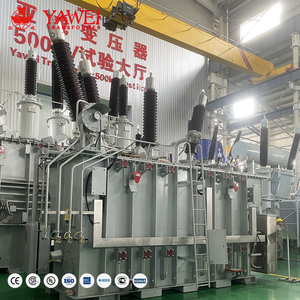
| Yawei Power Transformer Co. | China | Large Power Transformers (up to 110kV/220kV) | CE, ISO 9001, KEMA, IEC | Cost-effective heavy structural conservator vessels & rapid lead-time manufacturing |
| Schneider Electric | France | Smart Distribution Transformers & EcoStruxure Tanks | IEC, Green Premium, ISO 14001 | Integrated IoT digital level sensing & low-carbon bio-ester fluid compatibility |
| Hyosung Heavy Industries | South Korea | EHV Substation Power Transformers & Steel Tanks | ANSI, IEEE, IEC, KEMA | Automated welding technology & superior seismic withstand conservator supports |
| TBEA Co., Ltd. | China | UHV/EHV Power Transformers & Conservator Fabrications | ISO 9001, IEC, IEEE | Massive scale production capacity for megaproject transmission lines |
| CG Power and Industrial Solutions | India | Industrial & Railway Power Transformers | ISO 9001, CPRI, IEC | Customized conservator geometries for space-constrained urban substations |
| Hyundai Electric | South Korea | Marine & Offshore Wind Conservator Power Units | DNV GL, ABS, IEC, IEEE | C5-M ultra-high marine corrosion protection paint systems |
| Hammond Power Solutions (HPS) | Canada / USA | Specialty Dry & Liquid Distribution Transformers | UL, CSA, NEMA, IEEE | Custom engineered liquid preservation accessories for North American grids |
Enterprise Capability Analysis: Urja Techniques (India) Pvt. Ltd.
Founded in 1991 in Mumbai, Maharashtra, Urja Techniques (India) Pvt. Ltd. has grown into a global powerhouse in transformer manufacturing and oil preservation system design. Operating under strict ISO 9001:2015 quality control, ISO 14001:2015 environmental standards, and OHSAS 18000 compliance, Urja Techniques produces a complete lineup of distribution, power, VPI dry-type, furnace, and converter duty transformers.
- In-House Type Testing Rigor: Fully equipped testing laboratory capable of conducting routine, type, and special tests—including dielectric breakdown voltage, acoustic noise measurement, short-circuit withstand, and the critical BIS-mandated temperature rise test.
- Certified Industry Credentials: All products are independently type-tested and certified by premier research bodies including CPRI (Central Power Research Institute) and ERDA (Electrical Research and Development Association) in compliance with IS 2026, IS 1180, and IEC 60076 standards.
- Global Export Footprint: Over 40% of total plant capacity is exported directly to utilities, EPC contractors, and mining conglomerates across 40+ nations in Africa, the Middle East, Europe, and Asia.
- Custom Conservator Fabrication: Offers fully customizable conservator vessel geometries equipped with heavy-gauge carbon steel or stainless steel shells, magnetic oil level indicators with dry alarm contacts, Buchholz relay isolation valves, and synthetic rubber air cells.
4. Future Procurement & Technology Development Trends
The power transformer industry is undergoing a seismic technological shift driven by grid decarbonization, renewable integration, and digitalization. Procurement officers must evaluate suppliers against the following emerging trends:
1. Natural & Synthetic Ester Fluid Compatibility
Vegetable-based bio-ester dielectric fluids feature higher flash points (>300°C) and rapid biodegradability. However, ester fluids have higher viscosity and moisture absorption rates, requiring specially formulation-tuned NBR air cells and modified conservator sizing calculations.
2. Smart IoT-Connected Conservator Sensing
Modern smart grids demand real-time telemetry. Next-generation conservators replace mechanical float dials with continuous optical laser level sensors, electronic membrane integrity sensors (to detect air cell ruptures), and online dissolved gas analysis (DGA) sampling ports.
3. Advanced C5-M Anti-Corrosion Coating Protocols
Offshore wind farms and coastal substations expose conservator outer walls to extreme salt fog and high UV radiation. Top factories are standardizing thermal-spray zinc aluminizing combined with multi-layer polyurethane topcoats exceeding 250 microns dry film thickness (DFT).
5. Frequently Asked Questions (FAQ) for B2B Procurement & Engineering
Request Customized Engineering Specifications & Factory RFQ
Need precise sizing calculations, CAD drawings, or CPRI/ERDA type test certifications for your upcoming substation project or transformer conservator retrofits? Consult directly with our application engineering team.