Featured Grounding & Distribution Transformer Portfolio
Below is our top-tier engineering lineup of heavy-duty neutral grounding, liquid-filled, dry-type VPI, and pad-mounted distribution transformers manufactured for global utility, mining, and renewable grid substations.
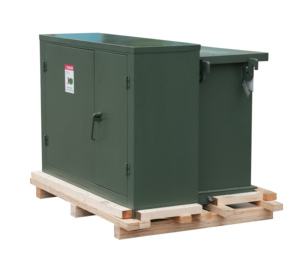
Three Phase Pad Mounted Grounding & Distribution Transformer
Type: Outdoor Pad Mounted Liquid Filled
Standard: IEEE C57.12.34 / ANSI compliant
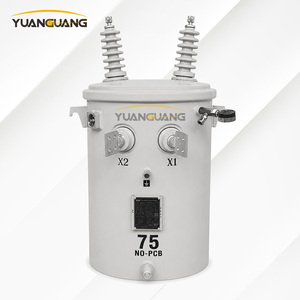
34.5Y/19.92kV CRGO Core Single Phase Overhead Transformer
Core: High-Permeability CRGO / Amorphous
Application: Overhead Rural & Grid Grounding
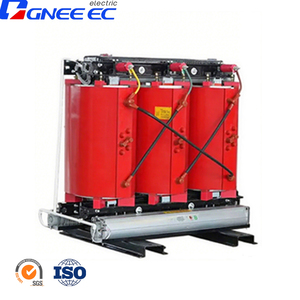
Earthing Dry Transformer Zigzag Connection Grounding System
Insulation: Class H / Class F VPI Dry-Type
Feature: Zero-Sequence Impedance Control
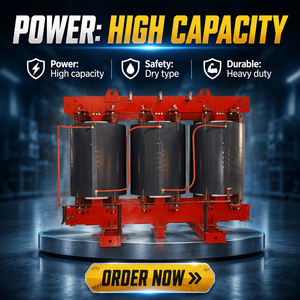
SCB10-5000/35 5000kVA Cast Resin Dry Grounding Transformer
Protection: IP23 / IP54 Enclosure
Testing: CPRI & ERDA Short-Circuit Certified
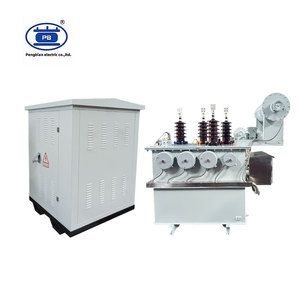
Pengbian Grounding Transformer with Neutral Grounding Resistor
Thermal Withstand: 10s / 30s / 60s rated
System: Un-grounded Delta Bus Protection
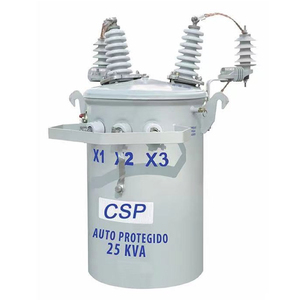
34.5kV ANSI Low Loss Amorphous Core Pole Transformer
Efficiency: Ultra-Low Standby Loss Core
Application: Renewable Substation Auxiliary
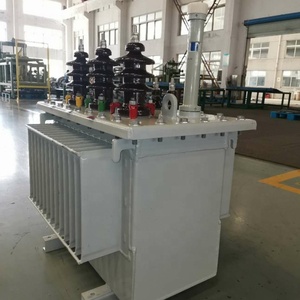
SGOB 60kVA 16kV Industrial Control & Grounding Transformer
Voltage Class: 16kV Medium Voltage Grid
Cooling: ONAN / ONAF Dual Rating
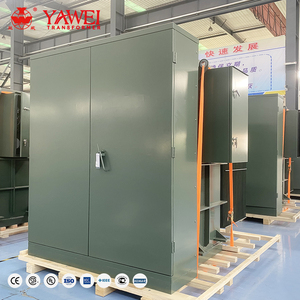
Yawei Outdoor 500kVA MV/HV Oil Immersed Grounding Pad Transformer
Fluid: Mineral Oil / Synthetic Ester Fluid
Standard: IEC 60076-6 / IS 2026 / IEEE C57
1. Technical Overview: The Engineering Purpose of Grounding Transformers
In modern medium-voltage (MV) and high-voltage (HV) distribution networks—specifically those configured in ungrounded delta ($\Delta$) connections—the presence of an established neutral point is essential for system protection, earth-fault detection, and transient overvoltage mitigation. A Grounding Transformer (also referred to as an Earthing Transformer or Neutral Grounding Transformer) provides an artificial neutral point for ungrounded three-phase electrical systems.
When a single-line-to-ground (SLG) fault occurs on an ungrounded delta network, destructive destructive transient arcing grounds can produce phase-to-ground overvoltages exceeding 300% to 500% of nominal system voltage. This severe voltage stress compromises cable insulation, damages switchgear components, and threatens utility step-up transformers. By installing a grounding transformer—most commonly configured with a Zigzag (ZN) vector connection or a Star-Delta (Ynd) arrangement—power systems engineers establish a controlled low-impedance path for zero-sequence currents ($I_0$). This enables protection relays to trip safely, isolates faulty feeders, and clamps phase voltages to harmless levels.
Top 10 Global Grounding Transformer Manufacturers Comparison Matrix (2025 Benchmark)
The matrix below outlines key engineering performance metrics, vector design capabilities, core material choices, and certification standards across the industry's leading manufacturers and OEM factories:
| Manufacturer / Brand | Primary Topology | Voltage Ratings | Core Technology | Thermal Rating ($t_k$) | Certifications & Testing |
|---|---|---|---|---|---|
| Urja Techniques (India) | Zigzag (ZNyn11) & Ynd11 | 3.3kV up to 33kV | High-Permeability CRGO / VPI | 10s, 30s, 60s Custom | CPRI, ERDA, ISO 9001:2015, IEC 60076 |
| Hitachi Energy | Zigzag / Neutral Earthing | 6.6kV up to 66kV | Laser-Scribed CRGO | 10s - 30s Rating | IEEE C57.32, IEC 60076-6, UL |
| Siemens Energy | ZNyn & Star-Delta | 11kV up to 132kV | Stacked Lamination Low-Loss | 10s Continuous Neutral | ISO 14001, CE, KEMA Tested |
| Schneider Electric | Tri-phase Zigzag Earthing | Up to 36kV MV Class | Cast Resin / Dry Type | Custom Short-Time Fault | IEC 60076, Bureau Veritas |
| Hammond Power Solutions | Zigzag Dry-Type VPI | 600V up to 15kV | Cold-Rolled Grain Oriented | 10s Fault Standby | CSA Certified, UL Listed |
| Eaton Electrical | Pad-Mounted Grounding Unit | 15kV to 34.5kV | FR3 Natural Ester / Oil | 30s Rated Withstand | IEEE C57.12.28, ANSI Compliant |
| Virginia Transformer Corp | Zigzag & Open Delta | 5kV to 115kV | Step-Lap Mitered CRGO Core | 10s to Continuous | ISO 9001, IEEE Standards |
| Yawei Electric Factory | Oil Immersed Pad Grounding | 10kV to 35kV | Amorphous Alloy / CRGO | 10s / 30s Dual Class | CE, ISO 9001, National Grid Approved |
| Pengbian Electric | Dry & Oil Neutral Earthing | 6kV to 35kV Class | High Precision CRGO Lamination | 10s - 60s Rated | ISO 9001, CPRI Standard Equivalent |
| CG Power & Industrial | Zigzag Neutral Reactor Unit | 11kV to 66kV | CRGO Silicon Steel | 10s Short Circuit Rating | KEMA, CPRI, IEC Compliant |
2. In-Depth Analysis of Top 10 Grounding Transformer Manufacturers & Factory Capabilities
When evaluating global OEM transformer factories for critical substation projects, electrical procurement teams must assess structural engineering precision, thermal withstand durations under zero-sequence current flow, and rigorous third-party short-circuit testing credentials. Below is a detailed technical analysis of the top manufacturing vendors in the market today:
1. Urja Techniques (India) Pvt. Ltd.
Specialization: Custom-engineered Vacuum Pressure Impregnated (VPI) dry-type and oil-immersed grounding transformers with integrated Neutral Grounding Resistors (NGR).
Key Advantage: Over 30 years of manufacturing mastery based in Mumbai. Fully certified by CPRI and ERDA for short-circuit withstand performance, zero-sequence impedance verification, and acoustic noise levels. 40% of production exported globally to over 40 countries.
2. Hitachi Energy
Specialization: High-voltage substation grounding solutions, eco-efficient ester-filled earthing transformers, and smart digital monitoring integrations.
Key Advantage: Industry leader in ultra-high voltage grids, offering superior thermal management systems capable of enduring long-duration zero-sequence fault stress across utility substations.
3. Siemens Energy
Specialization: Cast resin dry-type (GEAFOL) grounding units and compact integrated earthing/auxiliary step-down transformers.
Key Advantage: Exceptional flame-retardant and self-extinguishing cast-resin core-coil assemblies designed specifically for urban subways, data centers, and offshore platform substations.
4. Schneider Electric
Specialization: Tri-phase MV distribution earthing transformers integrated into modular smart substations.
Key Advantage: Advanced IoT-enabled thermal sensors embedded directly in vector windings, providing continuous real-time monitoring of neutral current balance and insulation health.
5. Hammond Power Solutions (HPS)
Specialization: Dry-type VPI Zigzag earthing transformers engineered to North American IEEE and UL safety guidelines.
Key Advantage: Robust heavy-gauge steel enclosures with anti-vibration core pads, delivering ultra-quiet operation for commercial and renewable power distribution networks.
6. Eaton Corporation
Specialization: Outdoor pad-mounted liquid-filled grounding transformers tailored for solar PV farms and utility substations.
Key Advantage: Uses biodegradable FR3 natural ester fluid to offer elevated fire point protection ($>300^\circ\text{C}$) and superior environmental safety near sensitive waterways.
3. Vector Connection Analysis: Zigzag (Zn) vs. Star-Delta (Ynd) Topologies
Selecting the optimum vector connection is a pivotal decision during the initial electrical design phase of a substation. The two primary methods for establishing an artificial neutral are the Zigzag (ZN) connection and the Star-Delta (Ynd) connection.
A. The Physics of the Zigzag (Interconnected Star) Winding
The Zigzag transformer features six coils wound on a three-limb magnetic core. Each limb carries two identical coils belonging to two different phases. When normal balanced positive-sequence or negative-sequence currents flow through the transformer, the magnetic flux created by the upper winding of one limb is equal and opposite to the magnetic flux generated by the lower winding of the adjacent phase on the same limb. Consequently, the core exhibits negligible net magnetization, resulting in an exceptionally low continuous magnetizing current (continuous no-load losses).
However, when a single-phase earth fault develops on the delta system, zero-sequence current ($I_0$) flows equally through all three phase terminals to the neutral point. Because the zero-sequence currents in each half of the zigzag winding flow in opposing physical directions around the same core limb, the net zero-sequence flux produced within the iron core is virtually zero. Thus, the transformer offers an extremely low zero-sequence impedance ($Z_0$) path, allowing earth fault current to flow unhindered into the neutral grounding system to trigger protection relays.
B. Star-Delta (Ynd) Grounding Transformer Topology
An alternative design utilizes a conventional two-winding transformer with a star-connected primary winding (with neutral grounded) and a closed delta-connected secondary winding. Under normal balanced operation, the delta winding remains unloaded. Under an earth-fault condition, zero-sequence current flows into the primary star neutral. This induces circulating zero-sequence current inside the closed secondary delta loop. The circulating delta current cancels the primary zero-sequence amp-turns, providing low zero-sequence impedance.
While effective, the Star-Delta design requires a two-winding structure, making it physical larger, heavier, and more costly than a single-winding Zigzag transformer engineered for identical short-time kVA fault duties.
Grounding Transformer Sizing & Thermal Calculation
The equivalent short-time kVA rating ($S_{kVA}$) of a grounding transformer is determined by the system phase-to-neutral voltage ($V_{LN}$), the zero-sequence fault current ($I_n$), and the rated fault duration ($t$):
Where $V_{LN}$ is system line-to-neutral voltage in Volts, $I_n$ is total neutral fault current in Amperes, and $t$ is fault duration (typically 10, 30, or 60 seconds per IEEE C57.32).
4. Future Procurement Trends & Strategic Technology Shift (2025-2035)
As global energy systems transition rapidly toward utility-scale renewable generation, microgrids, and high-density industrial electrification, the operational requirements for grounding transformers are evolving significantly. Key trends reshaping OEM procurement include:
A. Massive Adoption in Solar PV & Offshore Wind Farms
Modern solar inverter stations and offshore wind turbine step-up transformers frequently employ ungrounded or high-resistance grounded MV collector networks (11kV, 22kV, 33kV, 34.5kV). Procurement demand for compact, pad-mounted ester-filled earthing transformers installed directly at solar skid locations is projected to grow at a CAGR of 8.4% through 2030.
B. Transition to Amorphous Metal Cores
While grounding transformers operate largely in standby mode under normal grid balance, continuous no-load core losses accumulate over a 30-year operational lifespan. Leading manufacturers like Urja Techniques and Yawei are increasingly integrating Amorphous Alloy Ribbon cores, reducing core standby losses by up to 70-80% compared to traditional Cold Rolled Grain Oriented (CRGO) silicon steel.
C. Integrated Auxiliary Power & Neutral Resistance Skids
EPC engineers increasingly prefer single-skid packaged units that integrate the Zigzag earthing transformer, a Neutral Grounding Resistor (NGR), current transformers (CTs), disconnector switches, and an auxiliary step-down winding (e.g., 33kV to 415V/230V) to power substation lights, cooling fans, and SCADA relays simultaneously.
5. OEM Factory Capabilities: High-Precision Transformer Manufacturing
Superior performance in neutral earthing applications relies on rigorous manufacturing control, coil winding symmetry, and advanced vacuum drying technology. Leading OEM factories utilize state-of-the-art production workflows to guarantee zero failure rates under short-time fault currents.
Key Factory Manufacturing Pillars:
- Precision CRGO & Amorphous Core Cutting: Automated step-lap miter shearing lines reduce magnetizing currents and acoustic noise level to strict IEEE and NEMA standards.
- High-Dielectric Vacuum Pressure Impregnation (VPI): Dry-type coils undergo deep vacuum pressure cycles with high-temperature Class H/N epoxy resin, guaranteeing moisture immunity, void-free partial discharge levels ($< 10\text{ pC}$), and high mechanical strength.
- Dynamic Short-Circuit Mechanical Rigidity: Coils are reinforced with radial ceramic spacers and heavy steel clamping rings designed to resist extreme electrodynamic forces during 10-second maximum system earth fault spikes.
- In-House High Voltage & Temperature Rise Bay: Advanced testing bays equipped with impulse voltage generators ($1.2/50\mu\text{s}$ full wave lightning impulse tests), zero-sequence impedance measurement meters, and automated temperature-rise testing systems compliant with IS 2026 / IEC 60076.
6. Technical RFQ & Procurement Checklist for Engineering Procurement Contracts (EPC)
When drafting Request for Quotations (RFQs) for grounding transformers, specify the following technical parameters to avoid design misfits and project delays:
| Specification Parameter | Standard Engineering Range | Procurement Impact & Selection Criteria |
|---|---|---|
| System Voltage Class ($U_m$) | 3.3kV, 6.6kV, 11kV, 22kV, 33kV, 34.5kV, 66kV | Defines insulation BIL level (Basic Impulse Level) and bushing creepage distances. |
| Vector Group | ZNyn11, ZN0, Ynd11, Star-Open Delta | Determines phase displacement and neutral availability for secondary auxiliary loads. |
| Neutral Fault Current ($I_n$) | 100A, 200A, 400A, 1000A, up to 3000A | Sizing parameter for conductor cross-sectional area and thermal mass of windings. |
| Fault Current Duration ($t$) | 10 Seconds, 30 Seconds, 60 Seconds, Continuous | Dictates thermal energy absorption ($I^2 t$) without exceeding insulation temperature limits. |
| Zero-Sequence Impedance ($Z_0$) | Custom (typically 10 to 100 Ohms/phase) | Critical for establishing desired fault current level and relaying sensitivity. |
| Cooling Medium | AN / AF (Dry Type VPI/Resin) or ONAN / ONAF (Oil/Ester) | Selected based on indoor vs. outdoor installation, fire safety, and ambient temperatures. |
7. Frequently Asked Questions (FAQ) - Technical & Sourcing Guide
Engineered Neutral Grounding & Distribution Transformer Solutions
Need a custom-engineered Zigzag Earthing Transformer, Pad-Mounted Unit, or Complete NGR Skid for your grid expansion project? Consult with our senior engineering specialists today.
Get a Quote