High-Performance Industrial & Wind Power Isolation Transformers
Explore engineered isolation transformer units manufactured for heavy industrial machinery, renewable energy microgrids, wind turbine step-up substations, and critical facility power protection.
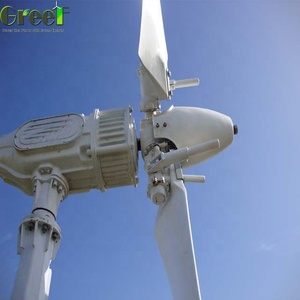
Aluminium Body Small Wind Turbine Isolation Unit for Farm
Designed for agricultural wind microgrids, featuring high galvanic isolation against lightning surges and environmental weather resistance.
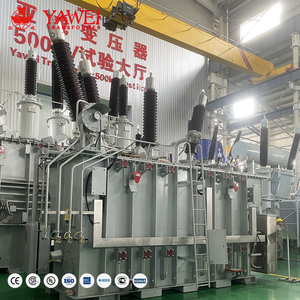
Yawei 10MVA-20MVA 67KV/69KV/33KV Power Isolation Transformer
Heavy-duty power transformer with 100% electrolytic copper windings, Dyn11 vector group, engineered for high-voltage grid isolation.
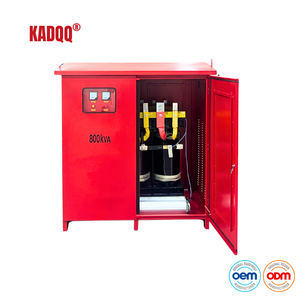
800KVA 3-Phase Wind Turbine Isolation Transformer (IP65)
CE-certified renewable energy isolation transformer engineered to withstand severe dv/dt switching transients from inverter systems.
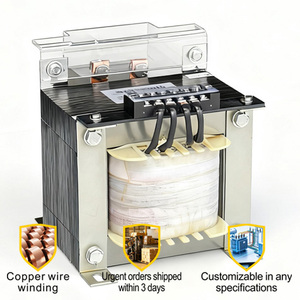
5KVA / 10kVA Single Phase Machinery Isolation Control Transformer
Precision step-down control transformer (110/220V to 36/48V) for packaging machinery and automated industrial control panels.
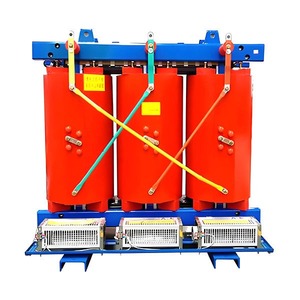
Fire-Safe 33KV/35KV/38.5KV Wind Turbine Dry Isolation Transformer
Class H insulated fire-prevention dry type transformer customized for commercial buildings and wind farm step-up stations.
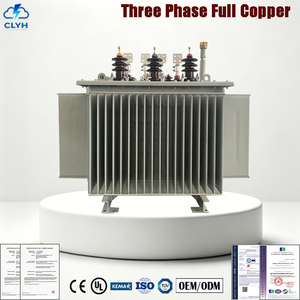
100kVA 10/0.4kV 3-Phase Oil Immersed Utility Distribution Unit
Low-loss, highly efficient oil-filled isolation distribution transformer fully compliant with IEC 60076 and utility grid standards.
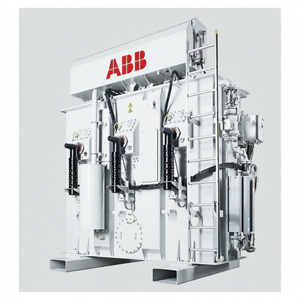
ABB (Hitachi Energy) Offshore Wind Transformer 5-25MVA 66KV
Genuine high-voltage offshore wind isolation unit designed for severe marine salt-spray conditions and high electrical vibration.
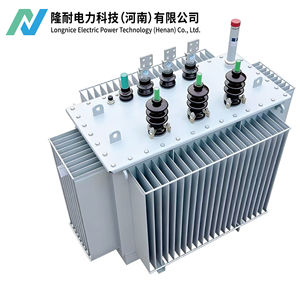
S11 Series 10kV/0.4kV 3-Phase Energy Efficient Isolation Transformer
High-grade core steel S11 series distribution transformer with ultra-low no-load losses and enhanced short-circuit withstand rating.
Executive Whitepaper: Galvanic Isolation & Power Quality Architecture
In modern electrical engineering, an isolation transformer serves as a critical galvanic wall between the primary power supply grid and sensitive secondary industrial loads. Unlike standard auto-transformers that share a common magnetic winding and continuous electrical pathway, an isolation transformer decouples the secondary circuit through physically separated primary and secondary windings linked exclusively via magnetic flux. This structural decoupling eliminates direct DC paths, blocks common-mode electrical noise, limits fault currents, and prevents ground loop circulation.
As global industrial infrastructure transitions toward high-frequency Variable Frequency Drives (VFDs), solar PV central inverters, uninterruptible power supplies (UPS), and automation machinery, electrical networks are increasingly polluted by high-order harmonics, voltage spikes, and electromagnetic interference (EMI). Specifying the correct isolation transformer OEM is paramount for maintaining system uptime, operational safety, and compliance with international standards such as IEC 60076, IEEE C57.12.01, and IS 2026.
Top 10 Isolation Transformer Manufacturers & Global OEM Benchmarking
Selecting a tier-1 isolation transformer factory requires evaluating engineering design flexibility, core-loss technology, coil insulation vacuum pressure impregnation (VPI) capabilities, short-circuit withstand capabilities, and global certification compliance. Below is the comprehensive technical benchmark of the leading 10 global manufacturers in 2025.
| Manufacturer / OEM | Headquarters | Capacity Range | Primary Core Technology | Key Specialization | Standards Compliance |
|---|---|---|---|---|---|
| Urja Techniques (India) Pvt. Ltd. | Mumbai, India | 10 kVA – 25 MVA | VPI & Cast Resin Dry Type / Oil-Filled | Industrial VPI, Converter Duty & Customized Isolation | ISO 9001:2015, IEC 60076, IS 2026, CPRI/ERDA |
| ABB (Hitachi Energy) | Zurich, Switzerland | 100 kVA – 100+ MVA | Dry Type Resibloc & Liquid Immersed | Offshore Wind, HVDC & Grid Substation Isolation | IEC, IEEE, UL, CSA, CE |
| Siemens Energy | Munich, Germany | 50 kVA – 80 MVA | GEAFOL Cast Resin & Eco-Dry | High-Rise Building, Rail & Heavy Industrial Power | IEC 60076-11, ISO 14001, EN 60076 |
| Schneider Electric | Rueil-Malmaison, France | 5 kVA – 15 MVA | Trihal Cast Resin & Ultra-Compact VPI | Data Center UPS, Medical & Automation Isolation | IEC 60076, CE, UL 1561 |
| Eaton Corporation | Dublin, Ireland | 1 kVA – 10 MVA | Encapsulated Dry & K-Factor Shielded | Commercial HVAC, IT Infrastructure & Noise Filtering | UL 1561, NEMA ST-20, IEEE C57 |
| Hammond Power Solutions (HPS) | Guelph, Canada | 500 VA – 5 MVA | VPI Dry Type & Drive Isolation | Drive Isolation Transformers & Harmonic Mitigating | CSA, UL, CE, NEMA 3R/4X |
| WEG Electric | Jaraguá do Sul, Brazil | 15 kVA – 30 MVA | Oil-Filled & Cast Resin Dry Type | Mining, Heavy Industrial Drives & Offshore Platforms | IEC, IEEE, ANCE, ATEX |
| Toshiba Energy Systems | Tokyo, Japan | 500 kVA – 50 MVA | Gas-Insulated (GIT) & Liquid Immersed | Thermal Power Plants & Sub-Station Isolation | JIS, IEC 60076, IEEE |
| TMC Transformers | Busto Arsizio, Italy | 100 kVA – 25 MVA | Cast Resin & Low-Voltage VPI | Marine, Traction & Renewable Energy Storage | IEC 60076-11, Lloyd’s Register, DNV-GL |
| Delta Electronics | Taipei, Taiwan | 1 kVA – 1 MVA | High-Frequency & Solid-State Isolation | Telecom Power, EV Fast Chargers & Precision Robotics | UL, CE, ISO 9001 |
In-Depth OEM Capability Breakdown
1. Urja Techniques (India) Pvt. Ltd.
Established in 1991 in Mumbai, Urja Techniques is an ISO 9001:2015, ISO 14001:2015 & OHSAS 18001 certified pioneer specializing in Vacuum Pressure Impregnated (VPI) dry-type, cast resin, and hermetically sealed oil-filled isolation transformers. Exporting over 40% of its volume to 40+ countries across Africa, the Middle East, and Europe, Urja’s designs feature electrostatically shielded copper windings, low watt-loss cold-rolled grain-oriented (CRGO) steel cores, and in-house temperature rise testing bays validated by CPRI and ERDA.
2. ABB (Hitachi Energy)
ABB (Hitachi Energy) dominates high-voltage transmission and offshore wind power isolation transformers. Their specialized Resibloc® cast resin transformers utilize fiberglass filaments wrapped around coils under tension, offering exceptional mechanical short-circuit strength and resistance to thermal shock down to -60°C.
3. Siemens Energy
Siemens Energy’s GEAFOL® range sets industry benchmarks for flame-retardant dry transformers. Designed without toxic liquid insulation, Siemens isolation transformers are ideal for infrastructure projects, urban underground substations, and automotive plants requiring maintenance-free operation.
4. Schneider Electric
Schneider Electric provides specialized isolation solutions geared toward data centers, healthcare isolation rooms, and smart buildings. Their Trihal dry transformers feature self-extinguishing epoxy resin formulations with ultra-low thermal dissipation and integrated EcoStruxure IoT thermal monitoring.
5. Hammond Power Solutions (HPS)
HPS is North America’s largest dry-type transformer manufacturer. Their HPS Centurion and Drive Isolation Transformer lines are explicitly engineered to handle high harmonic distortion caused by 6-pulse and 12-pulse VFD drives without overheating or core saturation.
6. Eaton Corporation
Eaton produces heavy-duty commercial and industrial isolation transformers equipped with advanced Faraday shielding. Their K-factor rated transformers (K-4 to K-20) safely absorb non-linear loads in high-density IT servers and automated manufacturing lines.
Technical Engineering Deep-Dive: Faraday Shielding & VPI vs. Cast Resin
To achieve total noise suppression and fault protection, industrial isolation transformers incorporate specific electro-magnetic features that procurement managers and electrical consultants must understand.
An electrostatic Faraday shield consists of a grounded non-magnetic metallic foil (typically pure copper or aluminum) placed between the primary and secondary windings. This shield creates an effective capacitive barrier: high-frequency common-mode noise spikes and voltage transients ($dv/dt$) are shunted directly to ground before reaching the secondary load. Standard Faraday-shielded transformers provide up to 60 dB of common-mode attenuation, while triple-shielded VPI designs achieve over 120 dB attenuation across 10 kHz to 1 MHz frequencies.
VPI (Vacuum Pressure Impregnation) vs. Cast Resin (CRT) Technology Matrix
When specifying dry-type isolation transformers, buyers often struggle between selecting VPI or Cast Resin insulation. The table below details their fundamental structural differences:
| Technical Parameter | Vacuum Pressure Impregnated (VPI) | Cast Resin Dry Type (CRT) |
|---|---|---|
| Insulation System | Class H (180°C) or Class C (220°C) Polyester/Silicone Resin | Class F (155°C) or Class H (180°C) Filled Epoxy Resin |
| Manufacturing Process | Coils submerged in vacuum chamber, resin injected under pressure | Coils encapsulated in solid vacuum mold with silica-epoxy mix |
| Partial Discharge Level | Typically < 10 pC to 20 pC | Strictly < 10 pC (Zero voids guaranteed) |
| Environmental Class | E2 (Industrial / Humid with protective IP enclosure) | E3 / C2 / F1 (Highest resistance to fire, condensation, chemical fumes) |
| Thermal Shock Resistance | Exceptional flexibility under rapid thermal expansion | Rigid structure; requires precise thermal expansion stress engineering |
| Maintenance & Repairability | High; coils can be re-impregnated or field-serviced | Low; encapsulated coils must be completely replaced upon failure |
| Capital Cost Index | 100% (Baseline economical high-performance choice) | 125% - 145% (Higher initial investment) |
Future Procurement & Sourcing Trends (2025–2030)
The global isolation transformer market is undergoing rapid evolution driven by energy efficiency directives, microgrid decentralization, and smart digital substations. Sourcing teams must align procurement strategies with five key emerging trends:
1. Amorphous Core Super-Low Loss Cores
Replacing traditional CRGO silicon steel with non-crystalline amorphous metal alloys reduces no-load core losses by up to 70% to 80%. Driven by the EU EcoDesign Directive Tier 2 (EN 50588-1) and US DOE 2016 efficiency rules, amorphous core isolation transformers are becoming mandatory for continuous-duty data centers and utility grids.
2. IoT Sensorization & Online DGA
Modern procurement mandates smart transformers fitted with fiber-optic winding temperature probes, online Dissolved Gas Analysis (DGA) sensors, and vibration monitoring ICs. Integrated telemetry feeds real-time predictive analytics to SCADA networks via Modbus RTU or IEC 61850 protocols.
3. Biodegradable Ester Dielectric Fluids
For liquid-immersed isolation units in environmentally sensitive sites (offshore wind, hydro plants), synthetic and natural ester fluids (e.g., FR3) are replacing mineral oil due to their 100% biodegradability, high fire point (>300°C), and K-class non-flammable safety rating.
Enterprise Manufacturing Strengths & Value Proposition
As represented by industry leaders like Urja Techniques (India) Pvt. Ltd., top-tier isolation transformer factories combine robust electrical design with rigorous quality testing standards to ensure 30+ year operating lifespans.
ISO 9001:2015 Quality System
Certified manufacturing procedures covering incoming copper purity verification, core lamination alignment, vacuum impregnation cycles, and final routine electrical testing.
CPRI & ERDA Type Tested
Validated by independent premier test laboratories for short-circuit withstand capabilities, dielectric impulse voltage withstand (BIL), temperature rise, and acoustic sound levels.
100% Electrolytic Copper
Coils wound exclusively with high-grade dual-coated electrolytic copper conductors to minimize $I^2R$ resistance losses and resist dynamic mechanical forces during external short-circuit faults.
Custom Engineering & OEM
Tailored voltage ratios (e.g., 415V to 415V 1:1, 11kV to 415V), customized IP55/IP65 enclosures, K-factor harmonics ratings (K-13, K-20), and dual secondary windings for multipulse rectifiers.
B2B Procurement FAQ: Technical Guidelines & Specs
Answers to standard technical inquiries encountered during RFQ preparation, transformer specification, and factory audit evaluations.
Request Technical Specifications & Factory Quote
Need customized VPI dry-type transformers, wind power step-up units, or heavy converter duty isolation transformers? Consult with our application engineering team today.