Industry-Grade Rectifier & Converter Transformers
Select from certified industrial units engineered for severe harmonic environments, electro-chemical smelting, traction power, and renewable grid conversion.
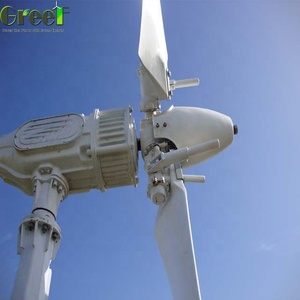
Aluminium Body Small Wind Turbine for Farm
- Compact Lightweight Enclosure
- Integrated Rectifier Bridge Ready
- Weatherproof IP65 Protection
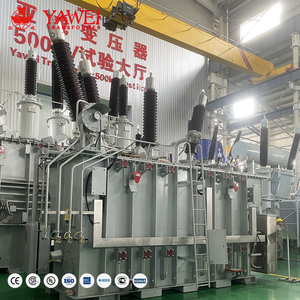
Yawei 10MVA–20MVA 69KV Converter Duty Transformer
- 100% Electrolytic Copper Winding
- Dyn11 Phase Vector Group
- Substation Heavy Industrial Duty
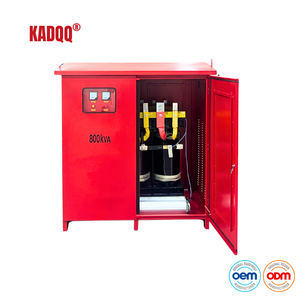
Wind Turbine Generator Isolation Transformer 800KVA
- CE Certified IP65 Enclosure
- Harmonic Distortion Mitigation
- Three-Phase Galvanic Isolation
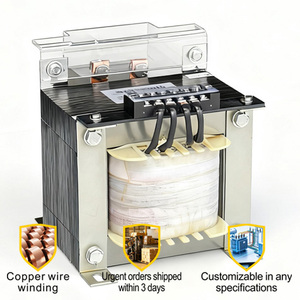
5KVA–10KVA Single Phase Rectifier Control Transformer
- Step-down 110/220V to 36/48V
- Pure Copper Winding CE ISO
- High Inrush Current Tolerant
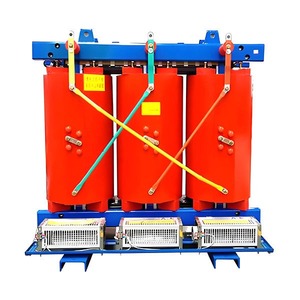
33KV–38.5KV VPI & Dry Type Isolation Transformer
- Flame Retardant Building Safe
- Vacuum Pressure Impregnated
- Low Harmonic Losses Design
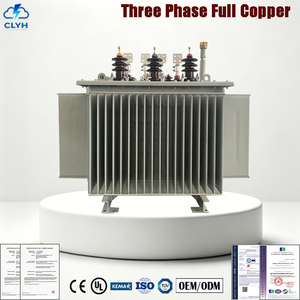
100kVA 10/0.4kV Oil Immersed Rectifier Step-Down
- IEC 60076 & CE Compliant
- High Dielectric Strength Oil
- Low No-Load Core Loss
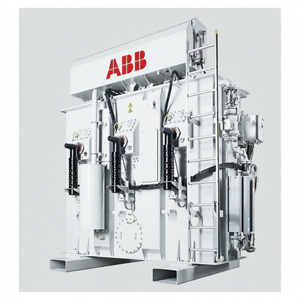
Offshore Converter Transformer 5–25MVA 66–72.5KV
- Corrosion Resistant Marine Enclosure
- Heavy Mechanical Vibration Safe
- High Voltage Converter Topology
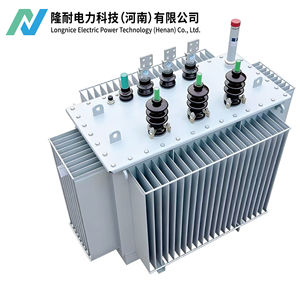
S11 Series 10kV Direct Rectifier Step-Down Transformer
- High Efficiency S11 Energy Standard
- Hermetically Sealed Oil Tank
- Overload & Surge Resistant Core
Understanding Rectifier Transformers in Heavy Industrial Applications
Rectifier transformers are non-linear, custom-engineered power step-down and phase-shifting units designed specifically to step down grid voltages and supply high AC current directly into diode or thyristor rectifiers. Unlike standard AC distribution transformers, converter-duty units must withstand high harmonic current contents (5th, 7th, 11th, 13th, 23rd+ harmonics), extreme thermal stress, and severe mechanical short-circuit forces from DC arc surges.
Phase Displacement & Vector Groups
Achieving ripple-free direct current requires multi-winding phase displacement topologies (such as Extended Delta, Star-Delta combinations, and Zig-Zag windings). By generating phase shifts of 30°, 15°, or 7.5°, rectifier transformers cancel out low-order harmonics (5th, 7th, 11th, 13th) before they reach the high-voltage utility grid.
Eddy & Stray Loss Suppression
Non-sinusoidal harmonic currents create massive eddy current losses in core laminations and copper conductors. High-end suppliers utilize continuously transposed conductors (CTC), multi-strand transposed windings, and non-magnetic stainless steel tank shielding to prevent localized hot-spots and insulation degradation.
Mechanical Short-Circuit Withstand
Electrochemical processes and DC arc furnaces subject transformers to frequent secondary short circuits and rapid load surges. Mechanical integrity is achieved through rigid pressboard clamping, radial core wedging, and automated high-pressure hydraulic coil compression during vacuum drying.
Top 10 Rectifier Transformer Manufacturers & Exporters
An objective evaluation based on manufacturing capacity, pulse technology depth (6-pulse to 48-pulse), compliance with IEC 60076-6 / IEEE C57.18.10 standards, and international supply chain agility.
| Manufacturer / Exporter | HQ Location | Primary Technical Specialization | Voltage / MVA Capacity | Pulse Configuration | Compliance Standards |
|---|---|---|---|---|---|
| Urja Techniques (India) Pvt. Ltd. | India (Mumbai) | Custom Converter Duty, VPI & Oil Rectifier Transformers | Up to 33kV / 25 MVA | 6, 12, 24, 36-Pulse | IEC 60076, IS 2026, CPRI/ERDA |
| Hitachi Energy (Formerly ABB) | Switzerland | Ultra-High Voltage DC (HVDC) & Heavy Aluminum Smelting | Up to 765kV / 150 MVA | 12, 24, 48-Pulse | IEEE C57.18.10, IEC, EN |
| Siemens Energy | Germany | Green Hydrogen Electrolyzer Rectifier Power Units | Up to 220kV / 100 MVA | 12, 24, 36-Pulse | IEC, IEEE, ISO 14001 |
| Schneider Electric | France | Traction Power Substations & Data Center Rectifiers | Up to 36kV / 15 MVA | 6, 12-Pulse Dry Type | IEC, CE, UL Listed |
| GE Vernova | USA | Industrial Arc Furnace & Submerged Arc Rectifiers | Up to 132kV / 80 MVA | 12, 24-Pulse | IEEE, ANSI, NEMA |
| Toshiba Energy Systems | Japan | High-Reliability Metal Refining & Chemical Electrolysis | Up to 154kV / 60 MVA | 12, 24-Pulse | JIS, IEC, IEEE |
| Eaton Electrical | USA / Ireland | Solid-State Integrated Rectifier Transformers | Up to 35kV / 10 MVA | 6, 12-Pulse | UL, IEEE, CSA |
| Hammond Power Solutions (HPS) | Canada | Drive Duty & Low/Medium Voltage Industrial Rectifiers | Up to 34.5kV / 5 MVA | 6, 12, 18-Pulse | CSA, UL, IEC |
| WEG Transformers | Brazil | Mining & Heavy Industrial DC Drives Transformers | Up to 138kV / 40 MVA | 6, 12, 24-Pulse | IEC, ABNT, IEEE |
| Hyundai Electric | South Korea | Traction Substation & Heavy Chemical Rectifier Systems | Up to 154kV / 50 MVA | 12, 24-Pulse | KS, IEC, IEEE |
Multi-Pulse Phase Shifting Architectures & Harmonic Suppression
How phase displacement mathematically eliminates harmonic currents in heavy DC industrial power systems.
6-Pulse Topology
Phase Shift: 0° (Standard Delta-Delta or Delta-Star)
The basic 6-pulse bridge generates characteristic harmonics at $h = 6k \pm 1$ ($5^{th}, 7^{th}, 11^{th}, 13^{th}$). Resulting Total Harmonic Current Distortion ($THD_i$) typically ranges between 28% and 35%, requiring external passive LC filters on the primary grid side.
12-Pulse Phase Shifting
Phase Shift: 30° Angle Displacement (Delta & Star Secondaries)
Utilizes two secondary windings offset by 30°. This phase shift forces the 5th and 7th harmonic currents to be 180° out of phase, canceling them out in the primary line current. Reduces $THD_i$ down to 8%–12% without massive external filters.
24-Pulse / 48-Pulse High-Purity
Phase Shift: 15° (24-Pulse) / 7.5° (48-Pulse) Phase Increments
Combines extended delta auto-transformers or multiple quad-secondary windings to achieve precise 15° or 7.5° shifts. Eliminates harmonics up to the 23rd/25th order, reducing primary current distortion below 3% to meet strict IEEE 519 grid codes.
Future Trends in Rectifier Transformer Design & Sourcing
Key innovations driving the next generation of industrial energy conversion systems.
1. Integration with Green Hydrogen Electrolyzers
As the world shifts to green hydrogen, multi-megawatt Proton Exchange Membrane (PEM) and Alkaline electrolyzers require gigantic low-voltage, ultra-high DC currents (e.g., 50,000A at 500V DC). Suppliers are engineering specialized multi-pulse converter transformers with integrated interphase reactors (IPR) to maximize electrolysis efficiency.
2. Synthetic Ester Fluid Insulation (K-Class Fluids)
Traditional mineral oil is being replaced by high-flashpoint (>300°C) biodegradable synthetic and natural ester liquids. Ester-filled rectifier transformers eliminate explosion risks in underground mining, offshore platforms, and urban traction substations while extending insulation paper lifespan.
3. Digital Twins & Fiber-Optic Hot-Spot Tracking
Because harmonic eddy currents cause severe localized heating in low-voltage busbars, modern procurement specs demand embedded fiber-optic temperature sensors. Real-time digital twin monitoring predicts insulation degradation and prevents catastrophic thermal runaway.
Urja Techniques (India) Pvt. Ltd. — 30+ Years of Manufacturing Leadership
Founded in 1991 and headquartered in Mumbai, India (Wadala West), Urja Techniques (India) Pvt. Ltd. has established itself as an ISO 9001:2015, ISO 14001:2015, and OHSAS 18001 certified global leader in custom transformer manufacturing.
With over 40% of production exported directly to over 40 countries across Africa, the Middle East, Europe, and Asia, Urja Techniques specializes in heavy industrial application transformers—including Converter Duty Transformers, Rectifier Transformers, Vacuum Pressure Impregnated (VPI) Dry Type Units, Cast Resin Dry Transformers, and Arc Furnace Transformers.
- Full Compliance: IEC 60076, IS 2026, IS 1180, and IEEE Standards
- Type Tested: Accredited by CPRI (Central Power Research Institute) and ERDA
- In-House Test Bay: Automated Temperature Rise Testing and Dielectric Impulse Verification
Core OEM Manufacturing Strengths
Frequently Asked Questions by Industrial Buyers
Direct answers to crucial technical questions regarding rectifier transformer selection, installation, and maintenance.
What is the difference between a standard power transformer and a rectifier transformer?
A standard power transformer delivers pure sinusoidal 50/60Hz AC current to linear loads. A rectifier transformer supplies non-linear diode or thyristor rectifiers. Consequently, rectifier transformers must handle high harmonic currents, asymmetrical phase loading, DC bias magnetic saturation, and intense mechanical forces caused by DC side short circuits.
Why is K-Factor rating crucial for rectifier transformer specification?
K-Factor measures a transformer's capability to withstand harmonic current heating without exceeding its insulation thermal limits. Non-sinusoidal currents elevate eddy current losses in proportion to the square of the harmonic frequency ($h^2$). Selecting the correct K-factor (e.g., K-9, K-13, K-20) ensures the unit operates safely without derating or premature thermal breakdown.
How does phase shifting (12-pulse, 24-pulse) mitigate power quality problems?
Phase shifting creates vector displacement between secondary windings (e.g., 30° for 12-pulse, 15° for 24-pulse). When low-order harmonic current waves recombine on the primary side, equal and opposite phase angles cancel each other out. This drastically lowers Total Harmonic Distortion ($THD$), improving power factor and eliminating grid pollution.
Should I choose a Liquid-Immersed or VPI Dry-Type Rectifier Transformer?
Choose Oil/Liquid-Immersed transformers for outdoor substations, mega-watt scale heavy electro-chemical plants, or high-voltage applications (>35kV). Choose VPI (Vacuum Pressure Impregnated) or Cast Resin Dry-Type transformers for indoor industrial plants, underground mines, high-rise buildings, or commercial facilities where fire safety and zero liquid leaks are mandatory.
What factory acceptance testing (FAT) should be performed prior to shipment?
Essential FAT procedures include Winding Resistance Measurement, Voltage Ratio & Vector Group Verification, Short-Circuit Impedance & Load Loss Test, No-Load Loss & Current Test, Separate Source AC Withstand Voltage, Induced Overvoltage Test, and Temperature Rise Testing under rated harmonic loading.
Ready to Optimize Your Power Rectification System?
Consult with our senior transformer design engineers to select the optimal phase shift topology, cooling method, and K-Factor rating for your specific application.