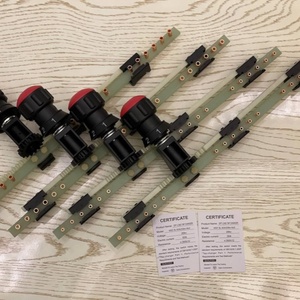
Customized Transformer Three-Phase Strip Switch Tap Changer
High-grade linear contact arrangement, multi-position Off-Circuit configuration for oil-immersed medium voltage transformers.
Direct factory-supplied, ISO-certified, and CPRI/ERDA type-tested voltage regulation components designed for global utility networks and industrial installations.
High-grade linear contact arrangement, multi-position Off-Circuit configuration for oil-immersed medium voltage transformers.
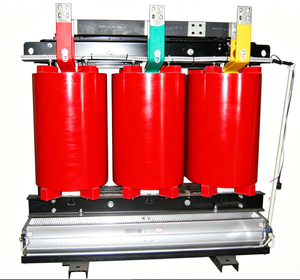
VPI/Cast Resin construction with integrated automatic step voltage switching for indoor fire-safe urban substations.
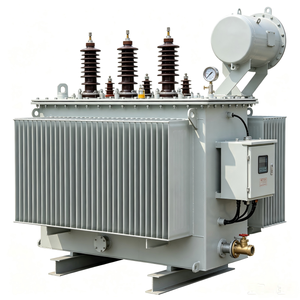
Engineered specifically for solar PV step-up applications with high dynamic switching duty cycles and remote AVR control.
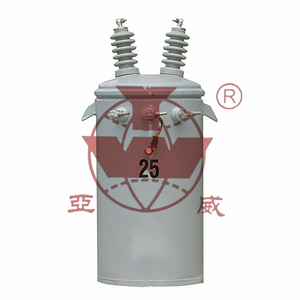
Compact overhead distribution transformer featuring external manual tap selector switches for rural power grid expansion.
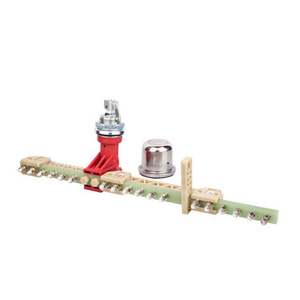
Reinforced PA66 thermal polymer housing with anti-corrosive aluminum shafts for distribution transformer maintenance retrofit.
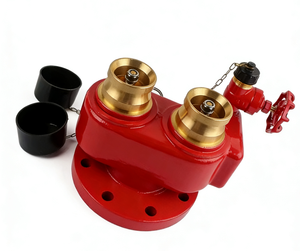
Heavy-duty cast iron and brass manifold selector system designed for industrial utility fluid and pressure distribution regulation.
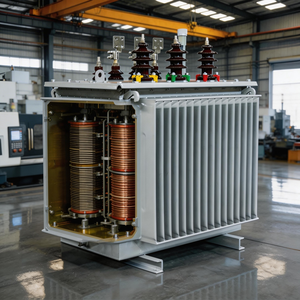
Automatic dynamic voltage regulation under varying load conditions, minimizing harmonic distortion and voltage sag.
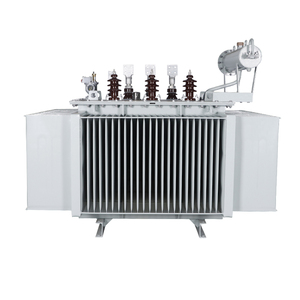
High-capacity industrial power transformer with vacuum-type OLTC for heavy metallurgical and chemical process plants.
In high-voltage electrical grid architecture, the Tap Changer serves as the fundamental electromechanical subsystem responsible for maintaining output voltage stability under dynamic load variations. As global power grids undergo unprecedented transformation—driven by renewable energy intermittency (Solar PV & Wind), industrial automation, and microgrid decentralization—the demand for high-end On-Load Tap Changers (OLTC) and robust Off-Circuit Tap Changers (DETC) has intensified exponentially.
This technical report evaluates the operational benchmarks, switching mechanics, maintenance protocols, and sourcing frameworks that define the world's top 10 tap changer exporters and manufacturers. By providing granular information gain regarding insulation dielectric strength, contact erosion limits, and automatic voltage regulator (AVR) telemetry integration, electrical engineers and procurement directors can optimize total cost of ownership (TCO) while guaranteeing grid compliance to IEC 60076, IEC 60214-1, and IS 2026 standards.
| Performance Parameter | On-Load Tap Changer (OLTC) | De-Energized Tap Changer (DETC) | Vacuum-Interrupter OLTC (Next-Gen) |
|---|---|---|---|
| Switching Condition | Operates seamlessly under live electrical load. | Requires full transformer de-energization. | Operates seamlessly under live electrical load. |
| Arc Quenching Medium | Transformer Mineral Oil / Natural Ester. | No switching arc generated. | Hermetically Sealed Vacuum Bottles. |
| Mechanical Endurance | 150,000 – 300,000 switching operations. | 5,000 – 10,000 mechanical operations. | > 500,000 switching operations. |
| Maintenance Interval | Every 20,000 - 50,000 operations (Oil filtering required). | Periodic visual inspection & contact resistance checks. | Every 100,000 - 300,000 operations (Maintenance-Free). |
| Primary Application | Substation power transformers, PV plants, steel arc furnaces. | Standard distribution transformers, dedicated industrial feeds. | Data centers, offshore wind, urban VPI dry-type transformers. |
| AVR & SCADA Integration | Fully Automated via RS485 / IEC 61850 protocol. | Manual mechanical hand-wheel / lever knob. | Digital twin online DGA & vibration telemetry integrated. |
When auditing international tap changer manufacturers and transformer exporters, B2B procurement committees must evaluate five core technical capability pillars.
Top exporters submit their tap changer mechanisms to independent short-time current withstand tests (e.g., 40kA for 3 seconds) according to IEC 60214-1. Contact materials must utilize silver-cadmium oxide or copper-tungsten alloys to withstand extreme thermal stresses during switching transitions.
Leading manufacturers, such as Urja Techniques (India) Pvt. Ltd., maintain accredited testing facilities capable of performing temperature rise tests, lightning impulse withstand tests, partial discharge (PD) measurements, and acoustic noise level verification verified by body bodies like CPRI and ERDA.
Power systems vary widely between regional grids. Top exporters offer versatile mechanical drive shaft configurations, flange-mounted tap selectors, strip-type switches for VPI dry-type transformers, and tank-head mounted diverter switches for large oil-immersed substations.
Anticipating technological shifts enables utility operators and industrial EPC contractors to future-proof their electrical grid assets.
Oil-arcing tap changers are rapidly being phased out in favor of vacuum switching technology. Vacuum interrupters eliminate oil contamination, eliminate arcing degradation in main transformer oil tanks, and extend maintenance intervals past 300,000 operations.
Modern buyers demand tap changers integrated with digital motor drive units (MDU), vibration analysis sensors, and real-time Dissolved Gas Analysis (DGA) modules to enable predictive maintenance via cloud-based SCADA systems.
With environmental regulations enforcing non-toxic and biodegradable insulation fluids, global exporters must certify tap changer contact materials and dynamic seals for high-viscosity synthetic and natural ester liquids.
Frequent voltage fluctuations caused by solar cloud-pass events require specialized high-duty cycle OLTCs capable of handling 100+ tap operations daily without contact erosion failure or overheating.
Referencing proven manufacturing methodologies and international supply chain benchmarks from Urja Techniques (India) Pvt. Ltd.
Founded in 1991 in Mumbai, Maharashtra, Urja Techniques (India) Pvt. Ltd. has established itself as an authoritative global manufacturer and exporter of power, distribution, furnace, converter duty, and dry-type transformers equipped with advanced tap changer mechanisms.
Our tap changer systems are integrated across diverse specialty transformer designs engineered to global standards (IEC 60076, IS 2026, IS 1180):
Answers to critical technical and commercial questions raised by electrical engineers, EPC procurement directors, and grid operators.
An On-Load Tap Changer (OLTC) can alter the transformer winding turns ratio while the transformer is energized and delivering load power to the network, preventing service disruption. An Off-Circuit Tap Changer (DETC) requires the transformer to be completely isolated and de-energized from the HV/LV grid before manual tap position adjustments can be performed.
Vacuum-type OLTCs perform electric arc switching inside hermetically sealed vacuum bottles instead of in open transformer oil. This completely eliminates carbon contamination and oil degradation, reduces contact erosion by over 70%, extends maintenance intervals to 300,000+ operations, and minimizes fire hazard risks in indoor dry-type or urban installations.
Tap changers must conform to IEC 60214-1 (Tap-changers - Performance requirements and test methods) and IEC 60076-8 (Application guide for power transformers). In India and South Asia, compliance with IS 2026 and IS 1180 is mandatory. Exporters must provide type test certificates from recognized laboratories such as CPRI or ERDA.
The AVR continuously monitors the secondary busbar voltage via potential transformers (PT). If the measured voltage deviates outside programmed bandwidth parameters for a set time delay, the AVR sends a step command signal to the tap changer's Motor Drive Unit (MDU), triggering a mechanical tap step change until nominal voltage balance is restored.
Retrofitted field conversion is technically complex because OLTC units require specific winding tapping leads, additional tank space or separate diverter switch oil compartments, and mechanical mounting flanges. It is generally recommended to specify factory-built OLTC transformers during initial procurement or replace the active tank assembly.
Routine maintenance includes periodic oil dielectric breakdown voltage (BDV) testing, dissolved gas analysis (DGA), checking drive mechanism lubrication, measuring contact wear, and replacing transition resistors or arcing contacts after specified operating cycles (typically every 50,000 operations).
Whether you require specialized high-capacity vacuum OLTC transformers, custom strip switch tap changers, or technical whitepaper datasheets, our engineering specialists are ready to assist your project requirements.