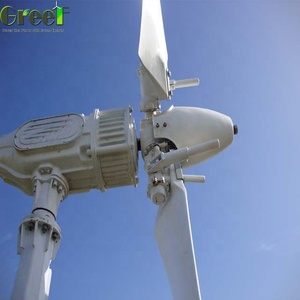
Aluminium Body Small Wind Turbine for Farm
- Corrosion-resistant aluminium alloy casing
- Optimized low wind speed startup
- Ideal for off-grid rural power & farms
Explore our certified range of compact prefabricated substations, high-voltage power transformers, dry-type isolation units, and specialized wind/solar step-up transformers designed for rugged environments.
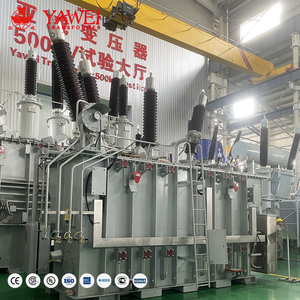
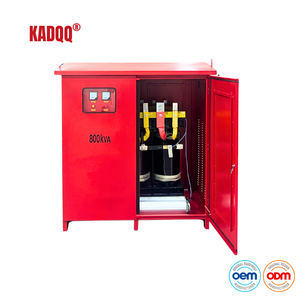
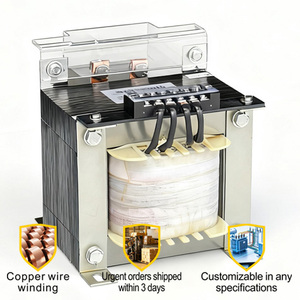
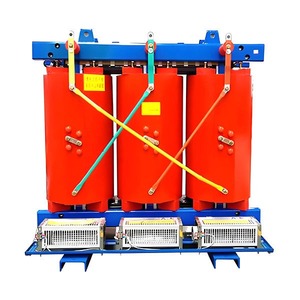
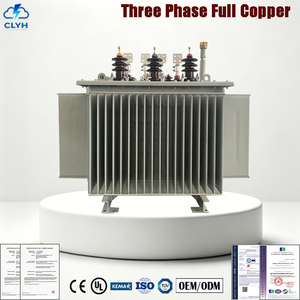
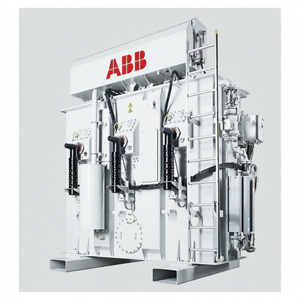
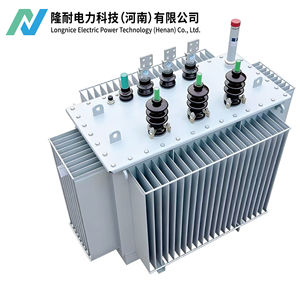
Combining heavy-duty structural engineering, state-of-the-art dielectric insulation, and full compliance with international power utility frameworks.
Every box substation and step-up transformer undergoes full type testing and routine dielectric, impulse voltage, and temperature rise testing in accordance with IEC 62271-200, IEC 60076, and IEEE requirements.
Manufactured with CORTEN steel, stainless steel, or aluminum alloy housings rated up to IP55/IP65. Engineered to endure extreme ambient temperatures (-45°C to +55°C), high humidity, and coastal saline atmospheres.
With over 40% of production deployed across Africa, the Middle East, Europe, and South America, we deliver plug-and-play prefabricated substations directly to industrial sites, wind farms, and solar PV plants.
As global electrical grids transition toward decentralized renewable energy integration and rapid industrial expansion, the demand for high-reliability prefabricated box substations (compact substations) has escalated. A box substation integrates high-voltage switchgear, a distribution or step-up power transformer, and a low-voltage distribution panel into a single factory-tested, transportable enclosure.
Top Chinese box substation manufacturers lead the global market by offering exceptional structural customization, superior thermal management, and strict compliance with IEC 62271-200, IEC 60076, and IEEE C37 standards.
International procurement managers must evaluate the core architectural differences between European-Style (YBW Prefabricated Substation) and American-Style (ZGS Combined Transformer Substation) units to select the optimal design for their project infrastructure:
| Engineering Feature | European-Style Substation (YBW Series) | American-Style Substation (ZGS Series) |
|---|---|---|
| Structural Design | Three isolated compartments (HV, Transformer, LV) in an independent walk-in shell. | Integrated layout: Transformer core/coils share liquid tank with HV load switches. |
| Voltage Range | Typically 10kV to 40.5kV high voltage stepping down to 0.4kV LV. | 6kV to 35kV medium-to-high voltage step-down/step-up applications. |
| Footprint & Dimensions | Larger footprint; offers internal maintenance access for utility technicians. | Ultra-compact footprint (up to 40% smaller than European style). |
| Switchgear & Protection | Uses Ring Main Units (RMU) with SF6 or SF6-free Vacuum Circuit Breakers (VCB). | Uses bay-o-net fusing and oil-immersed load switches within the main tank. |
| Primary Applications | Urban utility distribution, commercial complexes, mega solar PV farms, mining. | Residential neighborhoods, wind turbine base step-up transformers, park lighting. |
| Enclosure Protection | IP43 to IP55, configurable with fire-proof non-metallic or metallic panels. | IP54 to IP65, fully sealed tamper-proof outdoor cabinet. |
A high-performance box substation requires precise balance across three vital technical modules:
Strategic market shifts shaping the next decade of prefabricated electrical substation manufacturing and global procurement strategies.
Modern procurement demands box substations equipped with smart sensor arrays for Dissolved Gas Analysis (DGA), continuous thermal imaging of busbars, optical fiber temperature monitoring, and IEC 61850 protocol support for seamless integration into utility SCADA networks.
To align with global decarbonization policies and EU F-gas regulations, leading suppliers are shifting to SF6-free Ring Main Units (RMUs) utilizing dry air, nitrogen, or fluoronitrile gas mixtures, paired with biodegradable synthetic ester fluid transformers.
As utility-scale solar and offshore wind farms expand, box substations are evolving from standard 10kV/35kV ratings up to 66kV step-up stations equipped with heavy-duty C5-M marine anti-corrosion coatings to resist extreme humidity and salt spray.
Global EPC contractors prioritize plug-and-play skid-mounted or ISO containerized substations. Fully wired and factory-tested prior to export, these units reduce civil installation time on site by up to 70%, drastically cutting total project installation costs.
Critical technical considerations, quality assurance protocols, and logistics questions answered by industry experts.
Tier-1 Chinese box substation manufacturers adhere strictly to international electrical standards including IEC 62271-200 (High-voltage switchgear and controlgear), IEC 60076 (Power transformers), IEEE C37, and GB/T 17467 (High-voltage/Low-voltage prefabricated substations). Third-party type-test certificates from recognized laboratories such as KEMA, CPRI, or ERDA are mandatory for global grid connection.
The selection depends on project location, fire safety requirements, and budget:
• Dry-Type Transformers (VPI / Cast Resin): Ideal for dense urban areas, commercial high-rise buildings, underground subways, and fire-sensitive indoor environments. They are self-extinguishing and maintenance-free.
• Oil-Immersed Transformers (S11 / S13 / S20): Preferred for outdoor utility grids, large-scale solar farms, and industrial plants due to higher power capacities, superior heat dissipation, and lower initial purchase cost.
For environments with ambient temperatures exceeding +45°C (e.g., Middle East or Australian mining sites), box substations are designed with dual-wall insulated enclosure panels, reflective polyurethane topcoats, temperature-triggered forced air circulation systems, solar radiation shields, and oversized transformer cooling radiators.
Substations destined for coastal areas or offshore wind installations utilize marine-grade 304 or 316L stainless steel, hot-dip galvanized CORTEN steel, or specialized fluorocarbon paint systems complying with ISO 12944 C4 or C5-M high-durability standard, offering 15–25 years of protection against salt fog and humidity.
Standard manufacturing lead times range from 4 to 8 weeks depending on custom electrical ratings and voltage requirements. Before dispatch, full Factory Acceptance Testing (FAT) is conducted, including insulation resistance tests, power frequency withstand voltage tests, primary/secondary injection tests, ratio and vector group verification, and enclosure IP rating seal tests.
TCO includes the initial purchase price, freight/installation, plus operating losses over a 25–30 year operational lifecycle. Utilizing high-efficiency amorphous alloy or S20-grade silicon steel cores reduces no-load losses (Po) by up to 30%, yielding substantial lifetime energy savings that far outweigh initial equipment cost differences.