Featured High-Performance Industrial & Renewable Energy Transformers
Precision-engineered, type-tested transformers tailored for severe operational environments, utility grids, wind power farms, and heavy manufacturing plants.
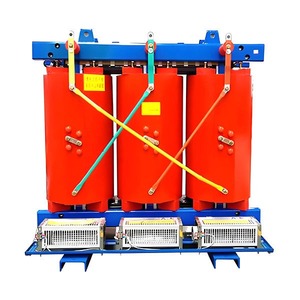
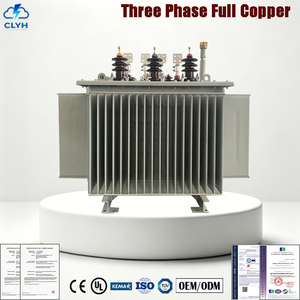
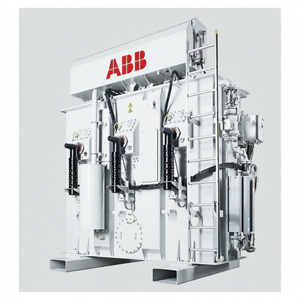
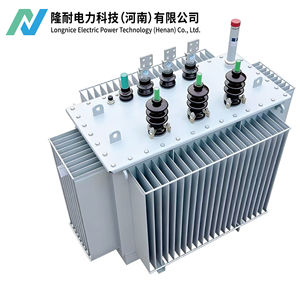
Leading China Industrial Transformer Manufacturer: Engineering Mastery & Global Footprint
In the rapidly evolving global energy landscape, industrial transformers serve as the critical backbone for power distribution, renewable energy grid integration, and heavy industrial automation. As a premier China Industrial Transformer Factory and Exporter, our manufacturing infrastructure stands at the intersection of precision engineering, stringent quality compliance, and cutting-edge material science.
Operating under fully integrated ISO 9001:2015 (Quality Management System), ISO 14001:2015 (Environmental Management), and ISO 45001 / OHSAS 18000:2007 (Occupational Health & Safety) certifications, our facility produces high-reliability transformers complying strictly with international standards, including IEC 60076, IS 2026, IS 1180, IEEE C57, and ANSI.
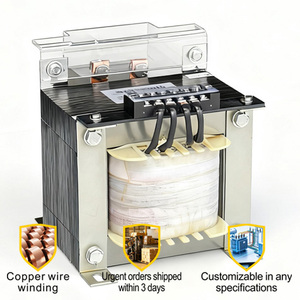
100% Electrolytic Copper Winding
We utilize high-grade, oxygen-free ETP (Electrolytic Tough Pitch) copper conductors with Class H insulation paper, guaranteeing superior conductivity, minimized copper loss ($I^2R$), and maximum thermal endurance during temporary emergency overloads.
Advanced Core Lamination
Constructed using high-permeability, cold-rolled grain-oriented (CRGO) silicon steel sheets (M4, M3, or Domain Refined Moh Grade) with 45-degree full-step-lap mitred joints, dramatically reducing no-load excitation current and acoustic noise pollution.
Harsh Climate Robustness
Custom exterior surface treatments, including C4/C5 marine-grade epoxy polyurethane coatings, stainless steel tanks, and IP65 enclosure protection, ensuring operational longevity in offshore marine, desert solar, and high-altitude installations.
Technical Specifications Matrix: Transformer Core Comparison
To assist industrial procurement officers, EPC contractors, and electrical design engineers in selecting optimal equipment, the technical matrix below outlines performance parameters across our primary transformer typologies:
| Transformer Category | Voltage Class | Cooling Type | Efficiency Rating | Typical Applications |
|---|---|---|---|---|
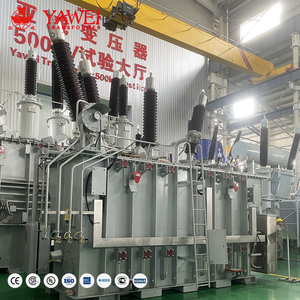
| Oil-Immersed Distribution (S11/S13) | 10kV to 35kV | ONAN / ONAF | > 98.8% | Utility Distribution, Industrial Complexes, Rural Grids |
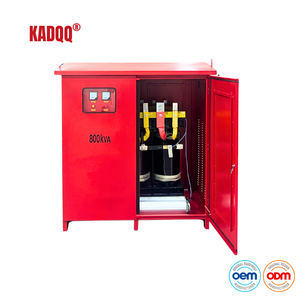
| Cast Resin Dry-Type (CRT / VPI) | 6kV to 38.5kV | AN / AF | > 98.5% | Commercial High-Rises, Data Centers, Metros, Underground Hospitals |
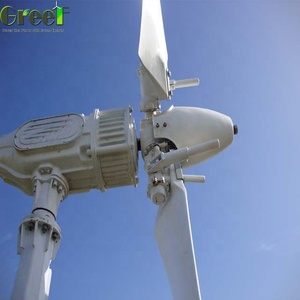
| Wind Turbine Step-Up Isolation | 0.69kV / 33kV - 69kV | ONAN / KNAN (Ester Oil) | > 99.1% | Onshore/Offshore Wind Turbines, Nacelle Installation |
| Converter Duty & Rectifier | Up to 35kV Multi-winding | ONAN / OFWF | > 98.6% | Solar PV Inverters, VFD Drives, Electrolysis Plants |
| Furnace Transformer (Arc / Submerged) | Up to 110kV High-Current | OFWF / ODAF | > 98.2% | Steel Smelting, Silicon Metal Melting, Chemical Refineries |
Global Procurement Trends in Industrial Transformers (2025–2035)
As global energy networks transition toward decentralized renewable generation and extreme electrification, industrial procurement strategies are shifting dramatically. Key trends shaping the future of industrial transformer sourcing include:
1. Decarbonization & Eco-Friendly Natural Ester Insulation Fluids
Mineral oil is rapidly being superseded by bio-degradable natural and synthetic ester fluids (such as FR3). Ester oils offer a fire point exceeding 300°C (Class K fire rating), allowing transformers to operate safely closer to load centers, drastically reducing clearance footprints and eliminating environmental soil contamination risks during accidental spills.
2. Adoption of Amorphous Alloy Core Technology
With stringent carbon-neutrality mandates and EU Tier 2 EcoDesign standards coming into effect globally, transformers featuring amorphous ribbon cores are replacing standard CRGO steel. Amorphous alloy cores exhibit an irregular atomic structure, reducing no-load core losses ($P_0$) by 60% to 70% compared to traditional silicon steel, achieving unprecedented lifetime operating cost savings.
3. IoT-Integrated Digital Twins & Real-Time Condition Monitoring
Modern B2B buyers no longer evaluate transformers strictly as static equipment. Sourcing criteria now demand smart transformers equipped with fiber-optic thermal sensors, online DGA gas monitors, partial discharge analyzers, and micro-embedded edge computing units. These smart systems upload telemetry directly to cloud-based SCADA systems, enabling predictive maintenance and preventing unpredicted outage downtime.
4. Mitigation of High Harmonics in Renewable Microgrids
With the proliferation of non-linear loads, solar inverters, and variable frequency drives (VFDs), transformers are subjected to intense high-order harmonics ($K$-factor loads). Future-proof purchasing mandates K-13 or K-20 rated isolation transformers featuring electrostatically shielded copper windings and oversized neutral conductors to handle harmonic thermal stress without derating capacity.
Technology & Manufacturing Industry Evolution
The manufacturing of industrial transformers has evolved from manual assembly to automated, robot-assisted precision manufacturing. Key advancements engineered into our production lines include:
Vacuum Pressure Impregnation (VPI)
VPI dry-type transformers utilize high-viscosity polyester varnish injected under deep vacuum (<2 mbar) and high pressure. This process thoroughly eliminates internal microscopic air voids, guaranteeing partial discharge levels below 10 pico-coulombs (pC) and preventing moisture absorption in humid environments.
Automated Foil Winding Machines
For low-voltage windings handling high currents, we utilize automated copper foil winding machinery with continuous edge deburring and automatic interlayer insulation feeding. Foil winding eliminates axial electromagnetic short-circuit forces during fault events, ensuring complete mechanical stability.
Furthermore, our advanced Hermetically Sealed Oil-Filled Transformers utilize corrugated flexible steel tanks that expand and contract dynamically with oil thermal variations. By completely isolating the transformer dielectric oil from atmospheric oxygen and moisture, oil oxidation is prevented, eliminating the need for periodic oil filtration or silica gel desiccant maintenance throughout its 30+ year service life.
Industrial Transformer Sourcing & Procurement FAQ
Below are expert responses to the most critical technical and operational questions encountered by global procurement engineering teams:
The Dyn11 vector group is widely favored for distribution and renewable step-up transformers because the delta ($\Delta$) primary winding traps 3rd order harmonics, preventing harmonic propagation into the utility grid, while the star ($Y$) secondary provides a stable grounded neutral point.
While CRT transformers carry a 20%-35% higher initial capital cost (CAPEX), they offer superior long-term ROI in indoor or environmentally sensitive installations. CRT requires zero oil containment pits, zero fire-suppression system installation, and minimal routine maintenance, reducing total cost of ownership (TCO) over 15 years.
Essential FAT tests include: Winding Resistance Measurement, Voltage Ratio & Vector Group Verification, Short-Circuit Impedance & Load Loss Testing, No-Load Loss & Current Measurement, Separate Source AC Withstand Voltage Test, Induced Overvoltage Voltage Test, and Partial Discharge measurement (for dry-type units).
Per IEC 60076 standards, transformers installed at altitudes exceeding 1,000 meters above sea level suffer reduced air cooling density. Sizing must account for a 0.4% thermal derating per 100 meters above 1,000m, or utilize reinforced cooling (ONAF/AF) or higher insulation temperature classes (Class H).
We provide custom marine-grade C5-M anti-corrosion paint systems, 316L stainless steel hardware, hermetically sealed IP66 terminal boxes, plug-in outer cone bushings, and anti-vibration rubber damper pads specifically rated for offshore wind platforms and chemical processing plants.
Standard distribution transformers typically require 3 to 4 weeks production. Fully customized 10MVA-25MVA power or converter transformers require 6 to 8 weeks, including complete 3D finite element electromagnetic simulation design approval, raw material procurement, assembly, FAT testing, and export seaworthy wooden crate packaging.
Comprehensive B2B Technical Evaluation & Factory Verification Guidelines
When auditing a China Industrial Transformer Factory, procurement teams must look beyond initial price quotes. Verifying engineering authority and manufacturing depth requires assessing four core pillars:
- Short-Circuit Withstand Capability: Verify dynamic short-circuit stress calculations using 3D FEA (Finite Element Analysis) modeling. Ensure the factory can provide actual CPRI/ERDA short-circuit type-test reports for identical or higher-capacity transformer designs.
- Insulation Drying Infrastructure: Confirm the presence of automated Vapour Phase Drying (VPD) plants or high-vacuum drying ovens. Inadequate core insulation moisture removal (>0.5% moisture content) accelerates insulation aging and causes early dielectric breakdown.
- Traceability of Raw Materials: Ensure prime quality materials: high-grade silicon steel directly from top-tier steel mills (e.g., Baosteel, POSCO), 99.99% pure copper rod stock, and certified transformer oil (Nynas or equivalent) free of corrosive sulfur (PCB free).
- Seaworthy Packaging & Nitrogen Inert Gas Purging: For large power transformers exported overseas, transformer main tanks should be shipped purged with dry nitrogen gas ($\text{N}_2$) under positive pressure, accompanied by impact recorders to monitor structural g-forces during ocean transport.
Partner with China's Premier Transformer Exporter
Need detailed CAD drawings, customized technical specifications, type-test certificates, or an instant commercial quotation for your power project? Speak directly with our senior transformer design engineers today.