Featured Potential & Power Transformer Solutions
Engineered to strict IEC 61869-3, IEC 60076, and IEEE C57.13 standards. Explore precision-wound, type-tested potential transformers and distribution units direct from certified manufacturing plants.
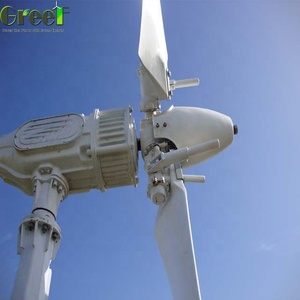
Aluminium Body Small Wind Turbine Power Unit
- Weatherproof IP65 Enclosure
- Low-Cut-in Wind Speed Start
- Farm & Microgrid Auxiliary Power
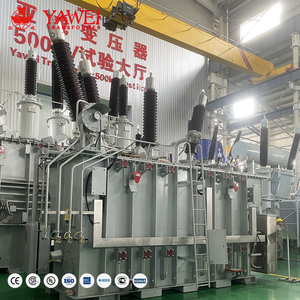
10MVA-20MVA 69KV/33KV Substation Power Transformer
- 100% Electrolytic Copper Winding
- Vector Group: Dyn11 / 60Hz
- ONAN/ONAF Forced Oil Cooling
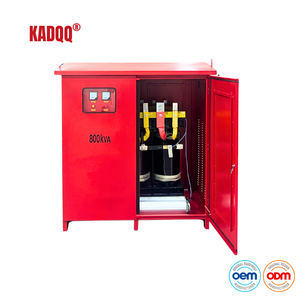
800KVA 3-Phase Wind Turbine Isolation Transformer
- CE Certified IP65 Protection
- Harmonic Suppressing Core Design
- Renewable Grid Step-Up Duty
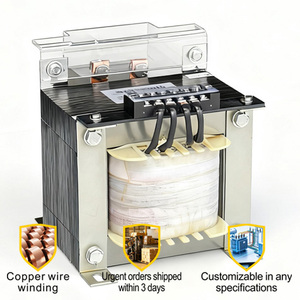
5KVA-10KVA Single Phase Voltage Control Transformer
- Step Down 110/220V to 36/48V
- Class H Insulation Insulation
- Machinery & Metering Step-Down
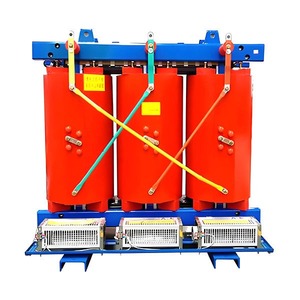
33KV/35KV VPI Dry Type Isolation Transformer
- Flame-Retardant Self-Extinguishing
- Vacuum Pressure Impregnated Core
- High-Rise & Wind Tower Approved
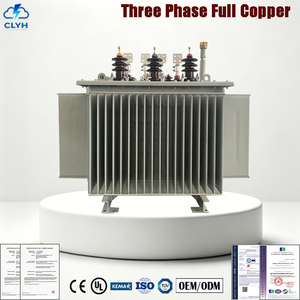
100kVA 10/0.4kV Oil-Immersed Distribution Transformer
- Low Total Losses (IEC Tier 2)
- Hermetically Sealed Tank
- Utility Grid & Rural Power Ready
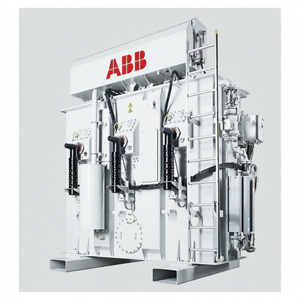
Heavy Duty Offshore Wind Transformer 66-72.5kV
- Corrosion Resistant C5-M Coating
- High Dynamic Short-Circuit Strength
- Subsea & Coastal Platform Rated
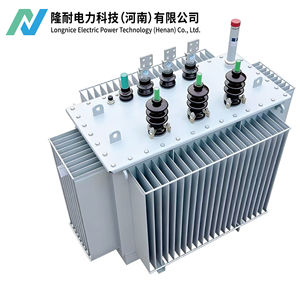
S11 Series 10kV Energy-Saving Distribution Unit
- High-Grade CRGO Silicon Steel Core
- Minimal No-Load Loss Factor
- 100% Oxygen-Free Pure Copper
1. Technical Whitepaper: China Potential Transformer (VT) Manufacturing Ecosystem
A Potential Transformer (PT), technically categorized under Instrument Transformers as a Voltage Transformer (VT) according to IEC 61869-3 and IEEE C57.13, is a high-precision electromagnetic component designed to step down extra-high grid voltages to standardized, safe operational secondary values (typically 110V, 100V, or 100/√3V). These precise proportional secondary voltage signals feed switchgear protection relays, Revenue Metering Units (RMUs), and SCADA data acquisition systems.
China has emerged as the global epicenter for advanced potential transformer production, leveraging vertically integrated supply chains for Cold-Rolled Grain-Oriented (CRGO) silicon steel, ultra-pure epoxy resin formulations, and automated vacuum pressure impregnation machinery. Industrial manufacturers in China now produce a vast spectrum of voltage equipment—from 3.3kV indoor cast resin VTs to 750kV capacitive potential transformers (CVTs) designed for ultra-high voltage (UHV) transmission networks.
Key Engineering Criteria when Evaluating Potential Transformer Factories:
Modern electrical grid modernization demands stringent compliance with thermal, dielectric, and magnetic saturation specifications. Leading Chinese OEMs integrate strict structural safeguards against ferroresonance phenomena, atmospheric impulse surges, and severe environmental pollution.
Core Technological Advantages
Why leading global EPCs, utilities, and industrial conglomerates partner with elite Chinese voltage transformer manufacturers.
Ultra-Precision Core Metallurgy
Utilizing domain-refined CRGO steel laminations and amorphous alloy formulations to guarantee exceptionally linear excitation curves, preventing saturation during transient overvoltage events.
Advanced Insulation Systems
Employing hydrophobic cycloaliphatic epoxy resin (APG technology) and Class H Vacuum Pressure Impregnation (VPI) ensuring partial discharge rates under 5 picocoulombs (pC) at 1.2Un test voltage.
Severe Dynamic Short-Circuit Withstand
Optimized primary and secondary coil winding geometries providing robust resistance to thermal degradation and electrodynamic forces caused by system short-circuits.
2. Engineering Benchmark: Potential Transformer Technology Comparison
Selecting the optimal potential transformer configuration depends heavily on installation environment (indoor switchgear vs. outdoor substation), system voltage level, and fire safety ratings. Below is an engineering comparison matrix across common PT constructions manufactured in China.
| Insulation & Core Technology | Voltage Range | Accuracy Classes | Partial Discharge | Primary Application Areas |
|---|---|---|---|---|
| Cast Resin (APG Epoxy) | 3.3 kV – 40.5 kV | 0.2S / 0.5 / 3P / 6P | < 5 pC at 1.2Un | Indoor MV Switchgear, Data Centers, High-Rise Distribution |
| Vacuum Pressure Impregnated (VPI) | 1 kV – 35 kV | 0.2 / 0.5 / 1.0 | < 10 pC | Wind Turbines, Mining Machinery, Flame-Proof Environments |
| Hermetically Sealed Oil-Immersed | 11 kV – 230 kV | 0.1 / 0.2S / 0.5 | < 2 pC | Outdoor Utility Substations, Renewable Energy Hubs |
| Capacitive Voltage Transformer (CVT) | 66 kV – 750 kV | 0.2 / 0.5 / TPF | Negligible | UHV Transmission Lines, Grid Interconnection, PLC Comms |
3. 2025–2030 Global Sourcing Trends in Voltage & Distribution Transformers
The global energy transition is fundamentally reshaping the requirements for voltage transformers and distribution infrastructure. Procurement directors and grid planners must align their purchasing strategies with key technological trends:
A. Integration with Smart Grids & Digital Substations (IEC 61850)
Conventional analog voltage signals are rapidly giving way to Optical Voltage Transformers (OVT) and electronic VTs equipped with Merging Units (MU). China’s top-tier manufacturers lead the field in producing low-power voltage transformers (LPVTs) that interface directly with digital protection relays via fiber-optic Ethernet cables compliant with IEC 61850-9-2 process bus standards.
B. Decarbonization and Eco-Friendly Insulation Media
Environmental regulations restricting SF6 gas emissions are forcing utilities to adopt dry-type cast resin PTs and natural synthetic ester fluid-filled transformers. Biodegradable ester oils offer flashpoints exceeding 300°C, drastically lowering fire risk profiles while achieving a carbon-neutral footprint during life-cycle disposal.
C. Dynamic Resiliency for Renewable Energy Integration
Solar PV farms and offshore wind installations expose voltage step-up equipment to intense harmonic distortion (THD), steep voltage wavefront transients caused by fast-switching IGBT converters, and extreme thermal cycling. Leading Chinese factories utilize copper shield interlayers and non-linear zinc oxide (ZnO) varistors built directly into the transformer housing to suppress high-frequency overvoltages.
4. Manufacturer Qualification & Rigorous Quality Assurance Standards
When sourcing potential transformers and distribution units from China, evaluating factory quality control (QC) infrastructure is critical to ensure high reliability and zero downtime over a 30+ year design life. Premier manufacturers operate under fully integrated management frameworks including ISO 9001:2015, ISO 14001:2015, and ISO 45001:2018.
Every production batch must undergo mandatory routine and type testing backed by internationally recognized accreditation bodies such as KEMA, CPRI, ERDA, and CNAS-certified laboratories. Essential verification protocols include:
- Lightning Impulse Withstand Voltage Test: Verifies the insulation system's capability to endure full-wave impulse spikes up to 200kV BIL or higher.
- Induced Overvoltage & Partial Discharge Measurement: Ensures zero internal voids or insulation degradation during continuous operational stresses.
- Accuracy & Ratio Error Verification: Precision testing across 5% to 120% of rated voltage to confirm compliance with Class 0.2S metering standards.
- Short-Circuit Withstand Dynamic Test: Validates mechanical structural strength of windings under extreme fault current conditions.
Frequently Asked Questions (Procurement FAQ)
Clear technical answers to common queries raised by international buyers, EPC contractors, and electrical engineers.
What is the core difference between a Potential Transformer (PT) and a Power Transformer?
A Potential Transformer (Voltage Transformer) is designed specifically to step down voltage for accurate metering, monitoring, and protective relaying, operating at very low power burdens (typically 10VA to 500VA). In contrast, a Power Transformer is engineered to transfer bulk electrical energy across grid networks at high efficiency, handling power ratings from several hundred kVA up to hundreds of MVA.
How do I select the correct accuracy class for my Potential Transformer?
Accuracy class selection depends on the end-use application: Class 0.1 or 0.2S is required for commercial tariff billing and revenue metering; Class 0.5 is standard for industrial switchgear monitoring and operational metering; Class 3P or 6P is used for protective relaying to ensure fast tripping during fault overvoltages.
Why is Ferroresonance protection critical for Medium Voltage VTs?
Ferroresonance is a non-linear resonant condition between the non-linear inductance of the VT core and grid capacitance. It can cause extreme overvoltages and overcurrents, leading to catastrophic transformer explosion. Quality Chinese manufacturers build damping resistors or open-delta auxiliary windings into their PT assemblies to dissipate ferroresonant energy safely.
Can Chinese PT manufacturers accommodate custom vector groups and dual primary voltages?
Yes. Leading OEMs provide full engineering customization including dual-ratio primary windings (e.g., 11kV/22kV switchable), specialized vector groups (Dyn11, Ynd11, YNyn0), custom mechanical dimensions to fit existing switchgear cells, and extreme environmental coatings (C5-M for marine offshore duty).
What documentation is provided with international transformer shipments?
Standard export compliance packages include Certified Factory Acceptance Test (FAT) Reports, Routine Test Certificates, Type Test Reports from accredited third-party labs (CPRI/KEMA/CNAS), Certificates of Origin, ISO System Credentials, and detailed Installation & Maintenance Manuals.
Partner with China's Premier Transformer Engineering Factory
Request comprehensive product catalogs, detailed CAD dimensional drawings, or custom technical quotes directly from our senior engineering team. Fast global response guaranteed.