2025 Global Industrial Whitepaper & Supply Chain Guide
Top China Silicon Steel Manufacturers & Factory
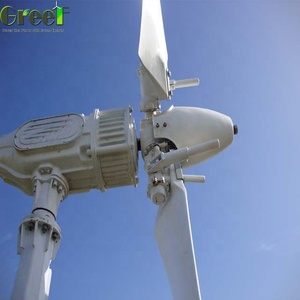
An engineering evaluation of high-permeability grain-oriented (CRGO) and non-oriented (CRNGO) silicon steel core solutions, powering next-generation transformers, wind power generators, and grid infrastructure worldwide.
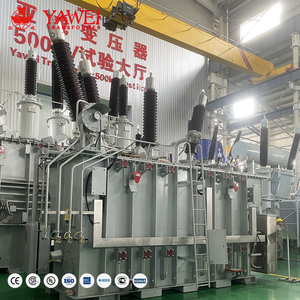
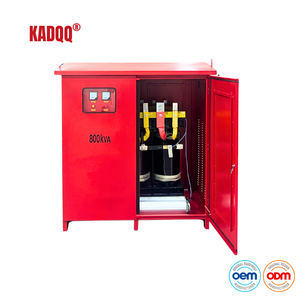
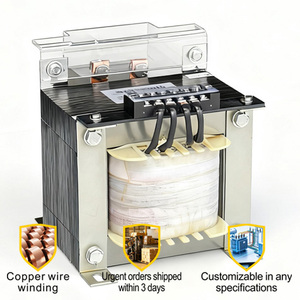
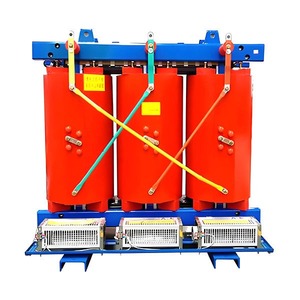
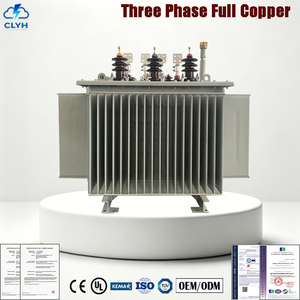
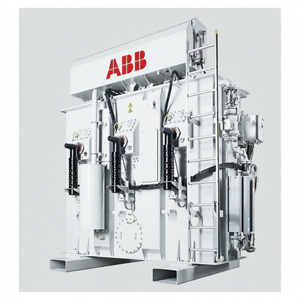
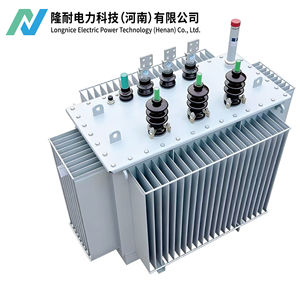
Precision-engineered transformer units and power equipment incorporating premium cold-rolled grain-oriented silicon steel laminations for minimal eddy current loss and ultra-low no-load dissipation.
1. Global Silicon Steel Market Dynamics & Metallurgical Engineering
Silicon steel, also known as electrical steel or soft magnetic alloy, is the foundation of modern electrical power transformation and electromechanical energy conversion. Containing between 2.8% and 3.5% silicon by weight, electrical steel exhibits remarkably high magnetic permeability, low coercivity, and high electrical resistivity. By increasing the electrical resistivity of the iron matrix, silicon content drastically suppresses eddy current losses ($P_e$) induced by alternating magnetic fields according to Faraday's law of induction.
In high-voltage utility power systems, renewable energy step-up transformers, and high-rpm electric vehicle (EV) traction motors, the selection of silicon steel grades directly dictates the total cost of ownership (TCO) and system efficiency. China has established itself as the world’s primary hub for both Cold-Rolled Grain-Oriented (CRGO) and Cold-Rolled Non-Oriented (CRNGO) electrical steel production, combining advanced laser-scribing domain refinement technologies with large-scale continuous annealing infrastructure.
Key Metallurgical Insight: Domain refinement via laser scribing or chemical etching reduces magnetic domain wall spacing in CRGO steel, cutting hysteresis loss ($P_h$) by up to 25% at operating flux densities of 1.7T to 1.9T.
Comparative Technical Analysis: CRGO vs. CRNGO Silicon Steel
Understanding the crystallographic orientation is paramount for procurement engineers selecting cores for stationary transformers versus rotating machinery:
Evaluating top China silicon steel manufacturers and factory partners requires a deep audit of manufacturing processes, quality assurance frameworks, and compliance with international standards such as IEC 60076, IS 2026, IS 1180, and IEEE C57. Leading factories combine fully automated core-slitting lines, step-lap mitred core stacking machines, and controlled-atmosphere stress relief annealing furnaces.
ISO & Type-Tested Quality
Certified under ISO 9001:2015, ISO 14001:2015, and OHSAS 18001. All core assemblies and finished transformers are type-tested by premier laboratories including ERDA and CPRI.
Step-Lap Mitred Stacking
Utilizing 45-degree precision mitred cutting with 5-step or 7-step lap joints. Reduces no-load loss by 8-12% and decreases acoustic magnetostriction noise by 4-6 dB(A).
In-House Testing Infrastructure
Equipped with automatic Epstein Frame test systems, Single Sheet Testers (SST), and full temperature-rise test bays compliant with mandatory BIS and IEC requirements.
Integrated manufacturing facilities leverage high-purity Carllite (phosphate-based inorganic) insulation coating on silicon steel coils. This coating provides superior surface inter-lamination resistance (>30 Ω·cm²/lamination), enabling oil-immersed and dry-type transformers to operate at high thermal classes (Class F and Class H) without breakdown.
Global Footprint: Over 40% of production capacity is dedicated to export orders across North America, Europe, the Middle East, Africa, and Southeast Asia, supplying state electricity boards, EPC contractors, and OEM machinery manufacturers.
3. Technology Development & Metallurgical Trends (2025–2035)
Driven by global decarbonization mandates, the Net-Zero 2050 framework, and national energy efficiency standards (such as EU Tier 2 EcoDesign and US DOE 2026 efficiency levels), the silicon steel manufacturing landscape is undergoing rapid technological evolution. Procurement teams must align with vendors who are pioneering the following core trends:
1. Ultra-Thin Domain-Refined CRGO (0.18mm to 0.20mm)
Traditional transformer cores relied on 0.27mm to 0.30mm laminations. Modern ultra-high voltage (UHV) grid transformers (750kV / 1000kV) and offshore wind turbine transformers (such as 66kV rated 5–25MVA units) are transitioning to 0.18mm laser-refined silicon steel. Thin gauge sheets reduce classical eddy current loss proportionally to the square of sheet thickness ($P_e \propto d^2$), achieving unprecedented core efficiency.
2. High-Frequency Thin-Gauge CRNGO for Electric Mobility & High-Speed Rotors
Electric vehicle traction motors operating at switching frequencies up to 20,000 RPM demand non-oriented silicon steel with thicknesses of 0.20mm to 0.25mm. Manufacturers are incorporating alloy modifications (addition of 0.5%–1.0% Aluminum) to increase resistivity while maintaining mechanical yield strength (>450 MPa) to resist high centrifugal stress during rotor rotation.
3. Green Steel & Hydrogen-Reduced Manufacturing
With the introduction of the European Union’s Carbon Border Adjustment Mechanism (CBAM), tier-1 Chinese silicon steel mills are adopting direct reduced iron (DRI) processes utilizing green hydrogen instead of metallurgical coke. Sourcing low-carbon electrical steel ensures international compliance and reduces embedded Scope 3 greenhouse gas emissions.
Technology Epoch
Dominant Thickness
Average Core Loss (1.7T / 50Hz)
Primary Market Drivers
Legacy Standard (S9/S11)
0.30 mm – 0.35 mm
1.20 – 1.45 W/kg
Basic Industrial Power Grids
Current Benchmark (S13/S15)
0.23 mm – 0.27 mm
0.85 – 0.95 W/kg
IEC 60076 & EcoDesign Phase 2
Next-Gen Ultra-Low Loss
0.18 mm – 0.20 mm
≤ 0.65 – 0.75 W/kg
Smart Grids, UHV Transmission, Offshore Wind
4. B2B Sourcing Strategies & Total Cost of Ownership (TCO) Optimization
When procuring silicon steel cores or core-assembled transformers from Chinese manufacturers, procurement officers must evaluate parameters beyond upfront purchase price ($C_{initial}$). High-efficiency transformers operate continuously for 25 to 40 years; thus, the cost of no-load core losses ($P_0$) dominates total lifecycle expenditure.
The Capitalized Cost Formula for Transformer Core Procurement:
$C_{initial}$ = Initial purchase price of the transformer / silicon steel core ($).
$P_0$ = No-load loss (iron loss caused by magnetic hysteresis & eddy currents in silicon steel, in kW).
$P_k$ = Load loss (copper loss in windings, in kW).
$A$ = Capitalization factor for no-load loss ($/kW, typically $4,000 - $8,000/kW depending on energy tariffs).
$B$ = Capitalization factor for load loss ($/kW, typically $1,500 - $3,000/kW).
Strategic Sourcing Takeaway: Investing a 15% price premium in high-grade 0.23mm laser-scribed CRGO core steel often yields a 300% to 500% ROI over a 20-year operational lifecycle by preventing continuous no-load dissipation.
5. Silicon Steel Procurement & Engineering FAQ
Comprehensive answers to key technical questions encountered during vendor audits, material specification drafting, and quality verification:
Q1: What is the difference between conventional CRGO and High-B (Hi-B) CRGO silicon steel?
Hi-B (High Magnetic Induction) grain-oriented silicon steel features a significantly higher degree of Grain-Oriented alignment (Goss texture precision >99%). Hi-B steel achieves higher magnetic permeability at high fields ($B_{800} \ge 1.90\text{ T}$) compared to conventional CRGO ($B_{800} \approx 1.82\text{ T}$). This allows transformer designers to operate at higher flux densities without driving the core into magnetic saturation, reducing total transformer weight and size.
Q2: Why is stress relief annealing critical after core slitting or shearing?
Mechanical cutting, slitting, and punching introduce severe shear stresses along the edges of silicon steel laminations. Mechanical stress disrupts the domain structure and degrades core loss properties by up to 15-30%. Stress relief annealing in a protective nitrogen-hydrogen atmosphere at 750°C - 800°C restores the original domain structure and magnetic properties.
Q3: How does the "Building Factor" affect finished core performance?
The Building Factor (or core loss ratio) is the ratio of the measured no-load loss of an assembled transformer core to the theoretical loss calculated from Epstein frame raw material test data. A well-designed 45° step-lap mitred corner structure achieves a building factor close to 1.10 - 1.15, whereas poor stacking or straight 90° joints can increase the building factor to >1.35.
Q4: What certifications and quality reports should be requested prior to shipment?
Buyers should demand: 1) Mill Test Certificates (MTC) according to EN 10204 3.1 verifying specific core loss (W/kg), stacking factor, and insulation resistance; 2) Epstein Frame test curves at 1.5T and 1.7T (50Hz/60Hz); 3) Type Test reports from independent accredited labs (such as CPRI or ERDA) for short-circuit withstand, temperature rise, and dielectric impulse withstand.
Q5: How do Chinese factory lead times and packaging compare for international ocean freight?
Standard lead times for custom slitted coils or cut-to-length core laminations range from 15 to 30 days. Core products are packed in moisture-proof vacuum foil, enclosed in wooden crates with VCI (Volatile Corrosion Inhibitor) paper, and secured on heavy-duty steel skids designed to withstand high humidity during ocean transport.
Request Custom Engineering Specs & Factory Direct Pricing
Partner with premier silicon steel manufacturers and transformer core specialists. Get instant technical support, MTC documentation, and competitive B2B volume quotes for your utility or industrial project.