High-Performance Power & Distribution Transformer Portfolio
Explore our engineered lineup of oil-immersed, dry-type, isolation, and specialized renewable energy transformers manufactured strictly to IEC 60076, IEEE C57, and IS 2026 international standards.
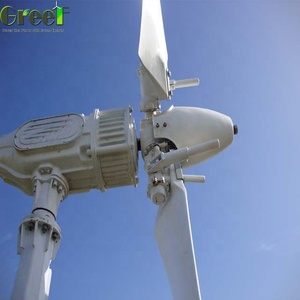
Aluminium Body Small Wind Turbine for Farm
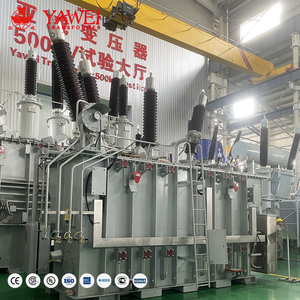
Yawei Manufacturer Price 10 MVA 15MVA 20MVA 67KV 69KV 33KV Power Transformer Copper Winding 60hz Dyn11
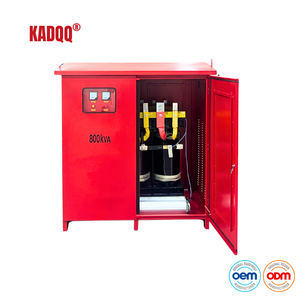
Wind Turbine Generator Isolation Transformer 800KVA Three Phase IP65 Protection CE Certified for Renewable Energy Systems
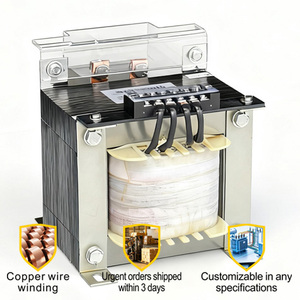
5KVA 10kVA Single Phase Control Transformer 110/220V To 36/48V For Packaging Machinery Pure Copper Winding CE ISO
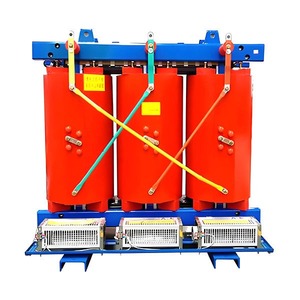
Customizable Fire Prevention Buildings Use Isolation Copper Winding Three Phase 33KV 35KV 38.5KV Wind Turbine Dry Transformer
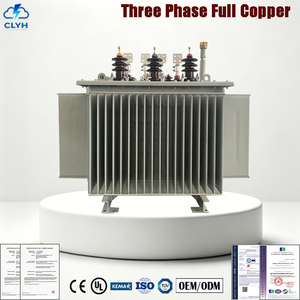
Distribution Transformer 100kVA 10/0.4kV Three Phase Oil Immersed Copper Winding IEC CE Certified 50Hz For Utility Grid
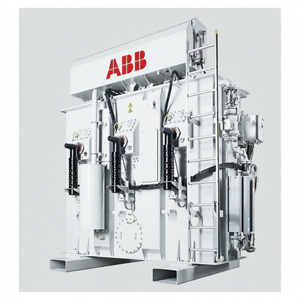
ABB (Hitachi Energy) Offshore Wind Turbine Transformer5-25MVA 66-72.5KV IEC Genuine
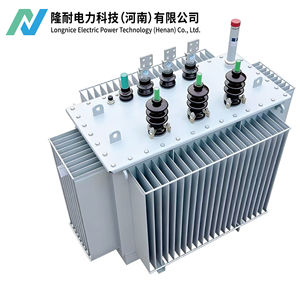
S11 3 Phase Oil Immersed Distribution Transformer 10kV 0.4kV 100% Copper Winding Power Transformer
Global Manufacturing Capability & Enterprise Authority
As premier electrical equipment manufacturers and export leaders, our manufacturing infrastructure operates under stringent quality control paradigms, serving state utilities, EPC contractors, and industrial conglomerates across 40+ countries. Backed by over three decades of engineering innovation since 1991, our facilities integrate advanced magnetic core fabrication, automated precision slitting, step-lap mitred shearing, and vacuum drying chambers.
ISO 9001 & 14001 Quality System
Fully compliant with international quality and environmental management protocols. Standardized production workflows guarantee structural integrity and uniform flux distribution.
In-House Temperature Rise & Short-Circuit Testing
Equipped with specialized testing bays capable of conducting dielectric strength, short-circuit withstand, temperature rise (BIS mandatory), and acoustic noise analysis.
Ultra-Low Loss Core Technology
Utilizing high-permeability, domain-refined Cold Rolled Grain Oriented (CRGO) silicon steel and amorphous alloys to reduce no-load losses by up to 30% relative to conventional grades.
Technical Whitepaper: Engineering Architecture of Transformer Cores & Global Sourcing Standards
In high-voltage electrical grid architecture, the transformer core serves as the primary electromagnetic pathway responsible for transferring energy between primary and secondary windings via induction. The efficiency, noise profile, harmonic tolerance, and thermal resilience of any transformer are inherently bounded by the core material metallurgy and mechanical stacking methodology. As global power grids undergo rapid decentralization to accommodate renewable inputs (solar PV, wind energy, and battery storage), procuring high-quality transformer cores from certified Chinese manufacturers has become a cornerstone strategy for global utilities and EPC procurement directors.
1. Metallurgical Breakdown of Transformer Core Materials
Modern transformer core manufacturing relies on three main metallurgical classifications, each delivering distinct magnetic saturation, coercivity, and loss profiles:
- Cold Rolled Grain Oriented (CRGO) Silicon Steel: Formed through specialized cold-rolling processes, CRGO steel exhibits highly oriented crystal structures along the rolling direction (Goss texture (110)[001]). High-permeability grades (such as 23Q110, 27QG120, and M0H) feature laser domain refining, which significantly curtails eddy current losses under elevated induction levels (1.5T to 1.7T).
- Amorphous Metal Alloys (Fe-Si-B): Produced via ultra-rapid solidification (cooling rates near $10^6 \text{ K/s}$), amorphous ribbon lacks a crystalline lattice structure. This random atomic layout minimizes magnetic anisotropy and reduces magnetic hysteresis loss to a fraction of conventional CRGO steel, yielding up to 70–80% lower no-load ($P_0$) loss figures.
- Nanocrystalline Ribbon Cores: Composed of ultra-fine grain structures (typically 10–15 nanometers), nanocrystalline cores provide exceptionally high initial permeability and high saturation flux density ($B_s \approx 1.25\text{T}$). They are extensively utilized in high-frequency isolation transformers, wind energy inverter units, and precision control transformers.
2. Advanced Core Assembly Topologies: Step-Lap Mitred Joints vs. Traditional Stacking
The mechanical geometric design of the magnetic circuit directly governs flux leakage, magnetizing current ($I_0$), and magnetostrictive acoustic noise emissions. Leading Chinese manufacturing plants employ 5-step or 7-step full-mitre cutting (45-degree angle shear) with automated step-lap stacking.
Compared to traditional 90-degree butt-joint or non-mitred overlap configurations, step-lap mitred joints ensure that the magnetic flux lines smoothly align with the preferred grain orientation of the CRGO steel across the corner limbs. This eliminates localized magnetic flux concentration, reducing no-load losses by 8–12% and decreasing acoustic sound pressure levels by 3 to 6 dBA—an indispensable compliance factor for urban distribution substations and indoor VPI dry-type installations.
3. Quantitative Benchmark: Magnetic Core Material Comparison
| Core Material Grade | Saturation Flux Density ($B_s$) | Typical Core Loss @ 1.5T 50Hz | Stacking Factor | Operating Temp Limit | Primary Technical Application |
|---|---|---|---|---|---|
| High-B CRGO (0.23mm) | 1.92 - 2.03 Tesla | 0.85 - 0.95 W/kg | 0.96 - 0.97 | 150°C - 180°C | High Voltage Power Transformers (10MVA–100MVA) |
| Laser-Refined CRGO (0.18mm) | 1.90 - 2.00 Tesla | 0.65 - 0.75 W/kg | 0.95 - 0.96 | 150°C - 180°C | Ultra-Efficient Grid Distribution Transformers (S13/S15) |
| Fe-Based Amorphous Ribbon | 1.56 Tesla | 0.20 - 0.28 W/kg | 0.86 - 0.88 | 130°C - 140°C | Eco-Design Energy Saving Distribution Units (SH15) |
| Nanocrystalline Alloy | 1.25 - 1.30 Tesla | 0.12 - 0.18 W/kg | 0.80 - 0.84 | 120°C - 160°C | High-Frequency Inverters & Wind Isolation Units |
4. Mathematical Formulation of Total Core Losses ($P_{\text{core}}$)
To properly calculate Total Cost of Ownership (TCO) during global transformer procurement, electrical engineers split total core loss ($P_{\text{core}}$) into three distinct components:
P_core = P_hysteresis + P_eddy + P_anomalous
Where:
• P_hysteresis = k_h * f * (B_m)^n (Hysteresis loss governed by material coercivity)
• P_eddy = k_e * (t * f * B_m)^2 / ρ (Eddy current loss proportional to lamination thickness 't' squared)
• P_anomalous = k_a * (f * B_m)^1.5 (Domain wall displacement loss)
Optimizing the core involves selecting ultra-thin laminations ($t = 0.18\text{mm} - 0.23\text{mm}$) with specialized inorganic carlite insulation coatings (C-5 over C-3) to maximize inter-laminar resistance ($\rho$) and minimize eddy current loops caused by high harmonic loads.
Global Procurement & Technological Trends in Transformer Core Manufacturing
The international power landscape is experiencing unprecedented structural shifts. Procurement directors evaluating Chinese transformer core exporters must navigate emerging regulatory, technical, and supply chain megatrends:
Strict Efficiency Mandates (EU Tier 2 & US DOE Standards)
Regulatory frameworks such as EU EcoDesign Directive Tier 2 (EN 50588-1) and US Department of Energy (DOE 2016/2024) mandate aggressive reductions in maximum allowable no-load and load losses. Exporters leveraging 0.18mm laser-scribed CRGO core assemblies dominate international utility contract awards.
Renewable Integration & Harmonic Resilience
Offshore wind turbines, solar farm central inverters, and EV fast-charging hubs introduce severe voltage harmonics (THD) and DC bias. Modern cores incorporate specialized distributed-gap configurations and higher K-factor designs to prevent core saturation and thermal runaway under non-linear loads.
Smart Fiber-Optic Thermal Sensing Core Integration
Industry 4.0 integration allows embedment of GaAs fiber-optic temperature sensors directly into the internal core limbs and yoke joints. Real-time hotspot detection enables predictive maintenance and dynamic transformer rating optimization in critical utility substations.
Frequently Asked Questions (Procurement & Technical FAQ)
Essential technical insights for B2B buyers, electrical engineering consultants, and utility procurement officers sourcing transformer cores from top China manufacturers.
Q1: How does step-lap mitred core construction compare to conventional lap joints in terms of ROI?
Step-lap mitred joints reduce no-load loss ($P_0$) by 8–12% and excitation current ($I_0$) by up to 30%. Although initial manufacturing precision requires higher capital investment in CNC shearing lines, the reduced energy loss over a 25-year operational lifespan yields a complete payback within 14 to 22 months of grid commissioning.
Q2: What quality testing standards must Chinese transformer exporters verify prior to shipment?
Tier-1 exporters verify compliance with IEC 60076 (Parts 1, 3, 5, 8, 10), IEEE C57.12.00, and GB/T 1094. Key factory acceptance tests (FAT) include No-Load Loss & Current Measurement, Induced Overvoltage Withstand, Temperature Rise Testing (mandatory per BIS/IEC), Short-Circuit Withstand Validation (certified by CPRI/ERDA/KEMA), and Sound Level Measurement.
Q3: What is the practical difference between CRGO Silicon Steel and Amorphous Metal Cores?
CRGO steel operates comfortably at higher flux densities ($1.6\text{T} - 1.7\text{T}$), resulting in a smaller physical footprint, making it ideal for power transformers above 5MVA and space-constrained indoor VPI units. Amorphous cores operate at lower flux density ($1.3\text{T} - 1.4\text{T}$) and require a larger physical size, but reduce no-load losses by 70–80%, making them superior for rural distribution grids with low load factors.
Q4: How do factories protect steel cores against oxidation and rust during ocean transit?
Export-ready transformer cores undergo multi-stage anti-corrosion protection: application of quick-drying protective varnish over exterior limb surfaces, vacuum wrapping with VCI (Vapor Corrosion Inhibitor) plastic films, moisture-absorbing silica gel desiccant packs within hermetically sealed seaworthy wooden crates (ISPM 15 certified).
Q5: Can Chinese manufacturers custom-build cores to non-standard frequency and voltage specs?
Yes. Leading factories engineer custom core dimensions for 50Hz, 60Hz, and high-frequency applications (400Hz up to multi-kHz). Custom core geometries (3-limb, 5-limb, single-phase shell type, toroid, and matrix cores) are designed using 3D finite element analysis (FEA) software to match exact customer tank and winding layouts.
Q6: Why is the core stacking factor critical when auditing factory technical proposals?
The stacking factor represents the ratio of actual magnetic steel volume to total solid core volume (accounting for surface insulation thickness). A high stacking factor ($0.95 - 0.97$ for prime CRGO) indicates tight stacking tolerances, optimal clamping pressure, low air gap reluctance, and minimal core vibration during energized operation.
Ready to Source High-Efficiency Transformer Cores & Power Equipment?
Connect directly with our engineering team for custom OEM technical proposals, factory audit documentation, and competitive international export pricing.