Featured Transformer & Substation Products
Explore our flagship range of high-efficiency distribution transformers, wind turbine power units, and custom industrial substations built to IEC 60076, IS 2026, and global utility standards.
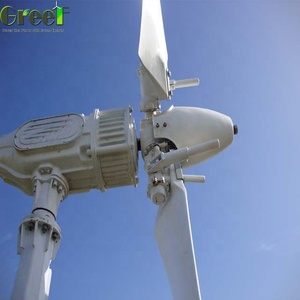
Aluminium Body Small Wind Turbine for Farm
Inquire Now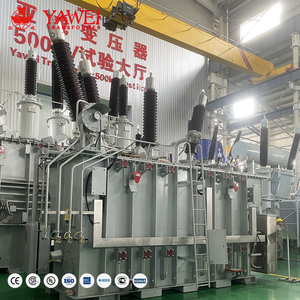
Yawei 10 MVA - 20MVA 69KV Power Transformer
Inquire Now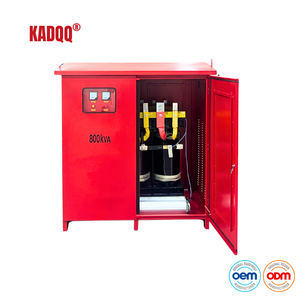
800KVA Wind Generator Isolation Transformer IP65
Inquire Now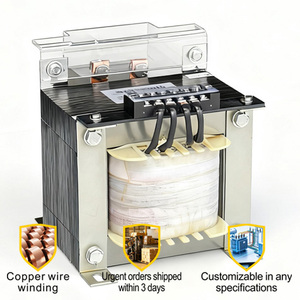
5KVA 10kVA Single Phase Machinery Control Transformer
Inquire Now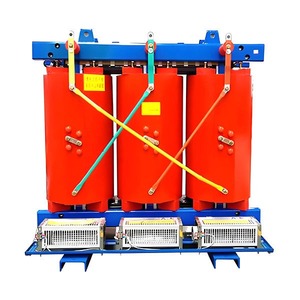
33KV 35KV Wind Turbine Fire-Safe Dry Transformer
Inquire Now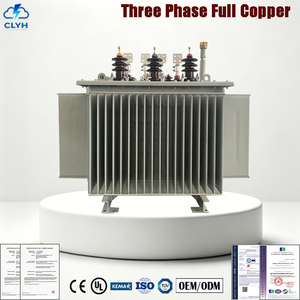
100kVA 10/0.4kV Three Phase Oil Immersed Transformer
Inquire Now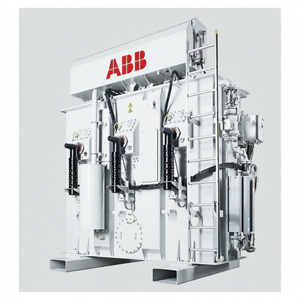
Offshore Wind Turbine Power Transformer 5-25MVA
Inquire Now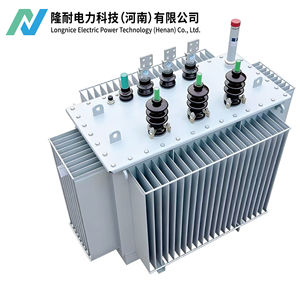
S11 3-Phase Oil Immersed Copper Winding Transformer
Inquire Now1. Executive Overview & Technical Fundamentals of Transformer Radiators
In high-voltage power transmission and distribution networks, the structural integrity and thermal management efficiency of a power transformer dictate its operational lifespan, overload capabilities, and total cost of ownership (TCO). As a premier global manufacturer and exporter of transformer cooling systems, specialized radiator panels, and complete transformer assemblies, our engineering framework integrates state-of-the-art metallurgical techniques with computational fluid dynamics (CFD) to address critical heat dissipation challenges.
The primary role of a transformer radiator panel is to exchange thermal energy generated within the transformer core and windings (copper/aluminium losses, $I^2R$, and stray eddy losses) to the external ambient environment via natural or forced convection. Efficient heat transfer prevents the thermal degradation of solid insulating materials (such as Kraft paper and pressboard) and liquid dielectric media (mineral oil, natural esters, or synthetic esters), thereby mitigating premature transformer insulation breakdown.
Cold-Rolled Steel Formulations
Precision-drawn DC01/DC03 cold-rolled steel sheets with uniform wall thickness (1.0mm to 1.5mm) ensure maximum structural rigidity under severe pressure impulses and seismic vibrations.
Advanced Oil Channel Fluidics
Optimized fluting geometry expands the effective heat dissipation surface area while minimizing hydraulic flow resistance, facilitating high thermosiphon velocity.
C5-M Heavy Anti-Corrosion
Multi-layer surface treatment including hot-dip galvanizing (HDG) and marine-grade C5-M epoxy-polyurethane coating for aggressive coastal and offshore operating environments.
2. Heat Dissipation Dynamics & Cooling Classification Framework
According to IEC 60076-2 and IEEE C57.12.00, power transformer cooling arrangements are classified by the internal and external cooling media and circulation mechanisms. Radiator banks serve as the cornerstone for ONAN, ONAF, OFAF, and ODAF cooling regimes:
| Cooling Designation | Internal Fluid Circulation | External Medium & Flow | Thermal Transfer Efficiency | Primary Application Range |
|---|---|---|---|---|
| ONAN | Oil Natural (Thermosiphon) | Air Natural Convection | Baseline (1.0x) | Standard Distribution & Light Industrial (< 10 MVA) |
| ONAF | Oil Natural (Thermosiphon) | Air Forced (Axial Fans) | 1.25x – 1.35x Expansion | Medium Power & Substation Transformers (10 - 40 MVA) |
| OFAF | Oil Forced (Pumps) | Air Forced (High Velocity) | 1.50x – 1.70x Expansion | Heavy Industrial & Transmission Nodes (40 - 100 MVA) |
| ODAF | Oil Directed (Targeted Ducting) | Air Forced (Multi-Bank Fans) | 1.85x – 2.10x Expansion | Ultra-High Voltage (UHV) & Generator Step-Up (GSU) |
Our radiator designs feature automated robotic seam welding along the outer perimeter of pressed radiator elements, coupled with high-frequency spot welding across interior flutes. This structural design guarantees a minimum pressure rating of 5.0 Bar (0.5 MPa) under static pressure testing, far exceeding standard operational hydraulic head pressure.
3. Global Procurement Trends & Engineering Future (2025–2030)
The global power transformer market is undergoing a structural transition driven by renewable energy grid integration, smart grid modernization, and stringent environmental policies. Electrical utilities and EPC contractors are recalibrating their procurement requirements toward four major technological vectors:
A. Transition to Ester-Based Dielectrics
Natural and synthetic ester fluids offer superior flash points (>300°C) and biodegradability compared to mineral oils. However, because ester fluids exhibit higher kinematic viscosity, radiator banks must be engineered with wider internal fluid channels (up to 45mm header pipe diameters) to maintain optimal thermosiphon flow rates without thermal stagnation.
B. Smart Radiators & Thermal IoT Integration
Next-generation radiator banks feature non-intrusive ultrasonic flow meters, infrared thermal sensors, and vibration monitoring nodes. These sensors feed real-time analytics into Asset Performance Management (APM) platforms, enabling predictive maintenance and dynamic transformer rating adjustments under extreme load spikes.
C. Eco-Design & Loss Reduction Mandates
Regulations such as EU Tier 2 Eco-design (EN 50708) and US DOE 2016 efficiency standards demand lower total loss profiles. Radiator manufacturers must maximize thermal dissipation per kilogram of steel, utilizing high-efficiency fin profiles that lower oil temperature rises ($\Delta T$) by 3°C to 5°C, thereby reducing copper winding losses.
4. Manufacturing Infrastructure & Quality Control Assurance
Rooted in over 30 years of manufacturing mastery, our facility operates under ISO 9001:2015, ISO 14001:2015, and OHSAS 18001 certifications. Serving top-tier utilities and OEM transformer builders across 40+ countries, our competitive edge relies on total process integration:
- Automated Stamping & Fluting Lines: Multi-station hydraulic pressing lines process high-grade steel sheets with high repeatability, maintaining tighter tolerances than ISO 2768-m.
- Degreasing & Phosphating Pre-treatment: 8-stage automated chemical immersion removes surface contaminants, applying a micro-crystalline zinc phosphate layer that enhances paint adhesion strength to 0-class according to ISO 2409.
- In-House Dielectric & Thermal Testing: Every batch undergoes full hydraulic pressure testing, oil-leak tightness verification using helium mass spectrometry, and hot oil wash down to guarantee zero particulate contamination inside radiator headers.
- Third-Party Type Test Verification: Certified by globally recognized testing bodies including CPRI and ERDA for short-circuit withstand performance, impulse voltage integrity, and temperature rise verification.
5. Comprehensive Procurement & Technical FAQ
Addressing critical engineering, quality assurance, and commercial inquiries for global electrical equipment buyers and project procurement managers.
Q1: What steel grades and thickness options are available for transformer radiators?
We manufacture radiators using high-quality cold-rolled steel according to EN 10130 / DC01, DC03, or JIS G3141 SPCC, with wall thicknesses ranging from 1.0mm to 1.5mm depending on customer specification. For highly corrosive marine environments or specialized applications, stainless steel grades (AISI 304 or AISI 316L) are available.
Q2: How do you guarantee leak-free performance during long-distance maritime transport?
100% of manufactured radiator assemblies are pressure-tested underwater at 2.0 to 3.0 Bar (0.2 - 0.3 MPa) for a minimum of 30 minutes to detect micro-porosity. Furthermore, dry air flushing is conducted before blanking headers with precision-sealed blind flanges, ensuring zero moisture entry or interior oxidation during sea freight.
Q3: What paint finish options are provided for harsh industrial or offshore environments?
We offer Hot-Dip Galvanizing (HDG) per ISO 1461 / ASTM A123 with zinc thickness > 70 microns, as well as multi-coat liquid epoxy/polyurethane systems compliant with ISO 12944 classification C4, C5-I (Industrial), and C5-M (Marine). Total Dry Film Thickness (DFT) options range from 120 microns up to 300 microns.
Q4: Can radiators be customized to match existing transformer tank flange dimensions?
Yes. We provide complete retrofit and custom OEM manufacturing services. Radiator widths (typically 520mm, 380mm, or custom), element counts (from 4 to 36 elements per panel), center-to-center distances (500mm to 4000mm), and header pipe flange layouts (DN80, DN100) are fully customizable based on CAD drawings.
Q5: What is the typical lead time for international export orders?
Standard design configurations are produced within 2 to 3 weeks following drawing approval. Custom or large-volume utility contracts typically ship within 4 to 6 weeks. Fast-track emergency replacements for substation maintenance can be arranged via dedicated manufacturing slots.
Partner with China's Premier Transformer Radiator Manufacturer
Leverage certified engineering quality, competitive factory direct pricing, and worldwide logistics execution.