High-Performance Transformer & Tank Systems
Precision-engineered oil-immersed, dry-type, and wind turbine isolation transformers manufactured in compliance with international IEC 60076, IS 2026, and IEEE engineering standards.
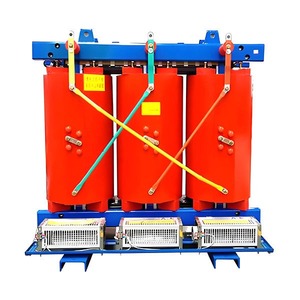
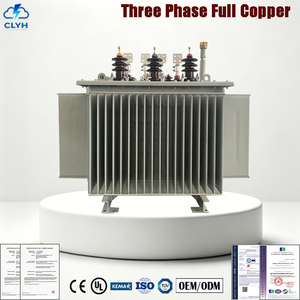
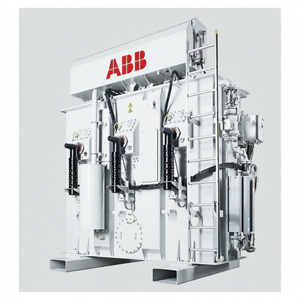
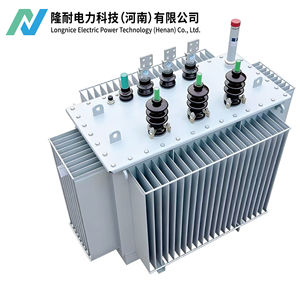
The Technical Evolution of Transformer Tanks & Structural Enclosures in China
In modern electrical power transmission and distribution (T&D) infrastructure, the transformer tank is far more than a simple metallic vessel; it serves as the critical mechanical backbone, primary thermal management interface, and dielectric oil containment unit for medium-to-high voltage power apparatus. Operating under extreme thermal stress, cyclic electromagnetic forces, aggressive environmental exposure, and internal pressure fluctuations, high-integrity transformer tank manufacturing demands rigorous material selection, precision robotic welding, advanced surface treatment, and stringent non-destructive testing (NDT).
As global power grids shift toward renewable energy integration, offshore wind farms, industrial microgrids, and ultra-high-voltage (UHV) transmission networks, international EPC contractors and utility procurement officers are increasingly looking to China's leading transformer tank factories. China has evolved into a global powerhouse for precision transformer enclosure manufacturing, pairing automated production lines with unprecedented supply chain integration to deliver solutions that strictly align with IEC 60076, IEEE C57, IS 2026, and ISO 12944 anti-corrosion benchmarks.
Comparative Evaluation of Mainstream Transformer Tank Architecture
Choosing the correct tank topology is crucial for balancing footprint constraints, thermal efficiency, maintenance lifespans, and total cost of ownership (TCO). Below is a engineering comparison of primary transformer enclosure configurations manufactured by top-tier Chinese suppliers:
| Tank Architecture Type | Primary Cooling Mechanism | Structural Rigidity & Vacuum Withstand | Typical Voltage & Capacity Range | Optimal Application Environment |
|---|---|---|---|---|
| Corrugated Fin Tanks | Flexible fin elastic expansion & natural convection (ONAN) | Designed for low-to-medium pressure; moderate vacuum limits during oil filling | 10 kV – 35 kV (100 kVA – 4,000 kVA) |
Compact distribution substations, urban pole-mounted transformers, residential grids. |
| Tubular Radiator Tanks (Header Type) | Detachable radiator banks with forced air/oil options (ONAN/ONAF/OFAF) | High structural rigidity; full vacuum withstand (100 kPa absolute) | 33 kV – 220 kV+ (5 MVA – 100+ MVA) |
Heavy industrial utility substations, renewable energy power plants, transmission grids. |
| Hermetically Sealed Vacuum Tanks | Gas-cushioned or nitrogen-padded oil expansion containment | Reinforced structural ribbing; completely maintenance-free sealed envelope | 10 kV – 69 kV (500 kVA – 25 MVA) |
Severe chemical plants, mining operations, remote agricultural solar/wind installations. |
| IP54 Dry-Type Enclosures (VPI/Cast Resin) | Air-forced louvers or internal water-to-air heat exchangers (AFWF) | Heavy-gauge sheet metal / stainless steel frame with ingress protection seals | Up to 38.5 kV (500 kVA – 15 MVA) |
High-rise commercial buildings, data centers, metro transportation, indoor fire-safe zones. |
Why Leading Global Utilities Partner with Our Manufacturing Ecosystem
Combining multi-decadal metallurgy experience with state-of-the-art testing infrastructure to guarantee zero-leakage, zero-defect transformer tanks.
Precision Robotic Welding & Seam Integrity
Utilizing automated Submerged Arc Welding (SAW) and Robotic MIG/TIG processes, our factory ensures 100% continuous full-penetration welds on all pressure-retaining seams. Every tank undergoes rigorous Non-Destructive Testing (NDT), including Ultrasonic and Dye Penetrant Inspections.
Helium Mass Spectrometer Leak Detection
To eliminate micro-porosity defects, all high-voltage oil-filled tanks pass through vacuum helium leak testing chambers. Microscopic leaks as minute as 1x10^-6 mbar.l/s are detected and eliminated, assuring 30+ year maintenance-free operational life under extreme ambient temperatures.
Heavy Marine & Industrial Coating Systems
Surface preparation via SA 2.5 automatic shot blasting removes all mill scale and oxidation. Tanks are coated with multi-layer epoxy primer, intermediate polyurethane, and fluorocarbon topcoats rated to ISO 12944 C5-M specifications for salt spray and coastal environment corrosion resistance.
CPRI & ERDA Type-Tested Performance
Our complete transformer products and structural tanks are independently tested and verified by leading global laboratories including CPRI and ERDA. Testing protocols cover short-circuit dynamic withstand, temperature rise limits, dielectric strength, and acoustic noise emissions.
Advanced 3D FEA Dynamic Stress Modeling
Prior to fabrication, custom transformer tanks are simulated using 3D Finite Element Analysis (FEA) software. We calculate mechanical deflection, seismic resistance (IEEE 693 compliance), transport vibration tolerance, and hydraulic oil surge pressures under internal fault arc scenarios.
Global OEM/ODM Customization Capabilities
Providing fully customized dimensional design options tailored to retrofit existing substation footprints, replace aging infrastructure, or accommodate specialized top-mounted cable boxes, side bushings, ONLOAD tap changers (OLTC), and smart sensor arrays.
Need Custom Technical Drawings or Factory Audit Reports?
Connect with our senior engineering team for OEM tank dimensional blueprints, coating test records, and comprehensive procurement catalogs.
Future Sourcing Trends & Technological Innovations
As power networks adapt to decarbonization mandates, severe weather phenomena, and digital sub-station architectures, the design and procurement parameters for transformer tanks are undergoing rapid evolution. Procurement teams must account for four major industry shifts:
1. Eco-Friendly Ester Liquids & Thermal Redesign
The transition from conventional mineral oil to synthetic and natural ester fluids (such as FR3) requires engineered modifications to internal cooling geometry. Ester fluids exhibit higher viscosity and different expansion coefficients. Modern Chinese tank manufacturers utilize optimized radiator channel spacing and dynamic thermal fluid simulations to compensate for fluid mechanics, ensuring optimal dissipation without oversized physical footprints.
2. Offshore Wind & High-Salinity Marine Corrosion Protection
With the rapid expansion of offshore wind turbines operating at 66 kV to 72.5 kV, transformer tanks installed inside nacelles or platform substations are subjected to intense salt fog, humidity, and mechanical vibration. Procurement standards now demand stainless steel grade 316L cover plates, hot-dip galvanized radiator banks, and duplex coating systems compliant with ISO 12944 CX extreme marine category standards.
3. Smart Tank Enclosures with Embedded IoT Diagnostics
Next-generation transformer tanks are transforming from passive steel boxes into intelligent sensing hubs. Advanced tanks feature factory-integrated fiber-optic temperature sensors, online Dissolved Gas Analysis (DGA) sampling ports, digital oil level transmitters, and dynamic pressure relief monitoring valves linked to centralized SCADA microgrid monitoring systems.
4. Harmonic Loss Mitigation in Inverter-Duty Transformers
Large-scale solar PV stations and battery energy storage systems (BESS) introduce significant high-frequency harmonics into the transformer. Stray magnetic flux can cause localized eddy current heating in standard carbon steel tank walls. Modern tank factories implement non-magnetic stainless steel inserts and copper/aluminum internal magnetic shielding to eliminate stray flux hot spots and extend insulation lifespans.
Frequently Asked Questions by Global Buyers
Addressing critical technical evaluation criteria, quality control procedures, and commercial considerations when sourcing transformer tanks from China.
Oil leakage prevention is achieved through a multi-tier engineering approach: using automated continuous robotic welding to prevent human error, selecting premium nitrile/fluorosilicone gaskets with recessed stop grooves to prevent over-compression, and conducting both positive-pressure air leak tests (50 kPa) and vacuum helium mass spectrometry prior to surface coating.
Corrugated fin tanks utilize flexible folded steel fins that expand and contract with oil temperature changes, making them ideal for small-to-medium compact distribution transformers (up to 4,000 kVA). Detachable radiator tanks feature rigid headers with flanged butterfly valves, allowing for higher heat dissipation capacity, higher voltage levels (up to 220 kV+), and easy field maintenance or replacement of individual radiator panels.
For marine or coastal zones, specify ISO 12944 Category C5-M or CX with a total Dry Film Thickness (DFT) of 280–320 microns (epoxy zinc-rich primer + polyurethane topcoat). For high-UV desert regions, specify aliphatic polyurethane or fluorocarbon topcoats with high UV-resistance indices to prevent chalking, cracking, and solar heat absorption.
During factory acceptance testing, structural tanks designed for vacuum oil filling are subjected to full vacuum testing (100 kPa absolute pressure for 8 to 24 hours). Mechanical deflection sensors measure wall deformation, ensuring permanent deflection remains well within IEC 60076 allowable tolerances upon vacuum release.
Yes. Leading manufacturers offer full OEM/ODM dimensional design customization. Using 3D parametric CAD software, engineers match exact center-to-center mounting bolt dimensions, high/low voltage bushing positions, radiator mounting flange centerlines, and overall height limits required for retrofit replacement projects.
A complete quality package includes raw material steel test certificates (MTR), WPS/PQR welding qualification records, NDT inspection reports, paint DFT coating verification certificates, hydrostatic and vacuum test logs, and third-party type test certificates from certified labs such as CPRI, ERDA, or KEMA.
Partner with China's Premier Transformer Tank Manufacturer
Whether you require corrugated distribution tanks, heavy power transformer radiator structures, or fire-proof IP54 dry-type enclosures, our factory combines decades of metallurgical excellence with international quality compliance.