Featured Cast Resin Dry-Type Transformers
High-efficiency, flame-retardant epoxy resin cast dry-type transformers certified to IEC 60076-11, IEEE C57.12.91, and ISO 9001:2015 quality standards.
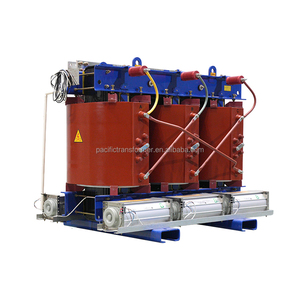
CE Certified 10kV 11kV 1250kVA Dry Type SCB Series Epoxy Resin Distribution Transformer
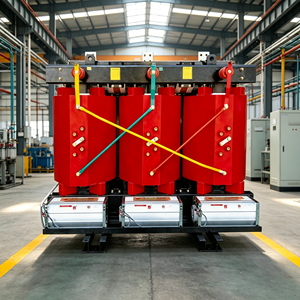
SCB18 30kVA to 315kVA Three Phase Epoxy Resin Cast Isolation Transformer 10kV / 400V
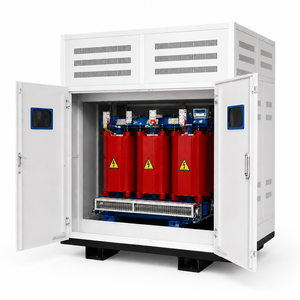
50kVA - 630kVA 380V/415V/480V High Quality Epoxy Resin Cast Dry Type Isolation Transformer
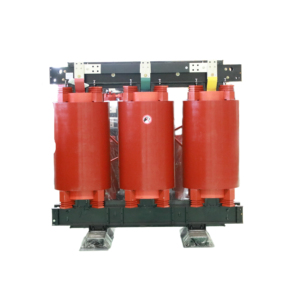
XD Dry Type Epoxy Resin Cast Transformer High-Purity Aluminum Coil Distribution Unit
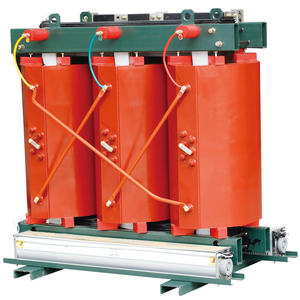
Three Phase Low Loss SCB10 10/0.4kV Epoxy Resin Dry Type Transformer OEM Customized
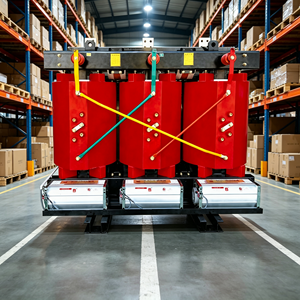
Three Phase SCB18 Epoxy Resin Cast Dry Type Power Transformer 10kV/0.4kV 30kVA to 315kVA
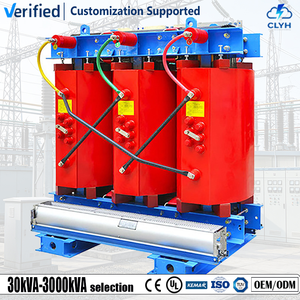
SCB11 20kV to 0.4kV 30kVA Copper Coil Cast Resin Dry Type Power Transformer Direct Factory Supply
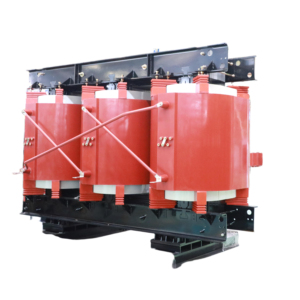
CE Certified 315kVA 10kV High-Reliability Copper Coil Dry Cast Resin Distribution Transformer
State-of-the-Art Epoxy Resin Cast Transformer Technology & Engineering Fundamentals
In modern electrical distribution networks, selecting the correct transformer architecture directly governs operational safety, energy loss overhead, and lifecycle longevity. As urban centers expand and heavy industries decarbonize, traditional oil-immersed transformers present significant environmental hazards, fluid contamination risks, and stringent fire-mitigation costs. Epoxy resin cast dry-type transformers (commonly designated under the SCB series) have emerged as the definitive technical standard for high-density, fire-sensitive, and environmentally critical installations.
Comparative Dielectric & Operational Physics: Cast Resin vs. VPI vs. Oil-Filled
Evaluating the true Total Cost of Ownership (TCO) requires comparing the fundamental insulating mediums utilized in power distribution. Below is an engineering comparison matrix detailing dielectric performance, fire safety classifications, and maintenance requirements:
| Performance Characteristic | Epoxy Cast Resin (SCB Series) | Vacuum Pressure Impregnated (VPI) | Liquid/Oil-Immersed Units |
|---|---|---|---|
| Dielectric Strength | Very High (> 20 kV/mm) | Moderate (12 - 16 kV/mm) | High (15 - 20 kV/mm) |
| Fire Safety Rating (IEC 60076-11) | Class F1 (Self-extinguishing, zero toxic gas) | Class F0 / F1 (Variable varnish smoke) | Class O1 / K1 (Combustible dielectric liquid) |
| Environmental Resistance | Class E2 / E3 (Condensation & heavy pollution) | Class E1 (Sensitive to humid storage) | Hermetically sealed / Risk of oil leaks |
| Partial Discharge Performance | < 5 pC to < 10 pC at 1.3 Um | 10 pC to 50 pC | N/A (Liquid dielectric) |
| Maintenance Routine | Zero Routine Maintenance (Visual checks only) | Periodic cleaning & varnish inspection | Oil sampling, DGA, filtering, seal replacement |
| Overload Capability | Up to 140% with forced air cooling (AF) | Up to 120% with forced air (AF) | 115% - 125% dependent on radiator heat sink |
Core Loss Optimization: Evolutionary Metrics (SCB10 vs SCB11 vs SCB18)
Global energy regulations, such as the EU Eco-Design Directives and regional Star Labeling mandates, place stringent limits on transformer core losses ($P_0$, no-load loss) and winding resistance losses ($P_k$, load loss). Choosing between historical SCB10 models and modern SCB18 units drastically influences long-term operational expenditure.
SCB10 / SCB11 Legacy Baseline
Utilizes cold-rolled grain-oriented (CRGO) silicon steel laminations with conventional step-lap joints. While structurally robust, these units exhibit higher magnetizing currents and core hysteresis losses compared to modern eco-design standards.
SCB18 Ultra-Low Loss Standard
Employs high-permeability domain-refined laser-scribed silicon steel or amorphous alloy cores combined with 7-step full-mitre lap jointing. Delivers up to 25% reduction in no-load losses and a 15% drop in load losses over SCB10 models.
Global Procurement & Future Technological Trends (2025–2035)
The global market for dry-type cast resin transformers is expanding rapidly, driven by the global transition toward renewable energy, high-density data centers, electrified urban rail systems, and smart factory automation. Procurement strategies are shifting from initial capital expenditure (CAPEX) prioritization toward lifecycle total cost minimization and sustainability compliance.
1. AI Data Centers & High Harmonic Load Adaptation
Hyperscale data centers require transformers capable of handling severe non-linear harmonic distortion generated by switch-mode power supplies (SMPS) and uninterrupted power supply (UPS) systems. Modern resin transformers feature specialized K-factor ratings (K-4, K-13, K-20) engineered with electrostatic shielding between primary and secondary windings to bypass high-frequency common-mode noise.
2. Integration with Renewable Energy PV & BESS Systems
Solar photovoltaic (PV) generation and Battery Energy Storage Systems (BESS) subject transformers to continuous cyclic loading, DC bias currents, and voltage spikes. Future procurement specifications prioritize cast resin units constructed with multi-winding secondaries (e.g., dual or quad low-voltage secondary coils) allowing direct coupling to central solar inverters.
3. Smart Condition Monitoring & IoT Sensing
Static power infrastructure is evolving into intelligent assets. Leading manufacturers now embed multi-channel fiber-optic temperature sensors (Pt100 RTDs) directly into the internal hot-spots of the cast resin coils. Integrated digital controllers output real-time thermal telemetry via Modbus/RS485 or IEC 61850 protocols directly to SCADA systems, enabling predictive maintenance.
4. Transition to Biodegradable & Recyclable Epoxy Systems
In accordance with circular economy regulations, tier-one manufacturers are advancing bio-based epoxy resins blended with natural anhydrides. These sustainable formulations reduce carbon footprint during polymer synthesis while ensuring the solid cast coil can be cleanly crushed and thermo-recycled at the end of its 30+ year service life.
Why Urja Techniques (India) Pvt. Ltd. is a Globally Trusted OEM/ODM Partner
With over three decades of engineering mastery since 1991, Urja Techniques (India) Pvt. Ltd. operates a premier manufacturing and testing complex based in Mumbai, Maharashtra. Our company designs, fabricates, and exports heavy-duty distribution, power, converter-duty, and custom cast resin dry-type transformers to over 40 countries across Europe, the Middle East, Africa, and the Asia-Pacific region.
Certified Compliance & Type Testing
Accredited with ISO 9001:2015, ISO 14001:2015, and OHSAS 18001. All transformer designs undergo rigorous short-circuit withstand, impulse withstand, acoustic noise, and temperature rise type testing verified by independent premier laboratories including CPRI (Central Power Research Institute) and ERDA (Electrical Research and Development Association).
Advanced Casting Infrastructure
Our plant incorporates computer-controlled vacuum casting chambers operating under precise pressure and thermal profiles. This automated processing eliminates micro-voids, guaranteeing partial discharge levels well below industry thresholds (< 5 pC) to extend dielectric lifespan.
State-of-the-Art In-House Routine & Special Testing
100% of manufactured units are subjected to strict routine tests before dispatch, including winding resistance measurements, voltage ratio checks, phase displacement validation, no-load and load loss verification, separate-source AC withstand voltage, and induced overvoltage testing.
Global Export Supply Chain Network
With over 40% of total revenue derived from direct international exports, our logistics team manages heavy-lift sea freight, tropicalized packing, export customs clearance, and global commissioning support for international EPC contractors.
Frequently Asked Questions (FAQ) for B2B Transformer Sourcing
What is the technical difference between Class F and Class H insulation in resin transformers?
Class F insulation is rated for a maximum operating temperature limit of 155°C with an allowable nominal winding temperature rise of 100°K. Class H insulation expands this threshold to a maximum temperature limit of 180°C with a 125°K nominal rise. Class H epoxy systems provide superior thermal headroom under heavy overload conditions and prolonged high-ambient operational environments without accelerating dielectric degradation.
Why is Partial Discharge (PD) testing critical when evaluating cast resin suppliers?
Partial discharge refers to localized electrical breakdowns within gas voids inside the solid epoxy resin casting. Over time, persistent PD erodes the resin matrix, leading to catastrophic dielectric failure. International standard IEC 60076-11 requires partial discharge levels to be strictly below 10 pC (picocoulombs) at 1.3 times rated voltage. Premium manufacturers achieve sub-5 pC performance, guaranteeing a long operational lifespan.
How do IP (Ingress Protection) enclosures impact transformer cooling and rating?
Standard un-enclosed cast resin transformers carry an IP00 rating for direct installation within clean electrical rooms. Installing protective steel enclosures reduces natural ventilation. An IP20 or IP23 ventilated enclosure typically de-rates the transformer's natural air (AN) thermal capacity by 5% to 8%. To maintain full kVA output within IP54 sealed outdoor enclosures, forced air cooling fans (AF) or internal air-to-water heat exchangers must be incorporated.
What are the environmental (E), climatic (C), and fire behavior (F) classifications?
Per IEC 60076-11, cast resin transformers are categorized as: Environmental Class E2 (resistant to heavy condensation and high pollution) or E3; Climatic Class C2 (suitable for operation, transport, and storage at temperatures down to -25°C); and Fire Behavior Class F1 (self-extinguishing, zero production of toxic gases or heavy smoke when exposed to external fires).
Copper vs. Aluminum Windings: Which material offers the optimal balance for dry-type units?
Electrolytic copper (E-Cu) windings offer higher electrical conductivity, resulting in smaller overall transformer dimensions, reduced weight, and superior short-circuit mechanical strength. High-purity electrical-grade aluminum foil windings offer a cost-effective alternative with equivalent thermal and electrical performance, provided the winding cross-section is appropriately scaled to manage thermal expansion differentials within the epoxy matrix.
What type of temperature control monitoring system is integrated into resin transformers?
Cast resin transformers are equipped with a digital temperature controller connected to three Pt100 platinum RTD sensors embedded directly in the low-voltage windings. The controller features programmable threshold relays for stage-1 alarm (typically set at 130°C for Class F), stage-2 trip (typically 150°C), and automatic activation of cooling fan banks when operating in forced-air (AF) mode.
Request Technical Specifications & Commercial Proposal
Partner with an ISO 9001:2015 certified transformer manufacturer. Our engineering team provides custom vector group design, short-circuit calculations, and direct factory pricing for global projects.