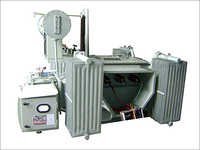
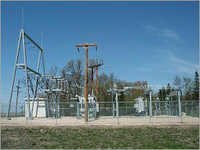
Selecting the correct High Voltage Power Transformer requires matching operational duty, thermal insulation withstand, harmonic loading, and environmental exposure against international electrotechnical standards.
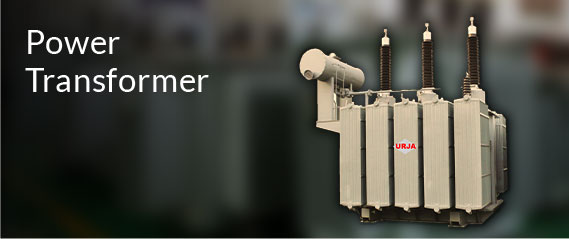
Designed for sub-transmission and primary distribution grids operating from 33kV up to 220kV. Built with High-Permeability Cold-Rolled Grain-Oriented (CRGO) steel cores and Electrolytic Grade Copper windings with On-Load Tap Changers (OLTC) for seamless grid voltage stabilization.
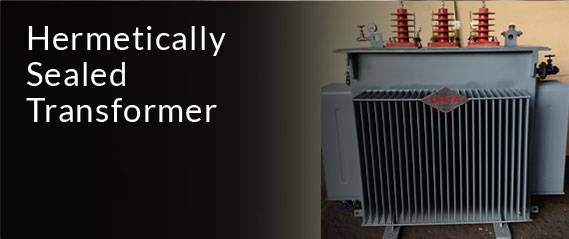
Engineered for critical indoor installations, underground metro networks, data centers, and commercial high-rises where fire safety and environmental hazard mitigation are paramount. Uses Class H/C solvent-free resin impregnation under deep vacuum.
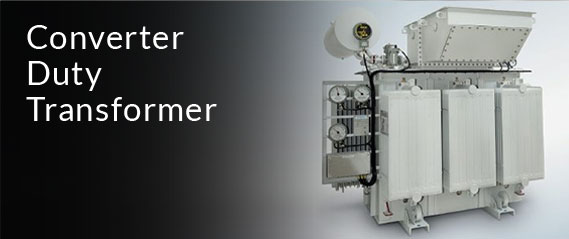
Specially designed to withstand severe mechanical forces, dynamic stress, and severe harmonic distortion (high K-factor) generated by multiphase thyristor/IGBT rectifiers, solar PV central inverters, and battery energy storage systems (BESS).
The table below provides a comprehensive comparison of standard operational parameters for high voltage power transformer selection across utility, heavy industrial, and renewable generation applications.
| Parameter / Specification | Utility Transmission / Grid | Industrial & Heavy Duty | Renewable Solar / Wind / BESS |
|---|---|---|---|
| Nominal HV Range | 33kV, 66kV, 132kV, 220kV | 11kV, 22kV, 33kV, 34.5kV | |
| MVA / kVA Capacity Range | 5 MVA to 100 MVA+ | 1 MVA to 25 MVA | 2.5 MVA to 12.5 MVA |
| Cooling Designation | ONAN / ONAF / OFAF / ODAF | ONAN / ONAF / AN / AF | ONAN / KNAN (Ester Fluid) |
| Tap Changing Mechanism | OLTC (On-Load Tap Changer) | OCTC / OLTC option | Off-Circuit Tap Changer (OCTC) |
| BIL (Basic Impulse Level) | Up to 1050 kV peak (for 220kV class) | 75 kV to 200 kV peak | 95 kV to 170 kV peak |
| Short-Circuit Thermal Duration | 2 Seconds to 3 Seconds | 2 Seconds (Symmetrical) | 2 Seconds (Symmetrical) |
| Applicable Core Material | Laser-scribed CRGO (M0H / M1H) | High Permeability CRGO | Amorphous / Low-loss CRGO Grade |
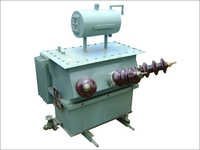
As global electrical infrastructure accelerates toward decarbonization, electrification, and digital intelligence, procurement officers and engineering leads must anticipate major systemic shifts in high voltage power transformer sourcing.
Traditional mineral oil in high voltage power transformers is increasingly being replaced by natural (vegetable-based) and synthetic ester dielectric fluids. Esters offer high fire points (>300°C), zero soil/water toxicity, and high moisture tolerance, significantly reducing substation fire suppression CapEx and civil containment bund costs while satisfying strict European Union EcoDesign Tier 2 guidelines and US EPA mandates.
Global utilities are shifting away from evaluating initial purchase price alone. Tender evaluations now heavily capitalize No-Load Losses ($A-Factor, $/kW) and Load Losses ($B-Factor, $/kW). High-efficiency transformers utilizing amorphous metal cores or laser-etched CRGO laminations dramatically lower lifetime operating expenses over a 30- to 40-year lifespan, yielding substantial NPV savings.
Modern High Voltage Power Transformers are transforming into intelligent edge-nodes. Future-ready procurement specs call for integrated online Dissolved Gas Analysis (DGA), fiber-optic direct winding hot-spot sensors, real-time bushing power-factor monitoring, and automated breather desiccant controllers natively communicating via IEC 61850 substation automation protocols.
With solar PV, offshore wind farms, and battery storage plants injecting non-sinusoidal currents into high-voltage networks, procurement specifications now routinely demand elevated K-factors, special electrostatic shielding, thermal margin derating, and reinforced structural clamping to prevent core saturation and stray flux tank overheating.
Excellence in transformer manufacturing relies on continuous mechanical, thermal, and electromagnetic refinements designed to maximize operational availability under severe grid fault conditions.
Modern high voltage power transformer design relies on 3D Finite Element Analysis (FEA) software to model stray magnetic flux leakage, electric field stress concentrations around high-voltage leads, and transient thermal gradients under peak overload.
By optimizing the core leg step-lap geometry and using high-density pressboard insulation arrangements, structural hot spots are eliminated, corona discharges are suppressed, and partial discharge levels are kept safely under 10 pico-coulombs (pC) at 1.5 times nominal operating voltage.
During a near-bank grid fault, high voltage transformers experience immense electrodynamic radial bursting and axial compressive forces measured in hundreds of kilonewtons. Advanced radial spacers, pre-compressed high-density pressboard rings, and rigid core tie-plate structures guarantee full mechanical integrity without winding displacement during 2-second or 3-second short-circuit short-circuits certified by CPRI and ERDA type tests.
Direct, expert engineering answers to the questions global procurement leads, utility planners, and EPC buyers frequently ask when sourcing high voltage electrical infrastructure.
Answer: To ensure accurate pricing and transformer design compliance, your Request for Quotation (RFQ) should specify: (1) Rated Power Capacity (MVA/kVA), (2) Primary and Secondary Rated Voltages (kV) along with vector group symbol (e.g., Dyn11, YNd11), (3) Basic Impulse Insulation Level (BIL) for HV and LV terminals, (4) Tap Changer requirements (On-Load Tap Changer / OLTC or Off-Circuit Tap Changer / OCTC with step percentage), (5) Cooling Designation (ONAN, ONAF, KNAN), (6) Maximum allowable No-Load Losses and Load Losses at reference temperature (75°C), (7) Short-Circuit Impedance percentage (%Z), and (8) Operating site altitude and ambient temperature extremes.
Answer: Standard transformers are rated for a top oil temperature rise of 50°C or 55°C and an average winding temperature rise of 60°C or 65°C above maximum ambient conditions according to IEC 60076-2. Operating a transformer continuously above its thermal rating accelerates solid cellulosic paper insulation degradation (following Montsinger's 6°C rule: every 6°C temperature rise cuts insulation life in half). For high ambient tropical regions (e.g., Middle East, Southeast Asia), custom low-temperature rise designs (e.g., 45°C/50°C rise) or Class H high-temperature insulation materials should be specified to maintain a 35+ year operating lifespan.
Answer: An Off-Circuit Tap Changer (OCTC) requires the transformer to be completely de-energized (disconnected from the grid) before changing voltage tap ratios, making it suitable for distribution and steady industrial loads. An On-Load Tap Changer (OLTC) contains high-speed diverter switches or vacuum interrupters that switch tap steps under full load current without interrupting grid supply. OLTCs are mandatory for high voltage transmission substations, utility tie-transformers, and industrial facilities with fluctuating supply voltages.
Answer: Routine factory acceptance tests (FAT) confirm basic manufacturing quality (winding resistance, voltage ratio, insulation resistance). However, Type Tests—such as Short-Circuit Withstand Test, Temperature Rise Test, Lightning Impulse Test, and Acoustic Sound Level Measurement—verify that the transformer's fundamental physical and electromagnetic design can withstand destructive electrical faults and extreme overvoltages. Tenders globally mandate type test certificates from ILAC-accredited third-party laboratories such as ERDA (Electrical Research and Development Association) or CPRI (Central Power Research Institute) to eliminate operational risk for critical utility assets.
Answer: VPI transformers utilize polyester or epoxy resin applied under deep vacuum and pressure cycles to penetrate open-layer glass-fiber insulated copper windings, offering excellent moisture resistance, repairability, thermal flexibility, and superior resistance to cyclic thermal shock. Cast Resin Transformers (CRT) encapsulate the HV windings entirely inside solid epoxy resin molds under vacuum, providing maximum mechanical strength, IP ratings, and extreme chemical/dust resistance. VPI is often preferred for high-shock industrial environments and custom site retrofits due to field-repairability, while CRT is popular in compact indoor commercial substations.
Headquartered in Mumbai, India, Urja Techniques (India) Pvt. Ltd. has been at the forefront of power transformer innovation, precision manufacturing, and global export since 1991.
Established in 1991, offering over three decades of specialized design and manufacturing experience across oil-filled, dry-type, furnace, and converter duty high voltage power transformers.
Our Mumbai manufacturing plant features state-of-the-art testing equipment including a dedicated full-capacity Temperature Rise Test setup—one of BIS's most stringent type test requirements.
40% of our production is exported worldwide. We reliably supply utilities, mining conglomerates, solar EPCs, and industrial plants across 40+ countries in Africa, the Middle East, Europe, and Asia.
Operating under ISO 9001:2015, ISO 14001:2015, and OHSAS standards. Fully compliant with international standards including IEC 60076, IS 2026, IS 1180, ANSI, and BS standards.
Consult directly with Urja Techniques' senior transformer design engineers. Get custom vector group configurations, loss optimization calculations, independent type test documentation, and competitive global delivery schedules tailored to your project.