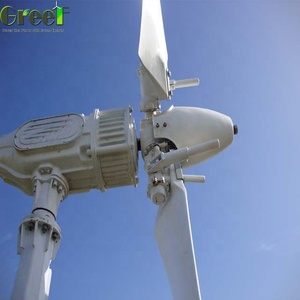
Aluminium Body Small Wind Turbine for Farm
- Rated Power: 3kW - 10kW
- Body Material: Die-Cast Aluminium
- Weathering: Sub-Zero Arctic Grade
Direct factory supply of high-efficiency transformers, wind power conversion equipment, and specialized industrial units certified for regional utility grids.
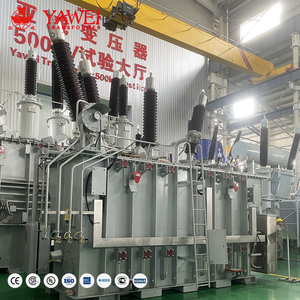
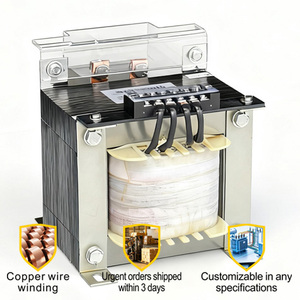
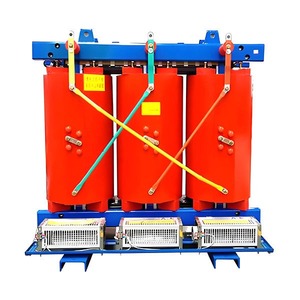
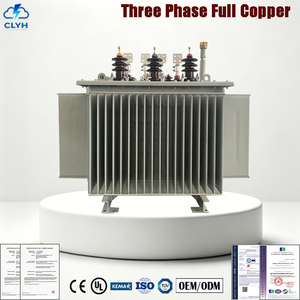
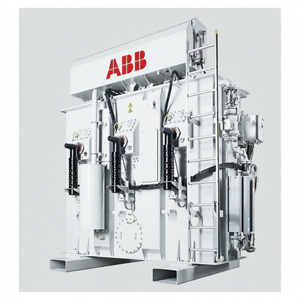
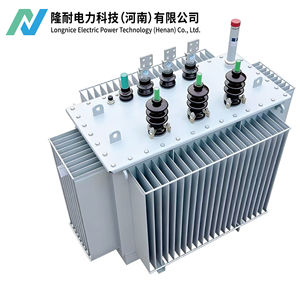
The transformer manufacturing ecosystem supplying the Russian Federation and the broader Eurasian Economic Union (EAEU) is undergoing a major technological transformation. Driven by stringent national energy-efficiency mandates, grid modernization initiatives by key power utilities such as PJSC Rosseti, and demanding regional operating environments, electrical equipment specifiers are increasingly moving away from traditional Cold-Rolled Grain-Oriented (CRGO) steel cores toward advanced amorphous alloy cores (Fe-Si-B metallic glass).
Amorphous metal transformers (AMTs) represent a step-change in distribution efficiency. Unlike crystalline silicon steel, which possesses a structured, long-range atomic lattice that causes significant magnetic hysteresis, amorphous metal features an non-crystalline atomic structure created through ultra-rapid solidification (cooling at approximately 1,000,000 °C per second). This random atomic structure minimizes the magnetic coercive force and eliminates grain boundary pinning, resulting in a dramatic reduction in no-load losses (standing losses) by 70% to 80% compared to standard conventional transformer cores.
To evaluate the long-term Return on Investment (ROI) and operational viability of amorphous core factory deployments in Russia, electrical engineers must consider key metallurgical and electromagnetic parameters. The table below details the technical performance metrics comparing iron-based amorphous ribbon (Fe78Si9B13) with high-permeability grain-oriented silicon steel (M0H grade):
| Engineering Property | Amorphous Metal Alloy (Fe-Si-B) | Conventional CRGO Steel (M0H / M3) | Operational Impact on Russian Grid |
|---|---|---|---|
| Atomic Crystal Structure | Non-crystalline (Amorphous Glass) | Polycrystalline Crystalline Lattice | Eliminates grain-boundary eddy currents |
| Ribbon / Sheet Thickness | ~0.025 mm (25 microns) | 0.23 mm - 0.30 mm | Reduces inter-laminar eddy current loss tenfold |
| Saturation Flux Density (Bs) | 1.56 Tesla | 1.90 - 2.03 Tesla | Requires specialized cross-section design & sizing |
| Specific Core Loss (50Hz, 1.4T) | ~0.20 - 0.28 W/kg | ~0.85 - 1.10 W/kg | 70-80% lower standing energy loss 24/7 |
| Coercive Force (Hc) | < 2.0 A/m | ~8.0 A/m | Extremely fast domain wall motion & low heat |
| Magnetostriction Coefficient | ~27 x 10^-6 | ~3 x 10^-6 | Requires acoustic dampening & VPI encapsulation |
Operating distribution and power transformers in Russia presents distinct environmental and electrical challenges. Equipment must operate reliably across extreme temperature ranges, withstand heavy ice loads, and conform to local regulatory standards. Key application scenarios for amorphous core factories include:
Amorphous core transformers engineered for Russian Siberian regions are designed according to GOST 15150-69 climatic classification UHL1 (Moderate and Cold Climate Outdoor placement). They utilize specialized low-pour-point synthetic ester or specialized transformer oils capable of remaining fluid down to -60°C, combined with specialized core clamping structures that withstand differential thermal contraction during rapid cold-start initialization.
In major metropolitan centers such as Moscow, St. Petersburg, and Novosibirsk, urban power grids operate with dense underground feeder cables. Modernizing older substations with 10/0.4kV and 35/0.4kV amorphous core dry-type and VPI transformers eliminates fire hazards, decreases operational noise, and cuts urban line loss metrics in high-occupancy residential complexes.
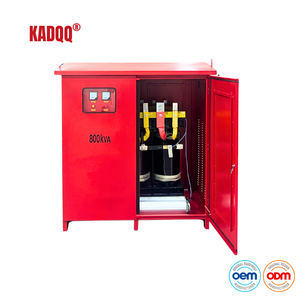
Integrating small and utility-scale wind farms across Russian coastal zones and agricultural steppes requires isolation transformers capable of handling complex harmonic spectrums. Our 800KVA and 33kV-38.5kV wind turbine transformers feature low-loss amorphous cores paired with copper wind structures that maintain high efficiency despite fluctuating voltage inputs and intermittent power spikes.
Several macro-economic and industrial trends are accelerating the demand for factory-direct amorphous core transformers across Russia and surrounding region markets:
PJSC Rosseti, manager of Russia's power grid infrastructure, has set clear benchmarks to lower transmission and distribution losses across regional electricity distribution companies (IDGCs/MРСK). Because distribution transformers remain energized 8,760 hours per year, upgrading aging distribution networks with amorphous metal core transformers directly supports national targets for reduction of carbon emissions and uncompensated line losses.
While the initial capital expenditure (CAPEX) for an amorphous core transformer is approximately 15% to 25% higher than a standard CRGO transformer—due to the specialized annealing processing and lower operating flux density—the operational expenditure (OPEX) savings are significant. Over a standard 30-year operational lifecycle in Russian climate zones, the electricity saved from reduced no-load losses offsets the capital price differential within 3 to 5 years of continuous energization.
Industrial buyers and OEM panel builders in Russia increasingly demand complete technical support, custom mechanical footprints, and modular substations (KTP/КТП). Our manufacturing facilities work directly with Russian engineering contractors to provide factory-customized enclosures, bushings, OLTC (On-Load Tap Changer) modules, and digital monitoring sensors designed for seamless installation onto existing concrete pads or skid-mounted substations.
Combining 30+ years of precision transformer manufacturing with world-class type testing, global export logistics, and advanced metallic glass annealing capabilities.
Fully certified quality and environmental management systems adhering to rigorous international standards and strict component traceability.
All core transformer designs are type-tested by accredited bodies (ERDA/CPRI) for impulse withstand, temperature rise, short-circuit, and acoustic noise limits.
State-of-the-art magnetic-field annealing furnaces specifically engineered to relieve stress and establish optimal magnetic domains in amorphous ribbons.
Extensive experience managing sea, rail, and land transport logistics to Russia, EAEU member states, Africa, the Middle East, and South America.
Expert insights on technical compliance, logistics, cold-climate operations, and factory-direct procurement.
Yes. Our distribution and power transformers are manufactured in accordance with international IEC 60076 standards and can be fully customized to meet GOST R 52719-2007, GOST 11677, and GOST 15150-69 requirements. We provide complete technical documentation, factory test reports (FAT), and schematic drawings required for Russian state grid connection and EAC certification.
Our transformers designed for Russian UHL1 climatic execution utilize cold-resistant structural steel, specialized silicone-rubber or nitrile seals, and transformer oil with a pour point below -60°C (such as GK or VG grade oils). Furthermore, because amorphous metal has negligible thermal expansion mismatch when encapsulated properly with structural resin/dampening pads, thermal stress during cold starts is fully mitigated.
We offer flexible multimodal shipping solutions including direct ocean freight to major ports (such as Saint Petersburg, Novorossiysk, or Vladivostok) as well as cross-border containerized rail transport via China-Europe / Eurasian rail links. Typical lead time for standard distribution units is 30-45 days for manufacturing, plus 15-25 days transit depending on destination port and customs clearing arrangements.
Amorphous metallic ribbons are extremely thin (~25 microns) and stress-sensitive. Mechanical vibration or improper clamping can degrade magnetic permeability and increase noise levels. Our factory utilizes specialized three-phase, five-column rectangular core frames and automated vacuum pressure impregnation (VPI) with elastic epoxy dampening to physically protect the ribbon and ensure ultra-low noise levels during operation.
Absolutely. We customize primary and secondary voltages, vector groups (Dyn11, Yyn0, etc.), tap changers (Off-Circuit Tap Changers or On-Load Tap Changers), and enclosure protection ratings (IP23, IP54, IP65) to match the exact project specifications of local industrial facilities and utility networks.
Request detailed technical datasheets, full product catalogs, and factory-direct pricing for your energy infrastructure projects in Russia and global markets.