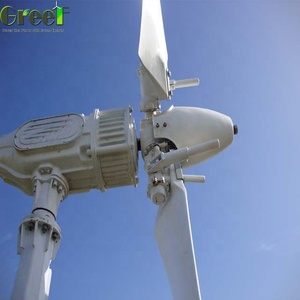
Featured Engineering Portfolio
High-Efficiency Transformer & Renewable Energy Solutions
Rigorous manufacturing compliance with IEC 60076, IS 2026, and EN 50588-1 standards. Engineered for grid operators, heavy industrial processing, and commercial infrastructure across Milan and Northern Italy.
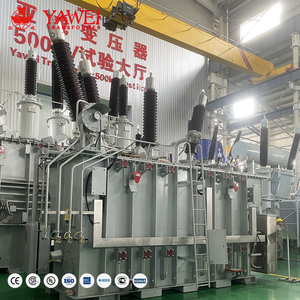
Yawei Manufacturer Price 10 MVA 15MVA 20MVA 67KV 69KV 33KV Power Transformer Copper Winding 60hz Dyn11
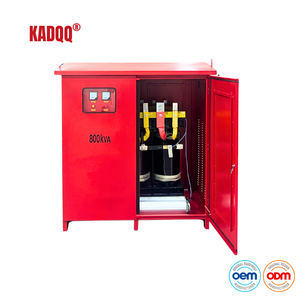
Wind Turbine Generator Isolation Transformer 800KVA Three Phase IP65 Protection CE Certified
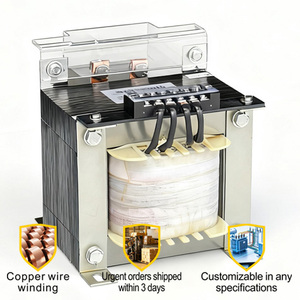
5KVA 10kVA Single Phase Control Transformer 110/220V To 36/48V For Packaging Machinery Pure Copper Winding
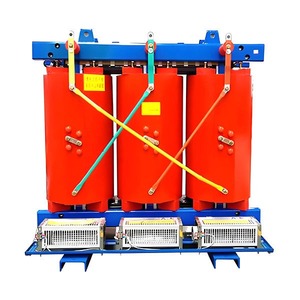
Customizable Fire Prevention Buildings Use Isolation Copper Winding Three Phase 33KV 35KV 38.5KV Wind Turbine Dry Transformer
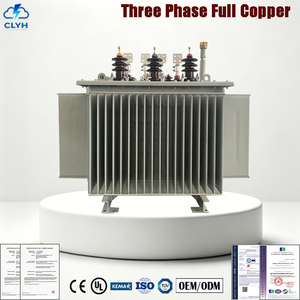
Distribution Transformer 100kVA 10/0.4kV Three Phase Oil Immersed Copper Winding IEC CE Certified 50Hz
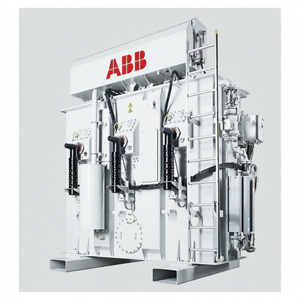
ABB (Hitachi Energy) Offshore Wind Turbine Transformer 5-25MVA 66-72.5KV IEC Genuine
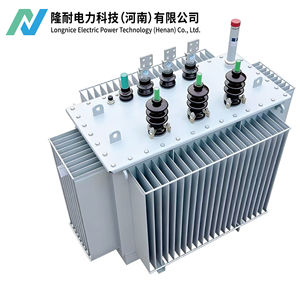
S11 3 Phase Oil Immersed Distribution Transformer 10kV 0.4kV 100% Copper Winding Power Transformer
Industry Technical Report
The Metallurgical Revolution in Electrical Infrastructure: Amorphous Alloy Cores vs. Traditional CRGO
In the evolving landscape of European electrical distribution, power quality, grid resilience, and energy conservation have transitioned from operational preferences to strict regulatory imperatives. As the metropolitan area of Milan and the broader Lombardy region accelerate their transition toward industrial net-zero goals under the EU Green Deal and Italy's Piano Nazionale di Ripresa e Resilienza (PNRR), grid operators, electrical consultants, and EPC contractors are scrutinizing power conversion losses at every node.
At the center of this technological paradigm shift is the deployment of Amorphous Metal Core Transformers (AMCT). Unlike traditional Cold-Rolled Grain-Oriented (CRGO) silicon steel cores, which exhibit a crystalline atomic structure, amorphous alloys possess a non-crystalline, disordered atomic arrangement created via ultra-rapid solidification (cooling at approximately 1,000,000 °C per second). This unique physics profile virtually eliminates domain wall movement resistance, resulting in a staggering 70% to 80% reduction in no-load (core) losses.
Ultra-Low Hysteresis Loss
The random magnetic domain orientation of Fe-Si-B amorphous ribbons requires minimal coercivity to align magnetic dipoles. Hysteresis losses during 50Hz AC magnetization cycles are diminished to unprecedented levels compared to Grade M4/ZOMH CRGO steels.
Micro-Thin Laminations
Amorphous metal ribbons are manufactured at an astonishing thickness of just 0.025 mm (25 microns)—roughly one-tenth the thickness of standard 0.23 mm CRGO laminations. This drastically limits localized eddy current loop pathways, suppressing thermal dissipation.
EcoDesign Tier 2 Compliance
Exceeding EU Regulation No 548/2014 and its 2019/1783 amendment (EcoDesign Tier 2), our amorphous core units allow utility networks in Lombardy to meet mandatory max no-load loss ($A_o$) and max load loss ($B_k$) thresholds effortlessly.
Technical Benchmark Matrix: 1000 kVA Distribution Transformer (20kV / 0.4kV, 50Hz)
| Technical Metric / Specification | Standard CRGO Core (M4/M3) | High-Grade CRGO (ZOMH/Laser Etched) | Urja Amorphous Core (Fe-Si-B Alloy) | Impact on Milan Operations |
|---|---|---|---|---|
| No-Load Losses (Watts) | 1,700 W | 1,100 W | 320 W - 380 W | 75% Loss Reduction |
| Lamination Thickness | 0.27 mm - 0.30 mm | 0.20 mm - 0.23 mm | 0.025 mm (25 µm) | Suppresses Eddy Currents |
| Core Operating Flux Density | 1.65 T - 1.70 T | 1.70 T - 1.75 T | 1.35 T - 1.40 T | Prevents Core Saturation |
| 20-Year Cumulative Energy Loss | 297,840 kWh | 192,720 kWh | 64,824 kWh | Saves ~€46,600 at €0.20/kWh |
| CO₂ Emissions over Lifetime | ~119 Metric Tons | ~77 Metric Tons | ~25 Metric Tons | Decarbonizes Lombardy Grid |
Localized Integration
Tailored Application Scenarios Across Milan & Northern Italy
From suburban industrial complexes in Monza and Brianza to high-density commercial towers in Porta Nuova, our custom-engineered amorphous core transformers solve specific operational challenges.
Milan Urban Substations & Commercial High-Rises
Zero-Risk Indoor Power & Low Acoustic SignatureIn densely populated metropolitan centers like Milan's CityLife and Porta Nuova financial districts, space constraints and strict acoustic ordinances enforce rigorous transformer selection criteria. Our Vacuum Pressure Impregnated (VPI) and Cast Resin Dry-Type Amorphous Transformers operate with acoustic noise levels below 45-48 dB(A).
- Fire Safety: Class F1 fire-behavior certified, non-flammable epoxy resin insulation eliminates oil-leak fire hazards in underground vaults.
- Continuous Standby Efficiency: Commercial buildings feature fluctuating loads (nighttime standby). Amorphous cores cut zero-load power drain by 78% during non-business hours.
Lombardy Heavy Industry & Manufacturing Belts
Precision Machine Tools, Automotive & MetallurgyManufacturing corridors surrounding Sesto San Giovanni, Brescia, and Bergamo host intense automated assembly, CNC machine tooling, and automotive component fabrication. These facilities experience complex harmonic stress from variable speed drives (VFDs) and arc/furnace loads.
- Converter-Duty Customization: Designed with electrostatic shielding between primary and secondary copper windings to filter high-frequency dV/dt spikes.
- Thermal Resilience: Customized K-Factor rated (K-9, K-13) amorphous cores mitigate additional harmonic eddy current heating, prolonging insulation life.
Northern Italian Renewable Energy Grid Step-Up
Solar Photovoltaic Parks & Alpine Hydro PlantsWith massive solar PV expansion across the Po Valley and small-hydro stations in the Alpine foothills of Lombardy and Piedmont, step-up transformers face low capacity factor during non-peak solar generation hours.
- No-Load Losses Voided: Because PV transformers remain connected to the MV grid 24/7 (even at night when 0 kW is produced), standard transformers continuously draw core power. Amorphous transformers salvage thousands of Euro annually in grid tare loss.
- Outdoor IP65 Protection: Fully hermetically sealed oil-immersed or outdoor dry-type enclosures equipped with anti-corrosion C4/C5 coastal and industrial coatings.
EV Fast-Charging Hubs & Smart Microgrids
High Peak Demand Infrastructure & Dynamic LoadsMilan's ambitious municipal electric transport rollout requires ultra-fast DC charging hubs along major ring roads (Tangenziale Nord/Est). These chargers subject local distribution networks to abrupt 350kW+ power surges interspaced with idle periods.
- Rapid Dynamic Load Response: Amorphous cores maintain linear magnetic permeability under pulse loading, maintaining smooth voltage regulation.
- Compact Footprint Integration: Easily combined into prefabricated Compact Substations (CSS) alongside MV switchgear and LV distribution panels.
Strategic Market Trends
Navigating Italy’s Regulatory Landscape & Decarbonization Mandates
Purchasing decisions in Northern Italy are strictly dictated by European Union environmental framework legislation and Italian national grid standards. Understanding these macro trends is vital for Italian engineering procurement managers aiming to avoid asset obsolescence.
1. EU EcoDesign Directive 2009/125/EC (Tier 2 Enforcement)
Since July 2021, EU Regulation 2019/1783 (Tier 2) has mandated maximum allowable loss values for medium power transformers ($\leq 3150\text{ kVA}$). Standard legacy transformers imported from non-compliant markets fail to pass European customs verification. Urja Techniques' amorphous core series is custom-designed, tested, and certified to surpass Tier 2 requirements, delivering an extra 15-20% loss safety margin.
2. Total Cost of Ownership (TCO) Capital Evaluation in Italy
Italian energy utilities (such as Unareti and Enel Grids) along with private industrial conglomerates evaluate procurement using total capitalized cost formulas:
$$\text{TCO} = C_{\text{purchase}} + (A \times P_o) + (B \times P_k)$$
Where $P_o$ is no-load loss, $P_k$ is load loss, and $A$/$B$ represent the capitalized cost per watt (typically €8 to €12 per Watt of no-load loss over a 25-year asset lifespan in Europe). Because amorphous cores slash $P_o$ by up to 1,300 Watts on a 1000kVA transformer, the net financial savings far outweigh the initial raw material premium within 18 to 24 months.
3. Integration with CEI EN 60076 & Italian Safety Code
Italian electrical installations must adhere strictly to CEI (Comitato Elettrotecnico Italiano) guidelines. Our export units intended for Milan feature standardized terminal arrangements, top-mounted bushings or side-mounted cable boxes compatible with Italian MV distribution voltages (e.g., 15kV and 23kV nominal MV grids, 400V 3-phase LV output).
Need Engineering Specifications for a Milan Project?
Our technical team provides custom CAD drawings, loss calculation spreadsheets, and CE compliance documentation within 24 hours.
Authority & Reliability
Why Urja Techniques is the Trusted Manufacturing Partner
Over three decades of precision electrical engineering, worldwide export expertise, and state-of-the-art testing infrastructure back every transformer that leaves our facility.
30+
Years Industry Leadership (Est. 1991)
40%+
Global Export Revenue Share
40+
Countries Actively Served
100%
Routine & Type Test Compliance
International Certification & Standards Compliance
Our facilities operate under strictly audited management systems: ISO 9001:2015 (Quality Management), ISO 14001:2015 (Environmental Management), and OHSAS 18001:2007 / ISO 45001 (Occupational Health & Safety). All transformers comply with IEC 60076, IS 2026, IS 1180, and European EN benchmarks.
Third-Party Type Tested by ERDA & CPRI
To guarantee zero-defect operational integrity, our design topologies have undergone rigorous independent short-circuit withstand tests, lightning impulse voltage tests, and acoustic emission evaluations at world-renowned accredited laboratories: CPRI (Central Power Research Institute) and ERDA (Electrical Research and Development Association).
State-of-the-Art In-House Testing Facility
Our Mumbai manufacturing plant features fully automated, high-precision test bays equipped for full routine testing—including automated winding resistance measurement, turns ratio & phase vector verification, dielectric oil breakdown testing, separate source voltage withstand, micro-ohmmeter contact tests, and in-house Temperature Rise testing (one of the mandatory BIS and IEC verification checks).
Seamless Overseas Logistics to Milan & Genoa Port
With 40% of total revenue derived from international supply across Europe, Africa, and the Middle East, our logistics division manages sea freight shipping directly to major Italian entry ports—such as Genoa (Genova) and La Spezia—or customs-cleared overland delivery straight to job sites in Milan and Lombardy.
Procurement Guidance
Frequently Asked Questions for Milan & EU Buyers
Clear, authoritative technical answers addressing common procurement, engineering, grid integration, and warranty questions.
How do amorphous core transformers handle local grid frequencies and voltages in Milan?
Our amorphous core power and distribution transformers are engineered specifically for the European 50Hz frequency standard. We supply custom primary voltage windings matching Italian Medium Voltage grid levels—including standard 15 kV, 23 kV, and 33 kV distributions down to 400V/230V 3-phase low voltage output (Dyn11, Dyn5, or Yyn0 vector groups available).
Are Urja Techniques transformers compliant with EU EcoDesign Tier 2 regulations?
Yes, absolutely. All transformer units exported to European Union member states are fully compliant with EU Regulation 2019/1783 (EcoDesign Tier 2). Thanks to the ultra-low hysteresis of our amorphous alloy cores, our transformers achieve no-load loss levels significantly below the maximum allowable $A_o$ thresholds mandated by EN 50588-1.
What is the structural difference between Cast Resin (CRT) and VPI Dry-Type Amorphous Transformers?
Cast Resin Dry Type transformers have their copper windings completely encapsulated in quartz-filled epoxy resin under high vacuum, offering maximum protection against heavy moisture, chemical dust, and harsh ambient contaminants. Vacuum Pressure Impregnated (VPI) transformers use high-grade polyester/silicone varnishes applied under vacuum and pressure cycles, providing excellent thermal dissipation, repairability, and flexibility for indoor commercial HVAC environments.
How fragile are amorphous metal cores during transport and short-circuit events?
While raw amorphous ribbon metal is thinner than traditional CRGO steel, our advanced structural core encapsulation and rigid framing technology eliminate stress sensitivity. Cores are supported with specialized shock-absorbing silicone dampening pads and heavy-duty steel clamping frames. Every design is short-circuit withstand verified by independent test bodies (CPRI/ERDA) to withstand mechanical electrodynamic forces during external fault occurrences.
What documentation and CE certificates accompany shipped transformers?
Each shipment includes a complete factory test bundle: Routine Test Reports signed by QA engineers, CE Declaration of Conformity, ISO compliance certificates, Type Test Certificates (Short-Circuit, Impulse, Noise, Temperature Rise), Dimensional CAD drawings, Maintenance Manuals in English, and Customs EU-origin documentation.
What lead times can Italian contractors expect for custom unit fabrication and shipping?
Standard custom distribution transformers (100 kVA to 2500 kVA) feature a typical manufacturing cycle of 3 to 5 weeks. Ocean freight from Mumbai port to Genoa (Genova) or La Spezia takes approximately 18 to 22 days. For urgent site commissioning in Lombardy, express air freight or expedited slot scheduling can be arranged.
Ready to Optimize Your Electrical Network Efficiency?
Contact our senior engineering consultants today for a comprehensive loss-savings calculation, customized quote, or product catalog.