Featured Power & Industrial Equipment Catalog
Explore our certified product line engineered for continuous duty, heavy industrial loads, and harsh grid dynamics across Algerian industrial zones.
Industrial Blueprint: Arc Furnace Transformers in Algeria's Metallurgy Surge
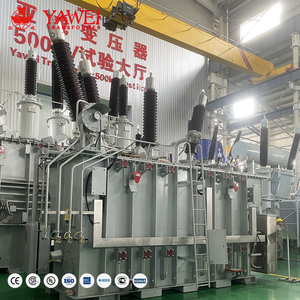
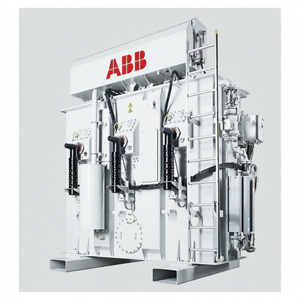
The People's Democratic Republic of Algeria is rapidly undergoing a structural industrial metamorphosis. Driven by the national strategy to diversify away from exclusive hydrocarbon reliance, Algeria’s steelmaking, ferroalloy smelting, and heavy manufacturing sectors are expanding at an unprecedented velocity. Central to this expansion are major industrial nodes such as the Bellara Steel Complex in Jijel, the historical El Hadjar Steel Complex in Annaba, and the massive Tosyalı Algeria DRI-EAF plant in Oran. Operating at the core of these heavy metallurgical complexes are specialized heavy-duty step-down transformers—specifically Electric Arc Furnace (EAF) Transformers and Submerged Arc Furnace (SAF) Transformers.
Unlike standard step-down grid distribution units, an Arc Furnace Transformer serves as the most electrical-stressed link in a steel manufacturing plant. It must step down high grid voltages (such as Sonelgaz 30kV, 60kV, or 220kV transmission feeds) to extremely low, controllable secondary voltages (ranging from 100V to 1500V) while delivering extraordinarily high secondary currents—frequently ranging from 10,000 Amperes to upwards of 80,000 Amperes. Furthermore, the operational dynamics of an arc furnace involve abrupt short-circuits during the scrap-melting phase, extreme harmonic distortions, massive electromagnetic forces, and repeated high-voltage switching surges. Procuring from an established, engineering-driven manufacturer is a critical priority for Algerian plant managers and procurement leads aimed at ensuring grid stability, operational uptime, and safety compliance.
Engineering Architecture of EAF & Submerged Arc Furnace Transformers
The thermal and mechanical stresses imposed on an Arc Furnace Transformer in a scrap-melting steel mill exceed almost every other electrical grid application. During the initial bore-in phase of scrap melting, direct short-circuits occur frequently when graphite electrodes bridge scrap metal pieces. This causes transient current spikes that subject transformer windings to extreme radial and axial electromagnetic forces proportional to the square of the peak current ($I_{peak}^2$).
1. Winding Dynamics & High-Current Output Topology
To counteract high mechanical forces and thermal dissipation challenges, premier manufacturers implement specialized winding configurations. The primary high-voltage winding is typically wound using high-grade Oxygen-Free Copper (OFC) with thermal class H or F insulation. For the low-voltage secondary side, heavy copper busbars or interleaved copper foil arrangements are utilized. LV terminals are brought out through the oil conservator tank cover via water-cooled copper tubes or heavy-duty busbar bushings, designed to minimize stray magnetic field losses and prevent local tank cover heating caused by eddy currents.
2. Voltage Regulation & Tap Changer Technology
Arc stability requires precise secondary voltage adjustments. Arc furnace transformers integrate specialized regulation systems, which are deployed either as internal regulation (variable flux voltage control using an OLTC on the primary winding) or via a separate booster transformer system (constant flux voltage control). In modern Algerian steel plants utilizing Direct Reduced Iron (DRI) pellets mixed with scrap metal, fine-step regulation allows furnace operators to switch seamlessly between high-voltage/short-arc refining modes and low-voltage/long-arc melting modes without stopping the operational heat.
3. Cooling & Insulation Media (OFAF / ODAF / Dry-Type VPI)
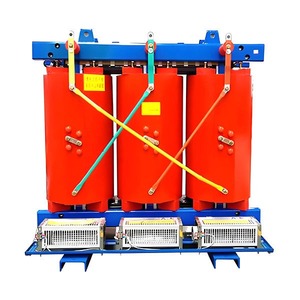
Thermal management is crucial, especially when operating in Northern African environments where summer ambient temperatures routinely top 45°C to 50°C. Heavy arc furnace units employ forced oil circulating systems with forced air heat exchangers (OFAF) or forced oil-to-water cooling systems (ODAF). For smaller ladle refining furnaces (LRF) or specialized indoor foundry operations, high-performance Vacuum Pressure Impregnated (VPI) Dry-Type transformers or Cast Resin Transformers (CRT) are increasingly preferred due to their inherent fire safety and elimination of liquid dielectric risk.
Technical Comparison Matrix: Industrial Transformer Topologies
The following specification matrix provides a comparative analysis of key transformer types deployed across Algerian metallurgical, utility, and heavy-duty manufacturing facilities:
| Transformer Topology | Typical Capacity (MVA) | Primary Voltage Range | Secondary Voltage / Current | Cooling Mechanism | Key Algerian Application Scenario |
|---|---|---|---|---|---|
| Electric Arc Furnace (EAF) | 10 MVA – 160 MVA | 11 kV – 66 kV (Sonelgaz Grid) | 100V – 1200V / Up to 80 kA | OFAF / ODAF / Liquid Cooling | Scrap Melting Steel Mills (Jijel, Oran, Annaba) |
| Submerged Arc Furnace (SAF) | 5 MVA – 60 MVA | 10 kV – 35 kV | 50V – 400V / High Continuous kA | ONAN / ONAF / OFAF | Ferroalloy, Calcium Carbide & Silicon Smelting |
| Converter Duty Transformer | 1 MVA – 25 MVA | 6.6 kV – 33 kV | Multi-phase pulse output (6/12/24 Pulse) | ONAN / ONAF / VPI Dry | VFD Drives, Heavy Electrolysis & Aluminium Plants |
| VPI / Cast Resin Dry-Type | 100 kVA – 15 MVA | 10 kV – 35 kV | 400V – 1.1 kV Distribution | AN / AF (Air Natural / Air Forced) | Indoor Substations, Infrastructure, Metros, Gas Plants |
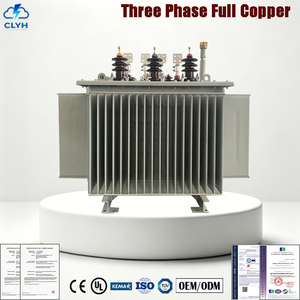
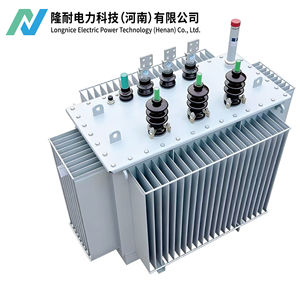
| Oil-Immersed Distribution | 50 kVA – 3.15 MVA | 10 kV – 30 kV (Sonelgaz MV) | 400V / 230V Standard LV | ONAN (Mineral / Synthetic Ester) | Industrial Parks, Utility Distribution, Rural Power |
Localized Application Scenarios Across Algerian Industrial Zones
Algeria presents diverse geographic and climatic operational conditions. Transformer units installed in northern coastal regions face saline moisture, whereas inland and southern Saharan installations encounter extreme thermal ranges and fine sand dust ingress. Tailoring transformer engineering to these micro-climates is vital for uninterrupted operational lifespans.
Facilities near coastal ports face severe marine atmosphere corrosion (C4/C5 corrosive environments). Furnace transformers deployed here require hot-dip galvanized radiator banks, C5-M high-durability epoxy paint systems, stainless steel hardware, and anti-saline hermetically sealed cable boxes to prevent insulation degradation caused by salt spray accumulation.
Inland heavy industrial and gas processing zones experience ambient summer peak temperatures exceeding 50°C. Standard 40°C rated transformers suffer severe thermal derating. Custom arc furnace transformers feature enlarged cooling surfaces, low temperature-rise winding designs (45°C/50°C rise), double-sealed Buchholz relays, and IP65 dust-tight control cabinets to prevent windblown Saharan sand entry.
Algerian Industrial Trends: Green Steel Transition & Grid Compliance (2025–2030)
As Algeria expands its energy transition framework under the national renewable energy program, the iron and steel sector is actively transitioning toward decarbonized manufacturing pathways. The integration of Direct Reduced Iron (DRI) with renewable Hydrogen power and solar photovoltaic microgrids is altering electrical distribution architectures across new industrial zones.
Sonelgaz Power Quality & Grid Interconnection Standards
Connecting heavy arc furnace loads to the national electrical utility (Sonelgaz) requires strict adherence to power quality regulations. Electric arc furnaces induce severe voltage flicker, voltage unbalance, and high-order harmonics (2nd, 3rd, 5th, 7th) into the medium-voltage grid. Modern furnace transformer installations are combined with Static Var Compensators (SVC) or STATCOM systems connected to tertiary transformer windings to maintain grid power factor compliance above 0.95 and keep Total Harmonic Distortion (THD) within Sonelgaz permissible limits.
Energy Efficiency & Low-Loss Magnetic Cores
Rising electricity tariffs for high-voltage industrial consumers in Algeria make transformer efficiency a vital economic variable. By utilizing high-permeability, domain-refined Cold-Rolled Grain-Oriented (CRGO) silicon steel laminations (such as M0H and M1H grades) and step-lap core mitered joint assembly, modern transformer units cut no-load losses by up to 25% to 30%, delivering significant operational savings over a 25-year plant service life.
Manufacturer Credentials & Quality Assurance Architecture
Sourcing arc furnace transformers for high-stakes metallurgical operations demands verifiable manufacturing expertise and stringent quality management. Drawing upon decades of specialized transformer engineering, our operations maintain full compliance with international standards including IEC 60076, IS 2026, and IS 1180.
Frequently Asked Questions by Algerian Industrial Buyers
Engineered Power Reliability for Algerian Heavy Industry
Consult with our senior transformer application engineers to configure heavy-duty Arc Furnace, Submerged Arc Furnace, or Converter Duty Transformers tailored specifically to your plant's operational parameters and Sonelgaz grid requirements.