Featured CE Certified Power Reactors & Transformers
Heavy-duty 60Hz and 50Hz solutions custom-engineered for Mexican energy utility networks, manufacturing plants, and renewable energy farms.
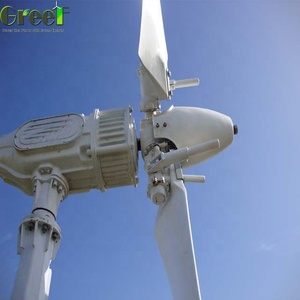
Aluminium Body Small Wind Turbine for Farm
- Lightweight corrosion-resistant aluminium casing
- Integrated line reactor for voltage smoothing
- Optimized for agricultural off-grid microgrids
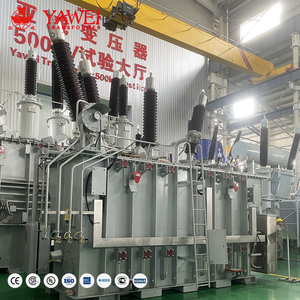
10MVA–20MVA 67KV/69KV/33KV Power Transformer Copper Winding
- 100% Electrolytic copper winding (Dyn11)
- 60Hz design optimized for CFE grid integration
- High-capacity short-circuit withstand rating
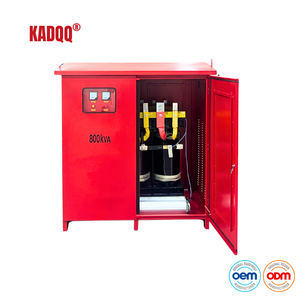
800KVA 3-Phase IP65 Wind Turbine Generator Isolation Transformer
- IP65 severe-weather protection enclosure
- High harmonic attenuation for clean energy
- CE Certified for renewable sub-stations
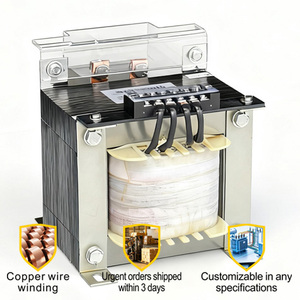
5KVA-10KVA Single Phase Control Transformer 110/220V to 36/48V
- Pure copper winding for industrial automation
- VPI insulated for high dielectric insulation
- CE & ISO standard compliant for packaging lines
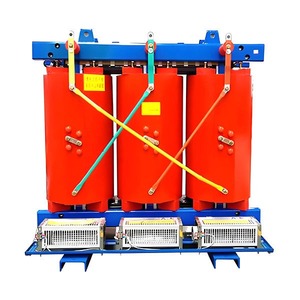
33KV/35KV/38.5KV Fire Prevention Dry Type Isolation Transformer
- Flame-retardant non-flammable dry-type design
- Class H insulation for high ambient heat
- Customizable for indoor high-rise & plant use
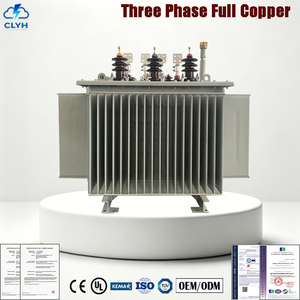
100kVA 10/0.4kV Oil Immersed Distribution Transformer
- Low-loss CRGO silicon steel magnetic core
- IEC & CE certified for utility distribution
- Hermetically sealed oil tank maintenance-free
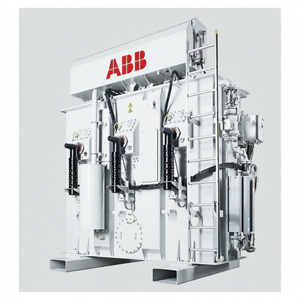
ABB (Hitachi Energy) Offshore Wind Transformer 5-25MVA 66-72.5KV
- Marine-grade anti-corrosion protection
- Vibration and shock-resistant design
- High-voltage step-up offshore generation
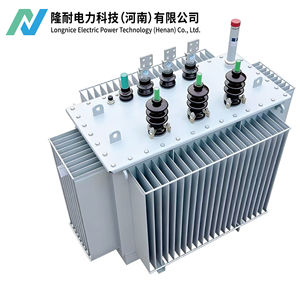
S11 3-Phase Oil Immersed Distribution Transformer 10kV/0.4kV
- 100% Copper winding high efficiency rating
- Ultra-low no-load loss performance
- Long service life with high overload margin
Industry Whitepaper: Engineering CE Certified Power Reactors for Mexico's Industrial & Energy Infrastructure
As Mexico consolidates its status as a global manufacturing giant under the ongoing Nearshoring transformation, the electrical reliability of industrial parks across Monterrey, Querétaro, Saltillo, and the Bajío region has become a paramount priority. Modern industrial facilities rely heavily on variable frequency drives (VFDs), electric arc furnaces, automated assembly robotics, and renewable microgrids. However, these non-linear loads introduce severe harmonic distortion, voltage sags, phase unbalance, and excessive reactive power consumption into the grid.
1. Technical Functionality of Power Reactors in High-Demand Industrial Grids
Power reactors—including series damping reactors, shunt reactors, line/load reactors, and detuned filter reactors—are inductive passive devices designed to limit fault currents, smooth voltage ripples, attenuate switching transients, and filter unwanted current harmonics. By placing precision-engineered CE certified power reactors into your electrical architecture, facility engineers achieve substantial power factor correction and system longevity.
Core Engineering Classifications of Industrial Power Reactors:
- Detuned Filter Reactors (PFC Reactors): Connected in series with power capacitors to prevent harmonic resonance (5th, 7th, 11th harmonics) while providing reactive power compensation.
- Line & Load Reactors: Installed on the input side of AC/DC drives to suppress dV/dt voltage peaks, reduce motor operating temperatures, and shield drives from utility grid surges.
- Current-Limiting Series Reactors: Placed in high-voltage substations to restrict short-circuit fault currents within the breaking capacity of circuit breakers.
- Shunt Reactors: Employed in long transmission lines or high-voltage cable networks to absorb excess capacitive reactive power under light load conditions, stabilizing transmission voltage.
2. High-Altitude and Thermal Derating Engineering for Central & Northern Mexico
A common oversight in importing power electrical equipment into Mexico is ignoring elevation derating factors. Key industrial centers such as Mexico City (2,240m ASL), Toluca (2,660m ASL), Puebla (2,135m ASL), and Querétaro (1,820m ASL) sit far above the standard 1,000-meter baseline specified by IEC and IEEE standards. At higher altitudes, thinner air reduces thermal cooling dissipation and lowers dielectric breakdown voltage.
Our engineering team designs custom CE certified power reactors and VPI dry-type transformers specifically tailored for high-altitude operational stress. By incorporating Class H insulation ($180^\circ\text{C}$ temperature rating), oversized cooling ducts, and optimized Basic Impulse Insulation Levels (BIL), our equipment operates continuously without thermal degradation or unexpected dielectric insulation breakdown in high-altitude Mexican industrial environments.
3. Technical Specifications Matrix: Reactor Construction Standard
| Parameter Specs | Standard Commercial Grade | Urja CE Certified Heavy Industrial Grade |
|---|---|---|
| Winding Material | Standard Grade Aluminium Wire | 100% Pure Electrolytic Copper (High-Conductivity) |
| Insulation System | Class B ($130^\circ\text{C}$) or Class F ($155^\circ\text{C}$) | Vacuum Pressure Impregnated (VPI) Class H ($180^\circ\text{C}$) |
| Grid Frequency Rating | 50Hz standard only | Dual 60Hz (Mexican CFE Standard) & 50Hz design |
| Altitude Derating Allowance | Standard up to 1,000m ASL | Custom engineered up to 3,000m ASL without derating |
| Type Test Certification | In-house test reports only | Independent CPRI & ERDA Certified Short-Circuit / Temp Rise |
| Enclosure Protection | IP20 Indoor Mesh | IP23 to IP65 Weatherproof & Anti-Corrosion C5-M Coating |
Localized Application Scenarios in Mexico
Tailored power reactor and transformer solutions serving strategic industrial corridors across the Mexican Republic.
Automotive & Aerospace Manufacturing (Monterrey, Saltillo, Querétaro)
High-speed robotic welding cells, stamping presses, and CNC machining centers create severe harmonic spikes and voltage notch problems. Our detuned PFC reactors and line reactors protect delicate controller electronics and prevent expensive assembly line shutdowns.
Solar PV & Wind Energy Farms (Sonora, Chihuahua, Oaxaca)
Large-scale solar fields in Northern desert regions and wind generation in the Isthmus of Tehuantepec require step-up isolation transformers and grid-side harmonic filter reactors built to withstand extreme ambient temperatures and high dust conditions (IP65 enclosures).
Mining & Heavy Metal Processing (Zacatecas, Sonora, Coahuila)
Submerged arc furnaces, rock crushers, and deep underground shaft hoists draw heavy, unbalanced inductive loads. Our heavy-duty furnace transformers and current-limiting reactors ensure reliable duty-cycle operation under abusive electrical stresses.
Commercial Skyscrapers & Data Centers (Mexico City, Guadalajara)
High-density urban infrastructure demands fire-safe, non-toxic, and low-noise electrical distribution. Our Cast Resin and Vacuum Pressure Impregnated (VPI) dry-type reactors eliminate fire hazards and operate seamlessly inside basements and interior substations.
Chemical Processing & Marine Ports (Veracruz, Altamira, Manzanillo)
Coastal facilities suffer from corrosive salt spray and high humidity. We build transformers and reactors wrapped in marine-grade C5-M epoxy coating with hermetically sealed enclosures to prevent insulation breakdown caused by environmental humidity.
Textile & Food Industry Industrial Parks (Guanajuato, Puebla)
Process industries require smooth single-phase and three-phase low-voltage control power. Our control transformers ensure steady secondary operating voltage, safeguarding sensitive automated packaging and food processing machinery.
Mexico Power Infrastructure Development Trends (2025–2030)
Key technology shifts driving procurement decisions across Mexican industrial, commercial, and utility sectors.
1. Accelerated Enforcement of Código de Red 2.0
Mexico’s Energy Regulatory Commission (CRE) is actively inspecting industrial consumers connected to Medium (MV) and High Voltage (HV) grids. Compliance requires maintaining power factor above 0.95 at least 95% of the time. This regulatory shift has vastly increased demand for CE certified detuned reactors and active harmonic filter units across industrial parks.
2. Shift toward Flame-Retardant Dry-Type VPI Insulation
Environmental regulations and insurance guidelines in new industrial installations favor VPI dry-type reactors over traditional oil-immersed units for indoor use. VPI dry reactors eliminate soil contamination risks, remove fire-extinguishing system requirements, and drastically reduce maintenance overhead.
3. Nearshoring Expansion in Border & Bajío Clusters
With hundreds of new manufacturing plants breaking ground in Nuevo León, Coahuila, and Querétaro, local electrical utilities face capacity bottlenecks. Factories are increasingly installing localized power factor correction banks and line reactors to maximize their existing kVA contract capacity with CFE.
4. Integration of Microgrids & Battery Energy Storage (BESS)
To combat localized power outages, major Mexican industrial facilities are deploying BESS solar microgrids. Power smoothing reactors and isolation transformers play a pivotal role in stabilizing the bidirectional energy flow between energy storage inverters and the central CFE grid.
Enterprise Superiority & Manufacturing Heritage
Why leading global EPC contractors and Mexican industrial engineers partner with Urja Techniques (India) Pvt. Ltd.
30+ Years Engineering Legacy
Established in 1991 in Mumbai, India, Urja Techniques has built over three decades of engineering expertise in low loss, high reliability power distribution equipment exported to over 40 countries worldwide.
100% Electrolytic Copper Windings
We utilize premium electrolytic grade copper windings with high dielectric thermal insulation paper. Copper provides lower $I^2R$ copper losses, exceptional mechanical short-circuit strength, and superior thermal conductivity.
CPRI & ERDA Certified Type Testing
Our power reactors and transformers are fully type-tested by premier independent laboratories (CPRI & ERDA) for short-circuit withstand performance, impulse voltage testing, noise level, and temperature rise.
In-House Temperature Rise Testing
Equipped with full load in-house testing bays, every power reactor and dry transformer undergoes rigorous routine and type testing to ensure strict compliance with IEC 60076-6, IS 2026, and CE directives before dispatch.
ISO Triple-Certified Management
Our manufacturing facility operates under strict quality management systems certified to ISO 9001:2015 (Quality), ISO 14001:2015 (Environmental Management), and ISO 45001 (Occupational Health & Safety).
Custom 60Hz & High Altitude Design
Unlike standard off-the-shelf units, our design software recalculates flux density, coil spacing, and insulation creepage distances specifically tailored for Mexico's 60Hz system frequency and elevated regional altitudes.
Frequently Asked Questions for Procurement in Mexico
Need CE Certified Power Reactors for Your Mexican Facility?
Consult directly with our senior power quality engineering team for custom 60Hz designs, high-altitude ratings, and turnkey delivery to Mexico.