Export-Grade Power & Rectifier Transformers for Japan
Engineered for extreme reliability, dual-frequency (50Hz/60Hz) compatibility, and low harmonic distortion in demanding industrial environments.
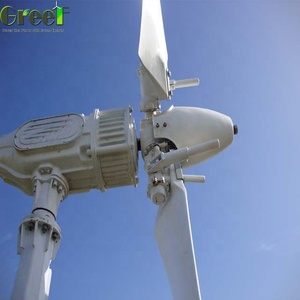
Aluminium Body Small Wind Turbine for Farm Applications
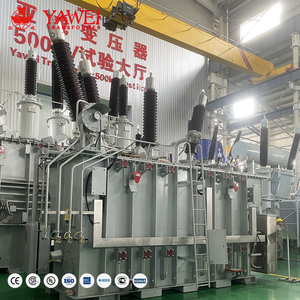
10MVA-20MVA 67KV/69KV/33KV Power Transformer Copper Winding 60Hz Dyn11
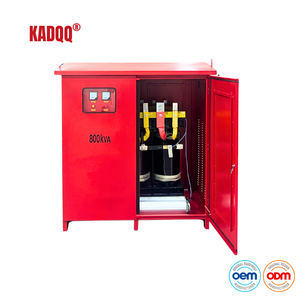
Wind Turbine Generator Isolation Transformer 800KVA Three Phase IP65 Protection
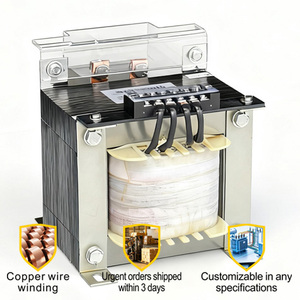
5KVA-10kVA Single Phase Control Transformer 110/220V to 36/48V Pure Copper Winding
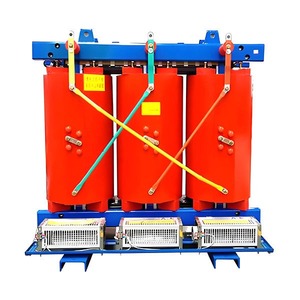
Fire Prevention Isolation Copper Winding 33KV 35KV 38.5KV Wind Turbine Dry Transformer
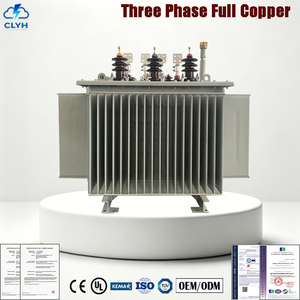
Distribution Transformer 100kVA 10/0.4kV Oil Immersed Copper Winding 50Hz/60Hz
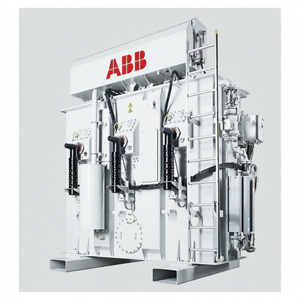
Offshore Wind Turbine Transformer 5-25MVA 66-72.5KV IEC Genuine Heavy-Duty Unit
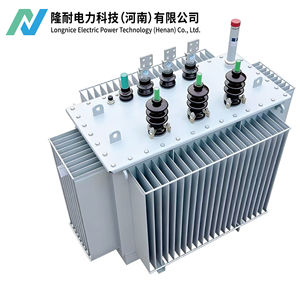
S11 3-Phase Oil Immersed Distribution Transformer 10kV/0.4kV 100% Copper Winding
Executive Whitepaper: Industrial Rectifier Transformer Dynamics in Japan
Japan’s industrial sector is undergoing a massive transformation driven by the national Green Transformation (GX) Roadmap, aggressive carbon neutrality goals for 2050, and the modernization of heavy chemical, metallurgical, and semiconductor manufacturing infrastructure. At the heart of these high-current, direct-current (DC) industrial processes lies the Rectifier Transformer—a highly specialized unit designed to step down high-voltage utility grid AC power and feed multiphase low-voltage power into solid-state thyristor or diode rectifiers.
Procuring rectifier transformers for Japanese installations presents unique engineering and regulatory hurdles. Japanese grid networks operate under a dual-frequency split: 50 Hz in Eastern Japan (serviced by Tokyo Electric Power Company / TEPCO and Tohoku Electric Power) and 60 Hz in Western Japan (serviced by Kansai Electric Power / KEPCO, Chubu Electric Power, and Kyushu Electric Power). Furthermore, equipment must strictly comply with the Ministry of Economy, Trade and Industry (METI) Technical Standards, Japanese Industrial Standards (JIS C 4304 for oil-immersed, JIS C 4306 for dry-type), and stringent seismic withstand acceleration thresholds (often exceeding 0.5g to 1.0g).
Information Gain Benchmark: Leading Chinese rectifier transformer manufacturers have evolved beyond basic OEM production. By integrating advanced electro-magnetic field modeling, custom phase-shifting topologies (up to 48-pulse systems), and Japan-specific seismic dampening designs, Chinese tier-1 suppliers provide Japanese industrial buyers with an optimal balance of technical compliance, high energy efficiency, and total cost of ownership (TCO) savings.
Advanced Engineering & Harmonic Suppression Technology
Unlike standard distribution or power transformers that feed balanced sinusoidal AC loads, rectifier transformers feed non-linear rectifying circuits. These circuits introduce severe current harmonics (5th, 7th, 11th, 13th, 23rd, 25th, etc.) back into the transformer windings and upstream grid. Without proper phase displacement and winding design, harmonic currents cause excessive eddy current losses, localized overheating in copper conductors, core saturation, and accelerated insulation degradation.
1. Multi-Phase Shift Topology (12-Pulse, 24-Pulse, and 48-Pulse Systems)
To eliminate low-order harmonics at the source without relying solely on passive external filters, top-tier Chinese manufacturers engineer integrated multi-winding phase-shifting transformers. By employing secondary and tertiary windings connected in extended delta, star, and zigzag configurations, internal phase angles are shifted by precise increments:
- 12-Pulse Rectification: Phase shift of 30° between secondary windings (e.g., Dyn11yy0), cancelling 5th and 7th harmonics.
- 24-Pulse Rectification: Phase shift of 15° using step-down auto-transformers or quad-secondary windings, effectively eliminating 5th, 7th, 11th, and 13th harmonics.
- 48-Pulse Rectification: Phase shift of 7.5°, deployed in ultra-large electrolysis plants (e.g., green hydrogen generating 100kA+ DC), ensuring Total Harmonic Distortion (THD) on the AC primary side remains well below 3%, easily satisfying TEPCO/KEPCO grid interconnection guidelines.
2. Thermal Stress Management & Stray Loss Cancellation
Rectifier transformers suffer from high stray losses induced by leakage magnetic flux generated by massive secondary currents (often reaching 10kA to 120kA DC). Leading Chinese factories utilize:
Continuously Transposed Conductors (CTC)
Utilizes epoxy-bonded CTC copper strands to minimize skin effect and eddy losses caused by high-frequency harmonic currents within the secondary busbars.
Non-Magnetic Stainless Steel Shifting
Employs non-magnetic stainless steel internal structural clamps and magnetic shielding plates along the tank interior to eliminate localized stray eddy heating.
Saturable Reactor Integration
Built-in saturable reactors (transductors) provide smooth, stepless DC voltage regulation under continuous heavy-duty electro-chemical loads.
Localized Application Scenarios in the Japanese Industrial Sector
Chinese rectifier transformer suppliers have tailored their technical engineering matrix to match specific industrial hubs across Japan, from the Keihin Industrial Area (Tokyo/Kanagawa) to the Hanshin Industrial Region (Osaka/Hyogo) and Kyushu's "Silicon Island".
Green Hydrogen Electrolysis (GX Project Deployment)
Deployed in large-scale Alkaline (AEC) and Proton Exchange Membrane (PEM) electrolyzer facilities across Fukushima and Hokkaido. Transformers provide multi-pulse low-voltage high-current output with tight DC ripple control for optimum electrolyzer stack longevity.
Precision Semiconductor & PCB Electroplating
Serving mega semiconductor fabs in Kumamoto and Chitose. Vacuum Pressure Impregnated (VPI) dry-type rectifier transformers deliver clean, spike-free DC power to electroplating lines, resisting corrosive acid mist and cleanroom humidity.
Chlor-Alkali & Chemical Electrolysis
Custom heavy-duty oil-immersed unitized rectifier transformers installed in coastal chemical complexes. Features specialized ONAN/ODAF forced-oil cooling systems designed to endure harsh, salt-laden marine air (Class C5-M anti-corrosion coating).
Comparative Engineering Matrix: Standard vs. Chinese Premium Rectifier Transformers for Japan
To help Japanese procurement officers and chief engineers evaluate sourcing decisions, the following data matrix highlights key engineering specifications comparing legacy off-the-shelf transformers against custom export-grade Chinese rectifier transformers designed for JIS/METI standards.
| Technical Parameter | Standard Distribution Transformer | Premium Export Rectifier Transformer (China Factory) | Impact on Japanese Operations |
|---|---|---|---|
| Harmonic Capability | Designed for linear loads (K-Factor 1-4) | High K-Factor rating (K-13 to K-30+) with multi-phase shifting | Prevents transformer overheating; ensures sub-3% THD compliance with TEPCO/KEPCO grid rules. |
| Winding Mechanical Strength | Standard short-circuit withstand forces | Reinforced radial and axial clamping; withstands repeated DC short-circuit stress | Prevents winding deformation during frequent rectifier thyristor fault trips or arc-overs. |
| Frequency Operation | Single Frequency (50Hz or 60Hz) | Dual-Rated 50Hz/60Hz magnetic core flux density optimization | Seamless deployment across both Eastern Japan (50Hz) and Western Japan (60Hz) grids. |
| Seismic Withstand Rating | Standard seismic anchor points (0.2g) | Seismically reinforced core-frame anchoring rated up to 1.0g (JIS C 0920 / METI guidelines) | Guarantees structural integrity and operational safety during major Japanese earthquake events. |
| Cooling Enclosure Options | Basic ONAN oil or IP20 Dry | VPI, Cast Resin (Class C2/F1/E2), ONAN/ONAF/OFAF with C5-M marine anti-corrosion | Enables safe indoor cleanroom installation or harsh coastal industrial site operation. |
| Voltage Tap Control | Off-Circuit Tap Changer (OCTC) | On-Load Tap Changer (OLTC) with saturable reactor fine-tuning & Japanese PLC interface | Provides dynamic, automated DC current control for high-yield electro-chemical production lines. |
Manufacturer Engineering Authority & Quality Control Systems
China's top rectifier transformer manufacturing hubs combine over 30 years of transformer engineering legacy with world-class testing infrastructure. Reflecting stringent quality benchmarks (similar to leading global brands), certified factories enforce total quality management across every phase of production.
Complete In-House Type Testing Capabilities
All transformer units dispatched to Japan undergo full routine and type testing strictly adhering to IEC 60076, IS 2026, and JIS C standards in certified high-voltage testing laboratories (with third-party witness auditing from CPRI, ERDA, or TÜV Rheinland):
- Lightning Impulse Withstand Test: Verifies insulation integrity against high-voltage grid transients and lightning surges.
- Temperature Rise Test: Conducted in custom thermal chambers to prove thermal stability under 100% continuous rated current plus harmonic load factors.
- Partial Discharge (PD) Measurement: Ensures Cast Resin and VPI dry-type units exhibit PD levels below 10 pC, guaranteeing decades of partial-discharge-free operation.
- Acoustic Sound Level Testing: Engineered with high-permeability cold-rolled grain-oriented (CRGO) silicon steel cores and step-lap mitred joints to meet strict Japanese municipal low-noise ordinances (<58 dB).
Frequently Asked Questions by Japanese Procurement Teams
Addressing core technical, regulatory, and logistical inquiries raised by Japanese EPC contractors, industrial plant engineers, and import procurement managers.