High-Performance Copper-Wound Electrical Equipment
Certified transformer solutions and renewable power units designed for harsh coastal and industrial environments across Greater Barcelona.
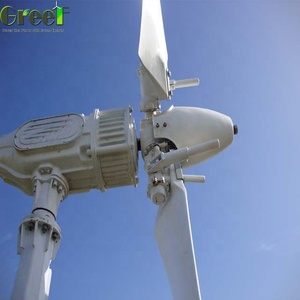
Aluminium Body Small Wind Turbine for Farm & Agricultural Grid
- Lightweight Corrosion-Resistant Alloy
- Low Cut-in Wind Speed Design
- Integrated Pure Copper Generator
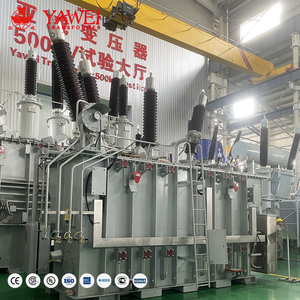
10MVA to 20MVA 67KV/69KV/33KV Power Transformer Copper Winding Dyn11
- 100% Electrolytic Copper Coils
- High Dielectric Strength & Low Losses
- IEC 60076 & CE Compliant
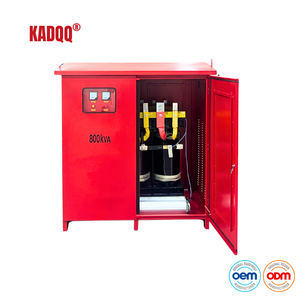
Wind Turbine Isolation Transformer 800KVA 3-Phase IP65 CE Certified
- IP65 Heavy-Duty Enclosure
- Harmonic Distortion Suppression
- Customized for Renewable Systems
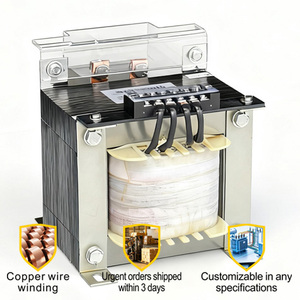
5KVA / 10kVA Single Phase Control Transformer 110/220V to 36/48V
- Pure Copper Winding Construction
- Packaging Machinery Automation
- CE & ISO 9001 Factory Direct
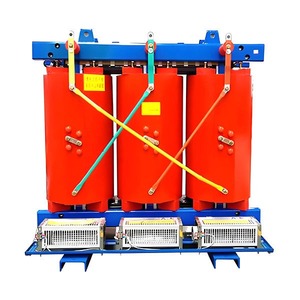
Fire-Prevention Building Isolation Copper Winding Dry Transformer 33KV/35KV
- F40 High Fire Safety Rating
- VPI Moisture-Proof Coating
- Designed for Urban High-Rises
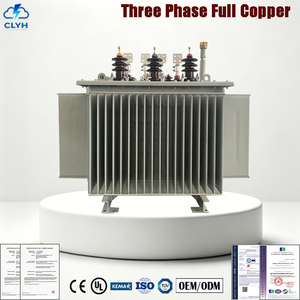
Distribution Transformer 100kVA 10/0.4kV Oil-Immersed Copper Winding
- Ultra-Low Load & No-Load Losses
- Hermetically Sealed Tank
- IEC & CE Certified Utility Grade
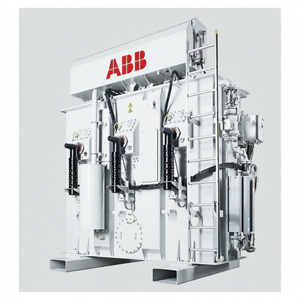
Heavy-Duty Offshore Wind Turbine Transformer 5–25MVA 66–72.5KV
- Salt-Spray & Humidity Guard
- Designed for Subsea Substations
- Optimal Short-Circuit Resistance
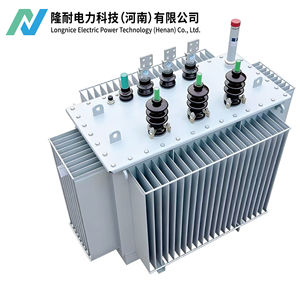
S11 3-Phase Oil Immersed Distribution Transformer 10kV/0.4kV Copper
- 100% High-Grade Copper Cores
- Extended 30-Year Operating Life
- Complies with European Ecodesign
1. Technical Rationale: Copper Winding Supremacy for Barcelona's Grid Ecosystem
As Catalonia accelerates its transition toward total energy self-sufficiency and industrial electrification under the ICAEN (Institut Català d'Energia) 2030 Strategic Framework, electrical grid infrastructure in the Metropolitan Area of Barcelona (AMB) faces stringent demands. Power transformers and industrial inductors form the backbone of this transformation. For electrical EPC contractors, port authorities, and plant engineers operating across Zona Franca, Sagunt, and the Besòs industrial corridor, selecting between electrolytic copper (Cu-ETP) and aluminum (Al) windings is not merely a matter of initial capital expenditure (CAPEX)—it is a fundamental engineering decision governing operational reliability, thermal tolerance, and long-term Total Cost of Ownership (TCO).
From an electro-physical perspective, electrolytic copper possesses an electrical conductivity rating of at least 101% IACS (International Annealed Copper Standard), compared to approximately 61% for electrical-grade aluminum. This superior electrical transport metric translates directly to a lower volumetric cross-section required for transformer windings. Consequently, copper-wound transformers exhibit substantially smaller physical footprints—a critical advantage for urban substations in central Barcelona, underground metro feeder stations, and compact substations retrofitted into historical industrial sites.
Thermal Dynamics and Short-Circuit Mechanical Withstand
Under transient surge conditions and short-circuit faults, the mechanical forces exerted on transformer coils scale quadratically with the current ($F \propto I^2$). Copper’s ultimate tensile strength ($\approx 200\text{--}250 \text{ N/mm}^2$) significantly exceeds that of aluminum ($\approx 80\text{--}100 \text{ N/mm}^2$). When severe grid disruptions occur within heavy manufacturing zones or during lightning surges along coastal transmission loops, copper windings resist mechanical displacement, conductor deformation, and insulation tearing. Furthermore, copper's superior thermal capacity permits higher short-term overload allowances without exceeding maximum hot-spot insulation thresholds defined by IEC 60076-7.
2. Localized Engineering Applications Across Catalonia & Greater Barcelona
The deployment of heavy electrical machinery in the Barcelona market requires exact calibration to regional environmental standards, municipal building codes, and regional power grid dynamics managed by Red Eléctrica de España (REE) and Endesa. Our export series of copper-wound transformers and wind turbine inductors is engineered specifically for five critical localized scenarios:
Port of Barcelona Shore Power (Cold Ironing)
As part of the Nexigen Project, the Port of Barcelona is investing over €110 million to electrify docks and allow cruise ships and container vessels to plug into onshore green electricity. Our Converter Duty and High-Capacity Copper Transformers process fluctuating shore loads while suppressing severe 5th, 7th, and 11th harmonic frequencies caused by massive shipboard variable frequency drives (VFDs).
Zona Franca Industrial Estate Automation
Operating in one of Western Europe’s largest industrial hubs, automotive plants, logistics warehouses, and chemical processing facilities demand non-stop operational continuity. Our Vacuum Pressure Impregnated (VPI) Dry-Type Copper Transformers eliminate fire hazards in enclosed urban industrial spaces while offering robust resistance against chemical vapors and dust accumulation.
Offshore & Coastal Wind Farms (Costa Brava & Ebro Delta)
Spain's offshore wind initiatives require specialized step-up transformers capable of handling aggressive marine salt fog (C5-M corrosion rating). Our 5–25MVA 66kV Copper-Wound Wind Turbine Isolation Transformers feature hermetically sealed tanks, double-dip VPI varnish insulation, and dynamic expansion radiators designed for high humidity and saline mist.
Urban High-Rise Infrastructure & Data Centers
High-density urban zones like 22@ Barcelona demand low-noise, flame-retardant electrical equipment. Our Cast Resin Dry-Type Transformers utilize self-extinguishing epoxy resin reinforced with copper conductors, ensuring compliance with strict European EN 60076-11 F1 fire reaction standards.
3. Comprehensive Engineering Matrix: Copper vs. Aluminum Winding
When evaluating supplier tenders for municipal or commercial power projects in Spain, engineering teams must evaluate physical, thermal, and electrical metrics side by side. The matrix below outlines why leading European utility contractors choose Urja Techniques' copper-wound architecture:
| Performance Parameter | High-Grade Copper (Cu-ETP) Winding | Standard Aluminum (Al) Winding | Impact on Barcelona Operations |
|---|---|---|---|
| Electrical Conductivity | 100% – 101% IACS | 61% – 62% IACS | Copper minimizes internal $I^2R$ copper losses by over 30%. |
| Thermal Conductivity | 394 W/(m·K) | 222 W/(m·K) | Faster heat dissipation during summer heatwaves in Southern Europe. |
| Tensile Strength | 200 – 250 N/mm² | 80 – 100 N/mm² | Prevents physical winding collapse under heavy short-circuit stress. |
| Galvanic Corrosion Risk | Extremely Low (Noble metal) | High (Prone to oxidation) | Crucial longevity in coastal saline air around Mediterranean ports. |
| Physical Footprint (Volume) | Compact (Baseline 100%) | Requires +40% Larger Core Size | Saves spatial real estate in urban substations and underground vaults. |
| Connection Integrity | Stable oxide layers, low creep | High thermal expansion & relaxation | Lower maintenance requirements on busbar bolted terminals. |
4. Regional Grid Evolution & Regulatory Compliance in Spain (2025–2030)
The European Union's Ecodesign Directive (Tier 2 Standards - EN 50588-1) strictly limits maximum allowable no-load ($P_0$) and load losses ($P_k$) for medium and power transformers placed on the EU market. For Catalan importers and plant engineers, non-compliance can lead to severe regulatory fines and grid connection rejections by distribution system operators (DSOs) such as Endesa Distribución or i-DE Redes Eléctricas Inteligentes.
Ecodesign Tier 2 Compliance and Carbon Footprint Reduction
Urja Techniques manufactures copper-wound transformers utilizing high-permeability, cold-rolled grain-oriented (CRGO) silicon steel cores combined with high-purity electrolytic copper windings. This synergy ensures that our equipment comfortably surpasses Tier 2 efficiency limits:
- Reduced Operational Carbon Intensity: By cutting stray energy losses, a 15MVA copper transformer deployed in an industrial facility near Barcelona saves approximately 42,000 kWh annually, eliminating over 18 tons of $CO_2$ emissions per year.
- Harmonic Mitigation for Smart Grids: Modern solar PV power plants in rural Catalonia (e.g., Lleida and Tarragona) introduce high harmonic content into the grid. Our isolation and step-up transformers feature specialized electrostatic copper shielding between primary and secondary windings to damp high-frequency noise.
- Substation Modernization: Retrofitting legacy oil-immersed transformers with modern VPI copper dry-type units eliminates oil leakage hazards into local urban water tables, adhering to Spanish environmental protection law Ley 7/2022 de Residuos y Suelos Contaminados.
5. Why Global Procurement Teams Partner with Urja Techniques (India) Pvt. Ltd.
Established in 1991 in Mumbai, India, Urja Techniques (India) Pvt. Ltd. has grown into a globally recognized engineering authority in transformer manufacturing. With over three decades of manufacturing excellence, our company blends rigorous engineering precision with streamlined international export logistics.
ISO & International Accreditation
Operates under fully certified ISO 9001:2015 (Quality Management), ISO 14001:2015 (Environmental Management), and OHSAS 18001 frameworks, guaranteeing complete batch traceability for all electrolytic copper inputs.
Independent Type Testing (ERDA & CPRI)
Our designs are independently type-tested by premier laboratories—the Electrical Research and Development Association (ERDA) and the Central Power Research Institute (CPRI)—for short-circuit withstand, impulse voltage, and temperature rise.
In-House Advanced Testing Rig
Every transformer undergoes 100% routine testing prior to dispatch, including insulation resistance, winding resistance, voltage ratio, phase vector group verification, and full-load temperature rise testing.
Global Export Footprint to 40+ Countries
Over 40% of our annual production is exported to demanding markets across Europe, the Middle East, Africa, and Asia, supported by sea-worthy seaworthy export packaging and direct shipping routes to the Port of Barcelona.
6. Frequently Asked Questions for Barcelona Procurement Managers
Addressing real-world engineering, compliance, and shipping logistics inquiries from Spanish EPC firms, utility distributors, and industrial buyers:
Partner with India's Premier Copper Transformer Manufacturer
Upgrade your industrial facility, renewable power plant, or municipal electrical grid in Barcelona with certified high-efficiency copper-wound equipment. Contact our engineering desk today for detailed technical datasheets, CAD drawings, and factory-direct price tenders.