Catalog Overview
Certified Kiosk & Package Substations for Austria
Explore our flagship range of prefabricated metal-enclosed kiosk substations, pad-mounted transformers, and smart distribution kiosks engineered for European industrial, utility, and municipal infrastructures.
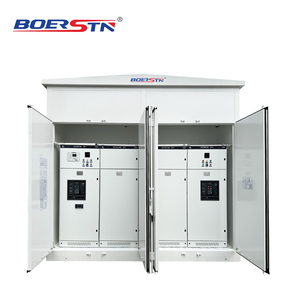
HV MV 35kV Compact Substation | Prefabricated Box Type Outdoor Kiosk Package Distribution Substation HV
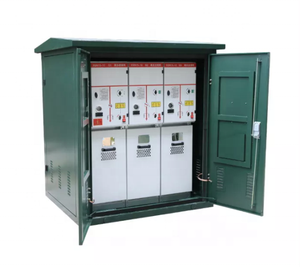
Outdoor Substation 11/0.4KV 6.6/0.4KV Electricity Power Distribution Transformer Station / Kiosk Container Substation
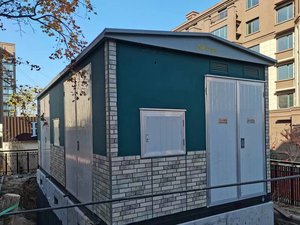
YBM Series High/Low Voltage Pre-assembled Substation (Pad-Mounted Substation)
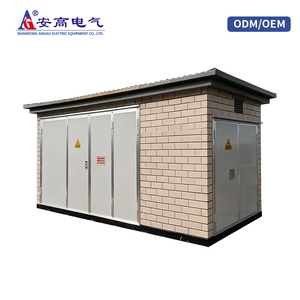
ANGAO OEM/ODM Three Phase European Type Compact Substation Transformer Pad-mounted Kiosk YBW Model Mini Package
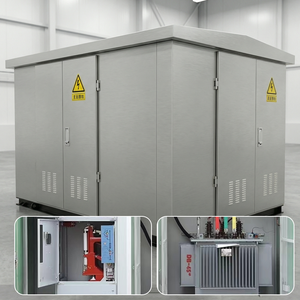
GDQ Custom High Voltage Industrial Metal Combined Electric Substation
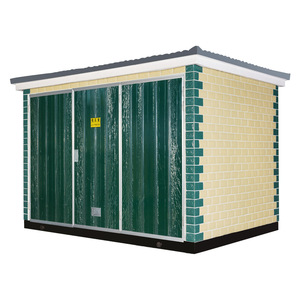
Integrated Outdoor Box Type Substation Compact Transformer Kiosk Substation for Industrial and Mining Power Supply
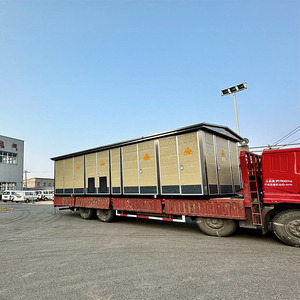
Ampereon Prefabricated Compact Substation With Energy Metering Device And Reactive Power Compensation Device Price
30+
Years Engineering Legacy
IEC 62271
Full Type-Test Certified
40+
Export Markets Worldwide
C5-M
Corrosion Protection Level
Engineering Whitepaper
Kiosk Substation Architectural Integrity for the Austrian Energy Grid
An in-depth guide to prefabricated secondary distribution substations designed to meet ÖVE/ÖNORM, EU EcoDesign Tier 2, and DACH region grid operational standards.
Alpine Climatic Resilience (-25°C to +40°C)
Austria’s topographical diversity—ranging from the high Alpine passes of Tyrol and Vorarlberg to the continental plains of Lower Austria—demands exceptional enclosure insulation and structural integrity. Our kiosk substations feature double-layered thermally insulated sandwich panels with polyurethane cores, preventing internal condensation during rapid temperature swings. Enclosures are rated for heavy snow load capacities (up to 4.5 kN/m²) and engineered with C5-M high-durability powder coating to withstand heavy winter de-icing salt spray.
Austrian DSO Technical Alignment (TOR Erzeuger)
Connecting to Austrian Distribution System Operators (DSOs) such as Wiener Netze, Netz Niederösterreich, Energie Steiermark, and Kärnten Netz requires strict adherence to TOR (Technische und Organisatorische Regeln) guidelines. Our kiosks are equipped with pre-configured Ring Main Units (RMU) featuring motorized breaker controls, digital protection relays (Siemens SIPROTEC or Schneider MiCOM), and smart remote terminal units (RTUs) for IEC 60870-5-104 telemetry integration with APG (Austrian Power Grid) SCADA systems.
EU EcoDesign Tier 2 Transformer Compliance
In compliance with European Union Regulation 2019/1783 (amending EU No 548/2014), all integrated step-down and step-up transformers within our kiosk packages adhere strictly to Tier 2 maximum load and no-load loss criteria (AoAk values). Utilizing high-grade grain-oriented electrical steel (CRGO) cores and precision-wound electrolytic copper or aluminum conductors, our transformers minimize carbon intensity while maximizing operational life expectancy (>35 years) under continuous heavy load cycles.
SF6-Free Gas & Bio-Oil Insulation Innovations
Aligning with Austria’s aggressive decarbonization targets under the Erneuerbaren-Ausbau-Gesetz (EAG), we offer zero-GWP (Global Warming Potential) medium voltage switchgear options. We integrate clean-air insulated RMUs and fluid-immersed distribution transformers utilizing synthetic or natural ester liquids (biodegradable transformer oil complying with IEC 61099), drastically reducing environmental risk in protected water catchment zones across the Austrian Alps.
Compact Footprint & Low-Acoustic City Design
Deploying energy infrastructure in densely populated hubs like Vienna, Graz, or Linz demands ultra-compact dimensions and stringent noise attenuation. Our European-style kiosk substations utilize acoustic dampening baffles and anti-vibration transformer pads that reduce noise emissions below 45 dB(A) at 1 meter. Custom exterior finishes including RAL color matching, exposed aggregate concrete cladding, or timber-slat disguises allow seamless integration into historic urban contexts.
EV Fast-Charging Hubs & Industrial Microgrids
As Austria expands its ASFINAG highway EV charging network and industrial solar PV arrays (Burgenland solar parks), our kiosk substations function as turnkey grid-connection nodes. Featuring integrated Active Power Factor Correction (APFC) panels, harmonic filtration (THD < 3%), and automatic step-up/step-down capabilities (11kV / 20kV / 30kV to 0.4kV), our units guarantee high power quality for sensitive industrial automation drives and high-power DC chargers.
Market Dynamics
Austrian Energy Transformation (EAG 2030) Drives Kiosk Substation Demand
How Austria’s target of 100% renewable electricity by 2030 relies on decentralized, intelligent secondary substation technology.
Austria’s Erneuerbaren-Ausbau-Gesetz (Renewable Expansion Act - EAG) legally binds the nation to generate 100% (national net) of its electricity from renewable energy sources by 2030. Achieving this goal requires adding 27 TWh of annual renewable capacity—comprising 11 TWh of solar photovoltaics, 10 TWh of wind power, 5 TWh of hydropower, and 1 TWh of biomass. This massive decentralized feed-in places unprecedented stress on existing medium- and low-voltage grid topologies managed by regional DSOs.
Consequently, the traditional passive transformer station is being rapidly replaced by smart, prefabricated kiosk substations equipped with automated voltage regulation, smart metering hubs, and real-time remote monitoring. Key trends defining kiosk procurement across Austria include:
- Agile PV Interconnection in Burgenland & Lower Austria: Rapid deployment of utility-scale agricultural solar farms demands plug-and-play 20kV and 30kV compact package substations that can be set up within days.
- Grid Reinforcement for Alpine Micro-Hydro: Mountainous regions in Tyrol, Carinthia, and Salzburg require compact, weather-sealed substations capable of handling bidirectional power flow from localized runoff hydro plants.
- Urban Fleet Electrification in Vienna & Graz: Municipal transport authorities transitioning to battery-electric buses require dedicated 1000kVA–2500kVA kiosk substations with high short-circuit withstand capabilities (up to 25kA/1s).
- Safety & Internal Arc Classification (IAC): High-density public areas require substations certified to IAC AB or IAC AFLR according to EN 62271-202 (20kA, 1 second), ensuring absolute operator and pedestrian protection during fault events.
As experienced global manufacturers and exporters, we customize every kiosk configuration to meet the specific grid code requirements of Austrian utility contracts, supplying fully routine-tested assemblies complete with factory acceptance test (FAT) documentation.
Technical Benchmarks
Kiosk Substation Technical Comparison Matrix
Detailed architectural overview comparing compact kiosk substations, pad-mounted transformer units, and heavy industrial containerized substations.
| Specification Parameter | European Compact Kiosk (YBW) | Pad-Mounted Kiosk (YBM) | Industrial Container Substation |
|---|---|---|---|
| Rated High Voltage (HV) Range | 6kV – 36kV (50 Hz) | 11kV – 35kV (50 Hz) | 11kV – 40.5kV (50 Hz) |
| Transformer Capacity Range | 100 kVA to 1600 kVA | 200 kVA to 2500 kVA | 1250 kVA to 6300 kVA |
| Enclosure Protection Rating | IP43 / IP54 / IP65 | IP54 / IP65 | IP55 / IP66 (HVAC Controlled) |
| Internal Arc Rating (IAC) | IAC AB 20kA / 1s | IAC AFLR 20kA / 1s | IAC AFLR 31.5kA / 1s |
| Enclosure Material Options | Aluminum Alloy / GRC Concrete / Galvanized Steel | Heavy-Duty Cor-Ten Steel / Stainless Steel | 20ft/40ft ISO High-Cube Steel Container |
| Cooling Methodology | ONAN (Natural Air) + Thermal Baffles | ONAN / ONAF Forced Ventilation | ONAF / KNAN (Ester Bio-Oil) + HVAC |
| Standards Compliance | IEC 62271-202, ÖVE/ÖNORM EN 62271 | IEC 60076, IEEE C57.12.28 | IEC 62271-200 / EN 60076 |
| Typical Austrian Application | Urban Residential / Commercial PV Feeders | EV Charging Hubs / Suburban Networks | Mining, Heavy Metallurgy (Voestalpine), Wind Parks |
Why Partner With Us
World-Class Manufacturing Excellence & Export Capability
Backing your infrastructure projects with ISO-certified manufacturing, rigorous lab testing, and custom OEM/ODM engineering support.
Certified Quality Assurance
Our production facilities operate under strict ISO 9001:2015, ISO 14001:2015, and ISO 45001:2018 integrated management systems. Every transformer and kiosk enclosure undergoes 100% routine testing prior to dispatch, including insulation resistance, power frequency withstand voltage, winding resistance, and oil dielectric strength testing.
ERDA & CPRI Type-Tested
Our transformer designs have been independently type-tested by globally recognized laboratories (such as ERDA and CPRI) for short-circuit withstand performance, impulse voltage withstand, acoustic noise levels, and temperature rise. Complete type-test certificates are available for Austrian engineering consultants and project owners.
Export Logistics to Austria
We provide comprehensive export support serving major Austrian industrial hubs—including Vienna, Linz, Graz, Salzburg, and Innsbruck. From seaworthy export packaging and container loading to CE marking compliance and customs documentation under EU import frameworks, we ensure seamless on-site delivery.
Procurement Intelligence
Frequently Asked Questions (Austrian Procurement)
Answers to common technical, regulatory, and logistics queries from Austrian electrical contractors, utility engineers, and EPC planners.
Q: Do your kiosk substations comply fully with ÖVE/ÖNORM and IEC 62271-202 standards?
Yes. All our prefabricated kiosk substations are engineered and tested in accordance with EN 62271-202 (High-voltage/low-voltage prefabricated substations), which forms the basis for Austrian ÖVE/ÖNORM EN 62271 adoption. Equipment integrated inside (switchgear, transformers, LV panels) complies with relevant IEC/EN standards including IEC 62271-200, IEC 60076, and EU EcoDesign Directives.
Q: How do you handle internal arc safety (IAC) requirements for urban public installations?
Our compact substations undergo rigorous internal arc testing. We offer enclosures certified to IAC AB or IAC AFLR (typically 20kA for 1.0 second). In the event of an internal short circuit arc fault, pressure-relief flaps direct hot gases away from operating personnel and passersby, satisfying Austrian municipal safety codes for city parks, residential zones, and industrial sites.
Q: What custom options are available for local Austrian DSO telemetry and smart grid controls?
We provide custom OEM/ODM wiring and cabinet design to accommodate smart telemetry equipment specified by Austrian DSOs (e.g., Wiener Netze, Netz NÖ). This includes pre-wiring for remote terminal units (RTUs), smart MID-certified digital energy meters, automated motor-driven load break switches (LBS), and optical fiber telemetry connections for real-time SCADA communication via IEC 60870-5-104 or Modbus TCP protocols.
Q: Can the substations operate reliably in high snow load and sub-zero Alpine environments?
Absolutely. For Alpine installations across Tyrol, Vorarlberg, and Salzburg, we specify reinforced roof structures engineered for heavy snow loads (up to 4.5 kN/m²), anti-condensation space heaters controlled by digital hygro-thermostats, special low-temperature seals (NBR/EPDM rated for -35°C), and liquid-immersed transformers using synthetic ester fluids with ultra-low pour points (-45°C).
Q: What is the typical lead time and shipping process for importing to Austria?
Standard manufacturing and factory testing lead times range from 6 to 10 weeks depending on customization and transformer kVA rating. Transit to major Austrian logistics hubs (via European sea ports such as Koper or Rotterdam followed by rail/road freight to Austria) takes approximately 3 to 4 weeks. Full export packaging, moisture-barrier wrapping, and complete export/import clearance paperwork are provided.