Featured Power & Industrial Transformers for Oman Markets
Explore our heavy-duty transformer series designed for steelmaking, renewable grid integration, distribution networks, and industrial automation across Oman’s key industrial zones.
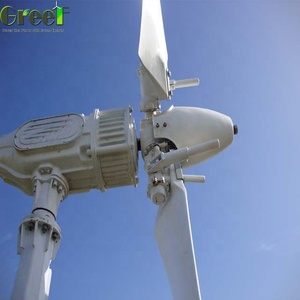
Aluminium Body Small Wind Turbine for Farm
Contact Us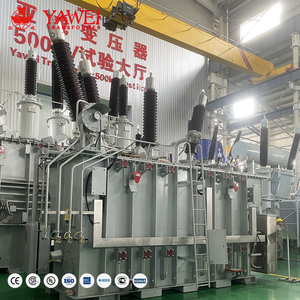
10 MVA to 20MVA 67KV/33KV Power Transformer Copper Winding Dyn11
Contact Us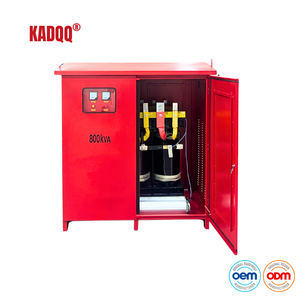
Wind Turbine Generator Isolation Transformer 800KVA IP65 CE
Contact Us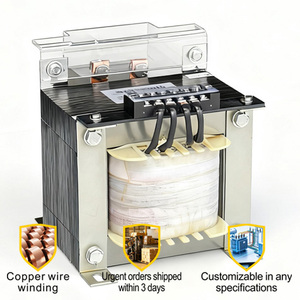
5KVA 10kVA Single Phase Control Transformer 110/220V To 36/48V
Contact Us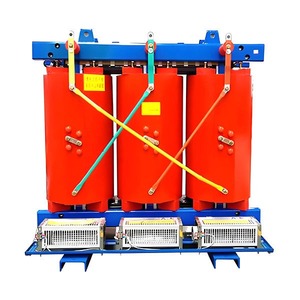
Customizable Fire Prevention Isolation 33KV 35KV Wind Turbine Dry Transformer
Contact Us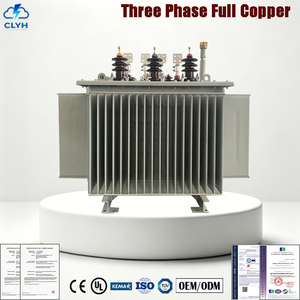
Distribution Transformer 100kVA 10/0.4kV Oil Immersed IEC CE 50Hz
Contact Us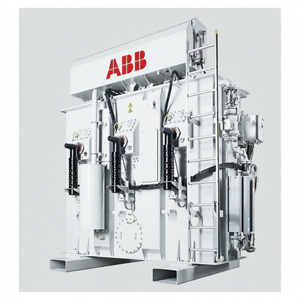
Offshore Wind Turbine Transformer 5-25MVA 66-72.5KV IEC Standard
Contact Us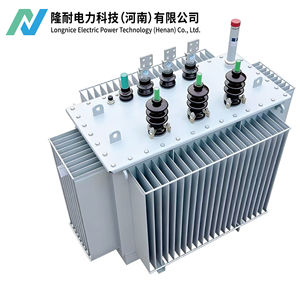
S11 3 Phase Oil Immersed Distribution Transformer 10kV 0.4kV Copper
Contact UsTechnical Whitepaper: Engineering Ladle Furnace Transformers for Omani Metallurgy
In modern secondary steelmaking, the Ladle Furnace (LF) plays a pivotal role in refining liquid steel, adjusting chemical composition, desulfurization, degassing, and maintaining precise casting temperatures. At the heart of this aggressive thermal process is the Ladle Furnace Transformer (LFT). Unlike standard electrical distribution transformers operating under steady-state loads, LFTs encounter some of the most brutal electrical, thermal, and mechanical stresses present in industrial electrification.
For steel production plants across the Sultanate of Oman—spanning key industrial zones such as the Sohar Industrial Port, Duqm Special Economic Zone (SEZAD), and Salalah Free Zone—operating high-capacity metallurgical equipment requires specialized transformer engineering. Oman’s unique environmental footprint combines severe ambient summer temperatures exceeding 50°C, high atmospheric salinity in coastal industrial corridors, airborne sand/particulate ingress, and strict power quality mandates established by the Oman Electricity Transmission Company (OETC).
Crucial Differences: Ladle Furnace Transformer (LFT) vs. Electric Arc Furnace Transformer (EAF)
While both EAF and LFT units serve steel manufacturing plants, their operational duty cycles differ significantly in ways that impact transformer core and winding topology:
Continuous Arc Stability
EAF transformers experience extreme bore-in short circuits during scrap metal melting. In contrast, LFTs operate on pre-melted liquid metal, requiring longer heating cycles with a stable, submerged arc under synthetic slag, demanding precise step-voltage regulation via On-Load Tap Changers (OLTC).
Ultra-High Secondary Current
LFTs operate at lower secondary voltage ranges (typically 120V to 450V) to minimize arc length and protect refractory ladle linings, resulting in exceptionally massive secondary currents that generate extreme electrodynamic forces across busbars.
Harmonic & Thermal Dissipation
The non-linear nature of liquid metal arcing generates severe harmonic currents. LFT design must incorporate multi-strand transposed conductors (CTC) to minimize skin effect and eddy current losses in high-current copper leads.
Localized Application Scenarios across Oman's Industrial Sectors
Oman's rapid industrialization under Oman Vision 2040 has expanded the nation’s heavy industrial footprint beyond petrochemicals into advanced metallurgy, steel rebar production, billet casting, and green steel initiatives. Our Ladle Furnace Transformers and specialized industrial transformers are custom-configured for Oman’s unique operating environments:
Sohar Industrial Port & Freezone
Home to major iron and steel complexes, pipe manufacturing plants, and aluminum smelters. Equipment deployed in Sohar faces coastal airborne salt mist, requiring C5-M anti-corrosion poly-urethane paint systems, stainless steel external hardware, and double-sealed marshalling boxes to prevent marine atmospheric degradation.
Duqm Special Economic Zone (SEZAD)
As Duqm emerges as a global hub for green hydrogen and green steel production, power transformers operating in SEZAD must withstand harsh desert sandstorms. Enclosures feature IP65/IP66 ingress protection, heavy-duty oil conservators with silica gel/dryers, and reinforced cooling radiators engineered for 55°C ambient temperatures.
Rusayl & Sur Industrial Estates
Powering intermediate manufacturing, structural steel fabrication, and mechanical foundries. Plants operating under high grid voltage fluctuations benefit from our motorized On-Load Tap Changers (OLTC) integrated with automatic voltage regulators (AVR) for seamless secondary voltage stabilization during furnace tapping.
Ladle Furnace Transformer Technical Specifications Matrix
Urja Techniques designs custom Ladle Furnace Transformers engineered to strict international standards (IEC 60076, IS 2026, IEEE C57.12.00) and Omani utility specifications. Below is the technical specification breakdown for our Omani metallurgical series:
| Parameter / Feature | Standard Range & Options | Engineering Benefit for Oman Steelmakers |
|---|---|---|
| Rated Power Capacity | 5 MVA up to 60 MVA (Custom design available) | Supports small foundries up to large-scale billet & slab refining mills. |
| Primary Voltage Class | 11 kV, 22 kV, 33 kV, 66 kV (50 Hz) | Directly compatible with OETC and local distribution grid voltages in Oman. |
| Secondary Voltage Range | 120 V to 480 V (Multi-tap steps) | Provides short-arc control to minimize refractory lining erosion in ladles. |
| Winding Material | 99.99% Electrolytic Grade Copper (CTC Winding) | Maximum thermal conductivity, minimal I²R losses, superior short-circuit strength. |
| Cooling Method | ONAN / ONAF / OFWF / OFAF | Water-cooled (OFWF) options available for extreme heat indoor furnace bays. |
| Tap Changer Type | Motorized OLTC (Up to 27 tapping positions) | Seamless voltage adjustment under load without interrupting furnace heating cycles. |
| Ambient Temperature Derating | Designed for 50°C to 55°C continuous ambient | Prevents insulation degradation and premature tripping during peak Gulf summers. |
| Corrosion Protection Class | C5-M Heavy Industrial / Marine Coating | Ensures 25+ year lifespan in humid coastal salt air at Sohar and Salalah. |
| Insulation Class | Class A / Class F (Dry Type options available) | High thermal endurance under severe repetitive cyclic loading. |
Oman Market Trends: Industrial Diversification & Green Steel Transition
The industrial landscape in the Sultanate of Oman is undergoing a monumental shift driven by national decarbonization goals and economic diversification strategy under Oman Vision 2040. Key trends transforming transformer procurement in the region include:
Decarbonization & Green Hydrogen Steelmaking
Oman’s commitment to becoming a top global green hydrogen exporter by 2030 has triggered massive investment in low-carbon steel meltshops. Electric arc and ladle furnaces are replacing traditional gas-fired units, requiring ultra-energy-efficient, low-loss transformers tested to international eco-design standards.
Power Quality Compliance & OETC Regulations
Omani electrical authorities strictly enforce power quality rules regarding voltage flicker, total harmonic distortion (THD), and power factor at the point of common coupling (PCC). Our LFT designs incorporate built-in tertiary stabilizing windings to facilitate harmonic filter bank integration.
Near-Port In-Country Value (ICV) Synergies
Omani procurement teams prioritize suppliers capable of offering rapid international maritime dispatch directly from Mumbai ports to Sohar and Sultan Qaboos ports, combined with comprehensive technical documentation, factory acceptance testing (FAT), and site supervision support.
Why Omani Industry Partners Trust Urja Techniques (India) Pvt. Ltd.
Founded in 1991 in Mumbai, India, Urja Techniques (India) Pvt. Ltd. has established itself as an ISO 9001:2015, ISO 14001:2015, and ISO 45001:2018 certified leader in transformer manufacturing and international export. With over 30 years of engineering mastery, 40% of our total production capacity serves international clients across 40+ countries in the Middle East, Africa, Europe, and Asia.
CPRI & ERDA Certified Quality
All transformer designs undergo rigorous short-circuit withstand, impulse voltage withstand, acoustic noise, and temperature rise type tests validated by premier independent testing authorities (CPRI & ERDA).
In-House Temperature Rise Testing
Our state-of-the-art Mumbai manufacturing facility features an in-built temperature rise testing bay—one of the mandatory BIS and IEC type testing facilities—ensuring guaranteed heat dissipation under Gulf ambient conditions.
Custom Metallurgical Customization
From water-cooled secondary busbars to multi-tap OLTC systems, dry-type VPI transformers, and hermetically sealed oil units, we engineer tailored solutions meeting precise client single-line diagrams (SLD).
Seamless Maritime Logistics to Oman
Strategic proximity to Jawaharlal Nehru Port (JNPT) in Mumbai enables rapid, direct ocean freight routes to Sohar Port, Salalah, and Muscat, minimizing transit lead times and customs handling delays.
Frequently Asked Questions (FAQ) for Omani Buyers & Engineers
Addressing common technical, procurement, and logistical queries from industrial buyers, plant managers, and EPC contractors in Oman.
Q1: How do your Ladle Furnace Transformers account for Oman’s extreme ambient summer heat?
Our transformers for Oman are engineered with custom thermal derating based on maximum ambient temperatures of 50°C to 55°C (in accordance with IEC 60076-2 standards). We utilize higher temperature index insulation materials, oversized cooling radiators, and forced oil-water (OFWF) or forced air (ONAF) heat exchangers to ensure full rated MVA capacity without thermal degradation.
Q2: What shipping routes and lead times apply for exports from India to Sohar or Salalah ports?
Dispatching from JNPT Port in Mumbai provides direct ocean vessel connectivity to Sohar Port and Salalah Port in Oman, with typical maritime transit taking only 4 to 7 days. Including sea-worthy heavy-machinery export packing and customs documentation, total door-to-port delivery schedules are among the fastest in the Middle East.
Q3: Do your Ladle Furnace Transformers comply with OETC and GCC grid standards?
Yes. All transformer units are designed to satisfy IEC 60076 specifications, GCC electrical standards, and OETC grid interconnection guidelines. We provide complete technical data books, short-circuit withstand calculation reports, and factory acceptance test (FAT) certificates prior to shipment.
Q4: How does Urja Techniques mitigate harmonic distortion caused by ladle arc furnaces?
Ladle arcing generates non-linear load fluctuations and high harmonic content (especially 3rd, 5th, and 7th order harmonics). We utilize Continuously Transposed Conductors (CTC) to lower eddy current losses, design heavy-duty magnetic cores using high-grade CRGO steel, and incorporate specialized tertiary delta windings or harmonic filter connection terminals to protect your plant’s electrical network.
Q5: Can you supply custom On-Load Tap Changers (OLTC) for fine voltage control?
Absolutely. Our LFT units feature high-reliability motorized On-Load Tap Changers (OLTC) capable of handling up to 27 fine-stepping voltage positions under load. This allows steel plant operators in Oman to make precise adjustments to electrode voltage and arc length without stopping the metallurgical refining cycle.
Q6: What surface protection measures are used for high-salinity coastal industrial environments?
For coastal deployments in Sohar and Salalah, transformer tanks undergo shot-blasting to SA 2.5 standards followed by a multi-layer C5-M high-durability epoxy and polyurethane coating system. External fittings, fasteners, and marshalling boxes are manufactured from grade 316 stainless steel to prevent corrosion from saline atmospheric exposure.
Partner with India's Premier Ladle Furnace Transformer Exporter
Planning a new meltshop installation, upgrading your ladle furnace capacity, or replacing existing transformers in Oman? Contact our engineering sales team for customized technical specifications, budgetary quotes, and FAT scheduling.