Engineering Grade Grounding & Distribution Transformers
Type-tested, high-reliability power equipment custom-engineered for New Zealand's unique distribution networks, wind integration, and rural power schemes.
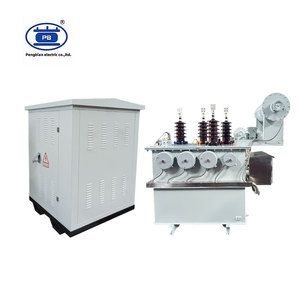
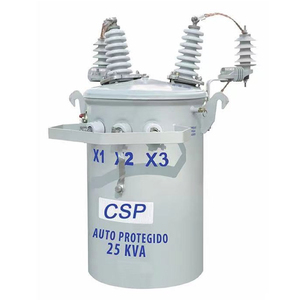
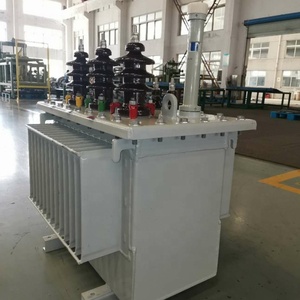
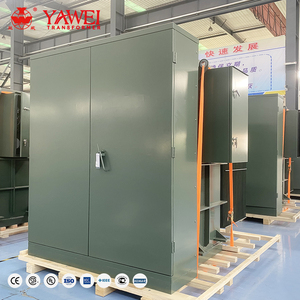
1. Executive Summary & Grounding Architecture in New Zealand Power Grids
In modern high-voltage and medium-voltage power distribution networks, ensuring continuous ground-fault protection and neutral balance is vital for operational stability, asset longevity, and personnel safety. Across New Zealand—from the dense municipal networks managed by Vector in Auckland and Orion in Christchurch, to rural networks operated by Powerco—electrical infrastructure faces severe environmental and operational challenges. A significant portion of 11kV, 22kV, and 33kV distribution circuits operate over delta-connected transformer windings. Because delta systems lack a physical neutral point, establishing a stable artificial neutral via Grounding Transformers (Earthing Transformers) is essential for system protection.
Grounding transformers provide a return path for zero-sequence currents during line-to-ground faults. When integrated with Neutral Grounding Resistors (NGR) or reactors, they effectively limit transient overvoltages, prevent ferroresonance, and facilitate immediate protection relay triggering (such as sensitive earth fault relays). As New Zealand accelerates its electrification trajectory—integrating utility-scale wind farms in the Manawatu region, geothermal stations in the Taupo Volcanic Zone, and distributed solar installations across Northland—the demand for high-reliability, low-loss grounding solutions compliant with AS/NZS 60076 standards has reached unprecedented levels.
2. Technical Matrix: Grounding Transformer Topology Comparison
Choosing the correct transformer configuration requires evaluating zero-sequence impedance ($Z_0$), continuous current ratings, short-time fault current withstand capacity (typically 10 seconds to 30 seconds), and thermal dissipation efficiency. The primary configurations utilized across New Zealand electrical infrastructure are detailed below:
| Vector Group / Topology | Zero-Sequence Reactance ($X_0$) | Neutral Point Availability | Primary NZ Application Scene | Core Advantage |
|---|---|---|---|---|
| Zigzag (Zn) Connection | Exceptionally Low / Engineered | Direct Physical Neutral | 11kV & 33kV Delta Substations, Wind Farm Collector Networks | Eliminates secondary winding requirements; compact footprint; high fault-current capacity. |
| Wye-Delta (Ynd) Connection | Moderate to High | Neutral on Primary Wye | Industrial Plants, Hydro Power Stations, Processing Facilities | Allows auxiliary station service load tapping from the secondary delta winding. |
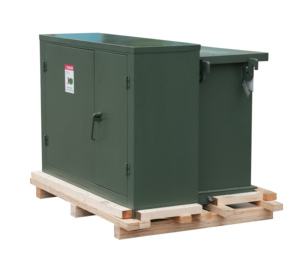
| Pad-Mounted Grounding Unit | Tailored to Substation Specs | Enclosed Bushing Access | Urban Underground Grids, Commercial Complexes, Solar Parks | Tamper-resistant, weatherproof enclosure ideal for outdoor public-access areas. |
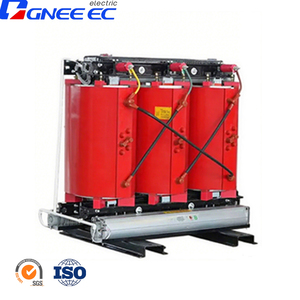
| VPI Dry-Type Grounding Unit | Controlled Impedance | Internal Terminal Bar | Indoor Substations, Data Centers, High-Rise Facilities | Zero risk of fluid leakage, self-extinguishing, class H insulation rating (180°C). |
3. Localized Application Scenarios Across New Zealand Regions
New Zealand's distinct topography and microclimates demand specialized transformer engineering. A generic off-the-shelf unit will fail prematurely under local environmental stressors. Below are the primary localized implementation scenarios where our engineered grounding transformers excel:
A. Coastal & Offshore-Adjacent Wind Generation (e.g., Taranaki & Southland)
Wind generation assets located in coastal zones face atmospheric salinity categorized under ISO 9223 corrosion class C5-M (Marine). Salt mist combined with strong westerly winds accelerates bushing degradation and tank corrosion. Our liquid-filled grounding transformers feature hot-dip galvanized cooling radiators, poly-urethane marine-grade paint systems, and high-creepage porcelain or composite silicone bushings designed to prevent flashovers caused by conductive salt deposits.
B. Geothermal & High-Sulfur Environmental Zones (Taupo & Rotorua)
Geothermal power generation sites emit atmospheric hydrogen sulfide ($H_2S$) and acidic vapors, which rapidly corrode copper terminals, brass fittings, and standard rubber gaskets. We supply specially sealed, hermetically enclosed grounding transformers with stainless steel hardware, fluorocarbon (Viton) seals, and tin-plated or silver-plated copper busbars to prevent sulfide corrosion and maintain zero-leakage security over a 30+ year service life.
C. High-Seismic Acceleration Infrastructure (Alpine Fault & Wellington Region)
New Zealand sits along the Pacific Ring of Fire, subject to severe seismic events. Electrical infrastructure must conform to IEEE 693 seismic withstand standards (High Seismic Level performance). Our grounding transformers feature reinforced internal core-and-coil clamping structures, low-center-of-gravity tank design, dynamic shock-absorbing mounting pads, and high-strength anchor bolt templates proven to withstand peak ground accelerations (PGA) exceeding 0.5g without structural displacement or internal winding deformation.
D. Electrified Dairy Processing & Agricultural Networks (Waikato & Canterbury)
Fonterra processing plants and large-scale agricultural irrigation systems demand zero unplanned downtime during peak milk harvest seasons. Continuous single-phase ground faults can trip main breakers if unmanaged. Integrating robust Zigzag grounding transformers with neutral grounding resistors allows selective fault detection, enabling plant engineers to isolate faulty feeders safely while maintaining continuous operating power for heavy industrial refrigeration and pumping loops.
4. Technology Trends & Information Gain: Grounding Solutions in NZ
To provide true Information Gain for utility engineers, procurement managers, and EPC contractors, we must examine the technical paradigm shifts transforming New Zealand's power equipment landscape:
1. Biodegradable Natural Ester Fluids (FR3) Replacing Mineral Oil
With Transpower and local Lines Companies establishing strict environmental compliance targets under New Zealand's Zero Carbon Act, traditional mineral oils are being phased out in ecologically sensitive areas. Modern grounding transformers are increasingly specified with Natural Ester Synthetic Fluids (IEC 61099 compliant). Ester fluids offer a fire point >300°C (Class K insulation), self-biodegrade within 28 days if spilled, and extend transformer paper insulation thermal life by moisture absorption.
2. Amorphous Core Metal Alloys for Zero-Load Loss Reduction
While grounding transformers primarily carry fault current, their magnetic cores remain energized 24/7, incurring continuous no-load core losses ($P_0$). Utilizing Amorphous Metal Cores instead of conventional Cold-Rolled Grain-Oriented (CRGO) silicon steel reduces core losses by up to 70-80%. Over a 30-year operational lifecycle, this transition saves tens of thousands of kilowatt-hours, aligning perfectly with EECA (Energy Efficiency and Conservation Authority) directives in NZ.
3. Real-Time Neutral Current & Dissolved Gas Monitoring (DGA) Integration
Smart grid integration requires intelligent asset monitoring. Modern grounding transformers are fitted with fiber-optic internal temperature sensors, neutral current transformer (CT) monitoring links, and online Dissolved Gas Analysis (DGA) valves. This allows predictive maintenance teams to detect incipient inter-turn insulation degradation or thermal hot-spots via SCADA before catastrophic failure occurs.
Engineering Strengths & Manufacturing Rigor
Built upon 30+ years of manufacturing excellence, state-of-the-art testing laboratories, and stringent quality governance.
ISO 9001:2015 & 14001 Quality Certified
Our manufacturing facility operates under audited Quality and Environmental Management Systems, ensuring end-to-end traceability from raw electrolytic copper to final routine testing.
Independent CPRI & ERDA Type Testing
Every grounding transformer design series undergoes independent short-circuit withstand testing, impulse voltage verification (BIL up to 200kV), and temperature rise testing in accredited labs.
Custom Zero-Sequence Impedance Control
We utilize precision electromagnetic modeling software to calculate exact $Z_0$ values, balancing short-circuit limitation requirements with relay sensitivity for seamless system protection.
Seismic & Harsh Environment Coatings
Tough exterior polyurethane and C5-M epoxy coating systems coupled with IEEE 693 seismic clamping structures guarantee survival under severe marine salt spray and earthquake events.
Streamlined Logistics to Auckland & Tauranga
Export-ready sea freight packaging, heavy-duty wooden crate enclosure, and direct shipping routes to Ports of Auckland, Tauranga, and Lyttelton ensure rapid, damage-free delivery.
Comprehensive Lifetime Technical Support
From pre-installation vector matching to post-commissioning maintenance routines, our power engineering team offers 24/7 technical advisory services for utility partners.
Frequently Asked Questions by New Zealand Buyers
Key technical and procurement considerations for local lines companies, EPC contractors, and industrial plants.
Do your grounding transformers comply with AS/NZS 60076 standards?
Yes. All transformers destined for New Zealand are engineered, manufactured, and tested in accordance with AS/NZS 60076 (Parts 1, 2, 3, and 6 for reactors/grounding units) as well as AS/NZS 3000 wiring rules. Test certificates are supplied with every unit detailing routine test results including insulation resistance, winding resistance, voltage ratio, vector group verification, and zero-sequence impedance measurement.
Why choose a Zigzag (Zn) grounding transformer over a Wye-Delta transformer?
A Zigzag (Zn) transformer is generally more economical and spatially compact than a Wye-Delta transformer of equivalent fault rating. Because the opposing windings on the same core leg cancel out normal sequence magnetic flux under balanced load conditions, zero-sequence current flows easily during earth faults. This provides extremely low zero-sequence impedance without needing a secondary delta winding, saving weight, copper loss, and enclosure space.
How do you ensure transformer survival against seismic events in Wellington or Christchurch?
Our engineering designs incorporate heavy-duty internal core clamping frames, locked winding supports, and low-center-of-gravity tank geometry tested to meet IEEE 693 High Seismic standard. We supply custom anchor bolt layouts and vibration-isolating mounting feet capable of absorbing shear forces up to 0.5g ground acceleration.
What lead times can New Zealand utilities expect for custom orders?
Standard production for custom grounding transformers typically ranges between 6 to 8 weeks, including approval drawing generation and factory testing. Ocean transport to major NZ ports (Ports of Auckland, Port of Tauranga, Lyttelton) takes approximately 18 to 24 days. Accelerated air-freight options are also available for emergency utility replacement requirements.
Can auxiliary power windings be integrated into grounding transformers?
Yes. We frequently design grounding transformers with an auxiliary low-voltage secondary winding (e.g., 415V/240V three-phase 4-wire) to power substation auxiliary loads such as lighting, battery chargers, cooling fans, and breaker trip units, eliminating the need for a separate station service transformer.
Request a Technical Quotation for New Zealand Projects
Speak directly with our power engineering design team to calculate zero-sequence parameters, specify seismic options, or request factory acceptance test details.