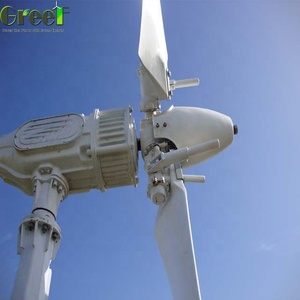
High-Performance Portfolio
Featured Solar & Renewable Energy Transformers
Rigorously engineered step-up transformers, converter duty units, and dry-type isolation solutions certified to IEC 60076 and EN standards for optimal integration with European power grids.
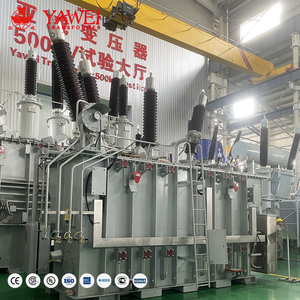
High Capacity 10MVA-20MVA 33KV/69KV Power Step-Up Transformer
Contact Us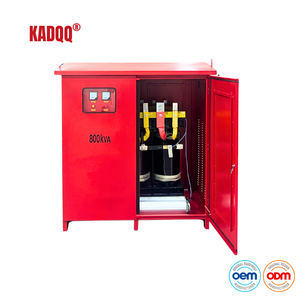
800KVA Three Phase IP65 Renewable Isolation Transformer
Contact Us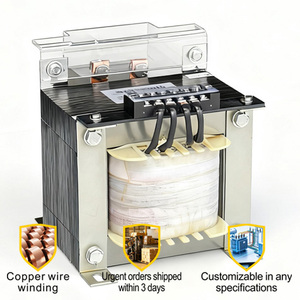
5KVA-10KVA Single Phase Pure Copper Control Transformer
Contact Us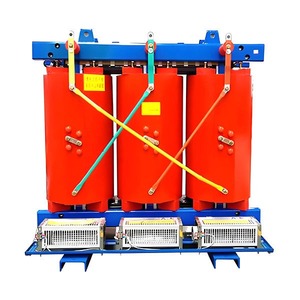
33KV/35KV Customizable Fire-Safe Solar Dry-Type Transformer
Contact Us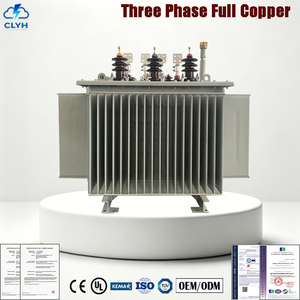
100kVA 10/0.4kV Oil Immersed Utility Distribution Transformer
Contact Us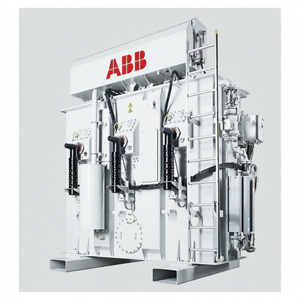
5-25MVA 66KV-72.5KV Heavy Duty Step-Up Power Transformer
Contact Us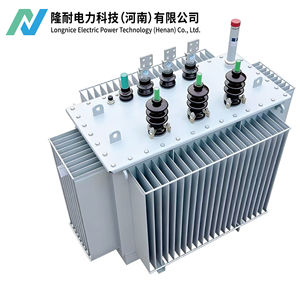
S11 3 Phase 100% Copper Winding Distribution Transformer
Contact Us
Engineering Whitepaper
Solar Application Transformers for the Bulgarian Renewable Ecosystem
An operational and structural analysis of step-up (GSU) and inverter-duty transformers optimized for Southeastern Europe's grid dynamics, thermal challenges, and regulatory directives.
The accelerated expansion of photovoltaic (PV) infrastructure across Bulgaria has fundamentally reshaped requirements for medium-voltage (MV) and high-voltage (HV) transformer engineering. Unlike traditional distribution transformers operating under stable, linear 50 Hz utility frequencies, solar application transformers operate at the high-stress interface between solar inverter stations and the regional transmission grid managed by Electricity System Operator (ESO EAD) Bulgaria.
Key Insight: Solar transformers must handle non-linear current harmonics, rapid thermal cycles, high DC offset, and severe voltage fluctuations without sacrificing operational efficiency or triggering premature insulation breakdown over a 25+ year design lifespan.
To succeed in the Bulgarian market, solar step-up (GSU) and converter-duty transformer manufacturers must comply strictly with EN 50588-1 (EU EcoDesign Directive Tier 2 loss requirements), IEC 60076-16 (standard specifically governing transformers for wind turbine and solar application), and local ESO grid codes. Procuring from specialized, top-trusted solar application transformer factories ensures that solar plant assets maintain ultra-high availability, optimized Levelized Cost of Energy (LCOE), and zero un-budgeted downtime.
30+
Years Manufacturing Authority
99.85%
Operational Availability
Tier 2
EU EcoDesign Compliance
40+
Global Export Markets
Technical Differentiation
Why Standard Transformers Fail in Solar Inverter Duty Applications
Understanding the technical delta between standard grid distribution transformers and custom-engineered solar converter duty transformers.
Core Engineering Challenges in Solar Grid Integration
Solar PV plants utilize Pulse Width Modulation (PWM) central or string inverters to convert direct current (DC) into alternating current (AC). This conversion introduces high-frequency harmonics (3rd, 5th, 7th, 11th, and higher order harmonics) alongside potential DC bias leakage into the low-voltage (LV) transformer windings. Standard grid distribution transformers are not equipped with electrostatic shielding or elevated K-factor thermal design, leading to localized hotspot heating, accelerated core saturation, and insulation failure.
| Engineering Parameter | Standard Utility Distribution Transformer | Urja Solar Converter Duty Transformer | Impact on Bulgarian Solar Projects |
|---|---|---|---|
| Harmonic Capability | K-1 Rating (Linear loads only) | K-13 to K-20 Rating (Non-linear load tolerant) | Prevents thermal runaway and insulation degradation from inverter harmonics. |
| Winding Configuration | Single LV, Single HV Winding | Multi-LV Windings (Dual/Triple/Quad Split LV) | Enables direct connection of multiple central inverters to a single transformer unit. |
| Electrostatic Shielding | None (Standard design) | Grounded Copper Shield between HV & LV | Attenuates high-frequency switching transients and prevents voltage spikes reaching grid. |
| Thermal Rise & Cooling | Standard 65°C oil rise | Optimized 50/55°C Low Temperature Rise | Handles continuous peak output during Bulgarian summer heatwaves (+42°C ambient). |
| DC Bias Withstand | Vulnerable to core saturation | Core Design with Saturation Margin | Eliminates transformer hum, excessive core loss, and magnetic saturation under DC leakage. |
| Efficiency Standard | Basic national standards | EU EcoDesign Tier 2 (EN 50588-1) | Minimizes no-load (Po) and load losses (Pk), maximizing solar revenue yield. |
Localized Application Scenarios
Tailored Deployment Across Bulgaria's Renewable Landscapes
From large-scale ground-mounted PV plants in Southern Bulgaria to commercial rooftop arrays and Agri-PV installations.
1. Thracian Plain Utility PV (Plovdiv & Stara Zagora)
Operating Environment: Intense summer solar irradiance coupled with ambient temperatures frequently exceeding +40°C, high dust accumulation, and continuous full-load operation during peak solar hours.
Recommended Solution: 2.5 MVA to 6.3 MVA 33kV Hermetically Sealed Oil-Immersed Solar Transformers equipped with 100% electrolytic copper windings, ONAN cooling, and C5-M high-durability anti-corrosion coating to resist environmental exposure.
2. Maritsa East Basin Coal-to-Solar Transition Zone
Operating Environment: Brownfield re-development sites requiring step-up integration directly into 110kV transmission networks, experiencing significant grid voltage fluctuations and demanding high short-circuit withstand capabilities.
Recommended Solution: 15MVA to 25MVA Power Step-Up Transformers featuring On-Load Tap Changers (OLTC), dynamic voltage regulation, and ERDA/CPRI short-circuit certification to satisfy strict ESO transmission grid stability thresholds.
3. Industrial Rooftop & Agri-PV (Sofia & Black Sea Coast)
Operating Environment: Indoor substations, logistics hubs, or agricultural lands where environmental protection, fire safety, and compact footprint are paramount.
Recommended Solution: Vacuum Pressure Impregnated (VPI) or Cast Resin Dry-Type Transformers (F1 fire class, C2 climate class, E2 environmental class) enclosed in IP54 weatherproof housing, completely eliminating oil leakage risks.
Strategic Market Analysis
Bulgarian Solar Energy Market Trends & Procurement Drivers
Key legislative, grid integration, and technology shifts shaping transformer purchasing decisions in Bulgaria.
1. Acceleration Under NECP & EU Green Deal Directives
Under Bulgaria's updated National Energy and Climate Plan (NECP), the nation is targeting a substantial increase in renewable power generation, aiming for over 4.5 GW of installed solar capacity by 2030. Driven by coal phase-out commitments in the Maritsa energy complex, utility-scale developers are deploying massive multi-megawatt solar parks. This rapid buildout has created acute demand for high-reliability 33kV and 110kV solar transformers capable of immediate grid connection.
2. Transition to 1500V DC Inverter Architecture & Multi-Winding Step-Up Units
Modern solar plant engineering in Bulgaria has shifted from legacy 1000V DC designs to 1500V DC central inverter blocks. This change requires specialized multi-winding transformers (e.g., dual-LV or quad-LV configurations) that allow multiple 1500V inverters to connect to a single transformer without inter-inverter circulating currents. Leading factories must provide dual LV windings with complete galvanic isolation to prevent cross-talk between inverter channels.
3. Co-Location of Battery Energy Storage Systems (BESS)
To combat power grid congestion and capture arbitrage on the IBEX (Independent Bulgarian Energy Exchange), solar developers are increasingly integrating BESS alongside PV fields. This trend demands bidirectional power flow capability in solar application transformers, as the unit must seamlessly switch between stepping up solar generation during daylight and stepping down grid power during night-time battery charging cycles.
Enterprise Authority
Why Urja Techniques is the Preferred Partner for Bulgarian EPCs
Over 30 years of transformer manufacturing excellence, strict quality assurance, and international export leadership.
ISO 9001:2015 & Full Type-Tested Compliance
Established in 1991 in Mumbai, India, Urja Techniques (India) Pvt. Ltd. operates state-of-the-art manufacturing facilities certified to ISO 9001:2015, ISO 14001:2015, and OHSAS 18001. All transformer designs undergo rigorous short-circuit withstand, temperature rise, and impulse tests conducted by premier independent test laboratories including CPRI (Central Power Research Institute) and ERDA (Electrical Research and Development Association), fully aligning with IEC 60076 and IS 2026 standards.
100% Electrolytic Copper Winding Superiority
Unlike factories utilizing lower-grade aluminum or mixed conductors, Urja Techniques utilizes 100% prime-grade electrolytic copper windings with high-grade Cold-Rolled Grain-Oriented (CRGO) silicon steel cores (M0H and M4 grades). This ensures minimal thermal expansion under surge conditions, superior mechanical strength against electrodynamic short-circuit forces, and lower total ownership losses over 25+ years.
Proven International Export Track Record (40+ Countries)
With 40% of total company turnover derived from international exports, Urja Techniques possesses deep domain knowledge in global freight logistics, sea-worthy export packaging, and EU customs documentation. We supply EPC contractors, utility boards, and industrial clients across Europe, Africa, the Middle East, and Asia with customized transformer solutions.
In-House Routine & Type Testing Capabilities
Our modern manufacturing facility in Mumbai is equipped with high-voltage test bays capable of performing all routine tests under IEC 60076, including winding resistance, voltage ratio, phase displacement, load loss, no-load loss, separate-source AC withstand voltage, and induced overvoltage withstand. In-house temperature rise testing ensures guaranteed thermal performance prior to dispatch.
Procurement FAQ
Frequently Asked Questions for Bulgarian Solar Buyers
Answers to critical technical, compliance, and logistics queries from Bulgarian EPC engineers and project developers.
Q
How do Urja solar transformers comply with EU EcoDesign Tier 2 (EN 50588-1) standards?
Our solar application transformers are custom-designed using high-grade, low-loss CRGO steel cores and high-purity copper windings to strictly meet or exceed EU EcoDesign Tier 2 maximum allowable no-load (Po) and load (Pk) loss limits. We provide complete factory test certificates detailing guaranteed loss values verified during routine testing.
Q
What vector groups and voltage ratings are standard for Bulgaria grid connections?
For medium-voltage step-up integration in Bulgaria, the standard distribution and collector grid voltage is 33 kV or 20 kV (50 Hz). Standard vector groups include Dyn11, Dyn1, or dual-LV configurations such as Dy11y11 or Dy11d11 for dual central inverter inputs. HV transmission step-up transformers are available at 110 kV with Ynd11 vector grouping.
Q
How does the electrostatic shield between HV and LV windings protect the solar park?
An earthed copper electrostatic shield installed between the primary and secondary windings acts as a capacitive barrier. It mitigates high-frequency voltage transients generated by inverter high-speed IGBT switching, prevents DC components from transferring into the MV grid, and shields delicate inverter electronics from lightning surges originating on the grid side.
Q
Can Urja manufacture transformers equipped with On-Load Tap Changers (OLTC)?
Yes. For solar installations connected to volatile grid nodes where utility voltage fluctuates significantly throughout the day, we integrate MR (Maschinenfabrik Reinhausen) or high-grade equivalent OLTC mechanisms with automatic voltage regulators (AVR) to maintain smooth, uninterrupted power injection into the Bulgarian grid.
Q
What is the typical shipping lead time to the Ports of Varna or Burgas in Bulgaria?
Manufacturing lead times typically range between 8 to 12 weeks depending on MVA rating and customization complexity. Maritime transit from India to Black Sea ports (Varna / Burgas) or overland transit through European logistics hubs takes approximately 22 to 30 days. All units are shipped in sea-worthy export packaging with nitrogen pressure filling for main tanks where applicable.
Q
What protection accessories are included as standard on oil-immersed solar transformers?
Standard protection instrumentation includes a double-float Buchholz relay with alarm/trip contacts, Pressure Relief Device (PRD) with directional spray shield, Oil Temperature Indicator (OTI), Winding Temperature Indicator (WTI), Magnetic Oil Level Gauge (MOG), and a dehydrated silica gel breather. Electronic transformer monitors with Modbus RS485 output for SCADA integration are also available upon request.
Accelerate Your Bulgarian Solar Project with Factory-Direct Engineering
Consult with our senior transformer design engineers to configure high-efficiency step-up and converter duty transformers tailored to your inverter specifications and ESO grid compliance requirements.
Contact Us